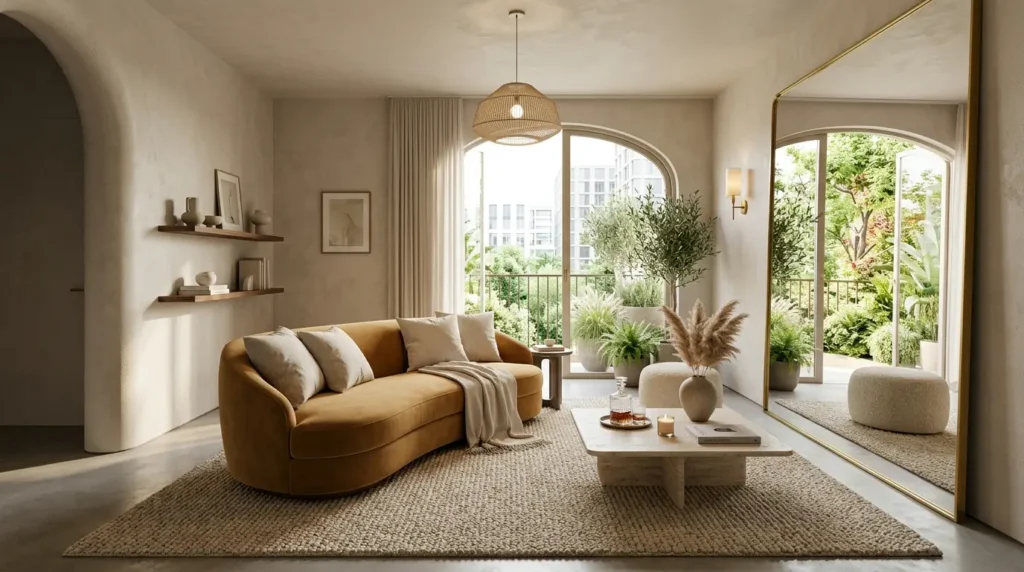
Let’s be honest: most of us aren’t living in a sprawling 10-bedroom estate with a ballroom and a wing just for gift-wrapping. In reality, we’re often dealing with “cozy” urban studios or apartments where the kitchen and the living room are essentially the same square foot. But here’s the secret the world’s top designers don’t want you to know: Luxury isn’t about square footage; it’s about the feeling of space.
As we move through 2026, the trend has shifted from “bigger is better” to “smarter is richer.” We’ve officially moved into the era of The Micro-Palace. Whether you’re in a high-rise in Kyiv or a charming flat in Ivano-Frankivsk, you can trick the eye (and the soul) into believing you’re living in a mansion.
The Psychology of Space: Why Your Square Footage is a Liar
Space is a perception, not a number. Your brain doesn’t actually count square meters; it counts visual interruptions. Every time your eye hits a hard line—a dark piece of furniture against a light wall, a rug that’s too small, or a cluttered shelf—your brain registers a boundary. The secret to a “mansion feel” is to remove those boundaries.
We want to create a “visual flow” where the eye can slide across the room without getting stuck. When the eye can travel further, the room feels bigger. It’s an optical illusion that even the most seasoned interior designers use to justify their six-figure fees. Ready to do it yourself?
Secret 1: The “Low and Lean” Furniture Strategy
If you have low ceilings (common in many apartments), the last thing you want is a giant, high-back Chesterfield sofa. Why? Because it bisects the room and eats up the “air” in the upper half of your space.
Avoiding the “Clutter Trap” of High-Back Seating
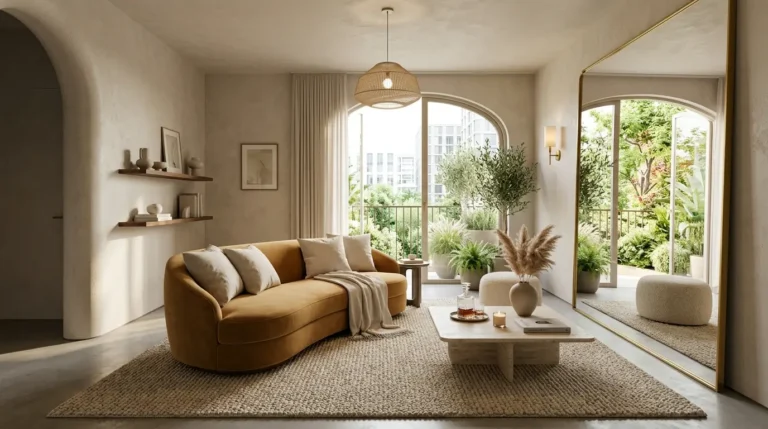
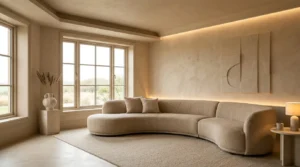
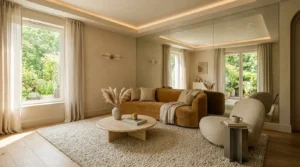
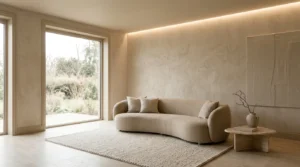
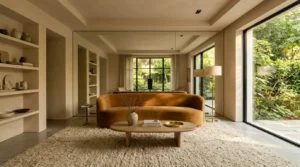
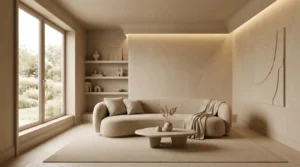
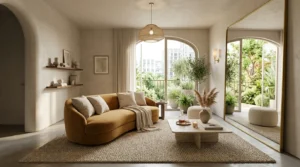
Instead, go for Low-Profile Furniture. Sofas and chairs that sit lower to the ground leave more wall space visible above them. This creates a sense of “loftiness.” Think of it as wearing a V-neck shirt instead of a turtleneck; it elongates the silhouette. In 2026, we’re seeing a massive trend toward “Organic Low-Riders”—curved, sculptural sofas that stay below the waistline, making the ceiling feel miles away.
Secret 2: Mastering Verticality (The Floor-to-Ceiling Rule)
If you want to feel like you’re in a ballroom, you need to look up. Most people stop their decor at eye level, which is a tragedy. You have an entire upper half of the room that is currently doing nothing for you.
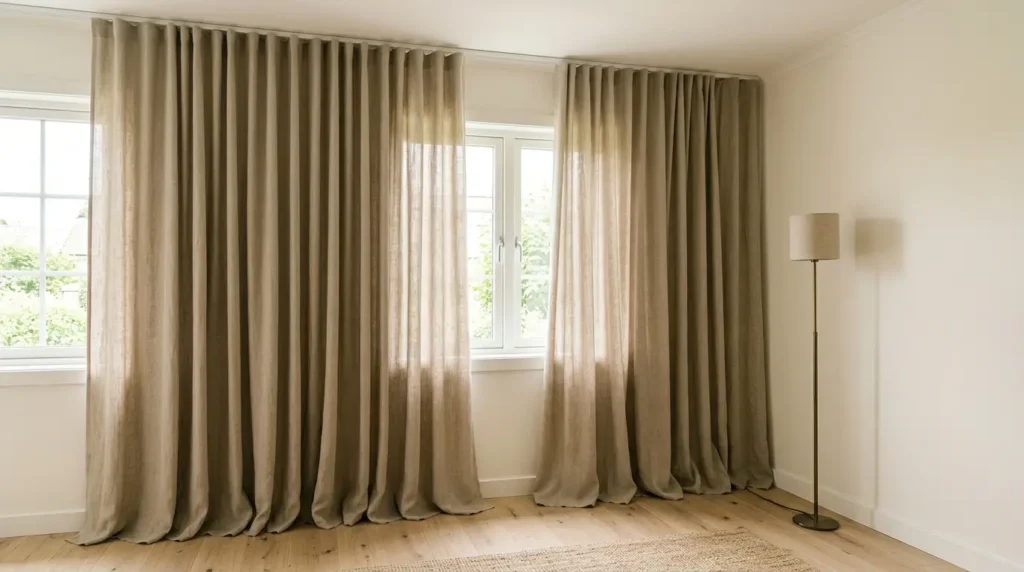
Why Your Drapery Should Always “Kiss the Floor”
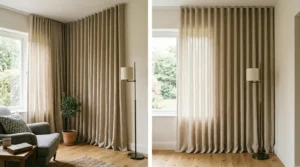
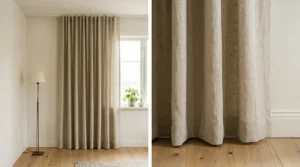
The most common mistake? Hanging curtains right above the window frame. Stop doing this. To make your room feel grand, hang your curtain rod as close to the ceiling as possible and let the fabric go all the way to the floor. This creates long, vertical lines that trick the brain into thinking the windows (and the walls) are much taller than they actually are. It’s like wearing pinstripes to look taller.
Secret 3: The Mirror Portal: Creating Infinite Depth
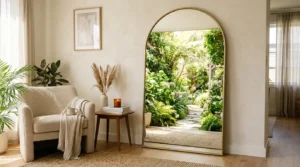
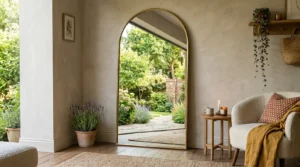
Mirrors are the oldest trick in the book, but most people use them wrong. Hanging a small mirror over a couch is just a decoration. Placing a Floor-to-Ceiling Mirror is a spatial revolution.
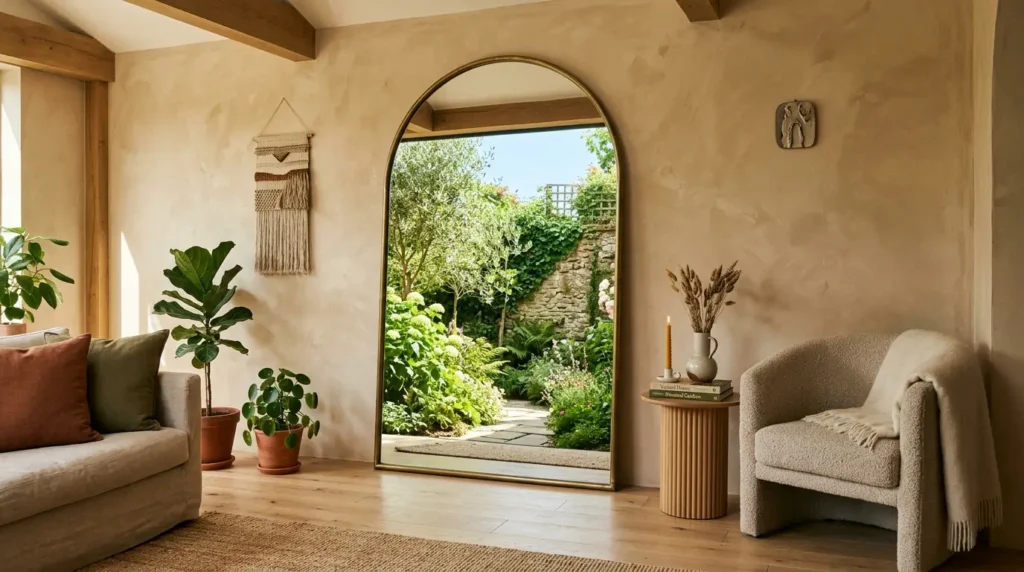
Strategic Placement: Bouncing Light into Dark Corners
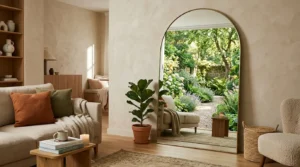
Place a large mirror opposite a window. Not only does this double the amount of natural light in the room, but it creates the “Portal Effect.” Your brain sees the reflection and perceives a whole other room. If you really want to go “mansion,” use a large-scale arched mirror. The curve adds an architectural element that makes the apartment feel like it was custom-designed by an architect in Lviv.
Secret 4: The Monochromatic “Wash” Technique
One of the biggest “space-killers” is high contrast. A dark blue wall with white trim and a brown sofa makes the room feel busy and “chopped up.”
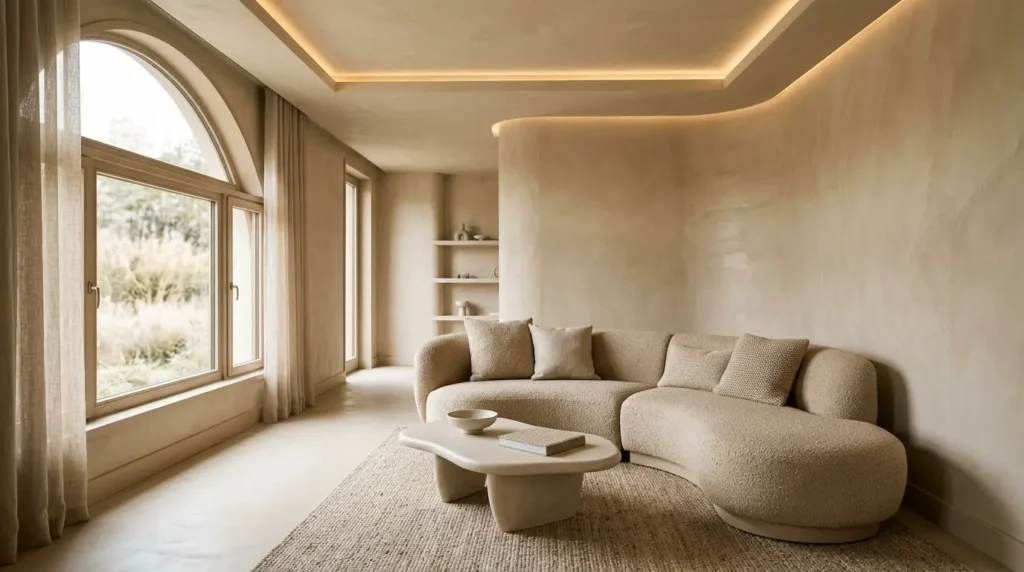
Why Matching Your Walls to Your Furniture Works
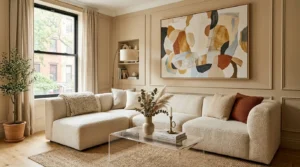
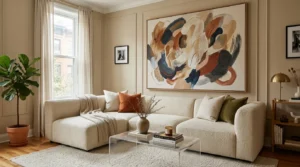
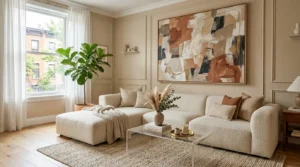
In 2026, we’re obsessed with the Monochromatic Wash. Paint your walls, your trim, and even your ceiling in the same warm neutral—think “Oatmeal,” “Sand,” or “Mushroom.” Then, choose a sofa in a similar shade. When the furniture matches the walls, it “disappears.” The boundaries of the room become blurred, making the space feel vast and unified. It’s quiet luxury at its finest.
Secret 5: Scale Play: The “One Big Thing” Rule
Counter-intuitive thought: Putting small furniture in a small room makes it look smaller. It creates a “dollhouse” effect that feels cluttered and chaotic.
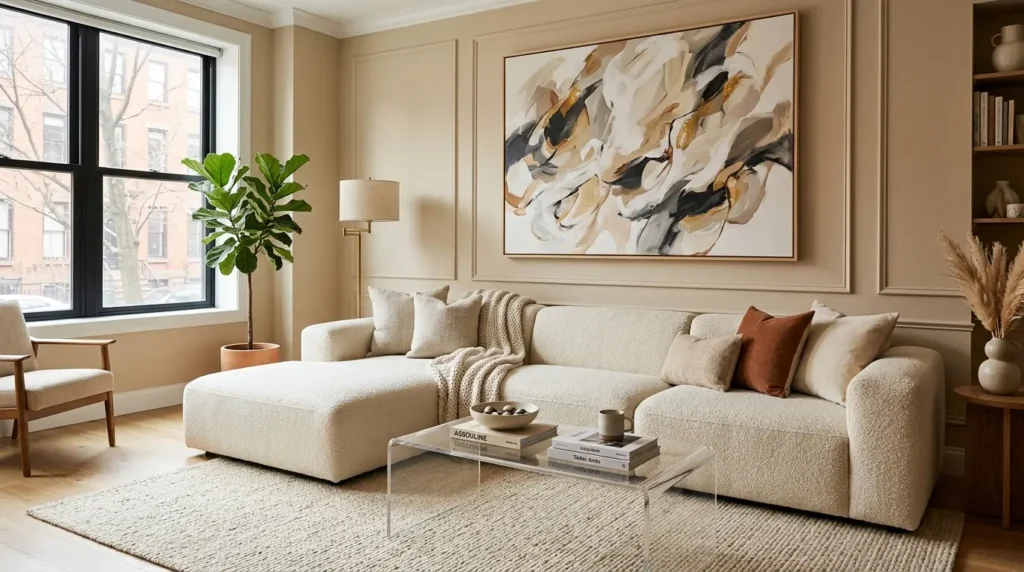
Why Small Furniture Makes Your Room Look Smaller
Instead of five tiny chairs and three little side tables, go for One Big Thing. One oversized, comfortable sectional or one massive piece of art acts as an anchor. It tells the eye, “This room is large enough to handle this piece.” It brings a sense of confidence and “grandeur” to the space that a bunch of tiny pieces never could.
Secret 6: Continuous Flooring and the Death of Thresholds
If your kitchen has tile, your living room has wood, and your hallway has carpet, you are effectively cutting your apartment into three tiny boxes.
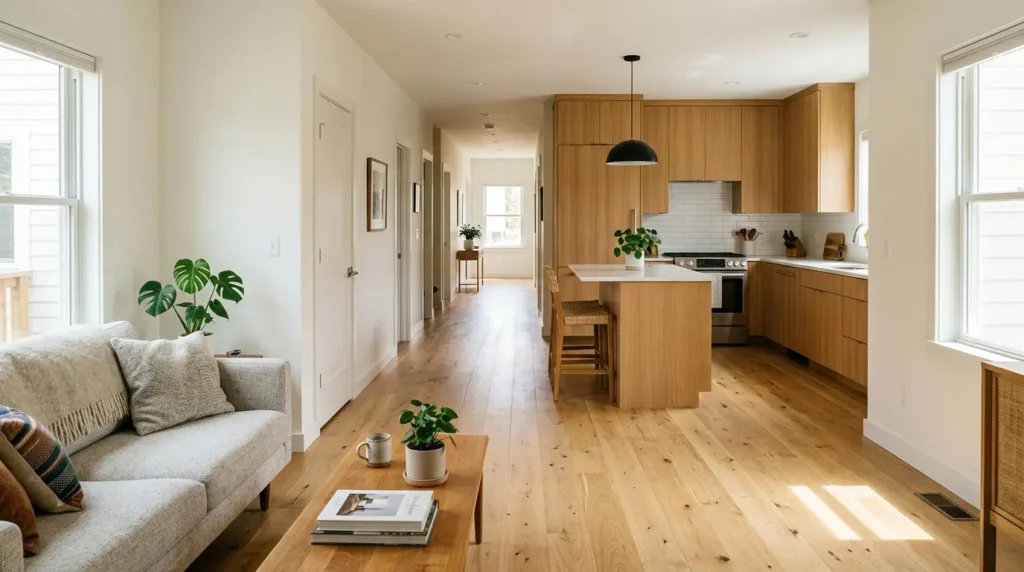
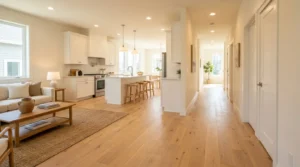
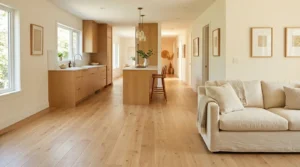
To get that mansion feel, you need Continuous Flooring. Run the same material through every room (except maybe the bathroom). When the floor doesn’t stop at the doorway, the rooms “bleed” into each other, creating one large, expansive plane. If you’re using rugs, make sure they are huge. A rug should tuck under all the furniture, not float like a “postage stamp” in the middle of the floor.
Secret 7: Lighting Layers: Creating the “Golden Hour” Effect
Nothing screams “cheap apartment” like a single, harsh “boob light” in the center of the ceiling. It flattens the room and makes it look like a doctor’s office.
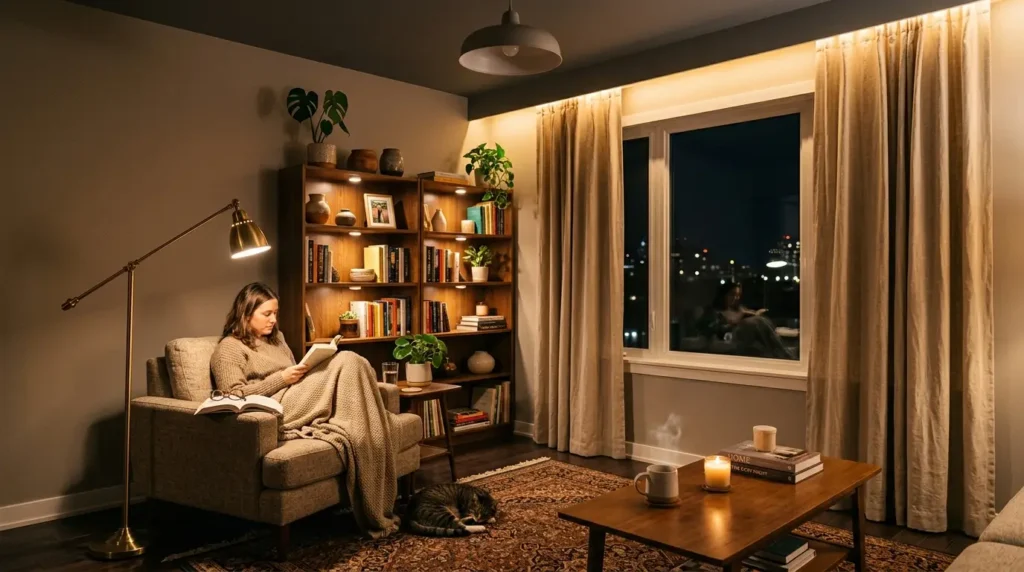
Why Overhead Lighting is the Enemy of Luxury
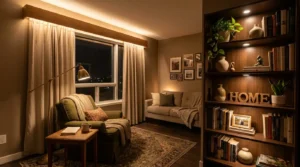
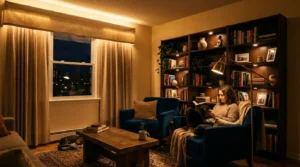
Luxury is about Shadow and Depth. You want at least three layers of light:
-
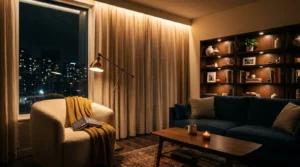
Ambient: Soft, indirect light (like LED strips hidden behind a curtain valance).
-
Task: A beautiful brass floor lamp for reading.
-
Accent: Small “puck lights” inside a bookshelf to highlight your favorite objects. By lighting the corners of the room rather than just the center, you push the walls out visually.
Secret 8: “Ghost” Furniture and the Magic of Lucite
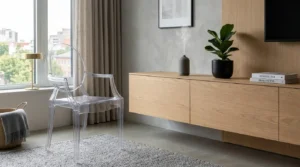
If you need a coffee table or a desk but don’t want to “take up” space, go for Acrylic or Lucite. Designers call this “Ghost Furniture.” Because you can see right through it, it provides the function you need without taking up any visual weight. It’s like it’s not even there, allowing the eye to travel all the way to the wall, which—you guessed it—makes the room feel bigger.
Secret 9: Architectural Faking: Adding Character to Drywall
Mansions have “bones.” Small apartments usually have flat, boring drywall. But you can fake the bones.
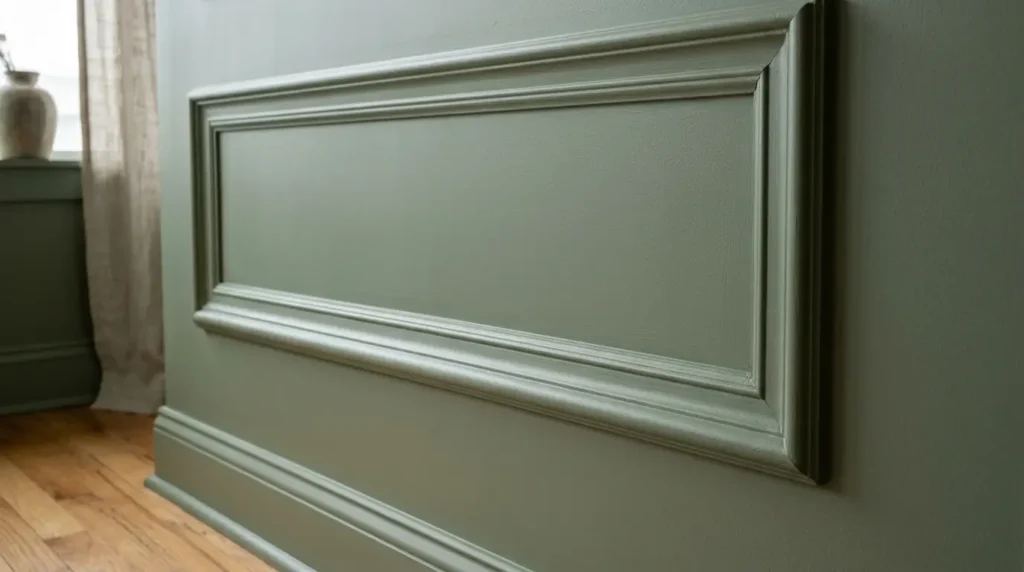
Using Picture Frame Molding for Instant Elegance
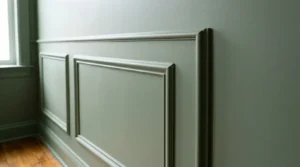
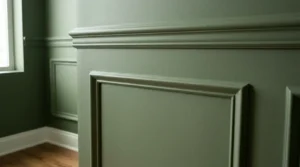
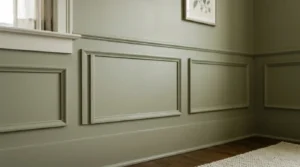
Adding simple Picture Frame Molding (wainscoting) to your walls adds a layer of “architectural intent.” It makes the room look like it has history and weight. Paint the molding the same color as the wall for a sophisticated, subtle look that adds 2026-style “texture” without clutter.
Secret 10: The Scent of Luxury: Designing for the Nose
We often forget that space is a multi-sensory experience. A mansion doesn’t just look big; it smells expensive. In 2026, “Scent-Scaping” is a major trend. Use high-quality diffusers with notes of Sandalwood, Amber, or Bergamot. When a guest walks in and smells something sophisticated, their brain automatically upgrades the value of the space they are standing in.
Secret 11: Integrated Tech and “Invisible” Storage
Clutter is the ultimate mansion-killer. If your mail, your chargers, and your remote controls are visible, the room feels small.
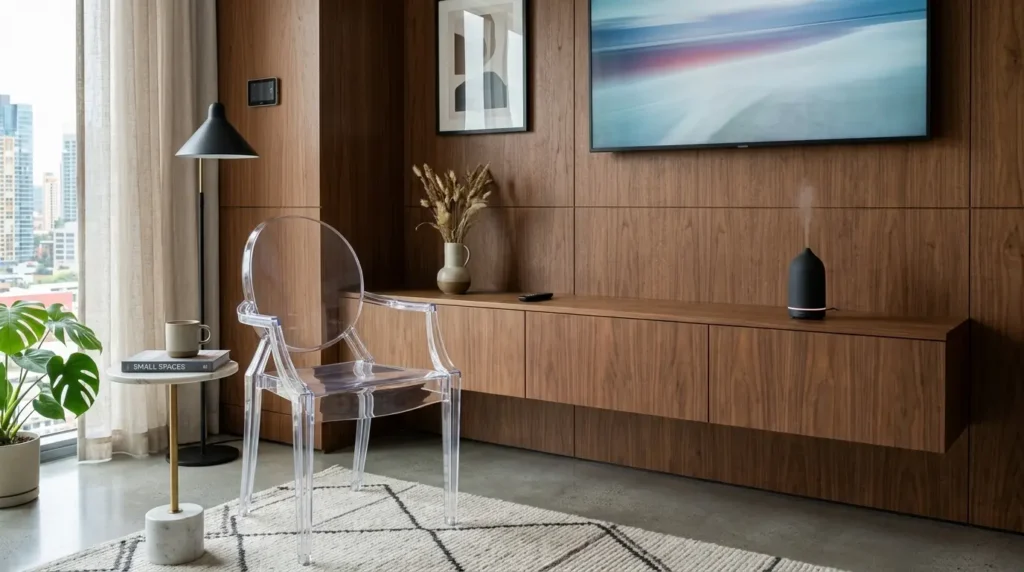
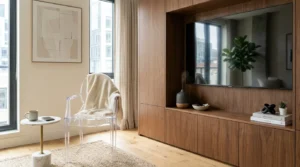
Invest in Multi-functional Furniture. An ottoman that opens up to store blankets, or a “Media Cabinet” that hides the TV behind a sliding art panel. In 2026, the goal is to have a “clean” environment where tech only appears when you need it.
Secret 12: Biophilic Grandeur (Nature as a Focal Point)
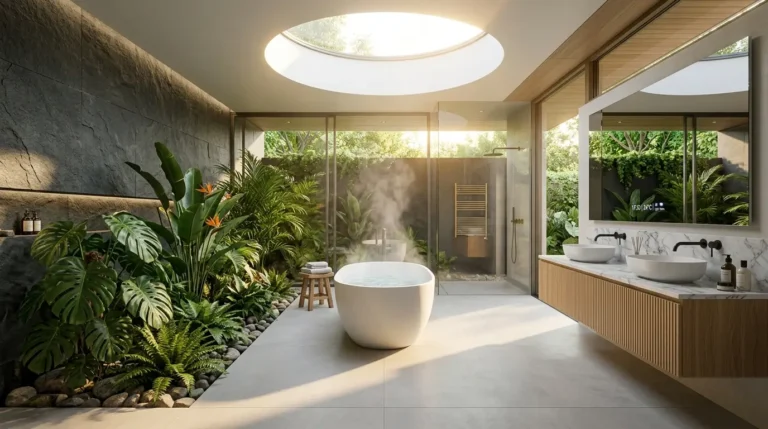
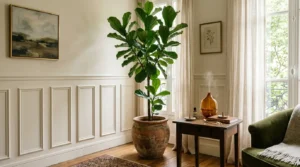
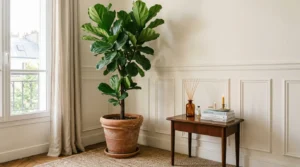
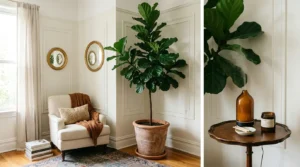
Instead of ten small succulents on a windowsill, go for One Hero Tree. A tall Fiddle Leaf Fig or a slender Olive Tree in the corner adds height and life. It brings the outdoors in, and because it’s a living thing, it adds a layer of “dynamic luxury” that static furniture can’t provide. It makes the room feel like it’s part of a larger, natural ecosystem.
Conclusion: Your Tiny Palace Awaits
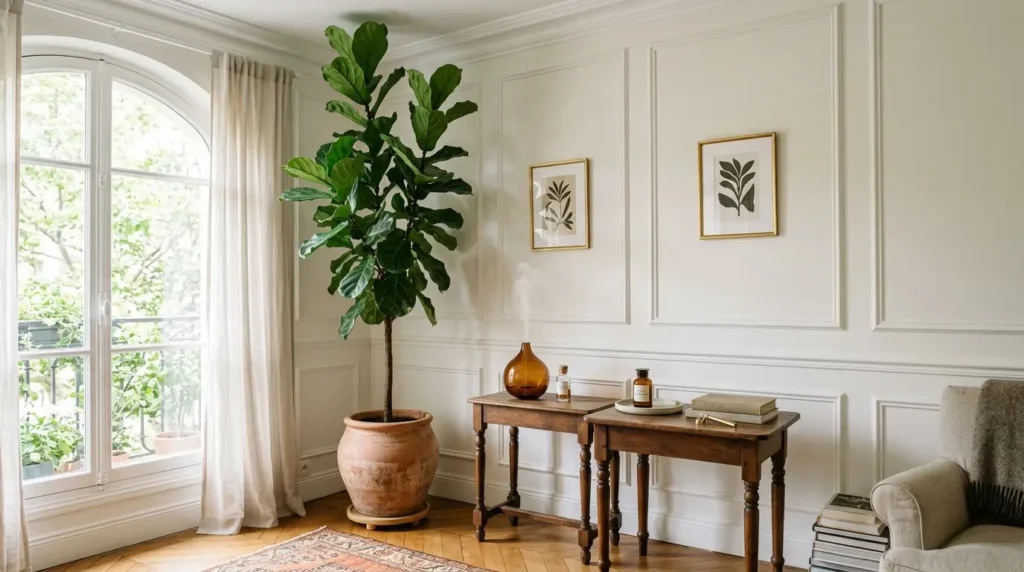
Making a small apartment feel like a mansion isn’t about spending a fortune; it’s about editing. It’s about choosing one large rug instead of three small ones, hanging your curtains high, and keeping your color palette tight.
Remember, luxury is a state of mind. When you treat your space with respect and design it with intent, it doesn’t matter if you have 40 square meters or 400. Your home is your sanctuary—make sure it feels like one.
Frequently Asked Questions (FAQs)
1. Won’t a big rug make my room look cramped? Actually, it’s the opposite! A small rug highlights the smallness of the floor. A large rug that goes under the furniture “pushes” the walls out and makes the seating area feel like a defined, grand zone.
2. Is a monochromatic palette boring? Not if you play with Texture. Use a wool rug, a velvet sofa, a linen curtain, and a stone coffee table—all in the same shade of beige. The “interplay” of the different materials will make the room look incredibly rich and interesting.
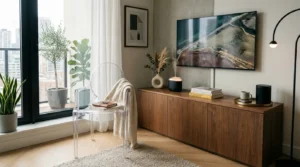
3. What is the best way to hide “ugly” tech in a small space? Look for “Art TVs” like the Samsung Frame, or use a decorative wooden box to hide your Wi-Fi router. The less “plastic” you see, the more “mansion” the room feels.
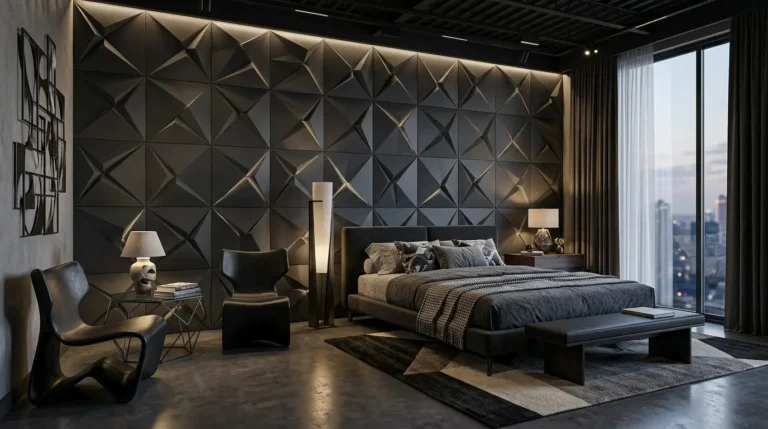
4. Should I avoid dark colors in a small apartment? Not necessarily! While light colors make a room feel “airy,” dark colors (like navy or forest green) can make a room feel “infinite” because you can’t easily see where the corners of the room are. If you go dark, go dark on everything (walls, ceiling, trim) for a cozy, cocoon effect.
5. How do I make my low ceilings feel taller? Avoid crown molding if your ceilings are low—it creates a “lid” on the room. Instead, paint the ceiling the same color as the walls to remove the visual “line” where the wall ends, making the ceiling seem to float higher.
About the Author