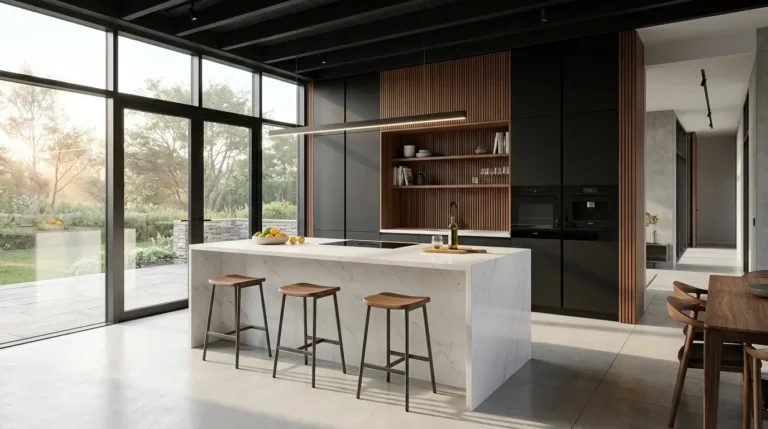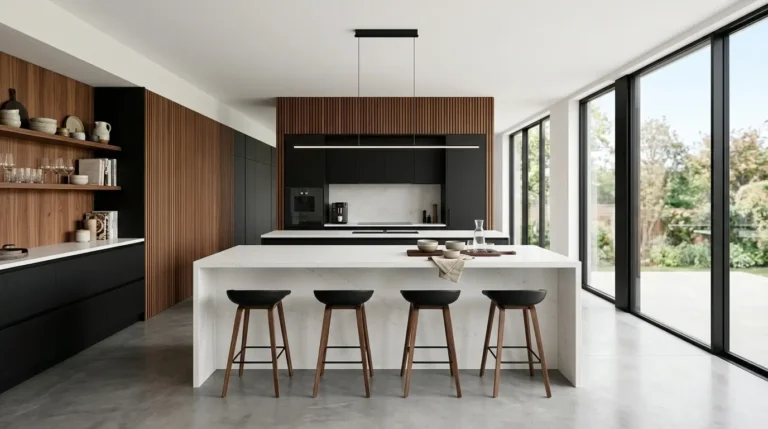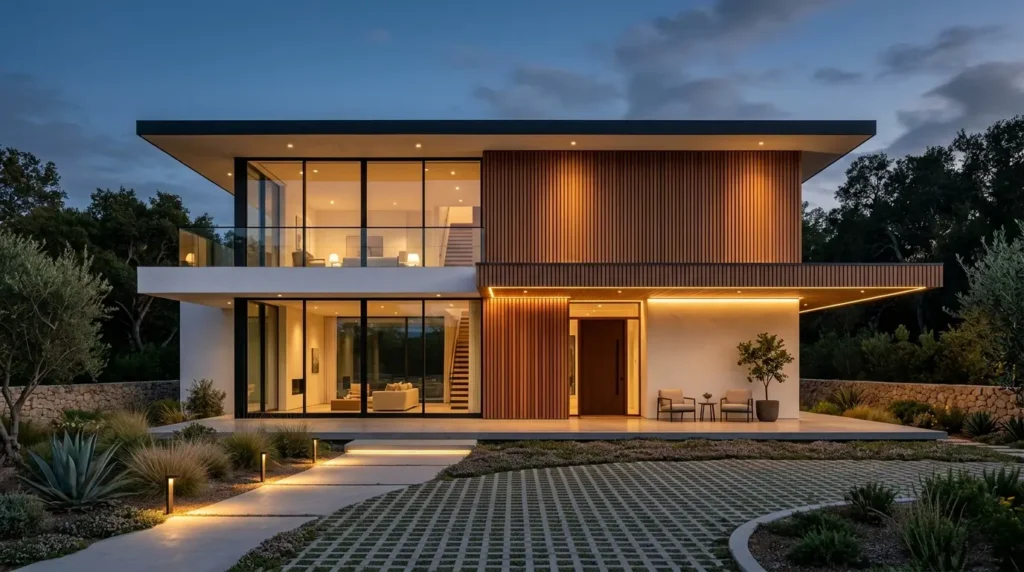
Have you ever driven down a street, minding your own business, when suddenly you see that house? You know the one. It makes you instinctively ease your foot off the gas pedal. It’s sleek, it’s architectural, and yet, it completely avoids looking like a high-tech dental clinic. It looks like a sanctuary.
Creating breathtaking curb appeal isn’t just about planting some petunias near the mailbox anymore. Today, modern house front elevation design is an art form. It’s about leveraging clean lines, bold geometries, and an inspired mix of materials to make a statement before you even turn the key in the lock. But how do you achieve that ultra-modern look without sacrificing the cozy, “welcome home” vibe?
If you’re building a custom home or planning a massive exterior renovation, you’re in the right place. We are going to explore the intersection of sleek minimalism and organic warmth. Let’s dive into 15 stunning modern house front elevation design ideas that will completely transform your home’s facade.
1. The Anatomy of Modern Curb Appeal
Before we start slapping wood panels and concrete on a house, we need to talk about the philosophy behind the modern facade. It’s a delicate balancing act.
1.1. Why Modern Doesn’t Have to Mean “Sterile”
For a long time, “modern” was a dirty word in residential neighborhoods. It conjured images of cold, gray boxes with zero personality. But the design world has evolved. The current trend—often referred to as Modern Organic Minimalism—is a direct rebellion against the coldness of the past. It embraces the crisp, uncluttered geometry of modernism but injects it with the heartbeat of nature.
1.2. Balancing Clean Lines with Organic Warmth
Think of your home’s exterior like a great recipe. If you only use salt (concrete, steel, glass), it’s going to be harsh and unpalatable. You need to fold in sugar and fat (natural woods, warm lighting, living landscaping) to create balance. When you combine a stark, flat roofline with a rich, thermally modified wood siding, magic happens. The hard lines provide structure, while the natural materials provide soul.
2. Mastering the Mix: Materials That Matter
The secret sauce of modern front elevations is texture mapping. You can’t just pick one material and wrap the whole house in it.
2.1. The Warmth of Natural Wood Accents (Idea 1)
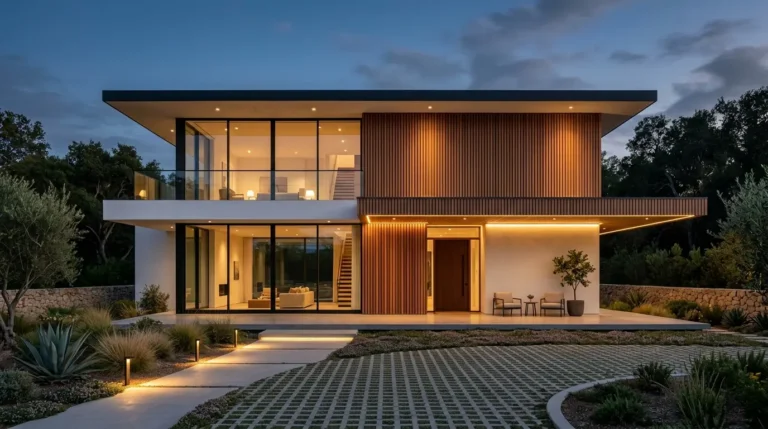
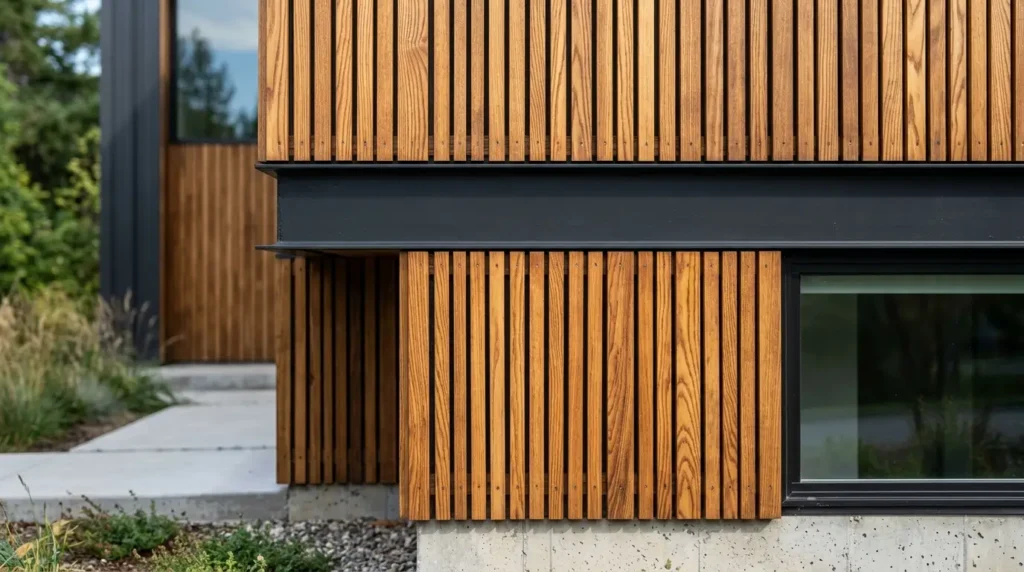
If there is one non-negotiable element in organic modernism, it’s wood. However, we aren’t talking about traditional overlapping clapboard. Think sleek, vertical slats. Materials like western red cedar, teak, or the Japanese charred wood technique known as Shou Sugi Ban add an incredible depth of color and tactile warmth. When placed next to a smooth, white rendered wall, a section of ribbed wood panelling acts as an architectural focal point, drawing the eye exactly where you want it.
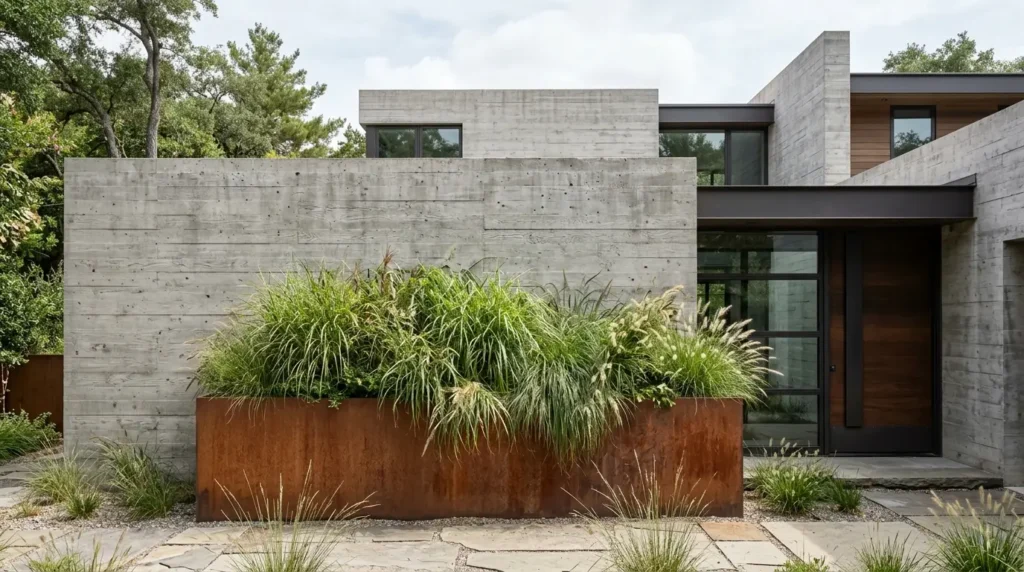
2.2. Industrial Chic: Corten Steel and Exposed Concrete (Idea 2)
For those who like their modernism with a bit of an edge, blending board-formed concrete with Corten (weathering) steel is a brilliant move. Board-formed concrete leaves the imprint of the wooden forms on the surface, giving a supposedly “cold” material a beautiful, wood-grain texture. Pairing this with the rich, autumnal rust color of Corten steel creates a facade that feels simultaneously industrial and deeply tied to the earth.
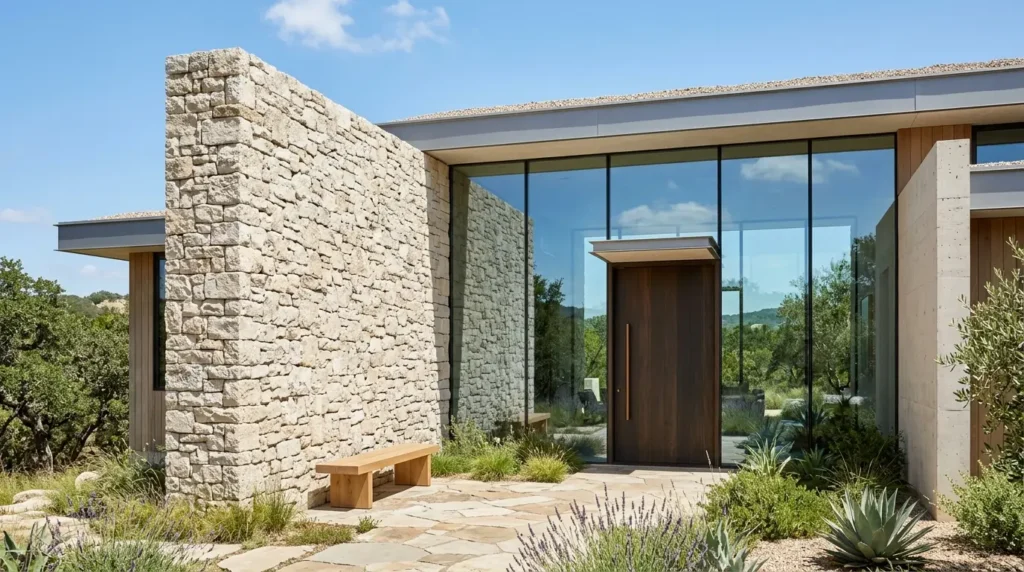
2.3. Stone Cladding for Earthy Grounding (Idea 3)
Forget the rounded, faux-river-rock facades of the 1990s. Modern stone cladding is all about linear, dry-stacked applications. Using natural limestone or slate in a horizontal layout grounds the house, making it look as though it sprouted organically from the landscape itself. This heavy, monolithic texture is the perfect counter-weight to massive expanses of fragile glass.
3. Let There Be Light: The Power of Glass
In traditional architecture, windows are just holes punched into a wall. In modern architecture, the windows are the wall.
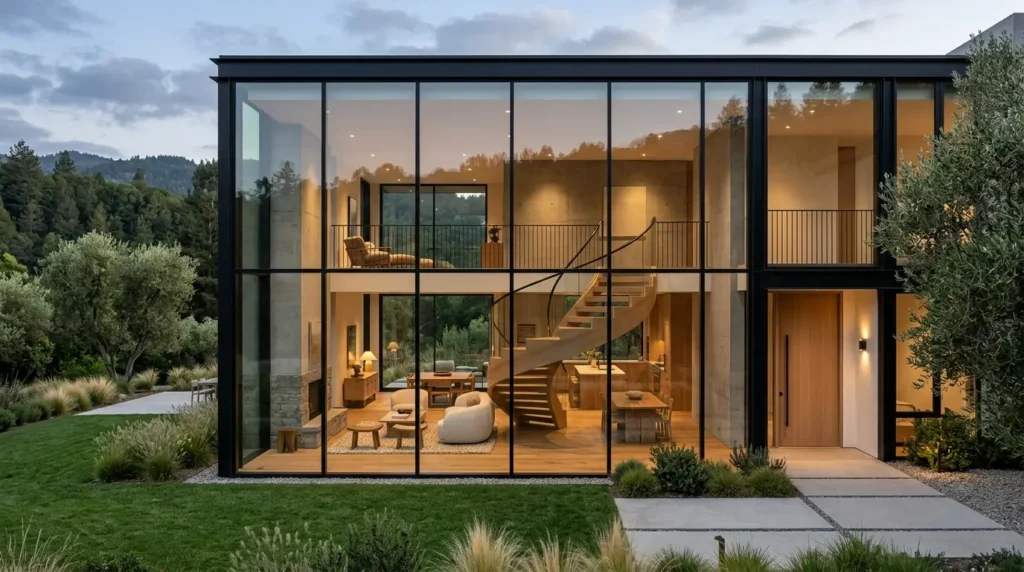
3.1. Floor-to-Ceiling Windows for Seamless Boundaries (Idea 4)
Is there anything more striking than a massive wall of glass? Floor-to-ceiling windows completely dissolve the visual barrier between your interior living space and your front landscaping. To keep the look ultra-modern, opt for commercial-grade, thermally broken aluminum frames in black or dark bronze. This turns the surrounding nature (or your carefully curated front yard) into living wallpaper for your home.
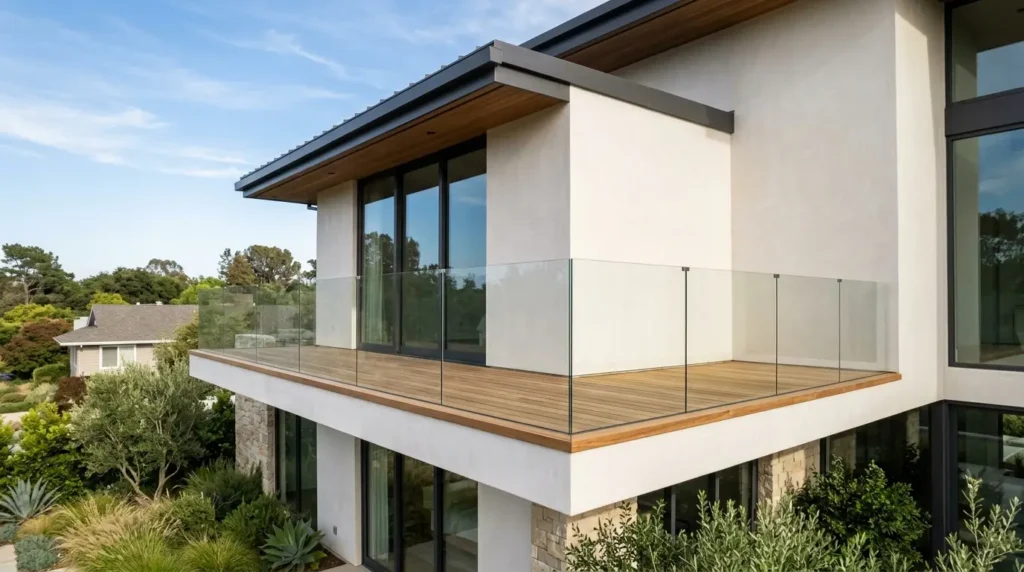
3.2. Frameless Glass Balconies (Idea 5)
If your front elevation includes a second-story terrace or balcony, ditch the traditional wooden spindles or bulky metal railings. A frameless glass balustrade is the ultimate modern flex. It provides safety without interrupting the visual flow of the facade, allowing the architectural lines of the house to remain sharp and uncompromised.
3.3. Transom Windows and Vertical Glass Slits (Idea 6)
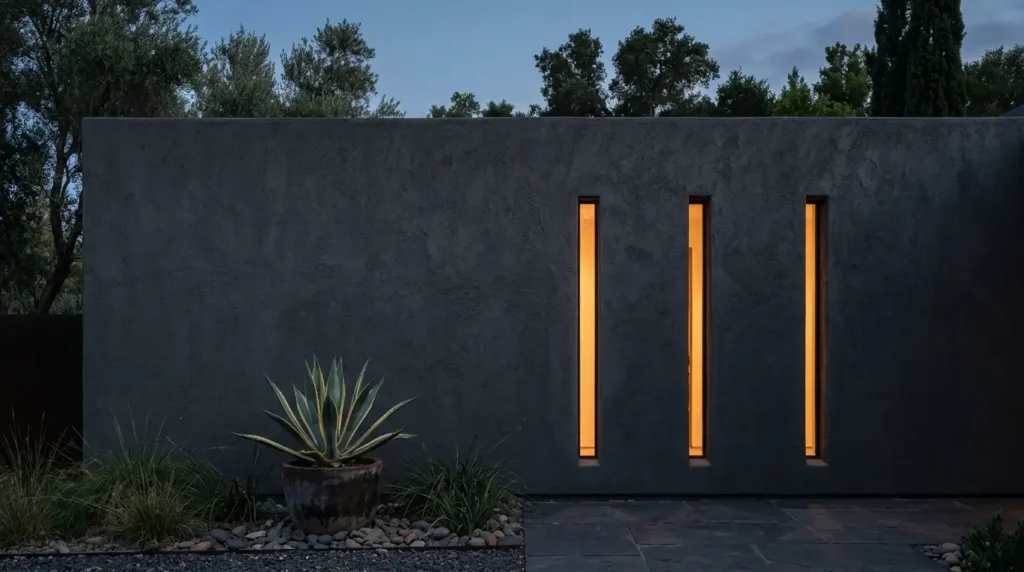
What if your house faces a busy street and you don’t want the neighborhood watching you eat cereal in your pajamas? You can still use glass. Horizontal transom windows placed high near the roofline allow sunlight to flood in while preserving total privacy. Alternatively, ultra-narrow vertical slit windows create an artistic, fortress-like aesthetic on the outside while casting dramatic, shifting ribbons of light onto your interior walls.
4. Rooflines That Redefine the Silhouette
Your roof isn’t just a lid to keep the rain out; it’s the hat that defines your home’s personality. Modern elevations play with roof geometries to create visual drama.
4.1. The Bold Statement of a Flat Roof (Idea 7)
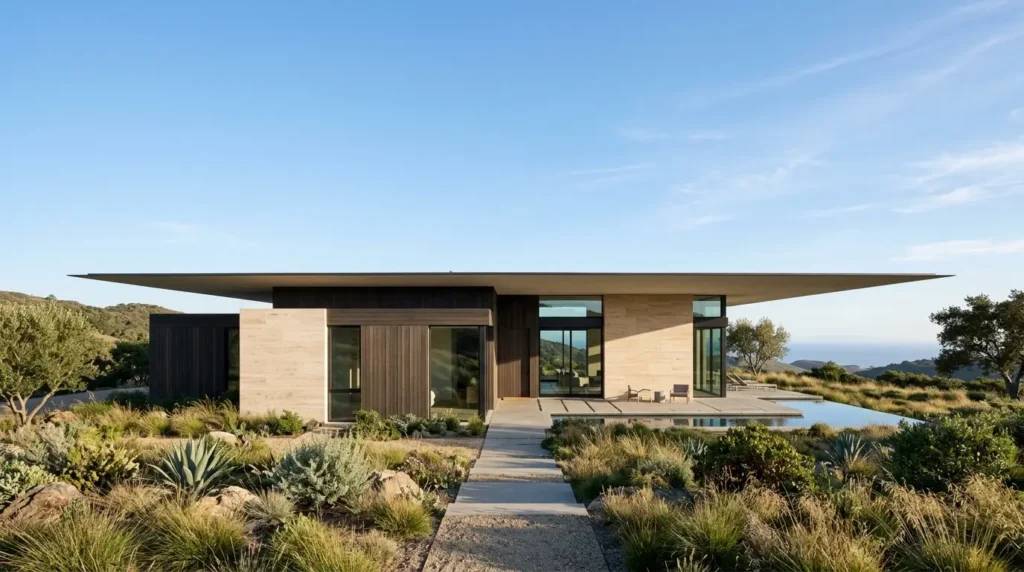
Nothing says “contemporary” quite like a flat roof. It strips away the traditional triangular gables, leaving behind a pure, cubic geometry. From a street-view perspective, a flat roof creates a sharp, clean silhouette against the sky, emphasizing the horizontal lines of the architecture.
4.2. Dramatic Overhangs and Cantilevers (Idea 8)
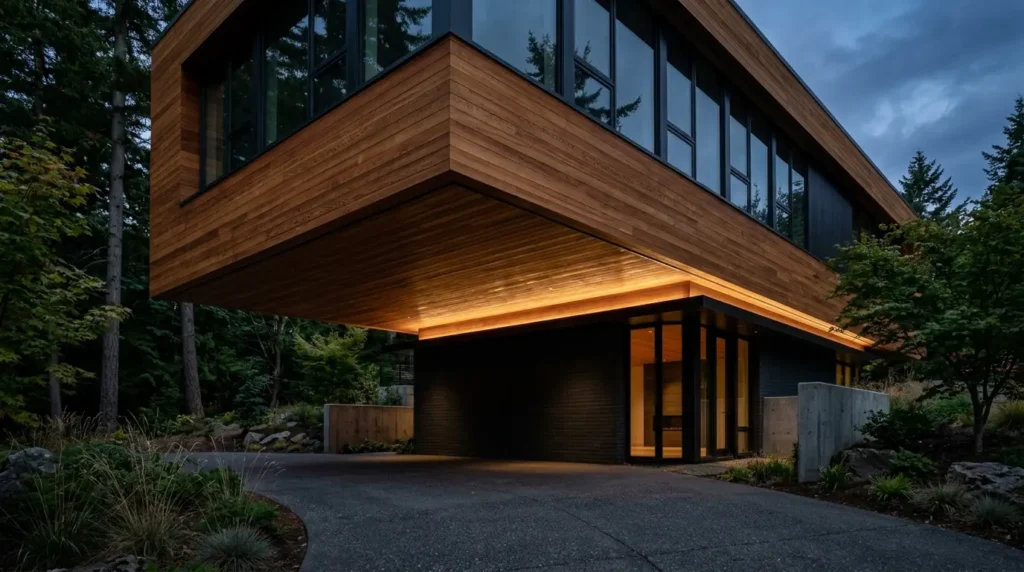
Want to make your house look like it’s defying gravity? Enter the cantilever. This is when the second story (or a roof overhang) protrudes outward without any visible pillars supporting it underneath. It creates an awe-inspiring, floating effect. Practically speaking, a deep overhang also protects your large glass windows from the harsh midday sun, keeping the house cooler in the summer.
4.3. The Slanted Shed Roof Aesthetic (Idea 9)
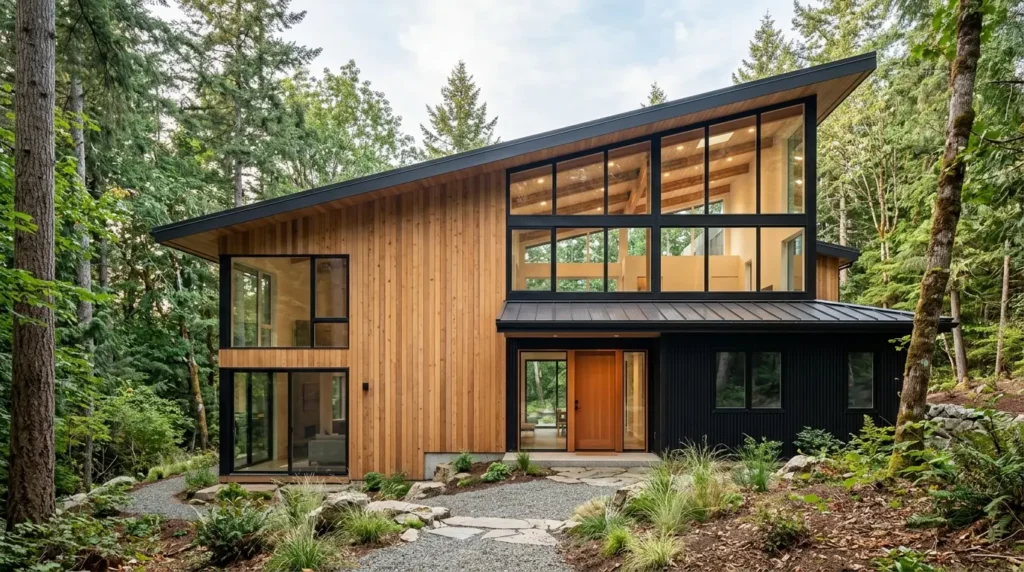
If a flat roof feels a little too boxy for your taste, consider the single-sloped “shed” roof. This asymmetrical design angles steeply in one direction. It’s incredibly dynamic, and the high side of the slope is the perfect place to install a massive wall of clerestory windows, flooding your vaulted ceilings with natural light.
5. Color Palettes That Pop (and Soothe)
You can have the best architecture in the world, but if you paint it the color of weak oatmeal, no one will notice. Modern color palettes are all about high contrast and intentionality.
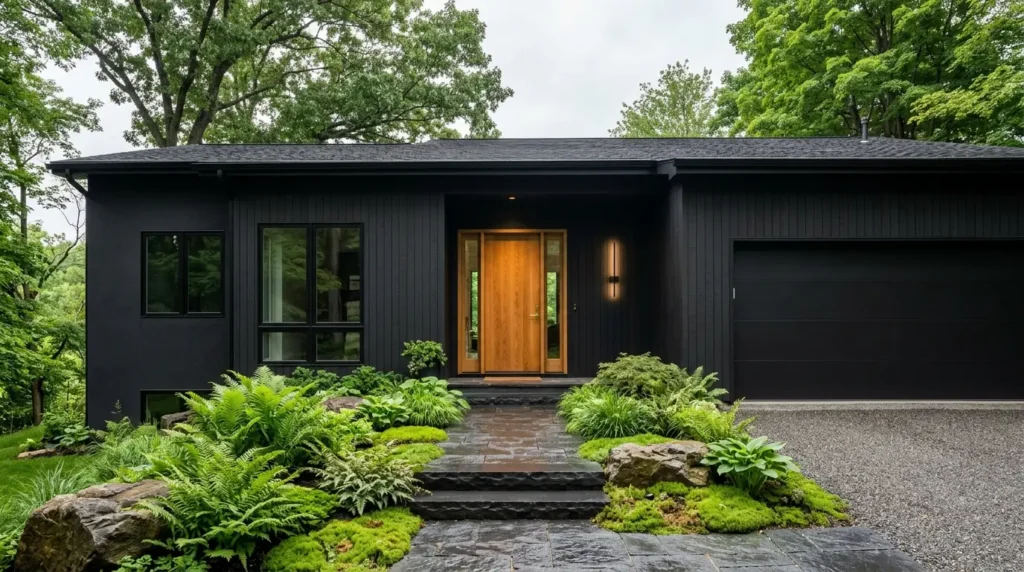
5.1. The Moody Elegance of Matte Black (Idea 10)
Black exteriors are having a massive moment, and it’s easy to see why. A matte black facade acts like a shadow in the landscape, making the vibrant greens of your lawn and trees pop with unbelievable intensity. To keep it from looking like a haunted house, pair the black siding with warm, honey-toned wood accents and plenty of warm-white exterior lighting.
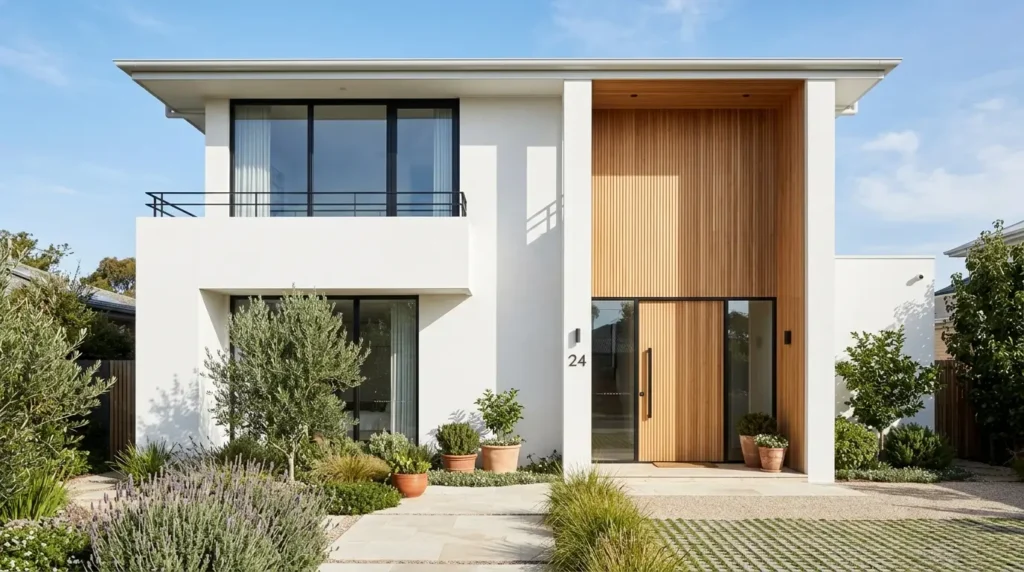
5.2. Crisp White and Natural Timber (Idea 11)
If you prefer a lighter, more ethereal aesthetic, you cannot go wrong with the classic pairing of crisp white stucco and natural wood. It’s the tuxedo of modern architecture—timeless, sharp, and sophisticated. The white reflects the sun, keeping the house bright, while the wood introduces that vital organic texture that prevents the home from feeling like an art gallery.
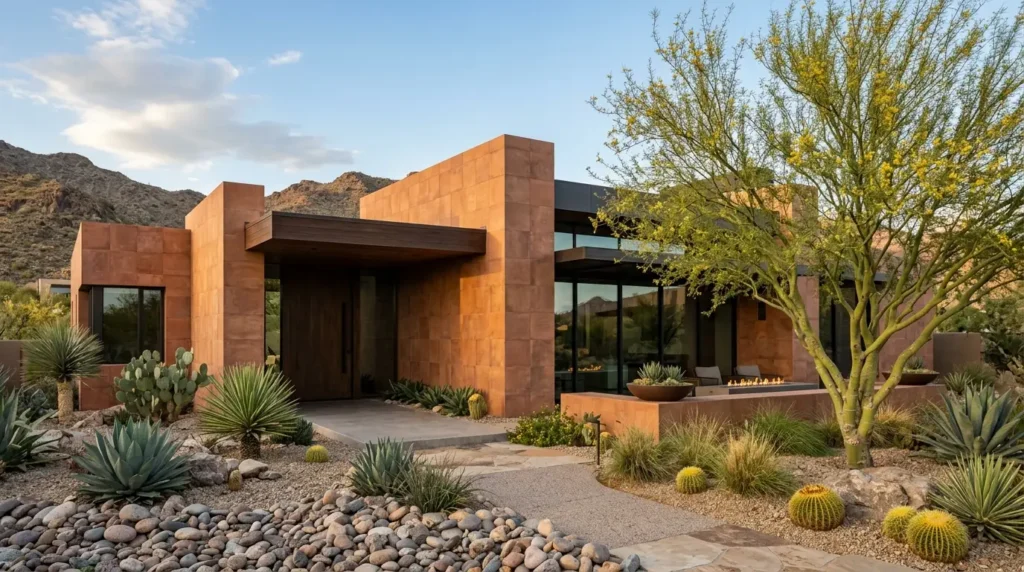
5.3. Earthy Tones and Terracotta Accents (Idea 12)
Taking a cue from desert modernism, earthy palettes are making a strong comeback. Think muted sage greens, warm taupes, and striking terracotta accents. Using large-format terracotta tiles as a wall cladding introduces a rich, baked-clay warmth that feels incredibly luxurious yet deeply tied to the natural environment.
6. The Approach: Entrances and Landscaping
Your facade doesn’t stop at the front wall. The way you guide a visitor from the street to the door is a crucial part of the architectural experience.
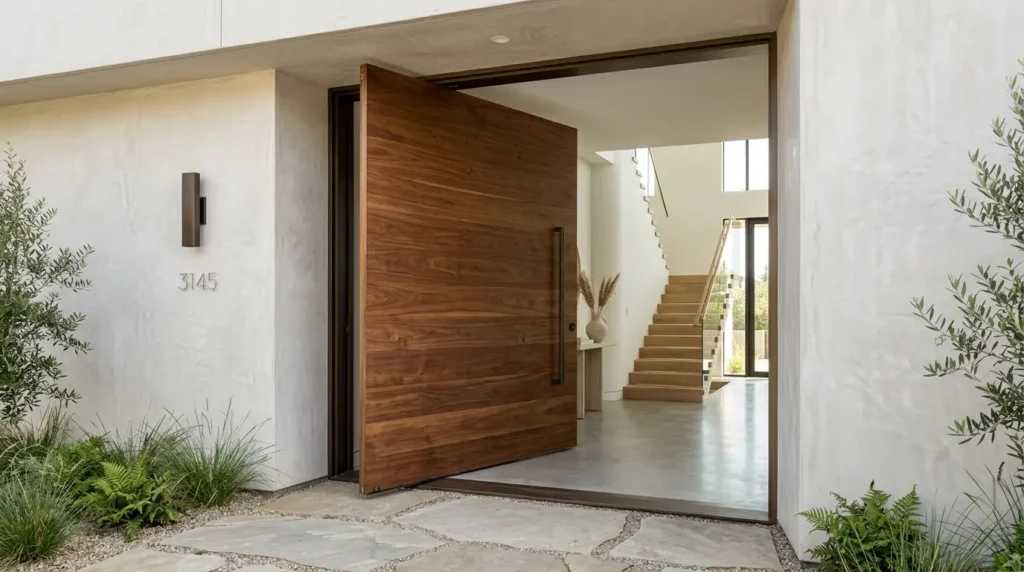
6.1. The Oversized Pivot Door (Idea 13)
Forget standard 36-inch front doors. If you want to make an entrance, you need an oversized pivot door. These doors rotate on a central vertical axis rather than traditional side hinges, allowing for massive, heavy slabs of wood or glass to open effortlessly. It feels less like opening a door and more like moving a kinetic wall.
6.2. Floating Concrete Steps (Idea 14)
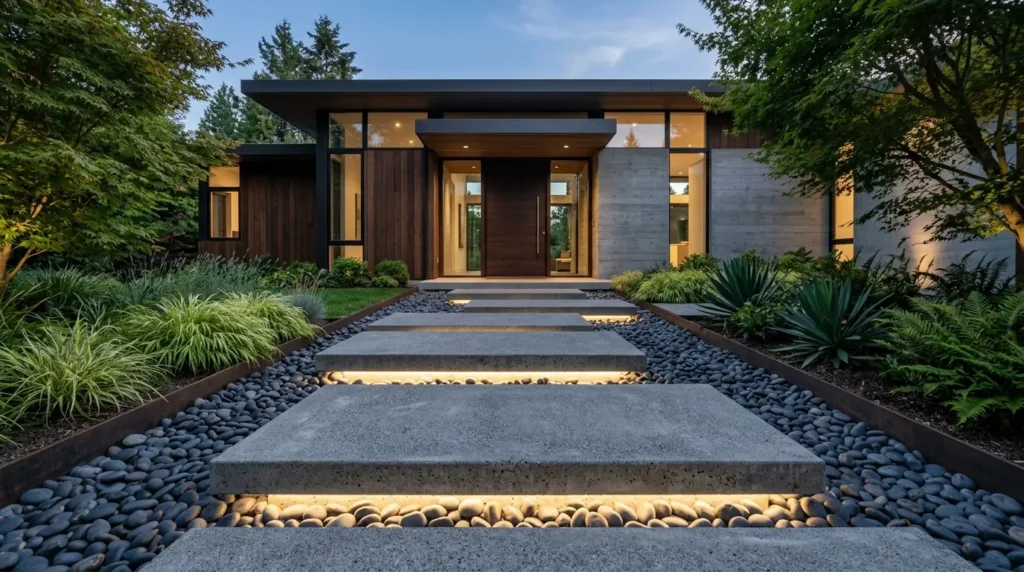
The walkway to your front door shouldn’t just be a poured concrete sidewalk. Create a sense of arrival with oversized, rectangular floating concrete step pads. By slightly elevating the pads over a bed of dark river stones or lush ground cover—and hiding LED strip lighting underneath—the steps appear to hover magically above the ground.
6.3. Integrated Planters and Minimalist Greenery (Idea 15)
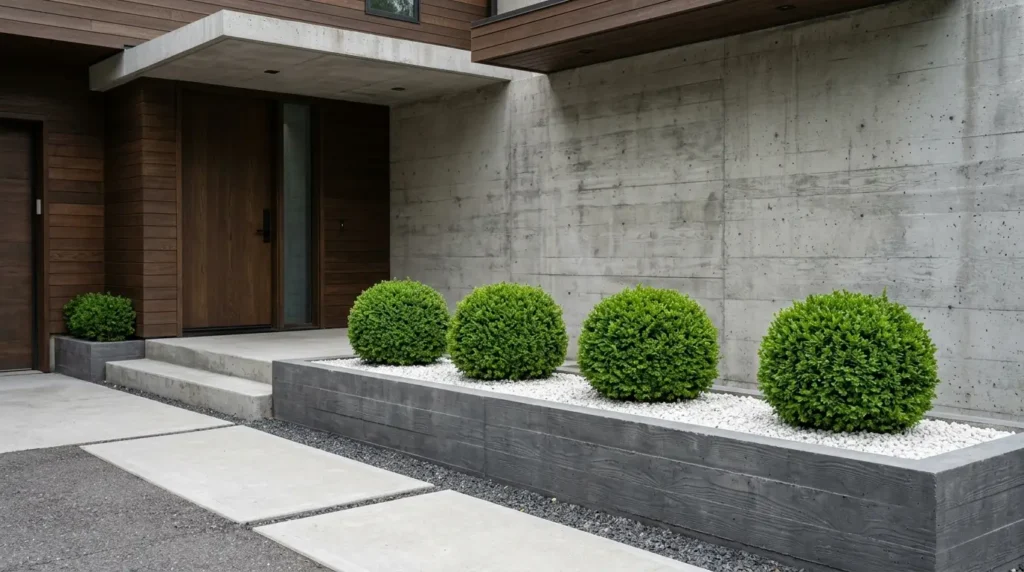
In modern organic design, the landscaping shouldn’t look like an afterthought; it should be integrated directly into the architecture. Building concrete planter boxes seamlessly into the front porch or retaining walls creates a highly structured look. Fill these with sculptural, architectural plants like Agave, Snake Plants, or manicured Boxwood spheres for a low-maintenance, high-impact finish.
7. Conclusion: Crafting Your Dream Facade
Designing a modern front elevation is akin to writing a great piece of music. It requires structure, rhythm, and a deep understanding of how different elements play off one another. By embracing the principles of Modern Organic Minimalism—blending the harsh, clean lines of steel, concrete, and glass with the soothing, tactile warmth of natural wood, stone, and purposeful landscaping—you can create a home that is undeniably contemporary, yet incredibly welcoming. Your home’s facade is its handshake with the world. With these ideas in your back pocket, you can ensure your house introduces itself with confidence, style, and breathtaking beauty.
8. Frequently Asked Questions (FAQs)
Q1: How do I maintain wood siding on a modern home exterior? A: To keep natural wood looking its best and prevent it from weathering to a silvery grey, it requires maintenance. You should plan to clean the wood and reapply a high-quality UV-protectant penetrating oil or stain every 2 to 3 years. Alternatively, consider thermally modified wood or the Shou Sugi Ban (charred) technique, which are highly resistant to rot and require far less upkeep.
Q2: Are large floor-to-ceiling glass windows energy efficient? A: They certainly can be! The key is to invest in high-performance glass. Look for double or triple-glazed windows with a Low-E (low emissivity) coating and argon gas fill between the panes. Additionally, framing them with thermally broken aluminum ensures heat isn’t transferred through the metal, keeping your home warm in the winter and cool in the summer.
Q3: Can I update an existing traditional home to look modern? A: Yes, though it requires strategic planning. You don’t necessarily have to tear the house down. You can modernize an existing facade by squaring off rounded arches, painting the brick or siding a solid, cohesive color (like white or charcoal), replacing traditional windows with large pane, grid-less glass, and updating the front door to a modern, flush design.
Q4: What is the best exterior lighting for a modern minimalist home? A: Less is more. Avoid overly ornate, carriage-style lanterns. Instead, use discreet architectural lighting. Recessed LED soffit lights that wash down the walls, hidden strip lights under floating steps, and sleek, modern up-and-down sconces highlighting columns or wood accents create a moody, sophisticated glow without drawing attention to the fixtures themselves.
Q5: Is a flat roof a bad idea in areas with heavy rain or snow? A: Not if it’s engineered correctly. A “flat” roof isn’t actually perfectly flat; it has a slight, imperceptible pitch (usually 1/4 inch per foot) to direct water to integrated scuppers and drains. In snowy areas, the roof structure just needs to be engineered to carry the specific snow load for your region. High-quality commercial-grade waterproofing membranes make flat roofs incredibly durable.
About the Author