Let’s be honest: standing in the paint aisle staring at 400 nearly identical shades of beige is enough to make anyone question their life choices. Choosing an exterior color palette is arguably the most stressful part of building or renovating a home. Pick the wrong shade for your powder room, and it’s an annoying weekend project to fix. Pick the wrong color for your home’s front elevation, and you have to live with a two-story monument to your mistake for the next decade.
But what if you didn’t have to guess?
In 2026, exterior design has shifted heavily toward the Modern Organic Minimalist aesthetic. This style is all about grounding sleek, contemporary architecture in the warmth of the natural world. It relies on a specific harmony of hues—where materials like wood, stone, and steel act as colors themselves. If you want to take the guesswork out of your exterior renovation, you are in exactly the right place. We are going to break down the nine most breathtaking, foolproof color combinations that will give your house undeniable curb appeal.
1. The Psychology of Curb Appeal: Why Color Matters
Your home’s exterior color isn’t just about aesthetics; it’s an emotional handshake. It sets the tone for how you feel every single time you pull into the driveway.
1.1. Escaping the “Analysis Paralysis” of Paint Chips
The reason exterior color selection induces so much anxiety is scale. A two-inch paint swatch looks vastly different when it’s magnified across 3,000 square feet of stucco and bathed in harsh midday sunlight. Dark colors can quickly turn a house into a gloomy fortress, while overly bright whites can cause a blinding glare. The trick is understanding contrast and balance.
1.2. Why the Modern Organic Minimalist Palette is Winning
Why is everyone abandoning the overly busy, multi-colored facades of the past? Because our eyes are tired. The modern organic minimalist approach offers visual peace. By pairing muted, nature-inspired tones with rich, tactile materials, this style ensures your home looks sophisticated rather than sterile. It’s the architectural equivalent of a deep breath.
2. The Golden Rule of Exterior Color Palettes
Before we dive into the specific combinations, you need to arm yourself with the ultimate designer secret.
2.1. Mastering the 60-30-10 Principle
If you want a facade that looks professionally designed, you must obey the 60-30-10 rule. This ratio dictates how much of each color should be present on your exterior:
-
60% Main Body Color: This is the dominant hue, usually applied to your siding, stucco, or brick.
-
30% Secondary Color/Material: This adds depth and breaks up the monotony. In modern design, this is often a natural material like wood cladding or stone.
-
10% Accent Color: The bold “pop” that draws the eye, typically reserved for the front door, window trims, or fascia.
2.1.1. Applying the Rule to Modern Facades
By sticking strictly to this mathematical proportion, you guarantee that your home will never look chaotic or unbalanced. It gives you permission to be bold with an accent color because you know it’s restrained by the dominant base.
3. The 9 Foolproof Color Combinations for 2026
Let’s get to the good stuff. Here are the exact color blueprints you can steal for your own modern build.
3.1. Combination 1: Charcoal Black, Warm Cedar, and Crisp White
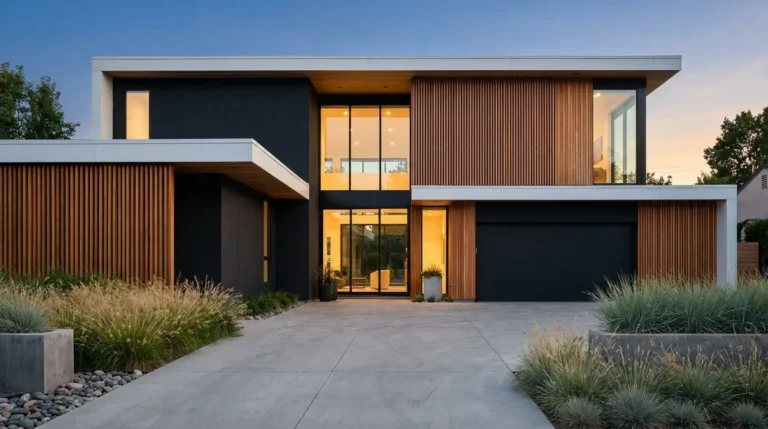
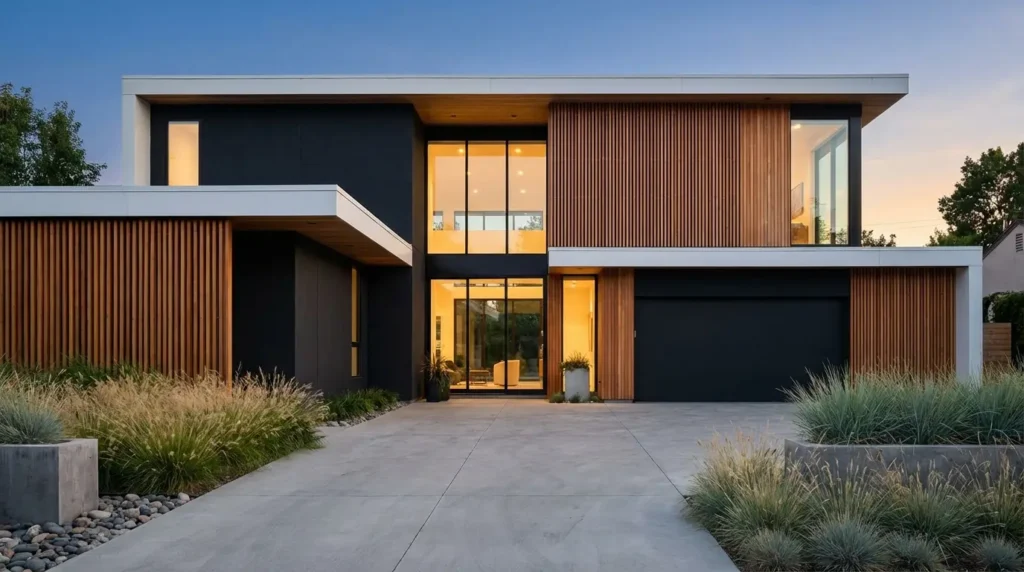
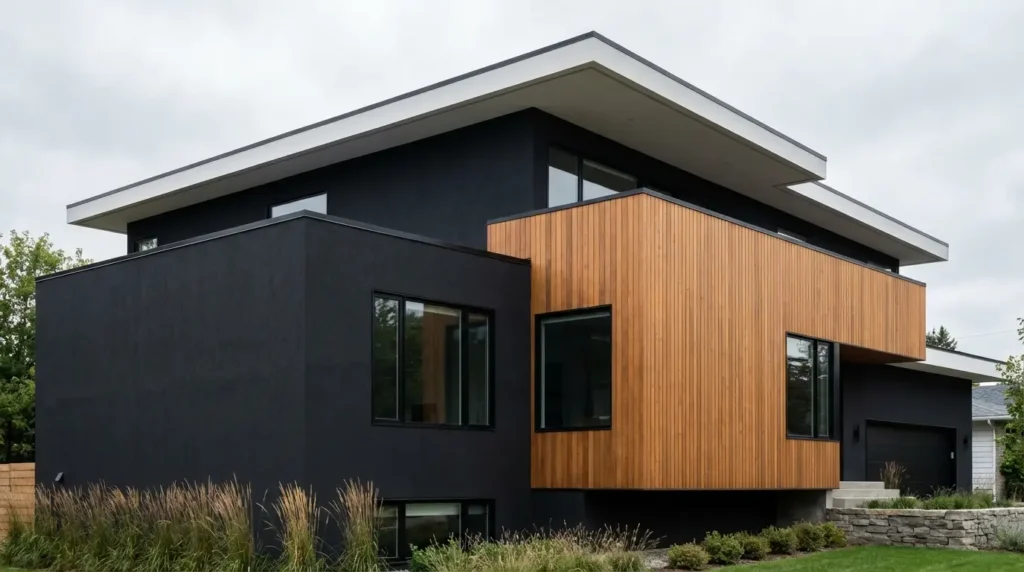
This is the holy grail of modern organic design. The deep, moody charcoal black provides a heavy, grounding presence. But to keep it from looking like a modern art museum in mourning, you inject a massive dose of warmth using vertical cedar slats. The crisp white is used sparingly—perhaps just on the roof trim or a cantilevered overhang—to provide a sharp, clean ceiling that frames the dark facade.
3.2. Combination 2: Earthy Sage Green, Limestone, and Matte Bronze
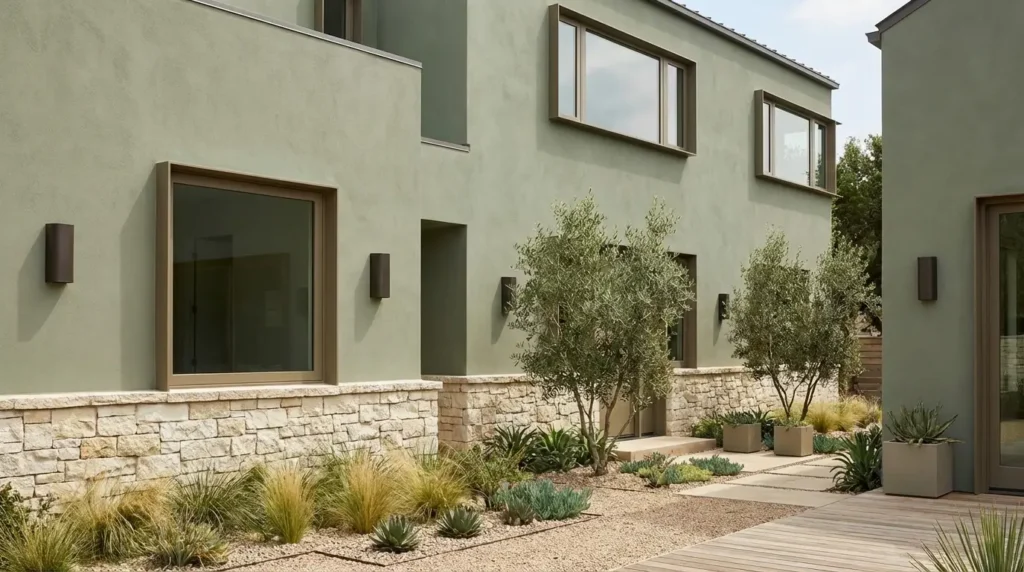
If you live in a wooded area or simply want to blend seamlessly with nature, this is your palette. A muted, earthy sage green acts as a beautiful, soft base. Contrast this with the heavy, organic texture of dry-stacked limestone. The true modern twist here is using matte bronze for your window casings and lighting fixtures instead of standard black. It adds an understated, quiet luxury.
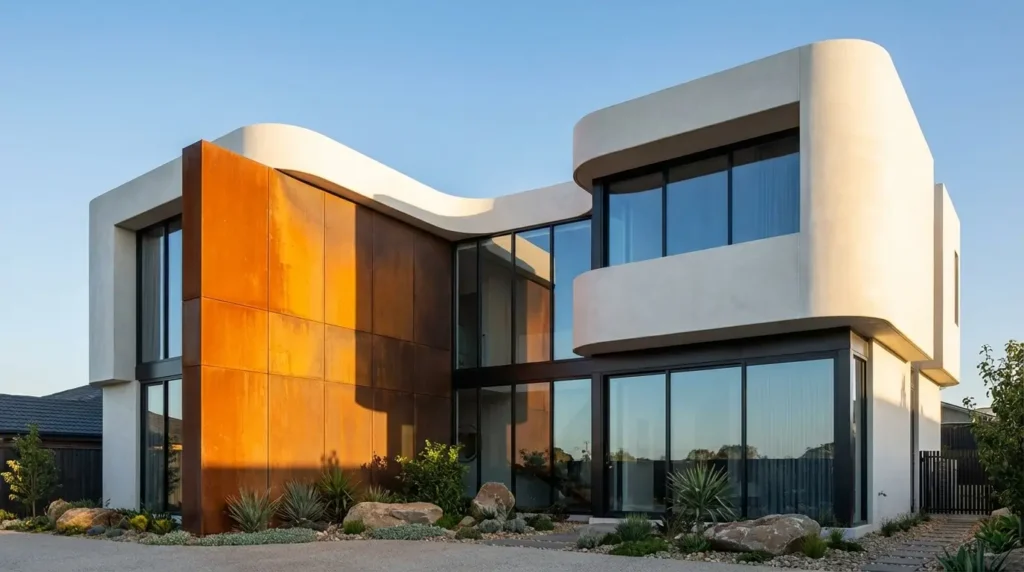
3.3. Combination 3: Bone White, Weathered Steel (Corten), and Glass
This combination is for the brave and the stylish. Bone white (a white with just a hint of warm undertone so it isn’t blinding) serves as the perfect minimalist backdrop. The 30% secondary “color” is actually Corten steel—a weathering steel that develops a rich, rusty orange patina over time. Massive expanses of reflective glass serve as the final accent, mirroring the sky and softening the industrial edge of the steel.
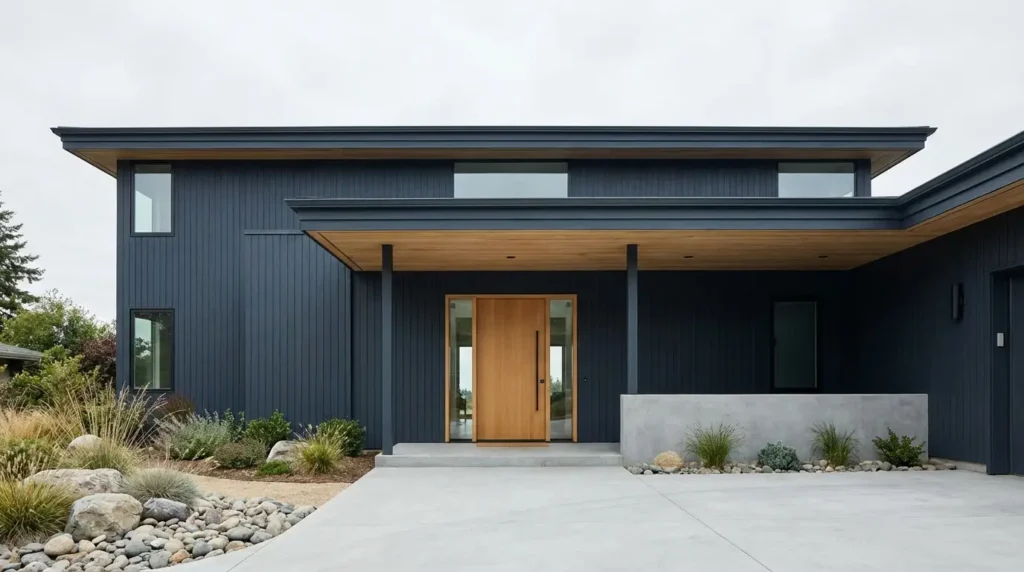
3.4. Combination 4: Deep Slate Navy, Natural Oak, and Soft Grey
Navy is the new neutral. A very dark, desaturated blue with heavy grey undertones (slate navy) provides the drama of black but with a slightly softer, more nautical edge. Pair this dark body with the light, honey-tones of natural oak wood for your front door and porch ceiling. Use a soft, concrete grey for your hardscaping and foundation to tie it all together.
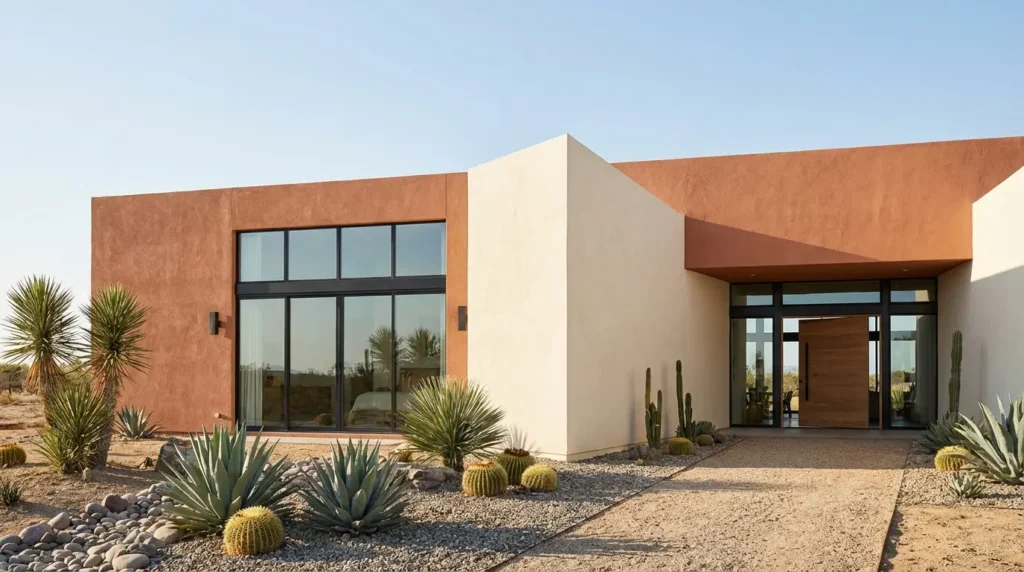
3.5. Combination 5: Warm Terracotta, Creamy Off-White, and Black Trim
Taking cues from desert modernism, this palette brings incredible heat to your curb appeal. Use a warm, baked terracotta tone as your primary color (this works beautifully on stucco). Balance that intense warmth with creamy off-white architectural accents, and then ground the entire look with razor-sharp matte black window frames and rooflines.
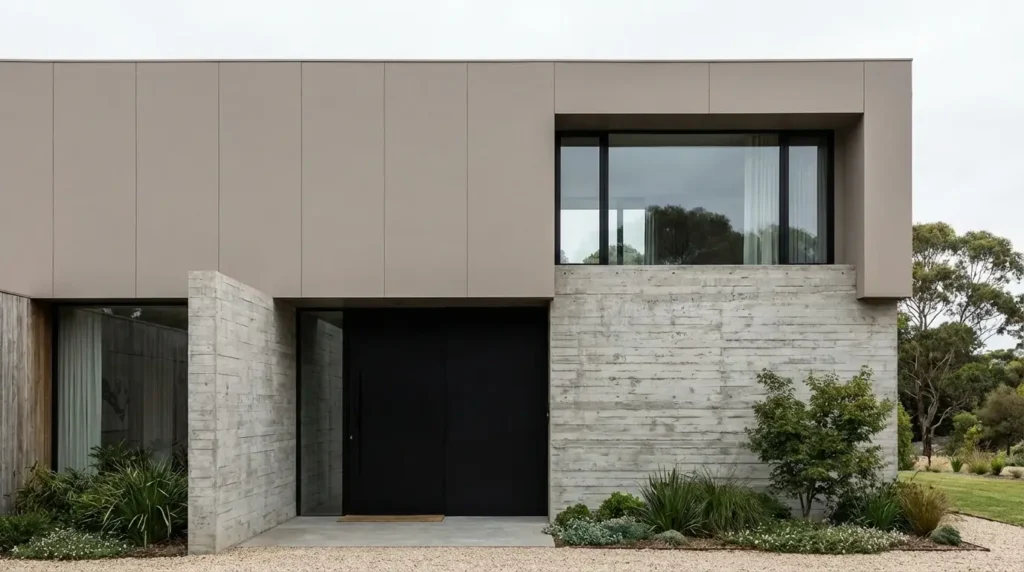
3.6. Combination 6: Mushroom Taupe, Board-Formed Concrete, and Onyx
Taupe gets a bad rap as a “boring” color, but when applied in a modern context, it is incredibly sophisticated. A mushroom taupe (a grey-beige blend) is the perfect earthy bridge. Pair this with the raw, brutalist texture of board-formed concrete. The 10% accent? Onyx black for the front door and hardware to give the soft tones a necessary punch of contrast.
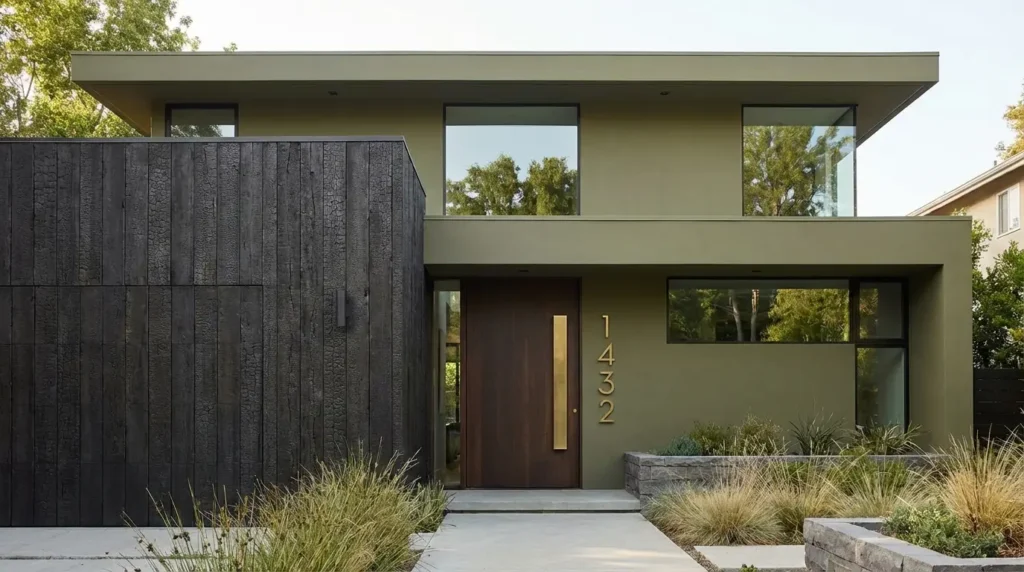
3.7. Combination 7: Muted Olive, Charred Wood (Shou Sugi Ban), and Brass
This is a palette for someone who wants their home to look like an ultra-high-end retreat. Muted olive green blends beautifully with a heavily forested or lushly landscaped lot. The star of the show here is Shou Sugi Ban—the traditional Japanese art of charring wood to weatherproof it. The resulting deep, alligator-skin black texture is mesmerizing. Use unlacquered brass hardware on the door and house numbers to add a jewelry-like sparkle.
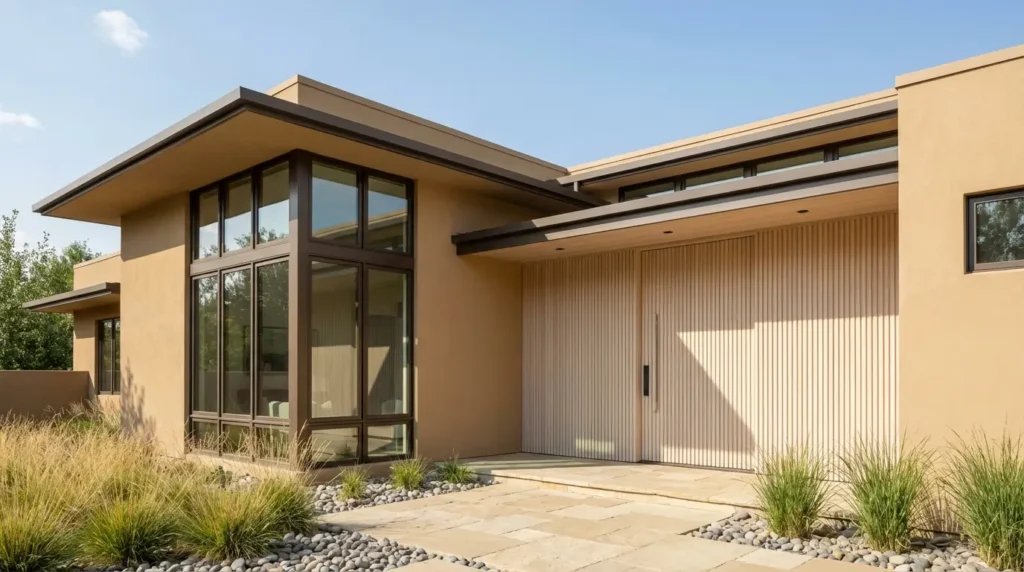
3.8. Combination 8: Soft Sandstone, Ribbed Ash Wood, and Bronze Casings
If you prefer a lighter, more ethereal aesthetic, this tonal palette is perfection. Start with a soft, warm sandstone hue for the primary body. Add texture (rather than contrasting color) with ribbed, light ash wood paneling. Finish the look with dark bronze window casings. The bronze is softer than black but still provides the necessary definition to frame the windows.
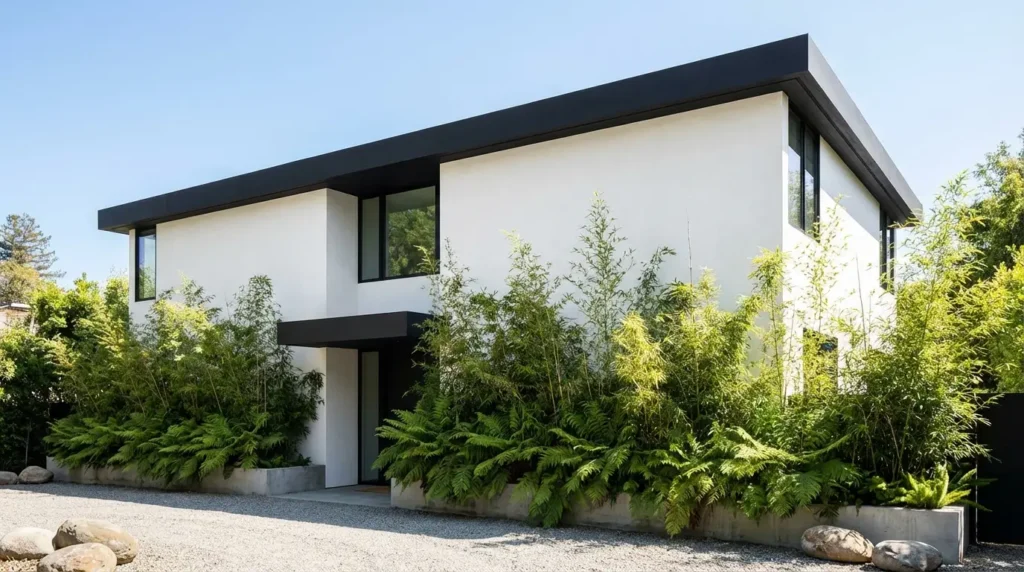
3.9. Combination 9: High-Contrast Pure White, Matte Black, and Lush Greenery
Sometimes, you just can’t beat a classic. But in the organic minimalist playbook, the third “color” isn’t paint—it’s the landscaping. A pure white house with stark matte black windows and trim relies entirely on its geometry. To keep it from feeling like a hospital, you must heavily integrate vibrant, structural green plants—like towering bamboo, manicured boxwoods, or climbing ivy—right against the foundation.
4. Factoring in Texture and Under-the-Hood Materials
Here is a pro-tip that many homeowners miss: color changes depending on what it is applied to. A charcoal black will look totally different on a smooth metal panel than it will on heavily textured wood.
4.1. How Plasters and Renders Change Color Perception
When you are building or deep into a renovation, you are dealing with the structural bones of the house. For instance, you might be insulating the exterior walls with mineral wool before sealing it all up. When it comes time to finish that wall, applying a modern spray-on plaster or render introduces a subtle shadow play. The fine, sandy grit of the plaster diffuses sunlight, making your colors appear softer and more matte. Always test your paint color on the actual material and texture of your facade, not just on a smooth piece of drywall.
5. Testing Your Palette Before Committing
Never, ever buy 20 gallons of exterior paint based on a tiny paper swatch. Light outdoors is vastly different from light inside a hardware store. You must buy sample pots of your top three combinations. Paint large, 3×3 foot squares on the north, south, east, and west-facing sides of your house. Watch how those colors behave in the morning dew, in the harsh midday sun, and at twilight. Only then should you pull the trigger.
6. Conclusion: Painting Your Modern Masterpiece
Choosing the right color combination for your home’s front elevation doesn’t have to be a shot in the dark. By embracing the Modern Organic Minimalist philosophy, you are choosing to work with a palette that is inherently calming, sophisticated, and deeply tied to the natural world. Remember to lean on the 60-30-10 rule, use natural materials as your secondary colors, and let the architectural lines of your home dictate where the contrasts should go. Your house is your biggest investment and your daily retreat. Pick a palette that makes you proud every single time you pull up to the curb.
7. Frequently Asked Questions (FAQs)
Q1: Should my garage door match my main body color or my trim color? A: In modern design, you generally want your garage door to disappear, not stand out. Paint it the exact same color as your main body (the 60%). The only exception is if your garage door is a beautiful natural wood that ties into your 30% secondary material. Never paint it the accent trim color, or it will visually overwhelm the facade.
Q2: Does a dark exterior make the house hotter in the summer? A: Dark colors do absorb more heat than light colors. However, modern building materials and high-quality insulation (like thick mineral wool boards) mitigate this heat transfer. If your home is well-insulated and your roof is properly ventilated, a dark exterior will have a negligible impact on your interior cooling bills.
Q3: How do I choose between black and bronze for my window frames? A: Matte black is sharper, offering a higher contrast that feels slightly more industrial and striking. Dark bronze is softer and richer, pairing beautifully with warmer, earthy tones like taupe, sage green, and natural limestone.
Q4: Can I use four colors on my exterior? A: It is highly discouraged in Modern Organic Minimalist design. Introducing a fourth color usually breaks the 60-30-10 rule and begins to make the facade look cluttered and visually confusing. Stick to three main elements for a clean, curated look.
Q5: What is the best exterior paint finish to use? A: For the main body of the house (especially on stucco or plaster), an eggshell or satin finish is best as it is easy to clean but doesn’t reflect too much glare. For trim, doors, and architectural accents, a semi-gloss finish provides a nice subtle sheen and extra durability against the elements.
About the Author