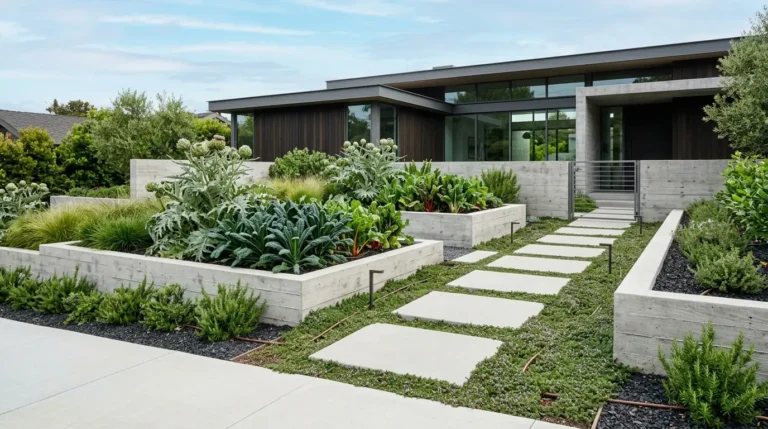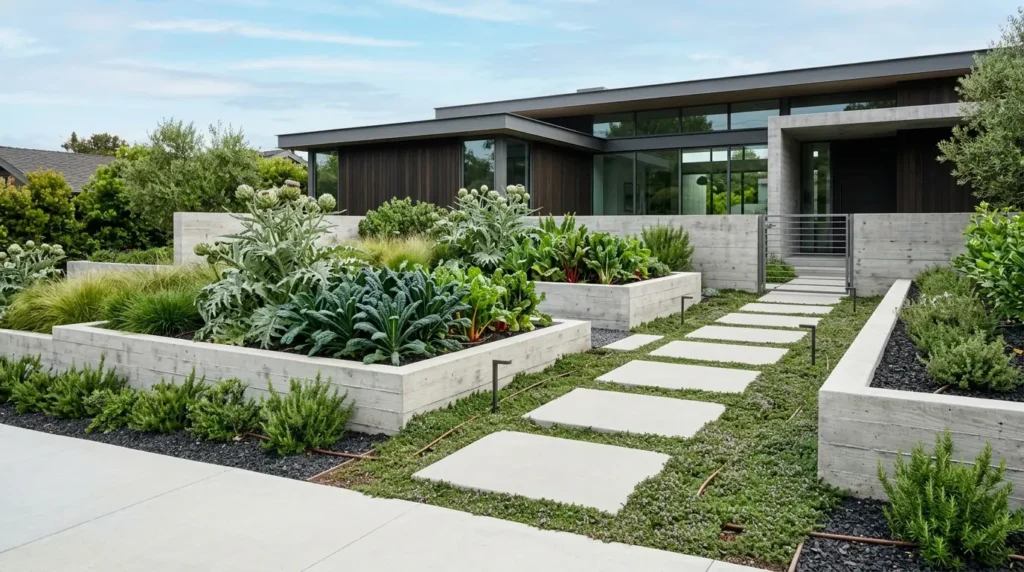
Let’s talk about the elephant in the garden. For decades, we’ve been told that a beautiful home requires a pristine, perfectly manicured front lawn, while the messy business of growing tomatoes and pulling carrots must be hidden away in the darkest corner of the backyard. The vegetable patch was the “ugly duckling” of home ownership—functional, yes, but rarely something you’d want to showcase to your neighbors.
But what if I told you that the rules have completely changed?
We are currently witnessing a massive revolution in landscape design. Homeowners are waking up and asking a very pertinent question: Why am I pouring water, time, and money into a front yard that gives me absolutely nothing in return? Enter the era of “foodscaping.” This is the art of flawlessly blending ornamental landscape design with functional, edible gardening. You no longer have to compromise between curb appeal and a summer harvest. By utilizing the clean lines, intentional geometry, and organic textures of the Modern Organic Minimalist style, you can transform your property into a high-end, architectural masterpiece that just so happens to feed you.
Ready to ditch the traditional lawn and elevate your exterior? Let’s explore 15 breathtaking landscape design ideas that secretly double as an edible paradise.
1. The Death of the Ugly Vegetable Patch
The traditional vegetable garden is often a chaotic grid of wooden stakes, sagging chicken wire, and overgrown weeds. It lacks structure. But it doesn’t have to be this way.
1.1. Why Compromise When You Can Camouflage?
Think of your front yard as a tailored suit. You wouldn’t wear a beautiful jacket with sweatpants. When you camouflage your edible plants within a strictly defined, modern landscape, they stop looking like “crops” and start looking like deliberate, exotic botanicals. A head of lettuce isn’t just salad; it’s a rosette of vibrant green texture.
1.2. The Modern Organic Minimalist Approach to “Foodscaping”
This aesthetic is the perfect vehicle for edible landscaping because it relies on heavy contrast. The hard, rigid lines of concrete, steel, and gravel create a “frame.” When you place a wild, sprawling vegetable or herb inside that strict frame, it looks incredibly sophisticated. It’s the visual tension between man-made order and nature’s wildness.
2. Core Principles of Blending Edibles with Ornamentals
If you want to pull this off without your yard looking like a messy farm, you need a blueprint.
2.1. Structure, Geometry, and Restraint
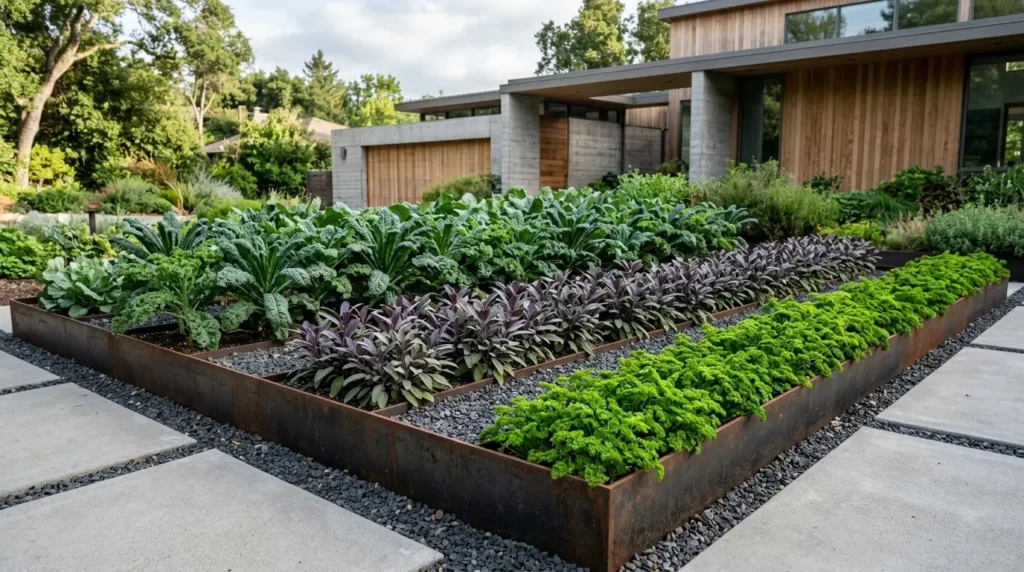
The golden rule here is repetition and limitation. Don’t plant twenty different types of vegetables in one bed. Choose three. Plant them in deliberate geometric blocks or sweeping ribbons. Use negative space (areas filled only with gravel or mulch) to give the eye a place to rest.
3. The Edible Border: Blending Greens and Perennials
Let’s rethink the plants we use to line our walkways and define our garden beds.
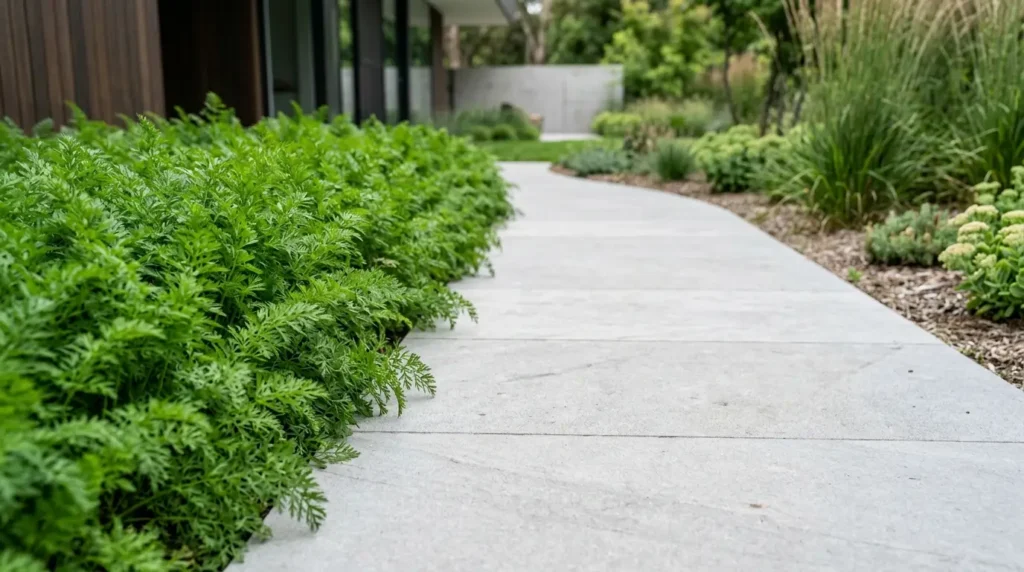
3.1. Feathery Textures: Carrots as Ornamental Edging (Idea 1)
When you’re sowing carrots in the early spring, your first instinct is to hide them in a raised wooden box in the back. But consider the foliage. Carrot tops offer an incredibly lush, feathery, fern-like texture that looks astonishingly beautiful when planted in a dense row. Use them to border a sleek concrete pathway. Before you harvest the vibrant orange roots, the tops serve as a brilliant, soft edge that rivals any expensive ornamental fern.
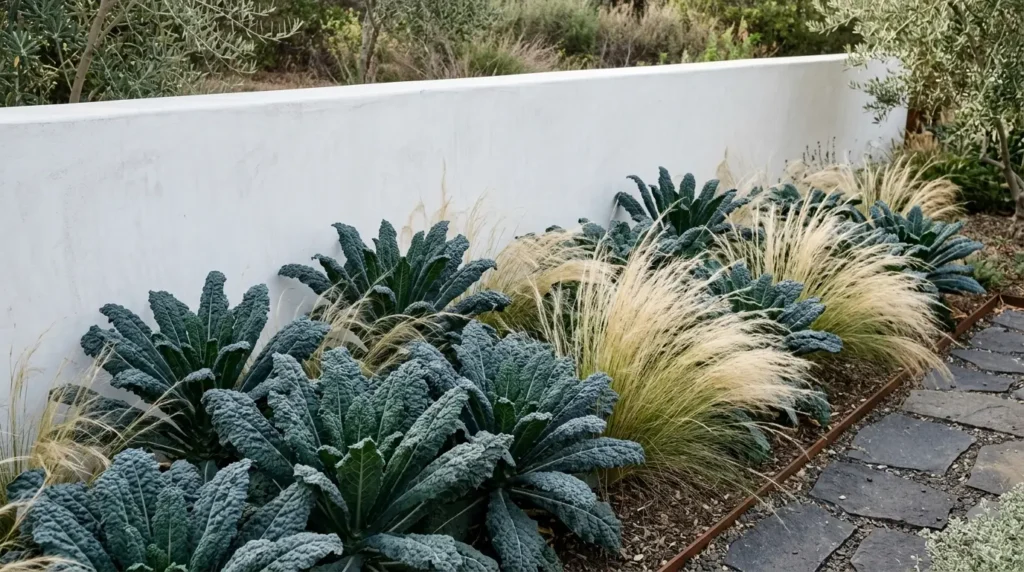
3.2. Kale and Swiss Chard as Structural Anchors (Idea 2)
Swiss chard (especially the ‘Bright Lights’ variety) and Tuscan kale are architectural marvels. The deeply crinkled, dark green leaves of Tuscan (Lacinato) kale look like something out of a prehistoric jungle. Plant these in groups of three alongside traditional ornamental grasses. Their heavy, solid structure grounds the softer, swaying elements of the landscape.
4. The Architectural Power of Edible Roots and Herbs
You don’t just have to stick to leafy greens. Some of the most stunning landscape plants are hiding incredible flavors beneath the soil.
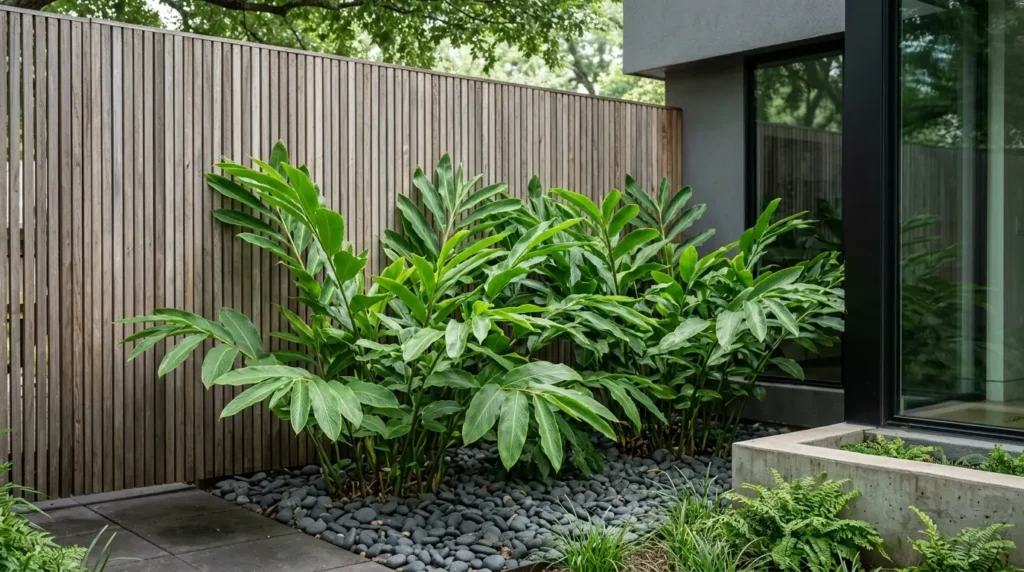
4.1. Tropical Vibes: Landscaping with Ginger (Idea 3)
Planting ginger isn’t an activity reserved solely for humid greenhouses or hidden pots. If you have a shaded, protected corner of your yard, ginger plants are a massive design asset. They feature long, broad, bright green leaves that bring an instant, lush tropical vibe to a modern landscape. Paired with a minimalist wood slat fence, ginger provides an exotic verticality that feels incredibly high-end.
4.2. The Sculptural Beauty of Flowering Dill (Idea 4)
Many gardeners panic when they see their dill has started to flower, assuming the plant is “ruined.” In a Modern Organic Minimalist landscape, we actually celebrate this.
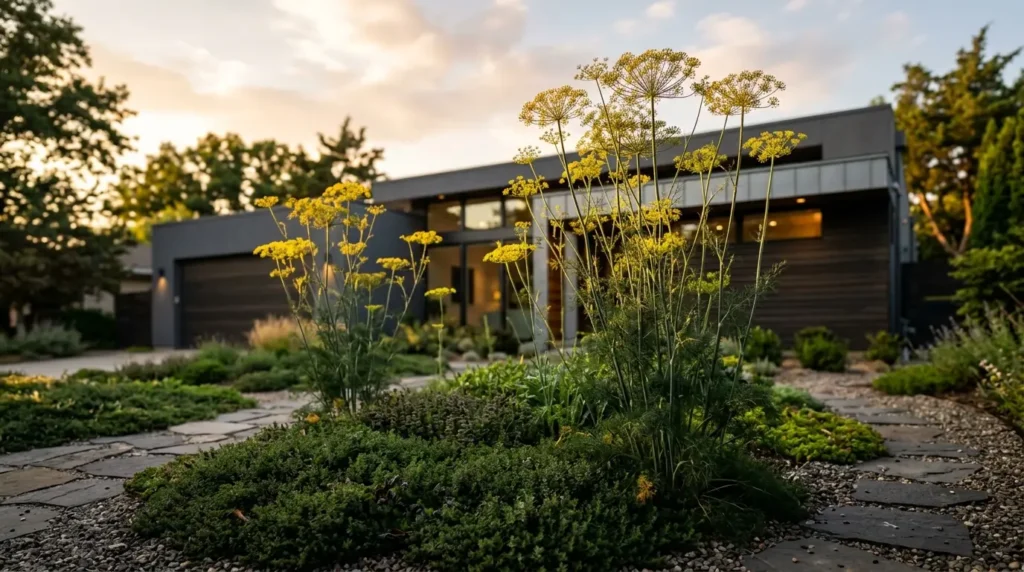
4.2.1. Embracing the Umbrella Blooms
When dill bolts and produces those massive, flat-topped yellow umbels, it transforms into a living sculpture. These tall, fireworks-like blooms look spectacular towering over low-profile creeping plants. Instead of cutting them down, let your dill flower in your front borders. It adds an airy, meadow-like height that catches the golden hour light flawlessly.
5. Vertical Edibles: Climbing Toward the Sky
When ground space is limited, you must look up. Vertical gardening is a staple of modern design.
5.1. Minimalist Wire Trellises for Vining Tomatoes (Idea 5)
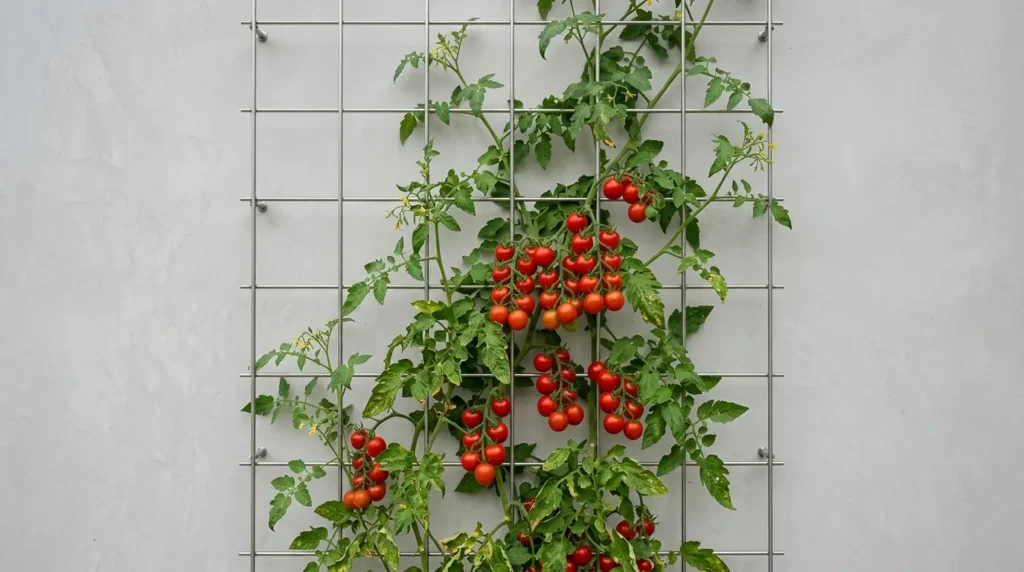
Forget the rusty, circular tomato cages from the hardware store. Install a sleek, grid-like stainless steel wire trellis against a blank exterior wall. As your cherry tomatoes vine upward, they create a “living wall.” The bright red fruits pop against the clean, structural geometry of the steel cables, turning your salsa ingredients into a dynamic art installation.
5.2. Espalier Fruit Trees Against Concrete Walls (Idea 6)
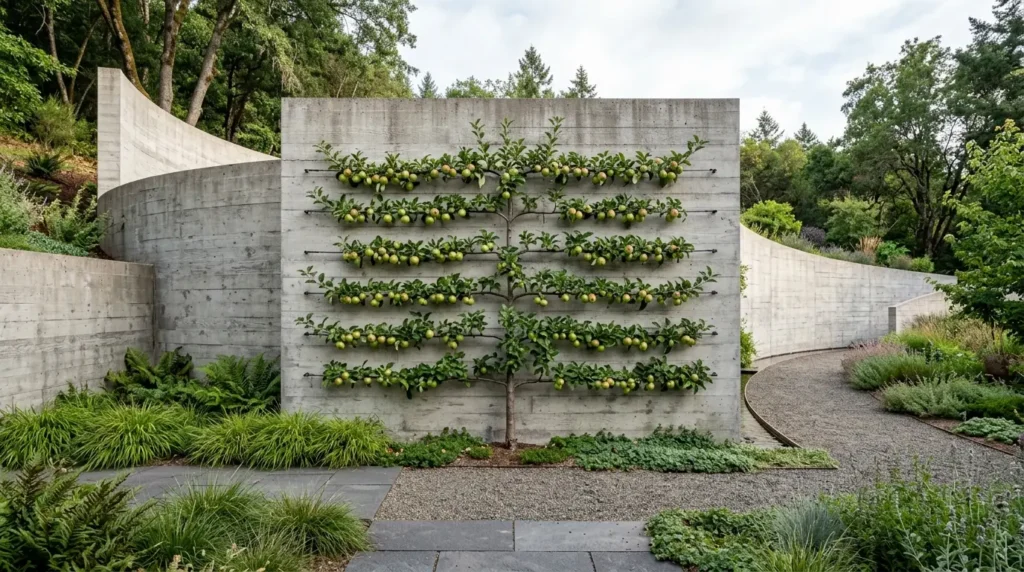
Espalier is an ancient pruning technique where a fruit tree (like an apple or pear) is trained to grow completely flat against a wall. In a modern context, an espaliered apple tree pinned against a raw, board-formed concrete retaining wall is a jaw-dropping focal point. It marries the rigid discipline of architectural pruning with the chaotic beauty of nature.
6. Hardscaping That Hugs Your Harvest
The containers and beds you use are just as important as the plants themselves.
6.1. Board-Formed Concrete Planters for Culinary Herbs (Idea 7)
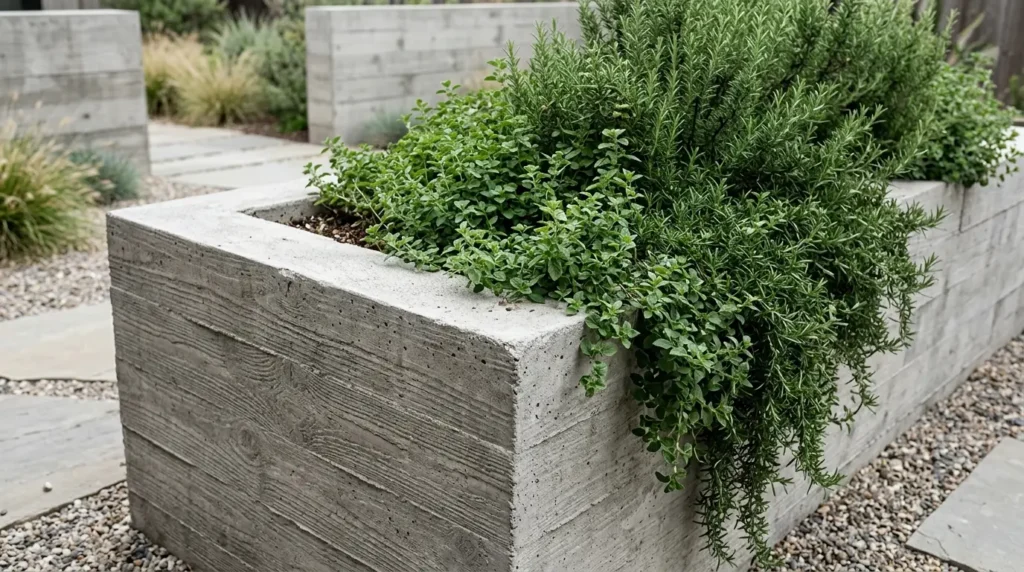
Rosemary, thyme, and oregano need excellent drainage. Building raised, geometric planters out of poured concrete creates a permanent, high-end home for these Mediterranean herbs. The soft, cascading foliage of creeping rosemary spilling over the sharp, brutalist edge of a concrete wall is the epitome of the Modern Organic Minimalist aesthetic.
6.2. Rusted Corten Steel Beds for Berry Bushes (Idea 8)
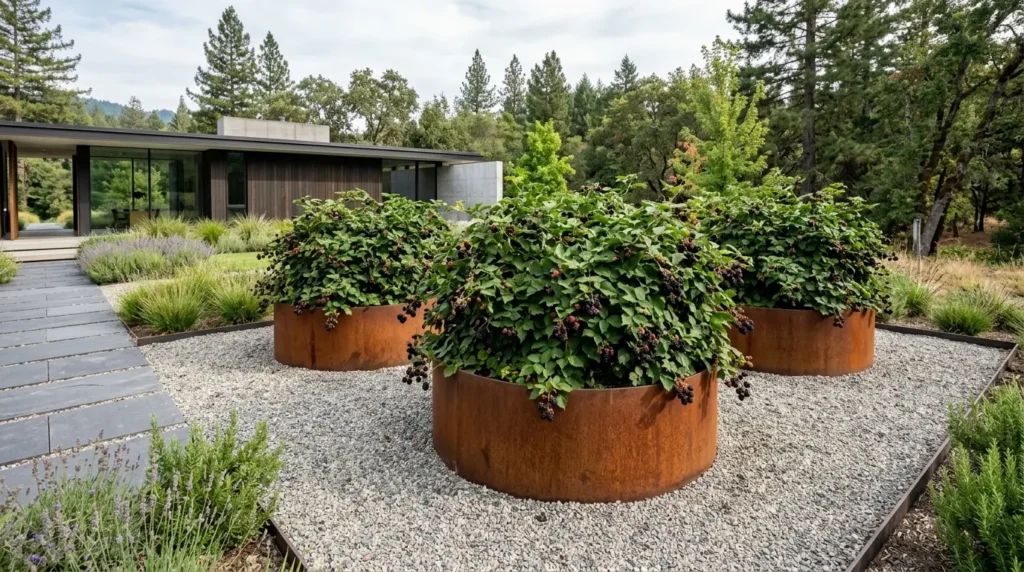
Raspberries and blackberries can be unruly. Containing them in massive, deep planter rings made of Corten steel keeps them manageable. The deep, rich rust orange color of the weathering steel contrasts brilliantly with the bright green foliage and dark jewel tones of the berries.
7. Groundcovers You Can Actually Eat
Why mow grass when you can harvest your lawn?
7.1. Creeping Thyme Between Geometric Pavers (Idea 9)
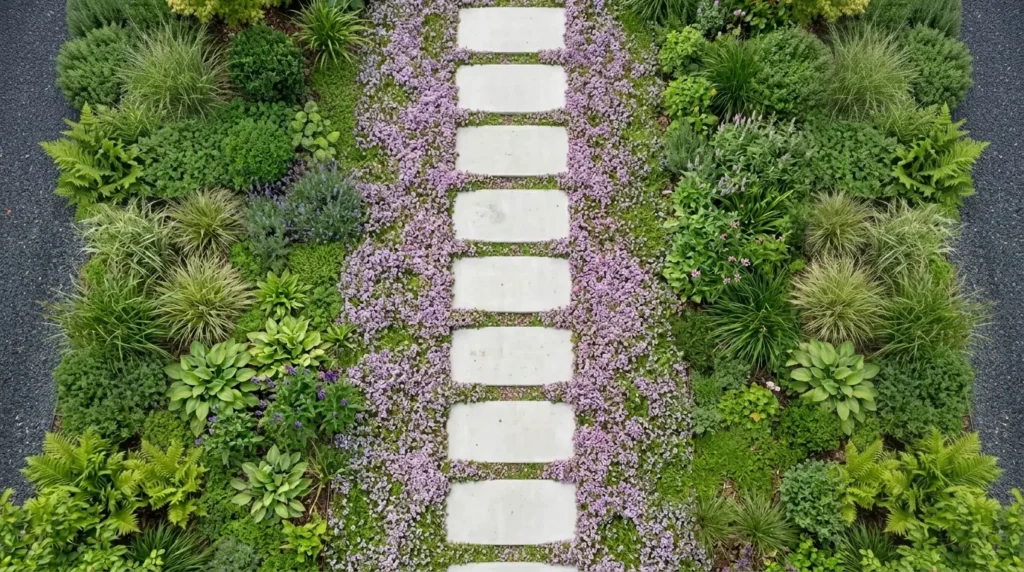
Instead of a traditional walkway, lay down oversized, rectangular concrete stepping stones. In the gaps between the stones, plant creeping thyme. It stays low to the ground, requires zero mowing, and explodes into a carpet of tiny pink and purple flowers in the summer. Plus, every time you step on it, it releases a beautiful, savory aroma.
7.2. Alpine Strawberries as Minimalist Mats (Idea 10)
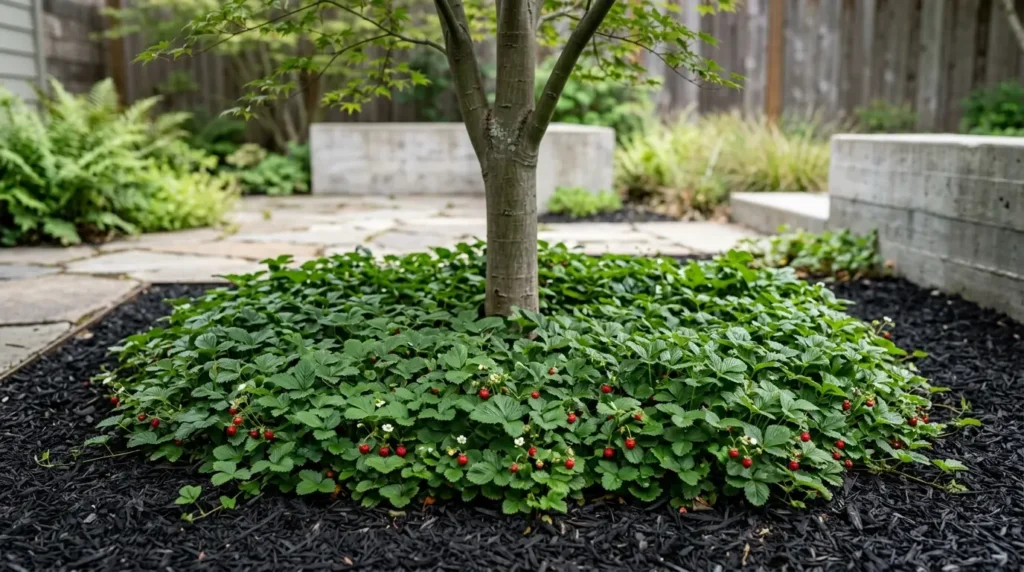
Alpine strawberries do not send out aggressive runners like standard strawberries; they grow in neat, polite little clumps. Planting a mass of them beneath a solitary, architectural tree creates a lush, deeply green groundcover that rewards you with tiny, incredibly sweet berries all season long.
8. Statement Plants That Command Attention
Every modern yard needs a “hero” plant—a specimen that stops traffic.
8.1. Globe Artichokes: The Ultimate Modern Centerpiece (Idea 11)
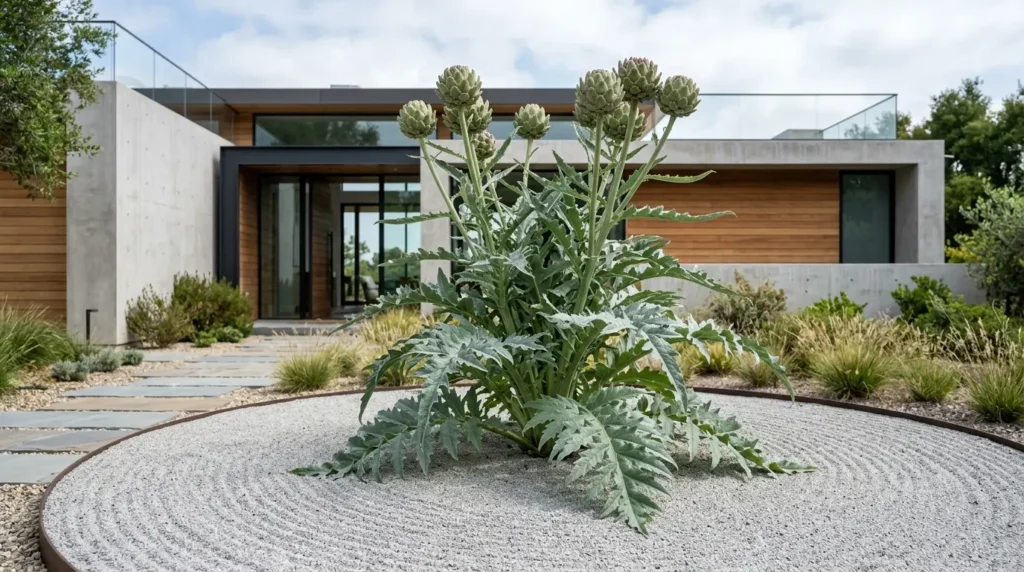
If you only take one piece of advice from this article, let it be this: plant an artichoke. The globe artichoke is a prehistoric-looking marvel. Its massive, jagged, silvery-blue leaves can span four feet wide. When the artichoke chokes themselves form, they look like giant, scaly architectural finials. Placed in the center of a minimalist gravel bed, it is undeniably striking.
8.2. Blueberry Bushes as Formal Hedges (Idea 12)
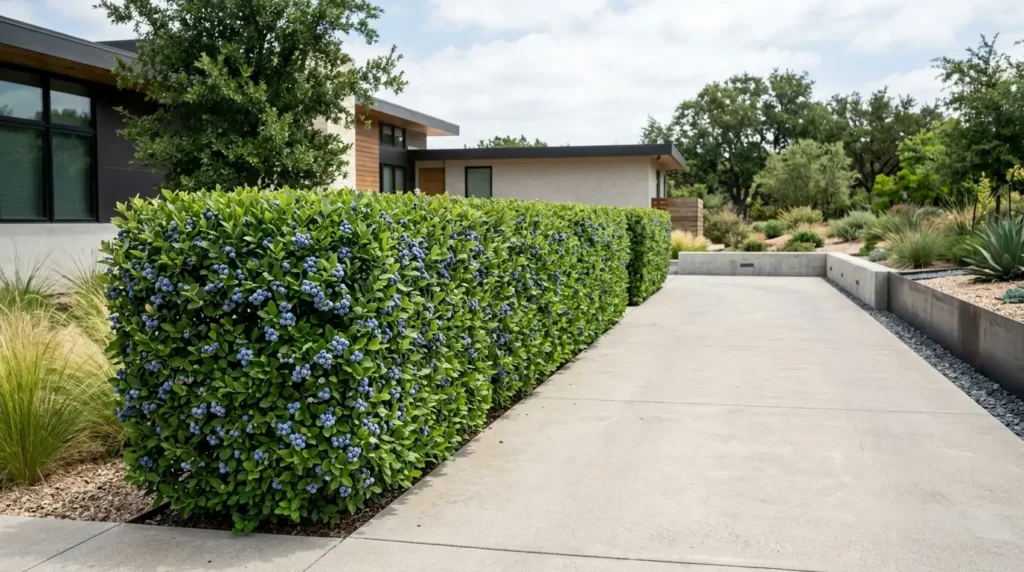
Forget the boring boxwood. Blueberry bushes make exceptional formal hedges. They can be pruned into tight, geometric rectangles. They offer delicate white bell flowers in the spring, delicious blue fruit in the summer, and breathtaking, fiery red foliage in the autumn. It is a multi-season masterpiece.
9. The Modern Orchard: Rethinking Fruit Trees
A fruit tree doesn’t have to look like it belongs on a rustic farm.
9.1. Citrus in Oversized Geometric Planters (Idea 13)
If you live in a warm climate (or are willing to wheel them inside during winter), place dwarf lemon or lime trees in massive, cubic black fiberglass planters. The bright yellow or green fruit against the dark foliage and stark black planter creates a high-contrast, ultra-modern aesthetic for your entryway.
9.2. Fig Trees as Sculptural Focal Points (Idea 14)
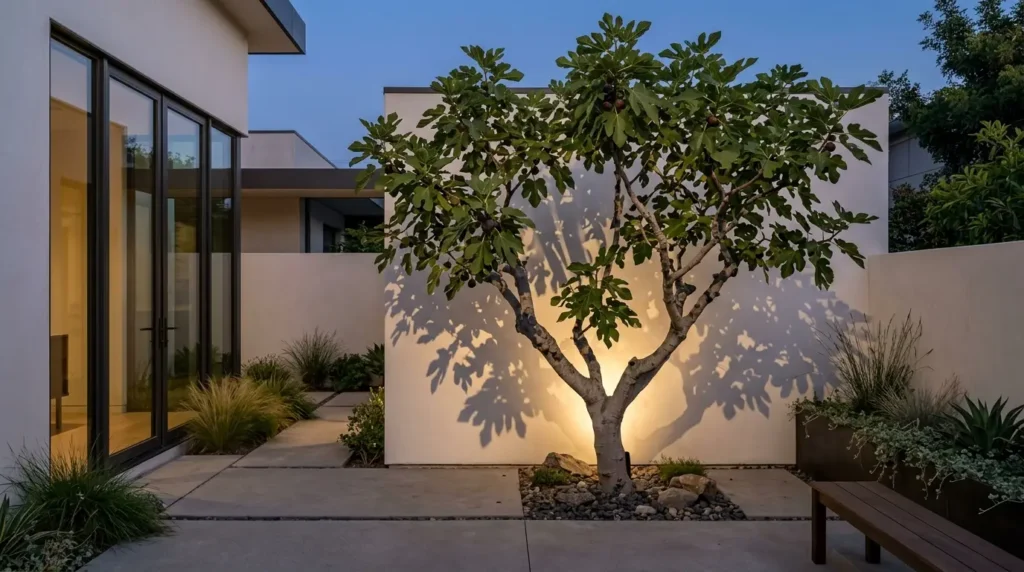
The fig tree is the darling of modern designers. Its massive, deeply lobed leaves provide incredible texture and cast beautiful, intricate shadows against modern architecture.
9.2.1. Pruning for Aesthetic Perfection
By aggressively pruning the lower branches, you can train a fig tree to have an umbrella-like canopy that exposes its smooth, twisting, silvery trunk. Up-lighting a fig tree against a white stucco wall at night is pure luxury.
10. The Edible Meadow: A Polished Polyculture (Idea 15)
For the ultimate expression of organic minimalism, consider replacing your front lawn with a curated edible meadow. By broadcasting seeds of edible flowers like Nasturtiums, Calendula, and Borage, mixed with fine native grasses, you create a soft, swaying sea of color. The trick to keeping it “modern” rather than “messy” is defining the edges. Use a sharp, crisp steel border or a wide concrete path to frame the meadow. The wildness is contained, making it look intentional, expensive, and deliciously edible.
11. Conclusion: Have Your Landscape and Eat It Too
The days of hiding your food source behind the garage are over. You no longer have to choose between a home that looks like a feature in an architectural magazine and a yard that yields fresh ingredients for dinner. By applying the principles of the Modern Organic Minimalist style—utilizing sharp hardscaping, respecting negative space, and celebrating the structural beauty of plants like flowering dill, tropical ginger, and architectural artichokes—your front yard can become a dual-purpose paradise. It’s time to rethink the lawn, elevate the vegetable, and design a landscape that truly feeds your soul and your stomach.
12. Frequently Asked Questions (FAQs)
Q1: How do I keep my edible landscape looking tidy when plants die back or are harvested? A: This is the most critical part of foodscaping. Always interplant your edibles with evergreen ornamentals (like boxwoods or perennial grasses). When you harvest a head of lettuce or pull up a carrot, the surrounding structural plants remain, so the bed never looks empty or barren. Also, use a thick, uniform layer of dark organic mulch to keep the exposed soil looking clean.
Q2: Will planting vegetables in my front yard attract pests and rodents? A: Not necessarily more than any other type of gardening. In fact, by mixing highly aromatic herbs (like rosemary, thyme, and flowering dill) with your vegetables, you confuse many insect pests. This practice, known as companion planting, acts as a natural deterrent. To keep mammals away, utilize raised steel or concrete planters.
Q3: Can I use chemicals on my lawn if I have edibles nearby? A: Absolutely not. If you are integrating food into your landscape, you must commit to 100% organic practices. Chemical herbicides and synthetic fertilizers used on a nearby patch of grass will easily leach into the soil of your edible plants or drift in the wind. Embrace organic soil amendments like compost, and manage fungal issues safely with traditional organic methods like a copper-based Bordeaux mixture.
Q4: Do fruit trees drop messy fruit all over the pristine hardscaping? A: They can, which is why placement is key. Never plant a fruit tree directly over a concrete pathway or driveway where fallen fruit will be crushed and stain the surface. Always plant fruit trees in a designated bed with mulch or groundcover beneath them to catch the drops seamlessly.
Q5: What are the easiest edible plants for a beginner to incorporate into a modern landscape? A: Herbs are by far the easiest and most architectural. Rosemary and lavender offer beautiful structure, creeping thyme is a foolproof groundcover, and chives produce stunning spherical purple flowers that look incredibly modern. They are all drought-tolerant, rarely bothered by pests, and look beautiful year-round.
About the Author