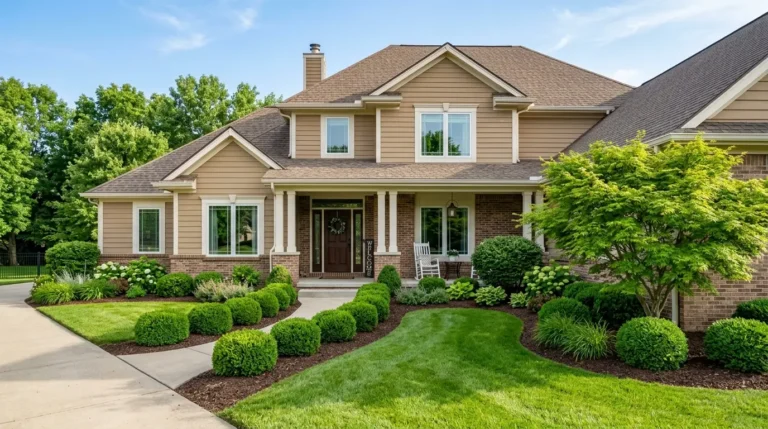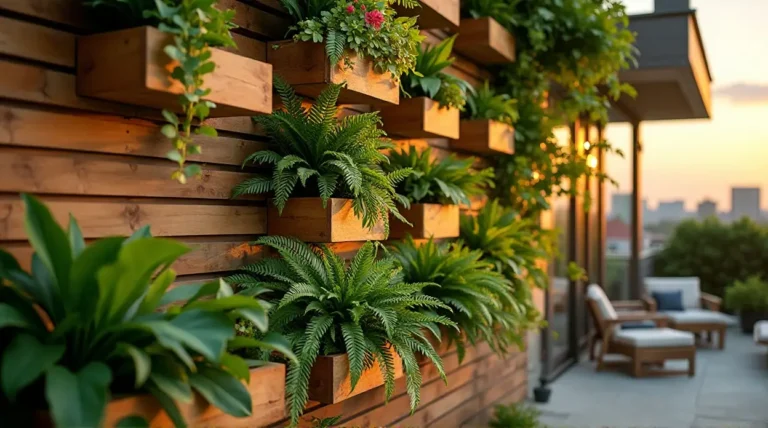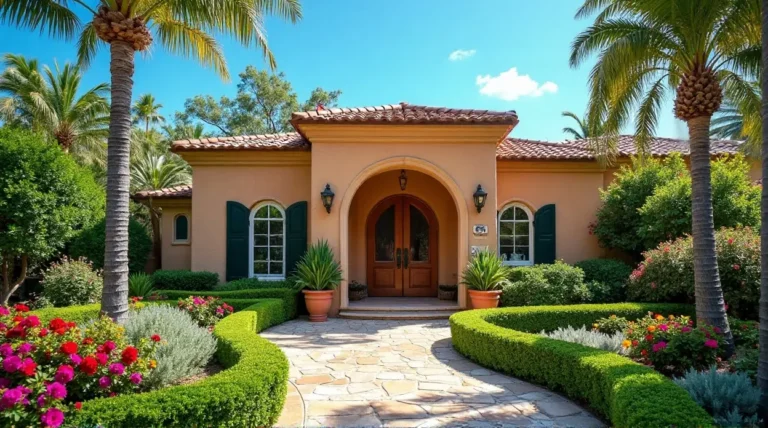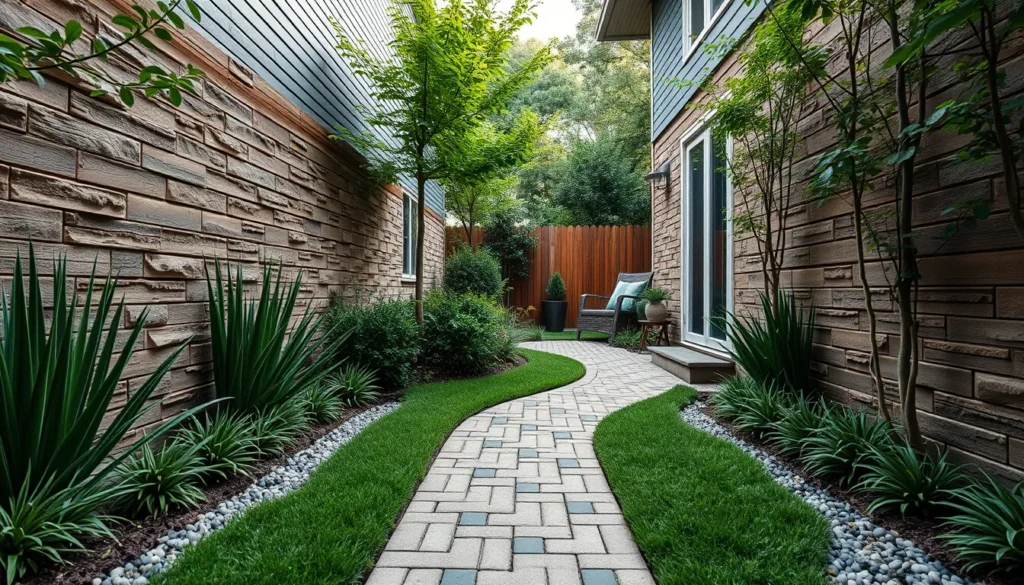
Pathways play a crucial role in the design of narrow side yards, providing essential access and facilitating movement while also contributing significantly to the overall aesthetic appeal of the space. An effectively designed walkway can enhance the functionality and beauty of your narrow yard, ensuring that every square foot is utilized harmoniously. Here’s an exploration of the importance of pathways, along with various materials and design ideas tailored for narrow side yards.
1. The Importance of Pathways
- Accessibility: Pathways provide a clear route for navigating through tight spaces, ensuring ease of movement for both people and maintenance access to plants and garden features.
- Safety: Well-defined walkways help reduce the risk of trips and falls, especially in narrow spaces where visibility may be limited or where plants may encroach on pathways.
- Aesthetic Appeal: A pathway can serve as an attractive design element that frames your garden, guiding the eye through various landscape features and creating an organized appearance.
- Functionality: Pathways enable better utilization of the side yard by connecting different garden areas, creating distinct zones such as seating, flower beds, or vegetable patches.
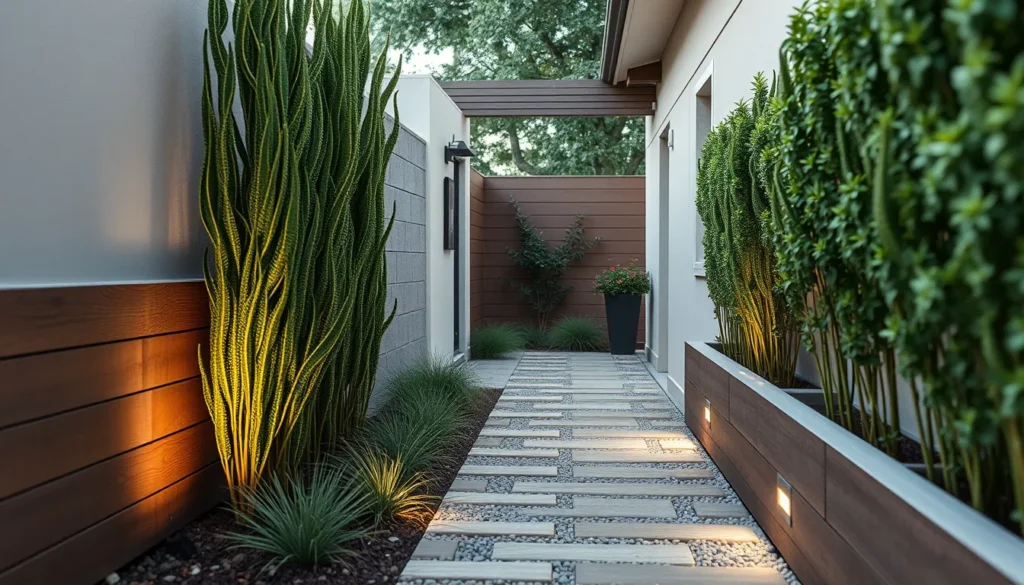
2. Materials for Pathways
Choosing the right materials for your walkway is essential to achieving durability, functionality, and visual appeal. Here are some popular options:
- Flagstone:Flagstone is a natural stone that offers a rustic and organic look. It can be laid in a random pattern, creating interest while allowing for gaps filled with ground cover plants or gravel for drainage. Flagstone is particularly suitable for areas with foot traffic and complements a variety of garden styles.
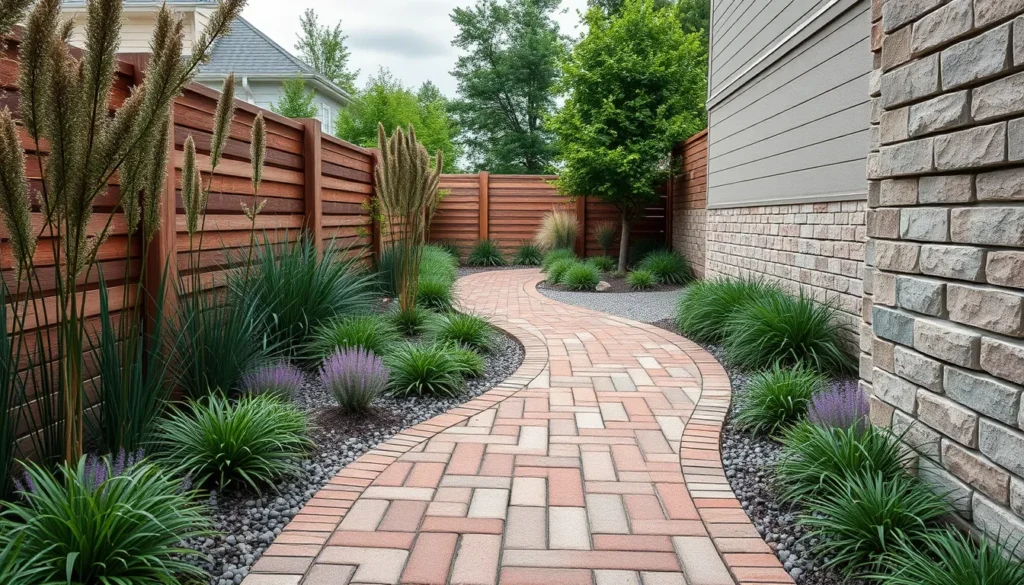
- Pavers:Concrete or clay pavers come in many sizes, shapes, and colors, offering versatility in design. They can be arranged in intricate patterns for a decorative effect. Pavers are durable, weather-resistant, and easy to maintain, making them ideal for narrow pathways.
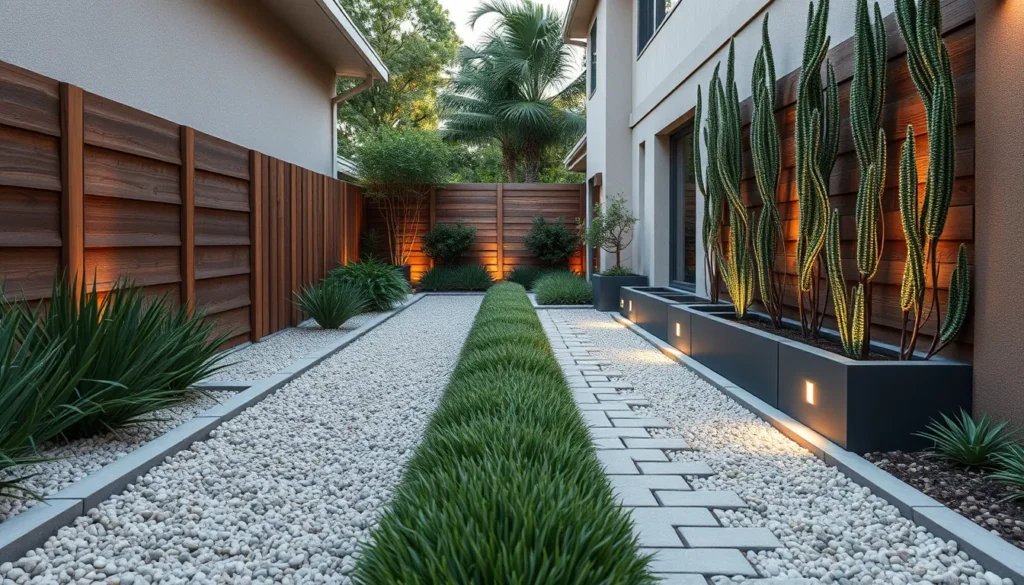
- Gravel:Gravel walkways are an inexpensive and easy-to-install option that promotes drainage. You can use larger stones or smaller pea gravel for different aesthetics. Consider edging the pathway with bricks or stones to keep the gravel contained and maintain a tidy appearance.
- Wooden Decking:Wooden pathways, including decking or boardwalks, can add warmth and a natural touch to your side yard. Cedar or redwood is durable and resistant to weather conditions. Raised wooden walkways can also enhance air circulation and prevent soil compaction beneath.
- Composite Materials:Composite decking materials combine recycled wood fibers and plastic, offering a sustainable and durable option for pathways. These materials are resistant to rot, insects, and fading, making them ideal for high-moisture areas.
- Concrete:Plain or stamped concrete pathways can be customized easily to match your style. Stamped concrete can mimic the appearance of stone or brick, offering a clean and modern look while providing durability.
3. Design Ideas for Narrow Pathways
When designing pathways in narrow side yards, consider these creative ideas to maximize functionality and beauty:
- Curved Pathways:Instead of straight lines, opt for slightly curved paths that create a sense of movement and softness. Curved designs draw the eye through the space and can make narrow areas feel wider.
- Stepping Stones:Use large stepping stones set within grass, gravel, or ground cover plants to create a whimsical and less formal pathway. This design allows for flexibility and adds an organic feel to the garden composition.
- Layered Walkways:Incorporate different levels or raised areas within your pathway to create visual interest. This can be particularly effective in sloped side yards, where steps or small inclines can guide movement naturally.
- Lighting Along Pathways:Add ground-level or solar-powered lights along pathways for both safety and ambiance. Lighting can enhance the visual appeal of the pathway in the evening and ensures safe navigation.
- Integration of Plants:Incorporate plants along the edges of your pathway. Low-growing shrubs, perennials, or flowering plants can soften the edges and create a natural transition between the path and planting areas.
- Decorative Edging:Use bricks, stones, or metal edging to outline paths clearly. Decorative edging provides structure to the walkway while adding texture and contrast against the plantings.
4. Maintenance Considerations
To keep pathways looking their best and functioning effectively:
- Regular Cleaning: Remove debris, dirt, and weeds to maintain appearance and safety. Ensure that no plants obstruct the walkway.
- Repair Damage: Address cracks or loose stones promptly to avoid larger issues down the line, especially in materials like concrete or pavers.
- Seasonal Adjustments: Consider seasonal changes and the impact of weather when planning materials; ensure that your chosen materials are appropriate for your climate.
Functional pathways in narrow side yards are essential for facilitating movement and enhancing the aesthetic appeal of your garden. By carefully selecting materials and designing pathways that complement the surrounding landscape, you can create inviting walkways that not only serve a practical purpose but also contribute to the overall ambiance and beauty of your outdoor space. Embrace the potential of your narrow side yard and design pathways that make your garden both functional and visually engaging.
About the Author