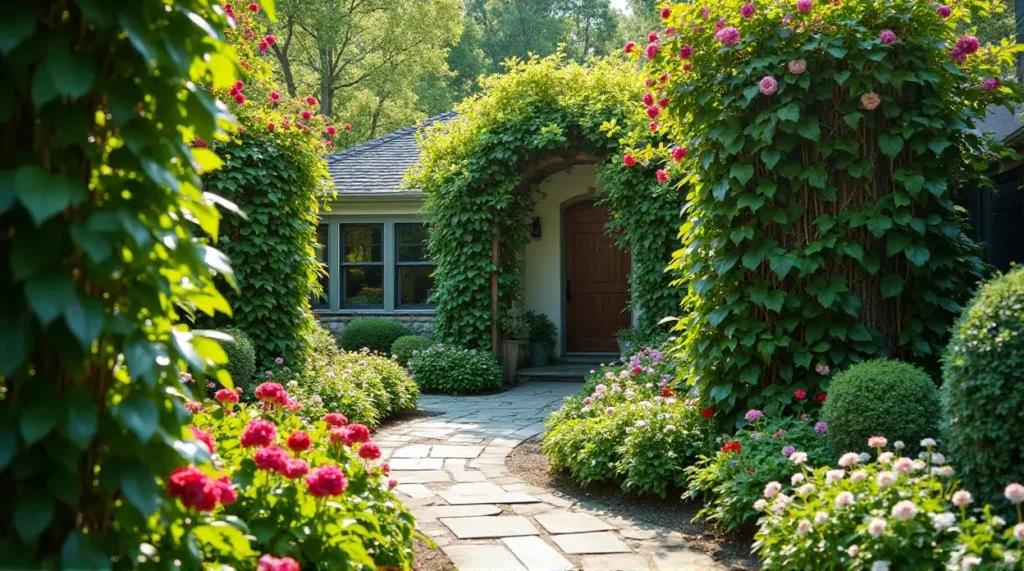
Incorporating vertical elements like trellises and arbors into front garden beds can significantly enhance both the aesthetic appeal and functionality of your landscape. These structures not only add height and dimension to your garden but also create additional growing space for climbing plants and provide inviting pathways. Here’s how to effectively integrate these vertical elements into your front garden beds, along with plant choices that will thrive and contribute to the visual interest of your outdoor space.
1. Choosing the Right Vertical Elements
Trellises:
- Design Options: Trellises come in various designs, from simple lattice grids to ornate, decorative styles. Choose one that fits the architectural style of your home to create a cohesive look.
- Placement: Position trellises against fences, walls, or standalone in garden beds to frame entrances and pathways. They can also serve as dividers between different sections of your garden.
Arbors:
- Functional Structures: Arbors can act as gateways or passageways, adding charm and inviting visitors into your garden. They can be large wooden structures or lightweight metal designs, depending on your aesthetic preference.
- Integrating into Pathways: Place arbors at the entrance to a path or at the end of a walkway, adorned with climbing plants to create a stunning focal point.
2. Plant Choices for Climbing and Supporting
To maximize the use of trellises and arbors, select plants that not only thrive with support but also offer beauty and interest throughout the seasons.
1. Flowering Vines:
- Clematis: Known for its wide range of colors and shapes, clematis can be trained to climb trellises and provides stunning blooms in spring and summer, depending on the variety.
- Honeysuckle (Lonicera): This fragrant vine attracts pollinators like bees and hummingbirds, offering beautiful trumpet-shaped flowers and lush green foliage.
- Morning Glory: Fast-growing and vibrant, morning glories are annuals that can quickly cover trellises with lush blooms in various colors, creating a cheerful display.
2. Perennial Climbers:
- Scarlet Runner Bean (Phaseolus coccineus): In addition to being ornamental, this plant produces edible beans and vibrant red flowers, making it a practical and beautiful choice for trellises.
- Sweet Peas (Lathyrus odoratus): Climbing sweet peas offer delightful scents and colorful flowers, perfect for adding charm to a garden facade.
3. Ornamental Grasses:
- Miscanthus: Tall, arching plumes of miscanthus can add height and texture when allowed to grow up a trellis, creating a visually striking element that sways in the breeze.
4. Fruit-bearing Plants:
- Grapevines: Vigorous and lush, grapevines can cover arbors, providing shade in addition to delicious fruit. They produce beautiful foliage and clusters of grapes during the growing season.
- Kiwi Vines: Hardy kiwi plants are not just ornamental; they can produce tasty fruit while covering trellises with attractive foliage.
3. Design Considerations for Vertical Elements
Scale and Proportion:
- Ensure the size and height of the trellis or arbor are proportionate to the garden bed and the surrounding landscape, avoiding elements that overpower smaller gardens while providing ample height for climbing plants.
Color and Material Compatibility:
- Select materials that complement your home and other garden elements. Wooden structures often provide a rustic charm, while metal trellises can present a more modern or formal look.
- Paint or stain wooden structures in colors that enhance the overall color palette of your garden.
Integration with Established Plants:
- When adding vertical elements, consider existing plants in your garden beds that could benefit from the added height or support. Train these plants to climb as needed.
Seasonal Interest:
- Select a mix of evergreen plants and deciduous climbers to maintain visual interest throughout the year. For example, a combination of evergreen vines and flowering perennials can ensure beauty in all seasons.
4. Maintenance and Growth Considerations
- Ensure that vertical structures are securely anchored to withstand wind and weight from climbing plants.
- Regularly check the health of climbing plants, providing necessary pruning to encourage healthy growth and prevent over-crowding.
- Consider irrigation needs; plants on vertical structures may require consistent watering, especially during dry periods.
Conclusion
Incorporating trellises and arbors into your front garden beds creates a striking visual impact while maximizing your garden’s functionality. By selecting the right climbing plants and ensuring appropriate design and maintenance, you can enhance your outdoor space with vertical elements that invite beauty and charm. These structures not only draw the eye upward, adding interest and dimension but also serve practical purposes, from increasing privacy to providing shade. Embrace the versatility and beauty of trellises and arbors to transform your front yard into a lush, inviting haven.
About the Author