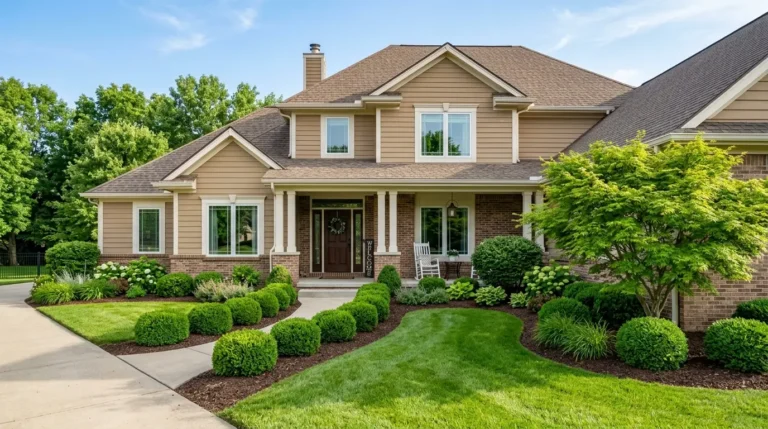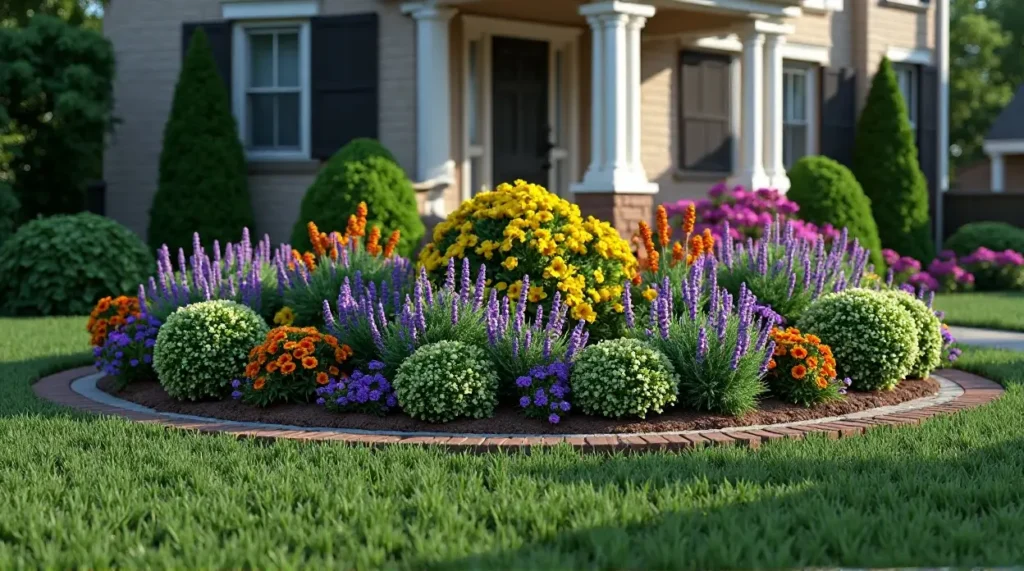
Creating an attractive front-of-house flower bed is pivotal for enhancing curb appeal while ensuring that the design is manageable and provides year-round interest. This comprehensive guide will walk you through establishing a foundation plan, choosing the right plants, and implementing strategies for low-maintenance care, creating a stunning landscape that complements your home.
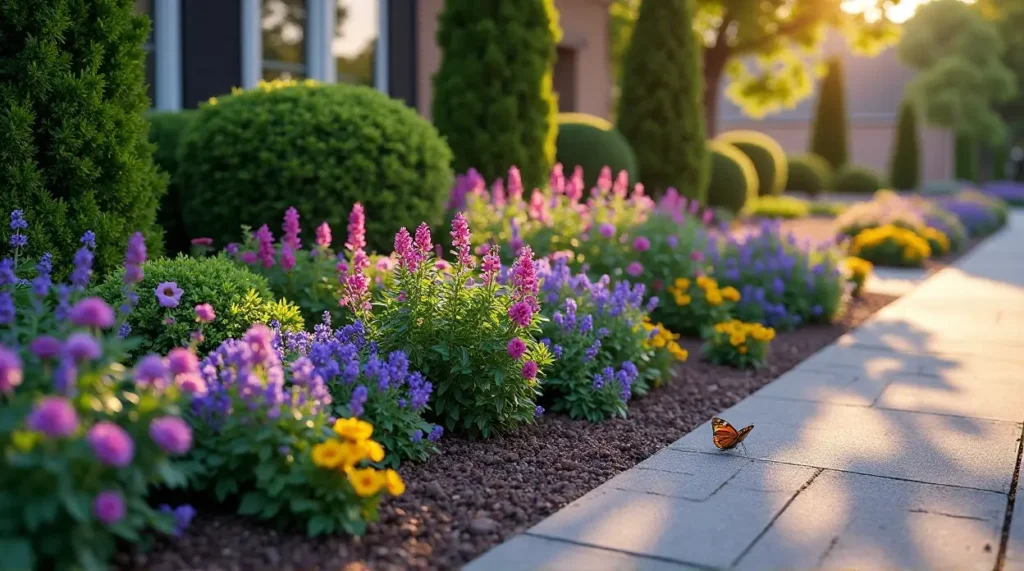
Foundation Plan: Establishing a Hardscape Edge
Defining the Flower Bed
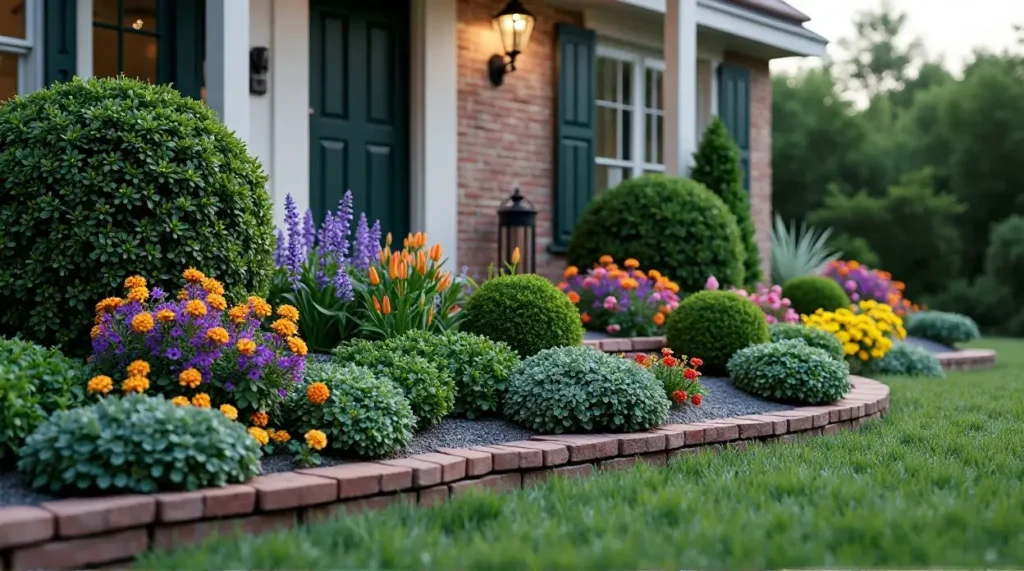
Start by establishing a hardscape edge to define the flower bed and minimize grass intrusion. Here are some excellent options:
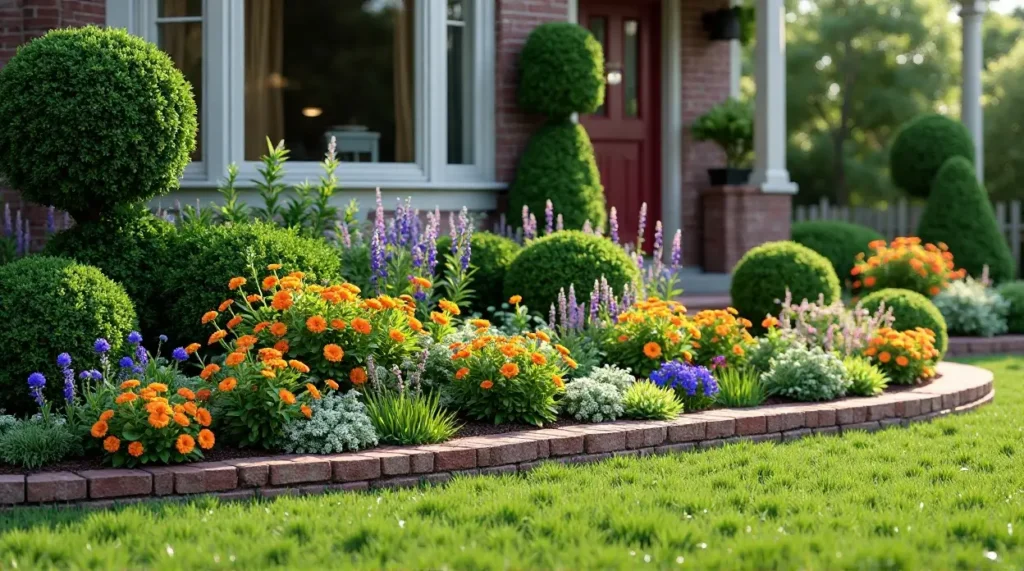
- Low Brick Edging: Adds a classic touch and has a sturdy presence.
- Natural Stone: Provides a rustic, organic feel and blends well with the landscape.
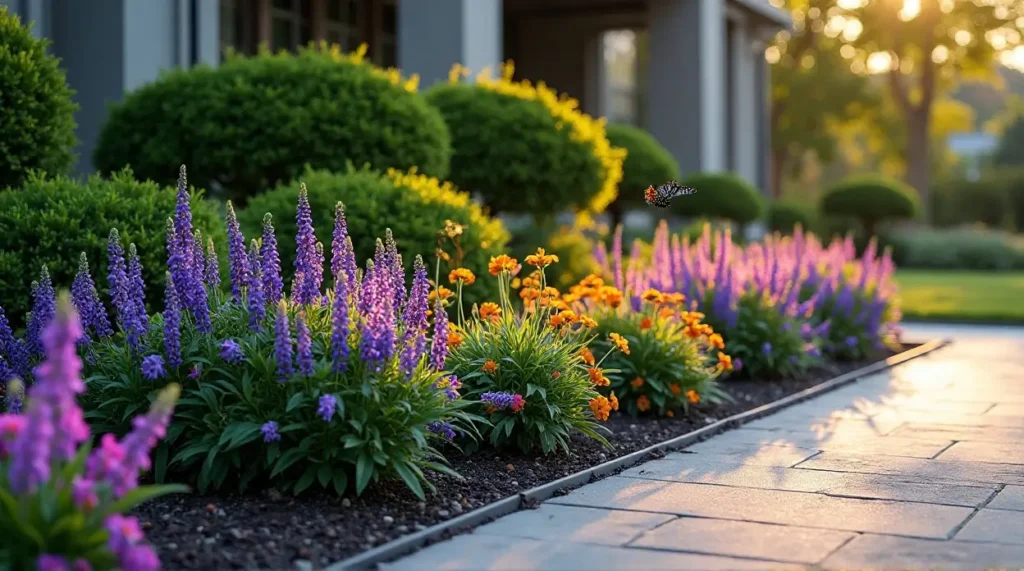
- Metal Edging: Offers a modern, sleek finish that can last for years.
This hardscape boundary not only beautifies your yard but also prevents grass and weeds from creeping into your flower bed, reducing long-term maintenance.
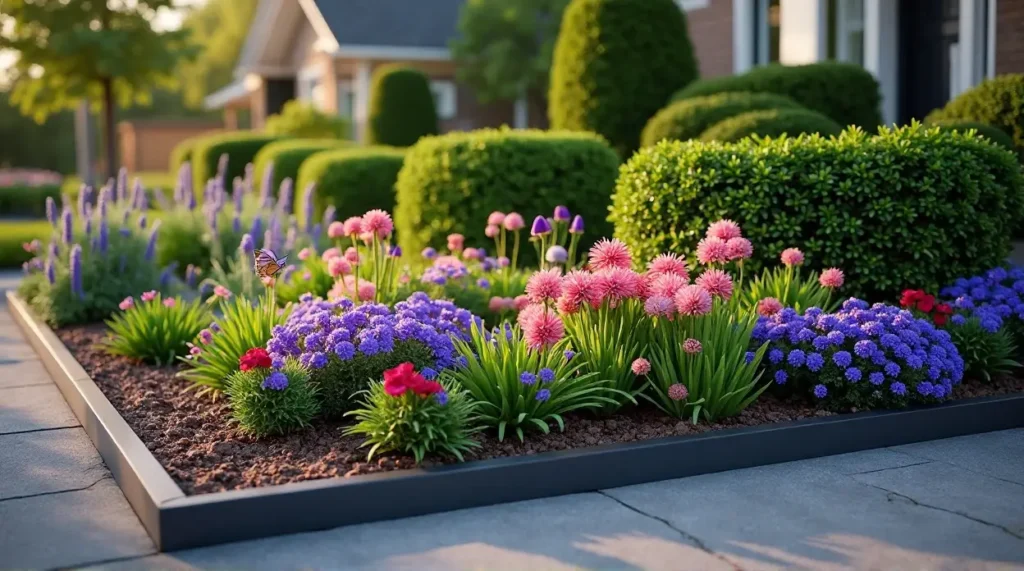
Layered Planting Scheme
Design your flower bed with three distinct tiers to create depth and visual interest:
1. Structural Evergreens at the Back
- Purpose: Provide a year-round form and a stable background for seasonal plants.
- Suggestions: Select hardy shrubs such as boxwood or dwarf holly, which require minimal care while maintaining their shape throughout the seasons.
2. Mid-Height Perennials for Color and Texture
- Purpose: Introduce vibrant blooms and varied textures to the overall foundation.
- Suggestions: Long-blooming perennials like salvia, coneflower, and daylilies offer continuous color from spring to fall, enriching the aesthetic appeal of your flower bed.
3. Low Groundcovers or Annuals for Seasonal Accents
- Purpose: Fill in the front layer near sidewalks for accessibility and charm.
- Suggestions: Use colorful annuals like petunias or low-maintenance groundcovers such as creeping thyme or vinca. These plants can easily be swapped out seasonally for new bursts of color.
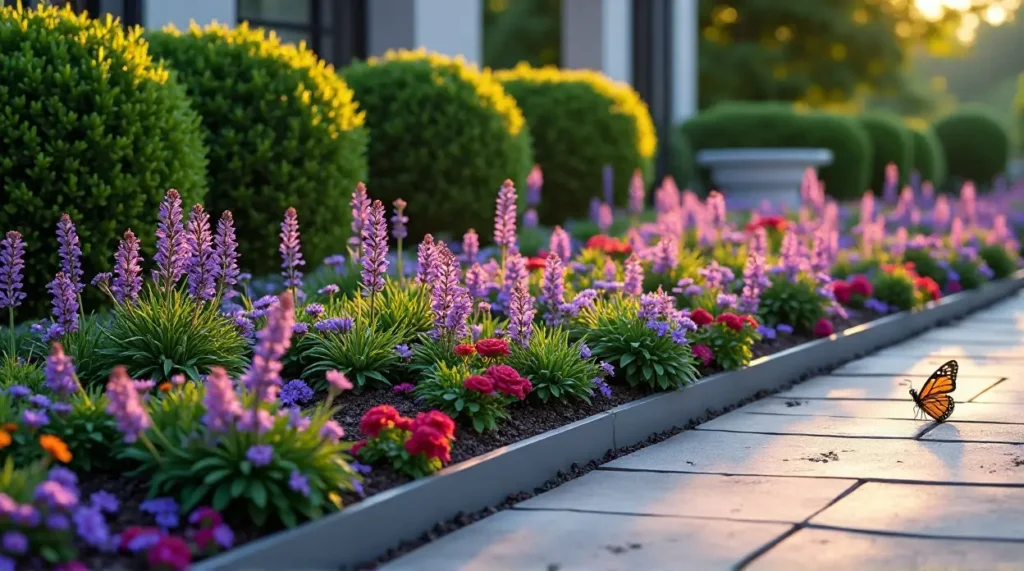
Incorporating Ornamental Grasses
Adding ornamental grasses brings movement and textural contrast:
- Selections: Consider varieties like blue fescue for its fine texture and fountain grass for its graceful, arching form. Both serve to contrast against broader-leaved plants and can hold interest through the winter months, particularly when adorned with frost.
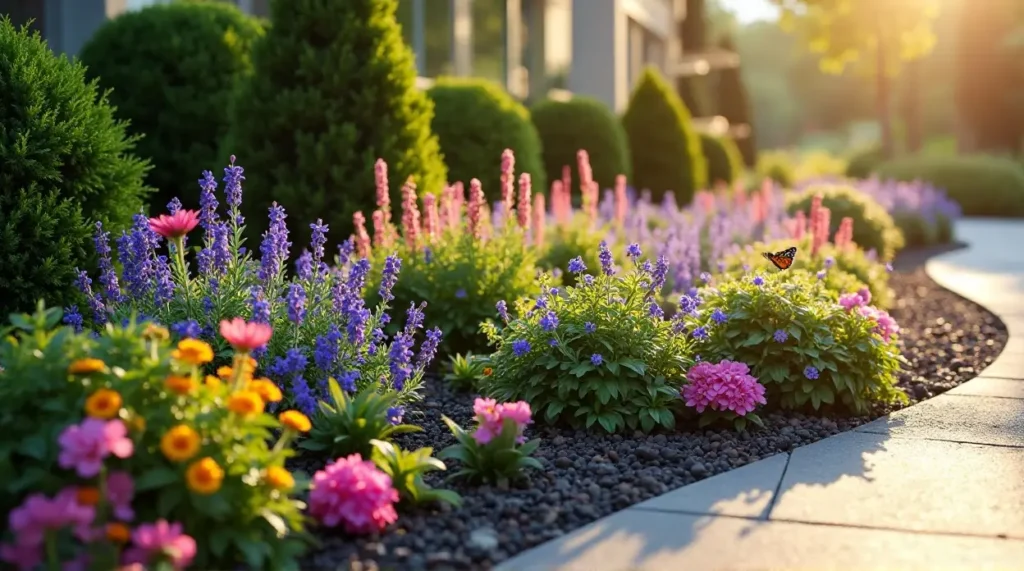
Creating a Pollinator-Friendly Design
To create a garden that supports local wildlife, incorporate a mix of native wildflowers:
- Suggestions: Include black-eyed Susan, bee balm, and milkweed. These plants attract bees and butterflies and can reduce your pesticide needs, fostering a healthier ecosystem.
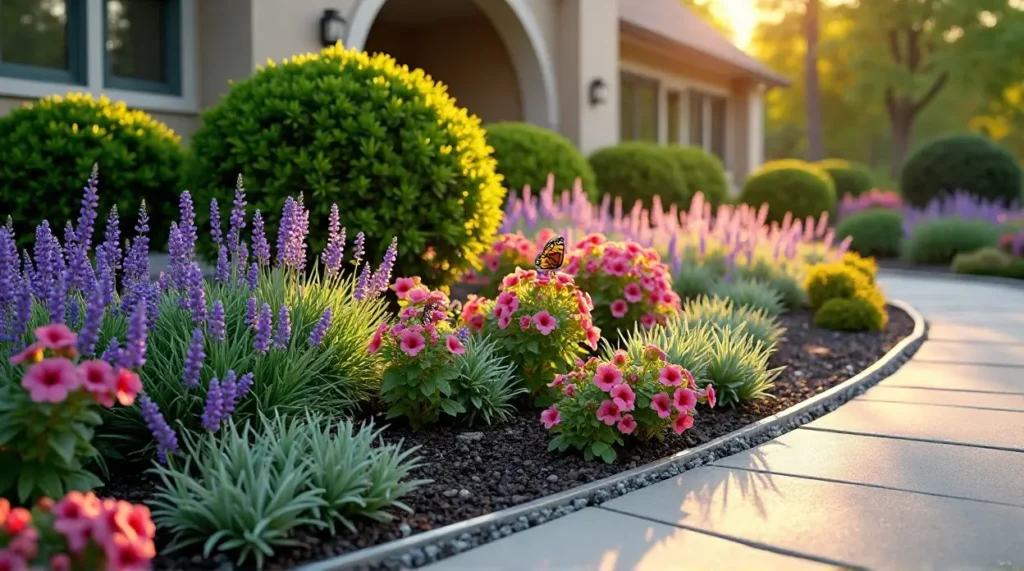
Visual Cohesion Through Plant Repetition
To simplify plant care and create a harmonious look:
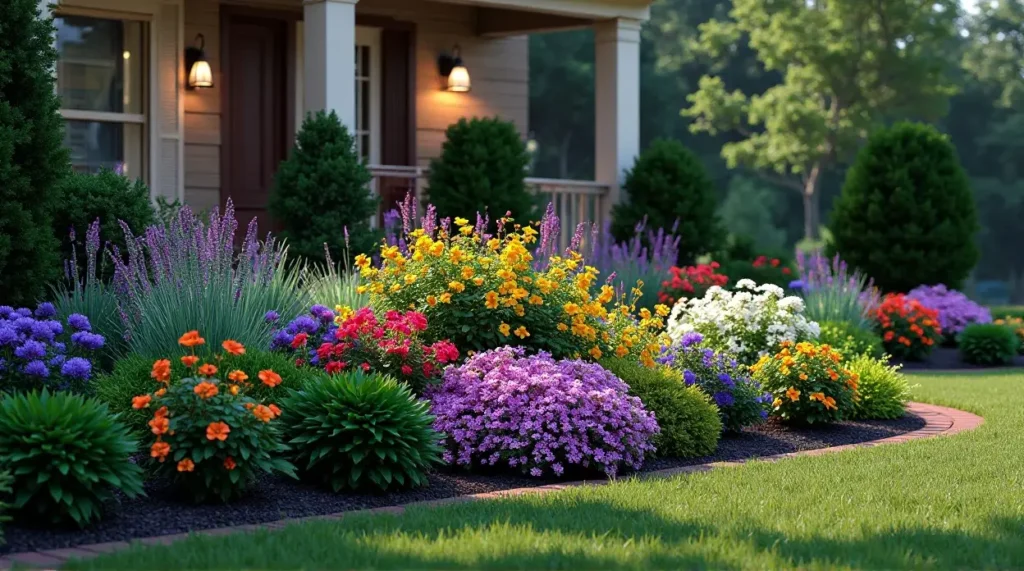
- Guideline: Repeat three to five plant species throughout the flower bed. This repetition creates a cohesive design that is easier to maintain while providing visual interest.
Ideas for Small Front Yards
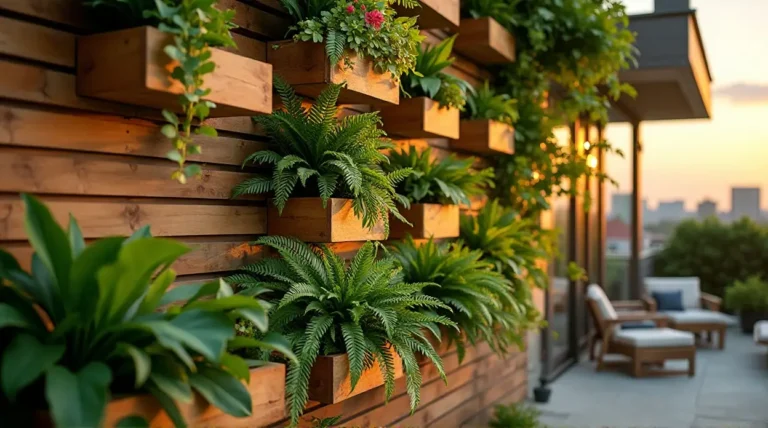
If you have a smaller front yard, focus on creating a narrow bed with vertical accents:
Vertical Accents:
- Suggestions: Use clipped yew or columnar evergreens for dramatic height, paired with cascades of low-growing plants like vinca or lambs ear for added softness and texture.
Structure and Nighttime Appeal
Enhance your garden’s functionality and beauty with lighting:
- Low-Voltage Lighting: Install lights along the edge of your flower bed to highlight the hardscape features and pathway.
- Spotlight a Specimen Plant: Draw attention to a favorite plant or tree, creating an enchanting evening atmosphere in your yard.
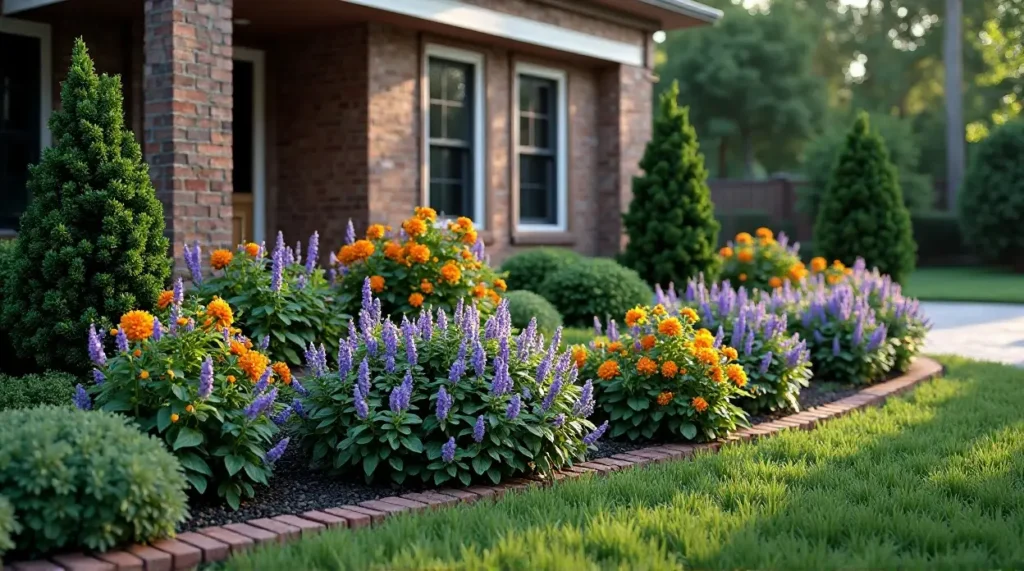
Seasonal Rotation for Year-Round Variety
Keep your garden dynamic and vibrant through all seasons:
- Spring Bulbs: Plant tulips and daffodils alongside summer perennials for an early burst of color.
- Annual Container Replace: Swap out annuals in containers during late spring to ensure continuous color heading into late summer and early fall.
Soil Preparation and Mulching
The foundation of any successful flower bed lies in the soil:
- Amend the Soil: Incorporate compost to enhance drainage and nutrient retention, ensuring that your plants have the best chance to thrive.
- Apply Mulch: Use a two- to three-inch layer of mulch to conserve moisture and suppress weeds. Organic mulch options also enrich the soil as they decompose.
Efficient Irrigation Options
Watering efficiently is key to maintaining a beautiful flower bed:
- Soaker Hoses: Use soaker hoses on a timer for even moisture distribution without waste.
- Drip Systems: Targeted drip systems conserve water and focus moisture where it’s needed most.
Final Considerations
To ensure your flower bed is both beautiful and safe:
- Sightline Maintenance: Keep plants trimmed back to maintain clear sightlines, especially near driveways and walkways.
- Height Guidelines: Choose plant heights carefully to avoid obstructing windows and views. Taller plants should be positioned toward the back or center as appropriate.
- Planting Calendar: Use a planting calendar to stagger bloom times effectively, ensuring that your flower bed is visually appealing throughout the year.
Conclusion
With careful planning and implementation, you can create a front-of-house flower bed that enhances your home’s curb appeal while being mindful of maintenance and seasonal interest. By establishing a strong foundation, layering plant selections, and considering wildlife needs, you can enjoy a vibrant and sustainable landscape. Embrace this guide as a resource, and transform your outdoor space into a picturesque haven that you and your neighbors will admire!
About the Author