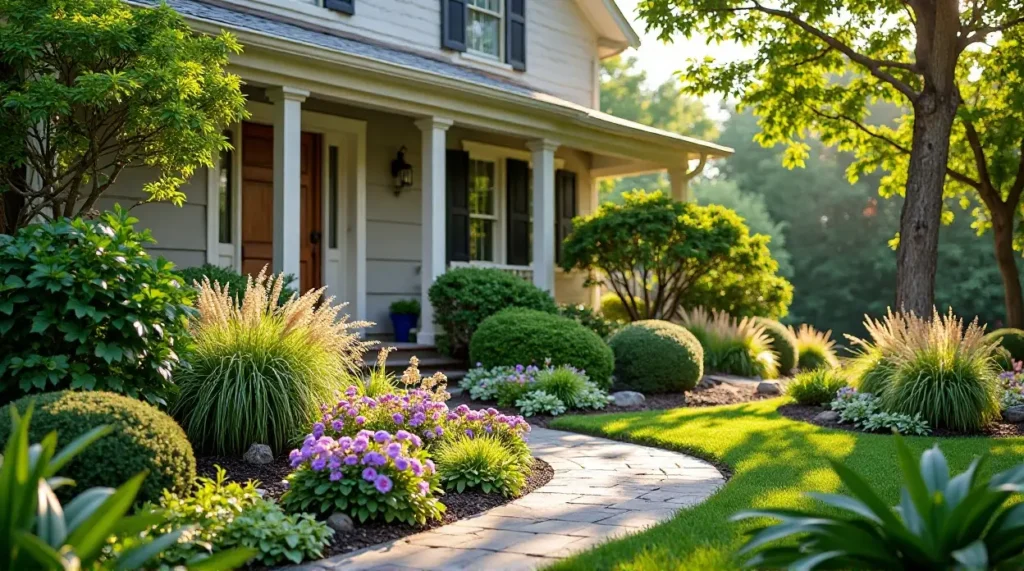
The front yard is the first impression your home makes on guests, neighbors, and potential buyers. A thoughtfully designed garden bed can transform a bland facade into an inviting, memorable entrance. This article presents a range of garden bed designs and practical guidance on using color, texture, and plant selection to maximize curb appeal while considering scale, maintenance, and seasonal interest.
Why Garden Bed Design Matters A well-composed garden bed does more than add color. It defines pathways, frames architectural features, softens hard edges, and creates a sense of arrival. Good design balances aesthetics and function: guiding sight lines to the front door, providing year-round interest, and matching the plant palette to the home’s style and local climate. Considering color, texture, and plant selection early in the process ensures cohesion and longevity.
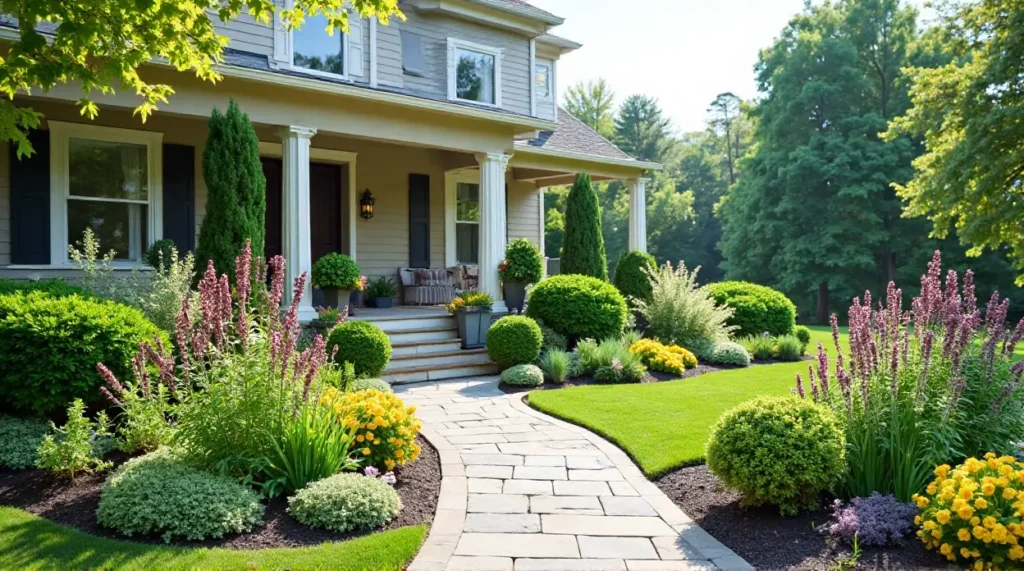
A beautifully landscaped front yard features a stone pathway leading to a porch with white columns, surrounded by lush greenery and vibrant flowers in shades of purple and yellow, set against a backdrop of a charming house and tall trees.
Essential Design Principles
- Scale and proportion: Beds should be proportional to the house and yard. A large house needs broader, more substantial plantings; a small cottage benefits from lighter, lower-scale beds.
- Layering: Use a three-tier structure of background (taller shrubs/trees), midstory (medium shrubs and perennials), and foreground (low plants, groundcovers, edging).
- Repetition and rhythm: Repeat plants or colors to create continuity and guide the eye toward focal points like the porch or entry path.
- Focal points: Use specimen trees, architectural shrubs, statues, or containers to anchor beds and create visual interest.
- Balance: Aim for symmetry near formal entries and asymmetry for a more relaxed, natural look.
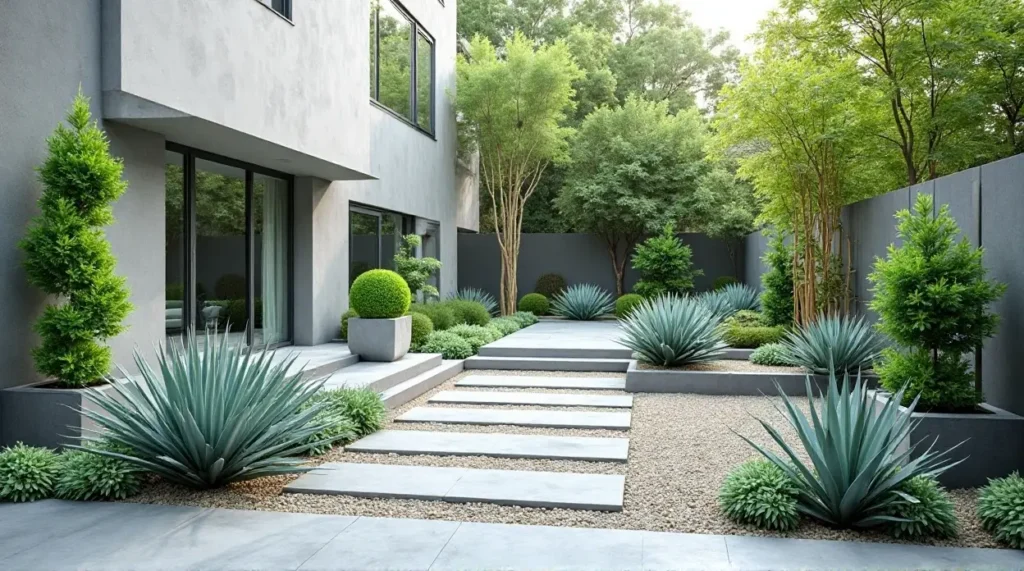
A modern garden features a sleek pathway of large stone slabs surrounded by various green plants, including spiky succulents and manicured shrubs, set against a gray building with large windows and a backdrop of lush trees.
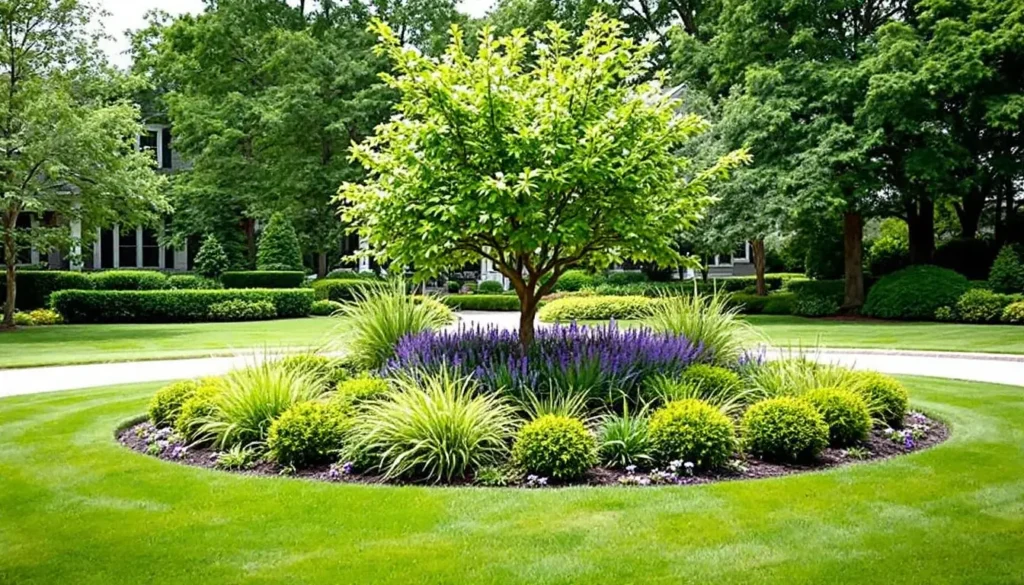
A beautifully landscaped garden features a small tree at its center, surrounded by vibrant purple flowers and lush green shrubs, set within a circular bed on a neatly manicured lawn, with tall trees in the background.
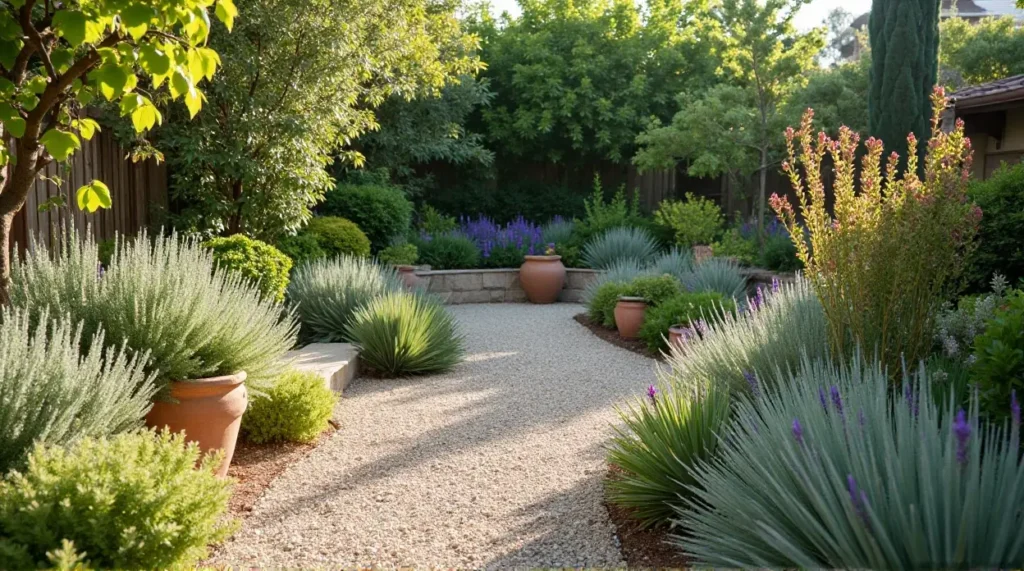
A serene garden path winds through lush greenery, bordered by terracotta pots and lavender plants. Sunlight filters through the trees, casting gentle shadows on the gravel walkway, with vibrant purple flowers adding pops of color amidst the foliage.
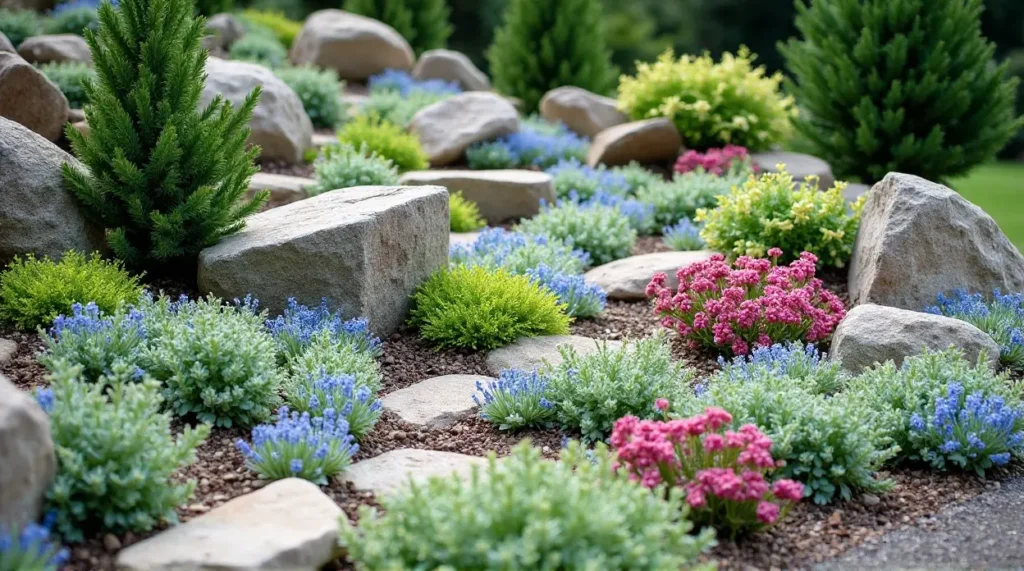
A vibrant rock garden featuring large stones surrounded by clusters of colorful flowers, including blue and pink blossoms, with lush green foliage interspersed throughout.
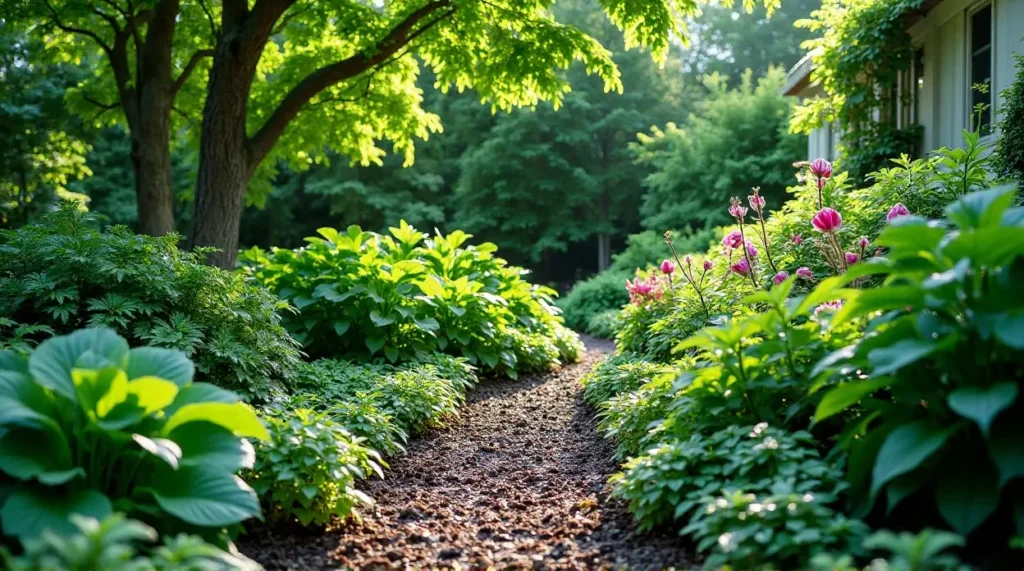
A serene garden path winds through lush green foliage and vibrant pink flowers, with sunlight filtering through the leaves of a large tree, creating a peaceful and inviting atmosphere.
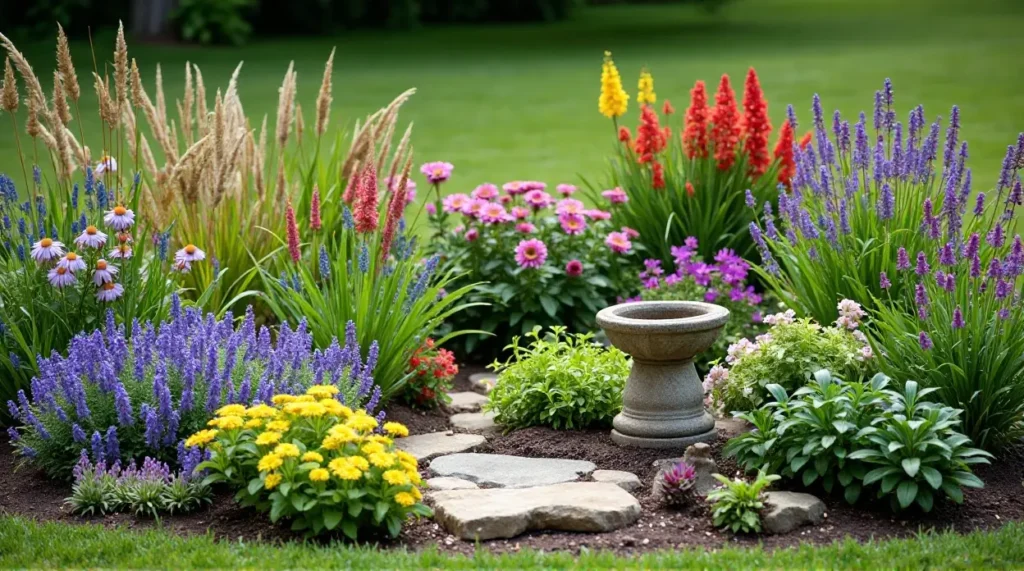
A vibrant garden features a variety of colorful flowers, including purple lavender, yellow blooms, and red and pink blossoms, surrounding a stone birdbath. The garden is neatly arranged with stepping stones leading through lush greenery, set against a backdrop of a well-maintained lawn.
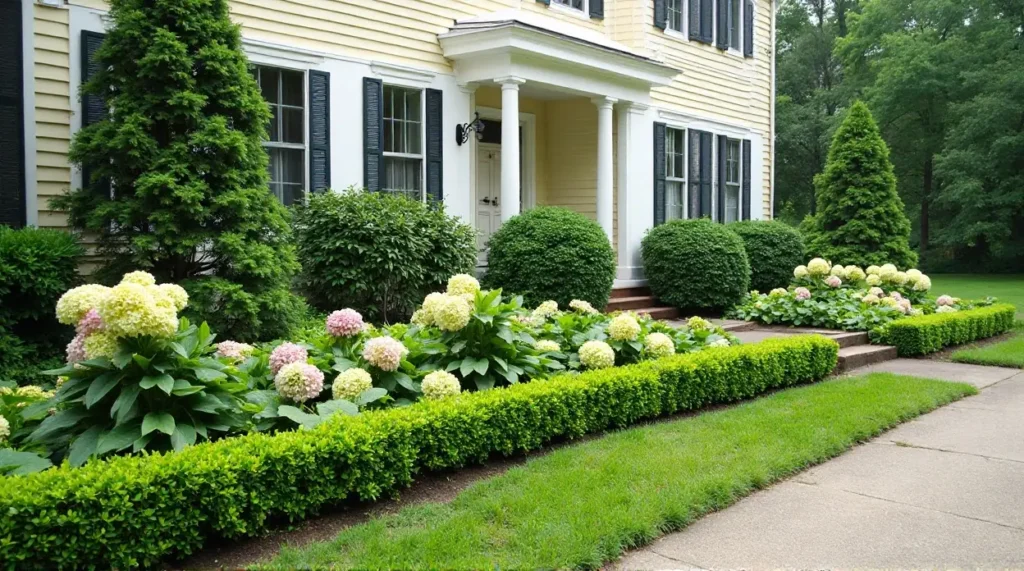
A charming garden in front of a yellow house features lush hydrangea bushes with blooms in soft pink and white hues, neatly bordered by trimmed hedges, and flanked by manicured lawns and a paved walkway.
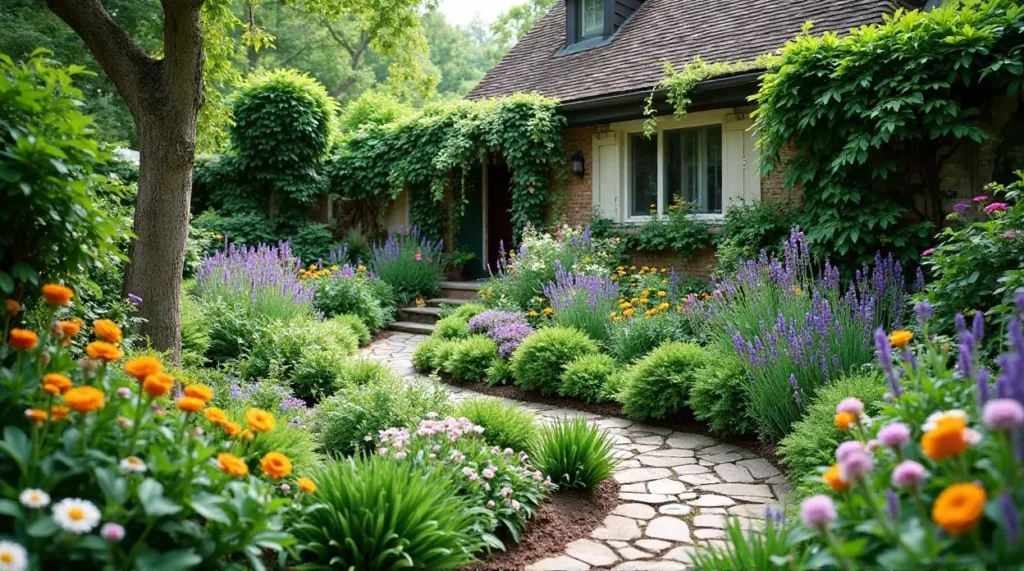
A charming garden path winds through lush greenery and vibrant flowers, leading to a cozy brick house with a sloped roof. The scene is filled with blooming orange and purple flowers, neatly arranged alongside the stone path, under the shade of a large tree.
Garden Bed Styles and Planting Concepts
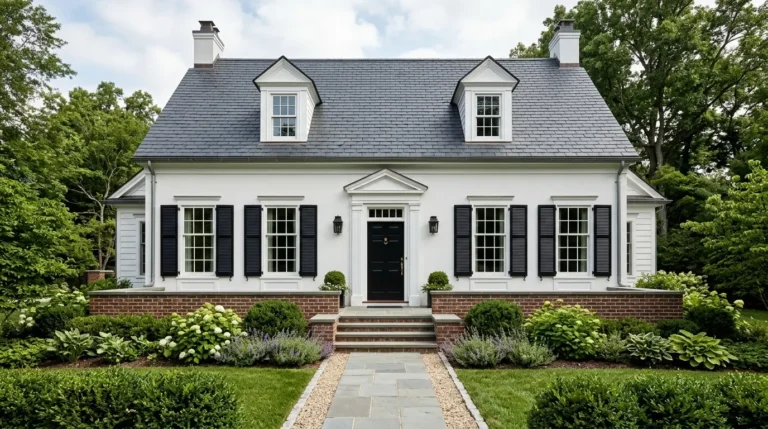
- Classic Foundation Beds Ideal for: Traditional homes Design: Low hedges and layered shrubs along the foundation, accented with perennials and seasonal annuals. Plants to consider: Boxwood or dwarf holly for structure; hydrangea or azalea for blooms; hostas and heuchera for understory texture. Why it works: Foundation beds soften house lines, provide year-round structure, and are easy to maintain.
- Island or Centerpiece Beds Ideal for: Larger front yards or driveways with medians Design: Freestanding beds surrounded by lawn or driveways. Emphasize a central focal point—small ornamental tree, multi-season shrub, or sculptural boulder. Plants to consider: Crape myrtle, Japanese maple, ornamental grasses, lavender or roses at the base. Why it works: Creates a dramatic, eye-catching feature that can be seen from the street.
- Cottage Garden Ideal for: Informal, country, or vintage-style homes Design: Layered, overflowing plantings with a mix of perennials, annuals, bulbs, and edibles. Curving beds and a mix of heights add charm. Plants to consider: Lavender, salvia, daisies, foxglove, roses, and herbs like rosemary and thyme. Why it works: Abundant color and fragrance make an inviting, friendly entrance.
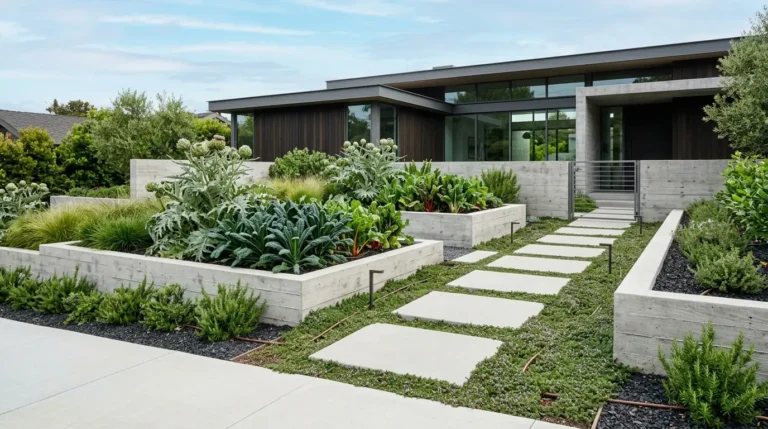
- Modern Minimalist Bed Ideal for: Contemporary architecture Design: Clean lines, restrained palette, and repetition of a few plant types. Combine hardscape materials like gravel, concrete, or steel edging with sculptural plants. Plants to consider: Ornamental grasses (e.g., blue fescue), succulents, agave, boxwood spheres, and bamboo in containers. Why it works: Low-maintenance, visually striking, and complements modern facades.
- Mediterranean/Low-Water Garden Ideal for: Dry climates or homeowners seeking drought-tolerant plantings Design: Group drought-tolerant shrubs and perennials with gravel or decomposed granite and terracotta accents. Plants to consider: Lavender, rosemary, sage, oleander, and Mediterranean grasses. Why it works: Conserves water and provides a relaxed, sun-loving aesthetic.
- Rock Garden and Alpine Plantings Ideal for: Sloped yards or properties with rocky soil Design: Use boulders and rock beds to create naturalistic plant pockets. Emphasize texture and low-growing, hardy plants. Plants to consider: Sedum, alpine phlox, dianthus, and dwarf conifers. Why it works: Adds structure and interest with minimal water needs and good drainage.
- Shade Front Bed Ideal for: Homes with mature trees or shaded front yards Design: Focus on shade-tolerant shrubs and perennials, and use mulch and groundcovers to suppress weeds and retain moisture. Plants to consider: Hosta, bleeding heart, ferns, hellebores, and azaleas for part-shade. Why it works: Turns a potentially challenging area into a lush, cool retreat.
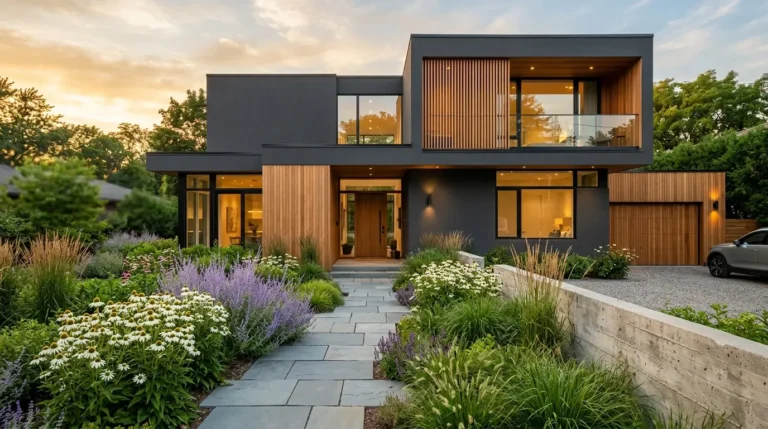
- Pollinator and Wildlife-Friendly Beds Ideal for: Eco-conscious homeowners Design: Prioritize native plants and nectar sources to support bees, butterflies, and birds. Minimize pesticides and include water features. Plants to consider: Echinacea, butterfly bush, bee balm, salvia, and native grasses. Why it works: Creates a lively, changing display through the seasons while supporting biodiversity.
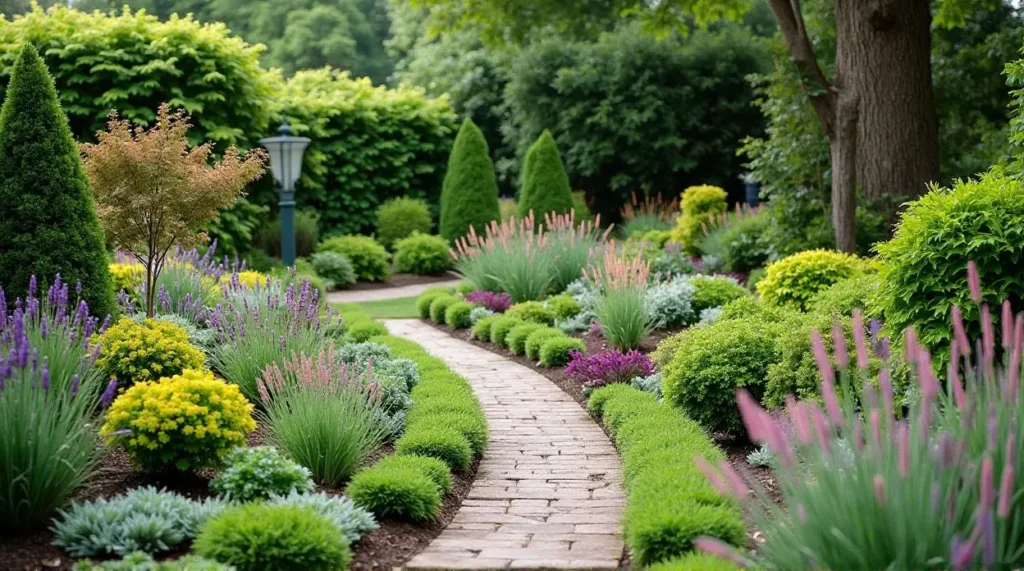
A winding brick path meanders through a lush, colorful garden, bordered by neatly trimmed shrubs and vibrant flowers in shades of purple, pink, and yellow. Tall trees and dense greenery provide a serene backdrop, while a classic lamppost adds a touch of elegance.
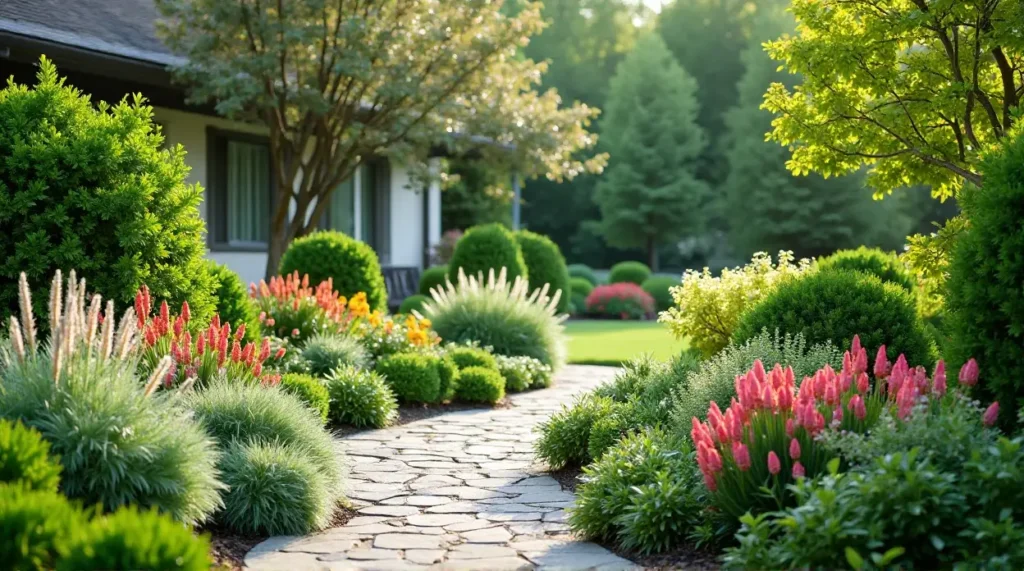
A charming garden path made of stone winds through lush greenery and vibrant flowers, with pink and orange blooms adding pops of color. The scene is bathed in soft sunlight, with trees and shrubs creating a serene and inviting atmosphere.
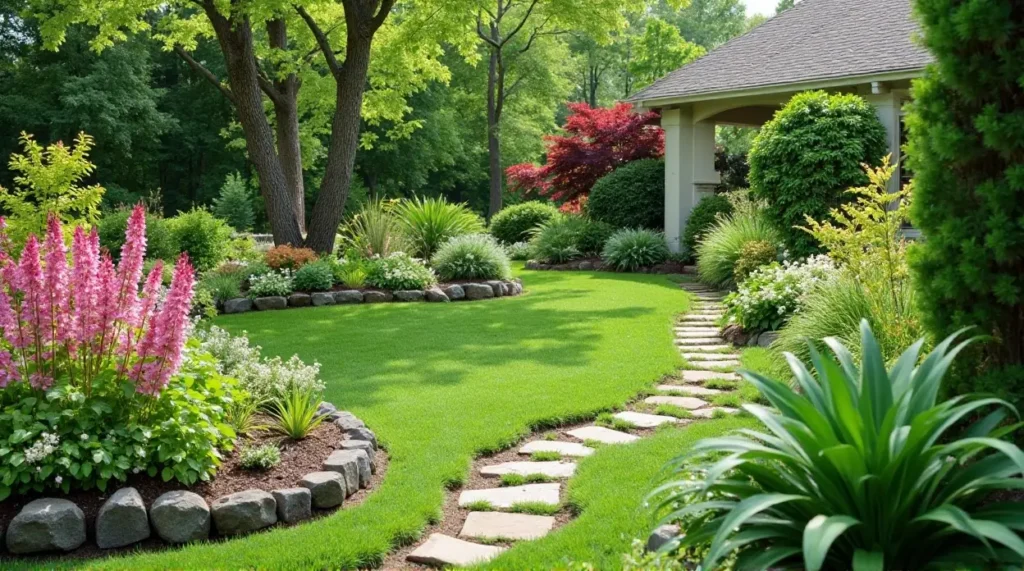
A beautifully landscaped garden features vibrant pink flowers, lush green shrubs, and a neatly manicured lawn. A stone path curves gracefully through the greenery, leading to a charming house with a welcoming porch. Tall trees provide shade, enhancing the serene atmosphere.
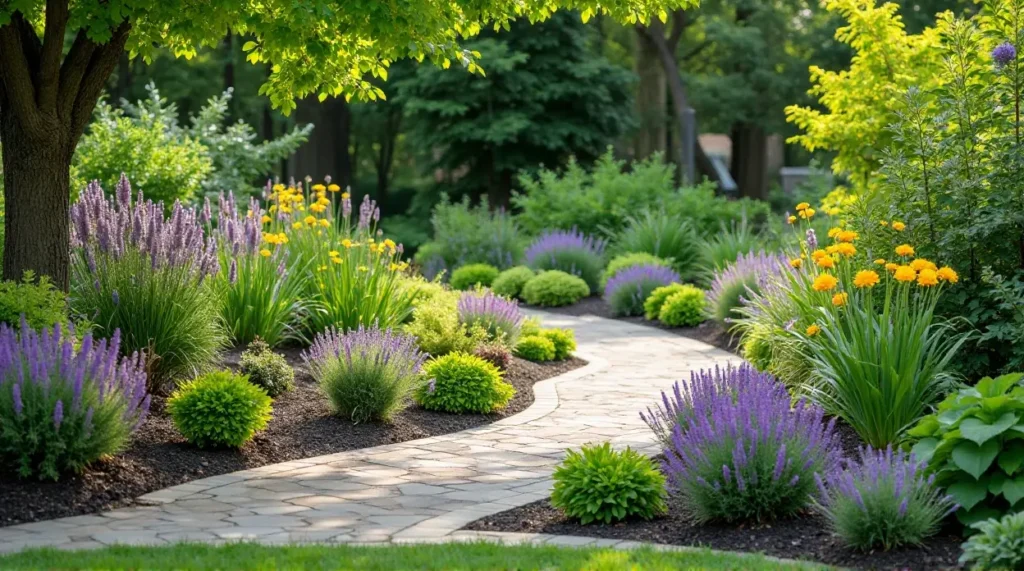
A picturesque garden path winds through lush greenery, bordered by vibrant purple and yellow flowers. Tall trees provide shade, while neatly arranged shrubs add texture to the landscape.
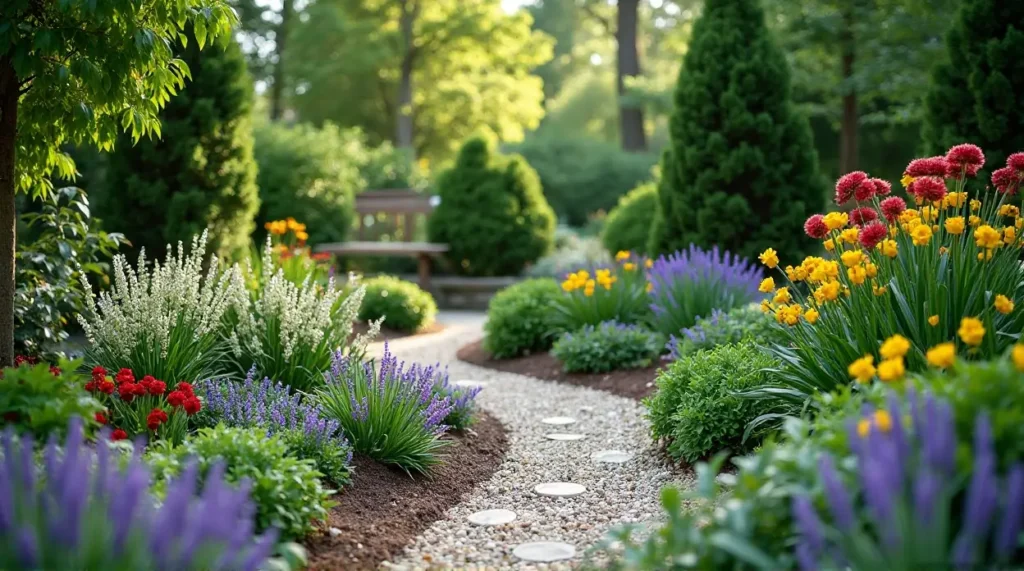
A serene garden path winds through vibrant flower beds, featuring purple, red, yellow, and white blossoms, surrounded by lush greenery and neatly trimmed shrubs, with a wooden bench in the background under dappled sunlight.
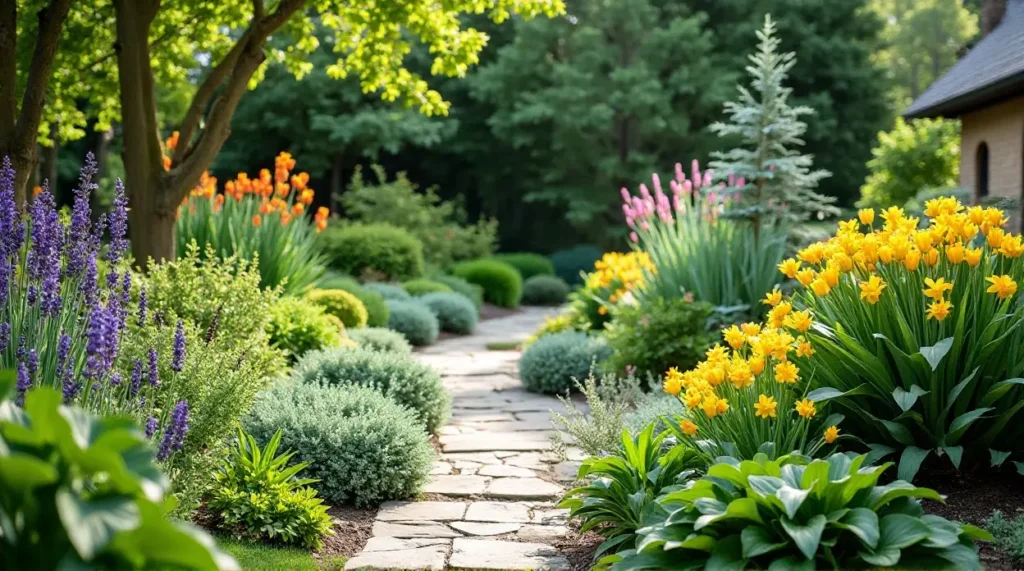
A picturesque garden path made of stone winds through lush greenery, flanked by vibrant flowers in shades of orange, purple, and yellow. Tall trees provide a canopy of shade, while a small evergreen adds texture to the scene. A charming house peeks into the frame on the right.
Color, Texture, and Plant Selection Color
- Aim for a limited palette with one or two dominant colors plus accents. This keeps the design cohesive and prevents visual clutter.
- Use color theory: complementary colors (opposites on the color wheel) create vibrant contrast; analogous colors (adjacent on the wheel) create harmony.
- Consider seasonal color: spring bulbs (tulips, daffodils), summer perennials, fall foliage (maple, burning bush), and winter interest (evergreens, bark texture). Texture
- Combine fine-textured plants (ornamental grasses, lavender) with bold-leaved or coarse-textured plants (hostas, elephant ear) to create contrast.
- Texture affects perceived distance: fine textures recede, coarse textures advance—use this to manipulate depth in small spaces. Plant Selection
- Choose plants suited to your USDA hardiness zone, soil type, sun exposure, and available water.
- Mix evergreens for year-round structure with flowering perennials and seasonal annuals for color.
- Use native plants where possible; they typically require less maintenance and support local wildlife.
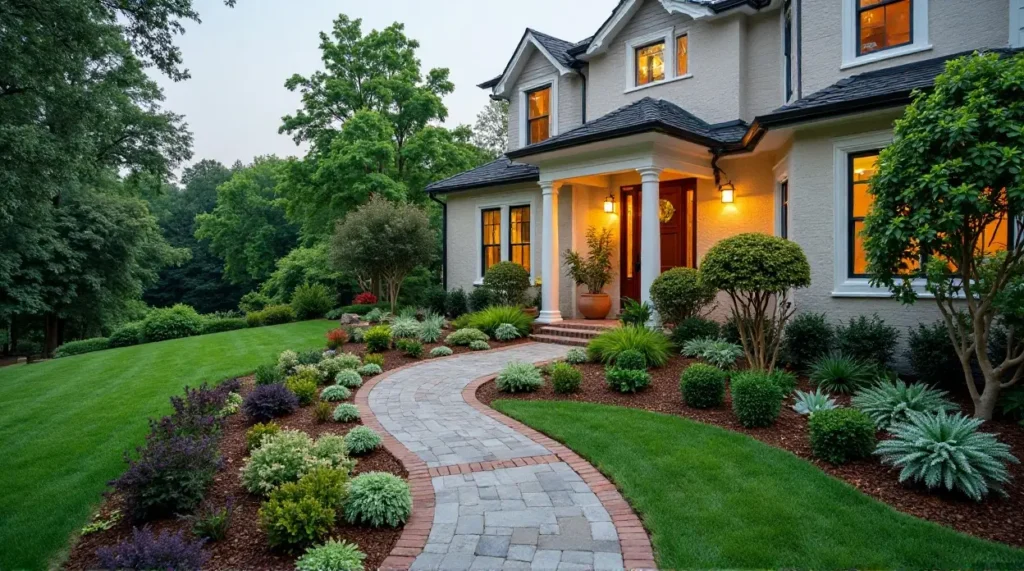
A charming house with a well-manicured lawn and lush landscaping, featuring a curved stone pathway leading to a welcoming front porch adorned with columns and warm lighting, surrounded by neatly arranged shrubs and trees.
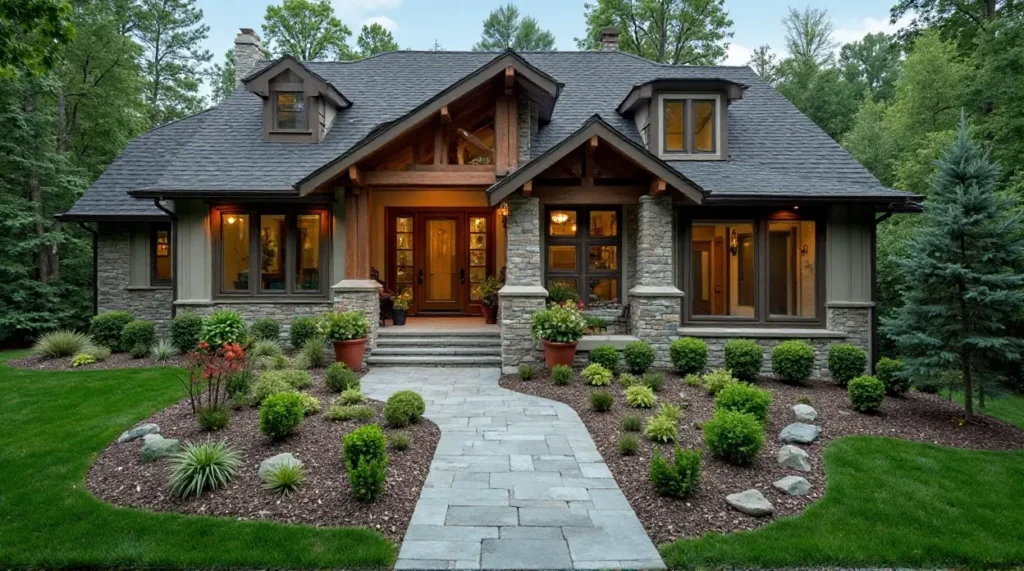
A charming stone house with a gabled roof and wooden accents is surrounded by lush greenery and landscaped gardens. The front path, made of stone tiles, leads to a welcoming entrance with warm lighting visible through large windows. The setting is tranquil, nestled among tall trees.
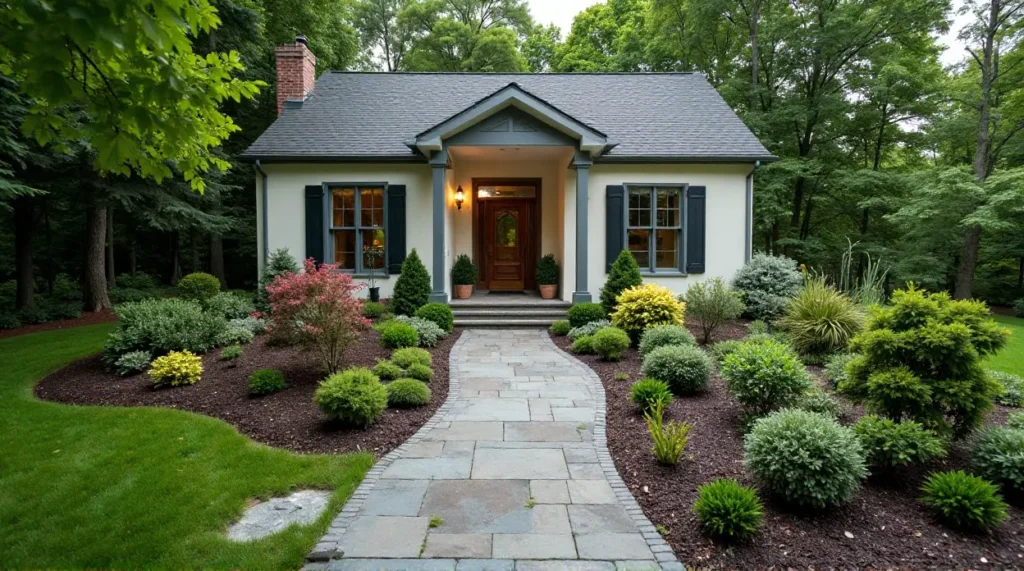
A charming small house with a gray roof and cream-colored walls is nestled amid lush greenery. A stone pathway leads to the front door, flanked by well-manicured bushes and colorful plants. Tall trees surround the property, enhancing the serene forest setting.
Hardscape and Accents
- Edging: Define beds with stone, brick, metal, or low planting to keep a clean separation from lawn and pathways.
- Mulch: Use organic mulch for moisture retention and soil health; decorative bark or gravel for style and reduced upkeep.
- Lighting: Low-voltage or solar uplights enhance nighttime curb appeal and highlight focal points.
- Pathways and stepping stones: Guide visitors to the entrance and add texture and rhythm.
- Containers: Use pots to frame entryways or add height and seasonal change to borders.
Practical Steps to Create Your Front Yard Garden Bed
- Assess and plan: Map sun exposure, soil type, drainage, and sight lines. Consider the home’s architectural style and your maintenance capacity.
- Sketch design: Include placement of focal points, layers, and pathways. Select a cohesive plant palette.
- Prepare soil: Amend with compost, correct drainage issues, and test pH if needed.
- Install structural elements first: Hardscape, irrigation, and larger shrubs or trees.
- Plant in groups: Mass plantings of three to five create impact and are easier to maintain.
- Mulch and water: Mulch to suppress weeds and retain moisture; water new plants regularly until established.
- Maintain: Prune for shape and health, deadhead spent blooms, replace annuals seasonally, and monitor for pests and disease.
Budget-Friendly Tips
- Start small: Establish a few beds and expand over time.
- Use perennials and shrubs as anchors; fill with inexpensive annuals or seed mixes.
- Divide existing perennials to create more plants at low cost.
- Buy smaller specimens and allow them to grow into the space.
Maintenance Considerations
- Choose plants that match your desired maintenance level. High-drama, fast-growing shrubs require more pruning; drought-tolerant beds need less watering once established.
- Install drip irrigation or soaker hoses for efficient watering.
- Regularly refresh mulch, feed perennials in spring, and remove invasive volunteers.
Conclusion Creative garden bed design is a powerful way to elevate curb appeal. By applying principles of scale, repetition, and layering, and by carefully selecting colors, textures, and plants suited to your climate and home style, you can create a welcoming, beautiful front yard. Whether you prefer the formality of foundation plantings, the charm of a cottage garden, or the restraint of modern design, intentional planning and thoughtful plant selection will ensure a stunning entrance year-round.
About the Author