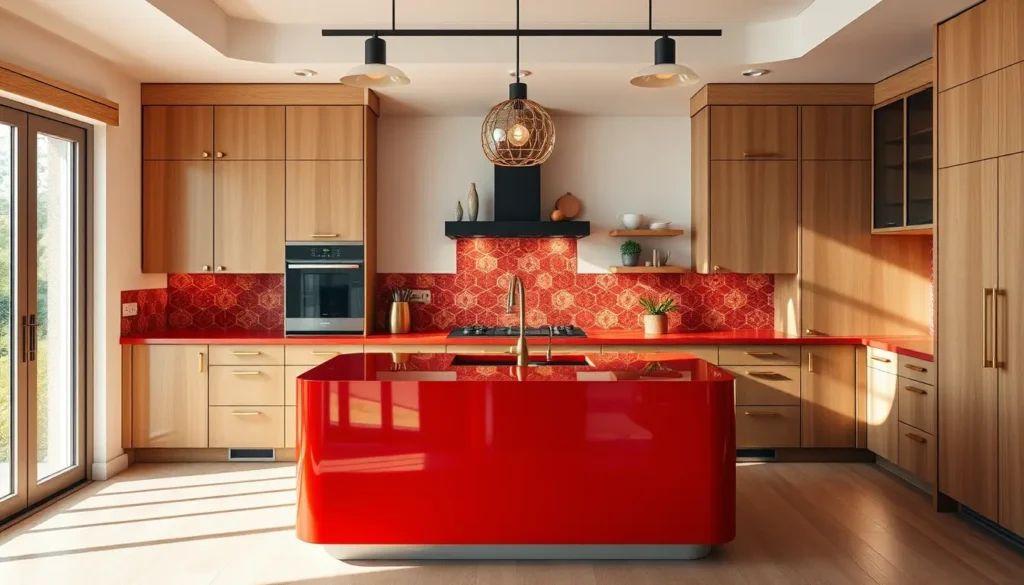
As we enter 2026, the realm of kitchen design is witnessing an exciting evolution in color trends, with homeowners and designers boldly embracing vibrant hues and unexpected combinations.
Color is not only a pivotal element in creating a suitable ambiance but also expresses personal style, making the kitchen a central hub of creativity and expression in the home. This guide analyzes the emerging color trends for kitchens in 2026, focusing on bold palettes, unique combinations, and effective ways to balance vibrant colors with neutral tones for a cohesive look.
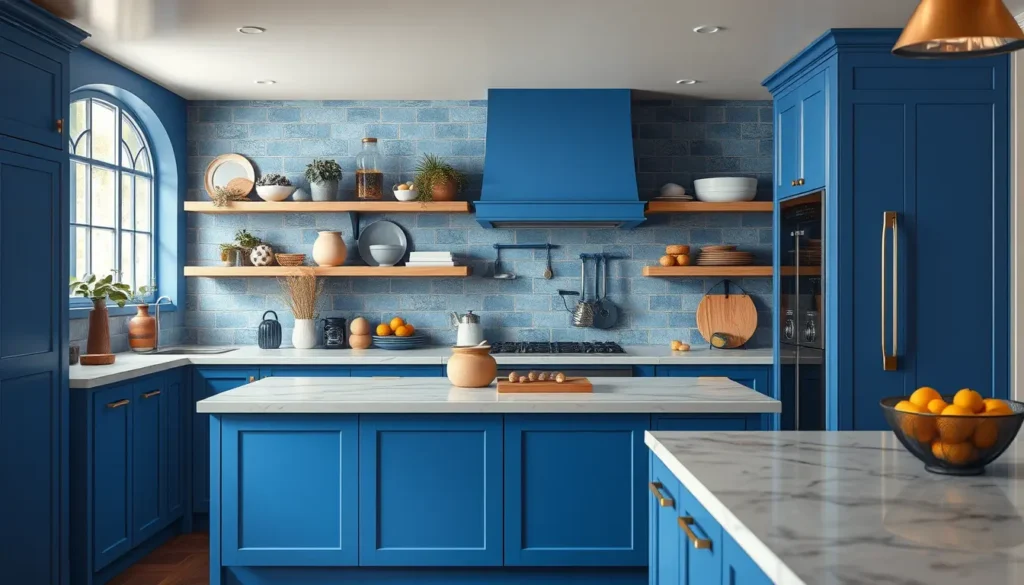
A modern kitchen featuring striking blue cabinetry and a matching range hood, complemented by marble countertops. Wooden shelves display decorative items and plants against a blue tiled backsplash. A bowl of oranges adds a pop of color on the countertop, while a large window allows natural light to fill the space.
1. Bold Hues: A Statement of Individuality
Deep Greens and Forest Tones
Rich greens inspired by nature are gaining popularity, evoking tranquility and a connection to the outdoors. Deep greens can serve as an excellent choice for cabinetry or accent walls.
- Advantage: These tones create a calming atmosphere while adding depth and elegance to the space. Pairing deep greens with natural wood elements can enhance their organic appeal.
Vibrant Blues
From cobalt to azure, bold blue shades are making a splash in kitchen design, introducing freshness and energy.
- Advantage: When used on cabinets or backsplashes, bold blues bring a refreshing pop of color that can be both modern and timeless. Pairing with white or soft beige can help balance the vibrancy.
Fiery Reds and Oranges
Warm colors like fiery reds and oranges can create a sense of warmth and excitement in the kitchen. These intense hues are perfect for statement pieces like kitchen islands or accent walls.
- Advantage: These warm shades stimulate conversation and creativity, making the kitchen a lively space. Pairing with neutral or earthy tones can temper their intensity, creating a vibrant yet inviting atmosphere.
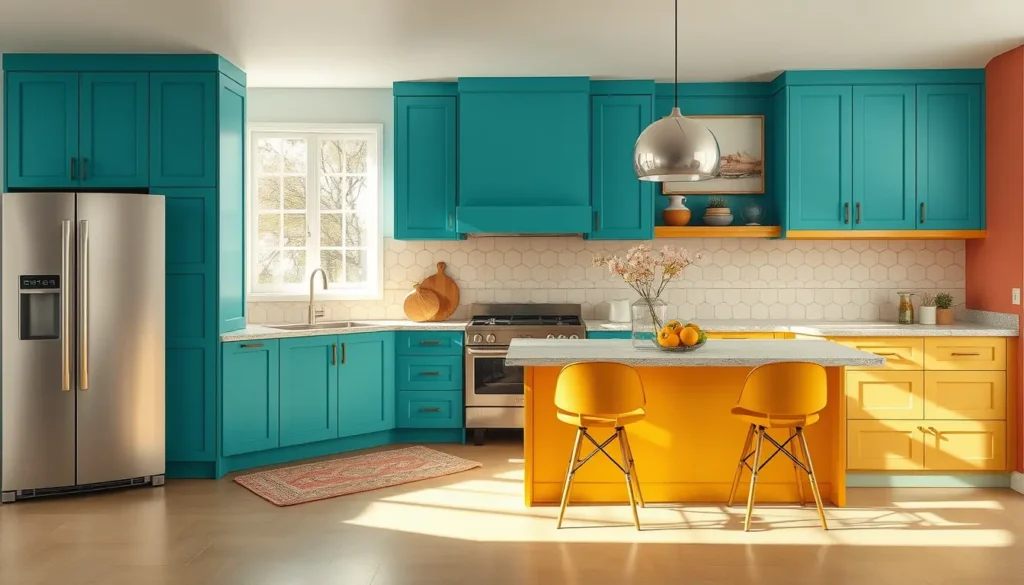
A vibrant kitchen features turquoise cabinets and a stainless steel refrigerator, with a sunny yellow island accompanied by two matching stools. A pendant light hangs above the island, which is decorated with a vase of flowers and a bowl of oranges. The hexagonal tile backsplash and a window letting in natural light enhance the cheerful atmosphere.
2. Unexpected Combinations: Creating Visual Interest
Bold Pairings
2026 is seeing exciting combinations of colors that may not traditionally be seen together but create dynamic contrasts.
- Teal and Mustard Yellow: This pairing can create a retro yet contemporary vibe. Using teal on cabinets coupled with mustard yellow accents or décor pieces can be striking.
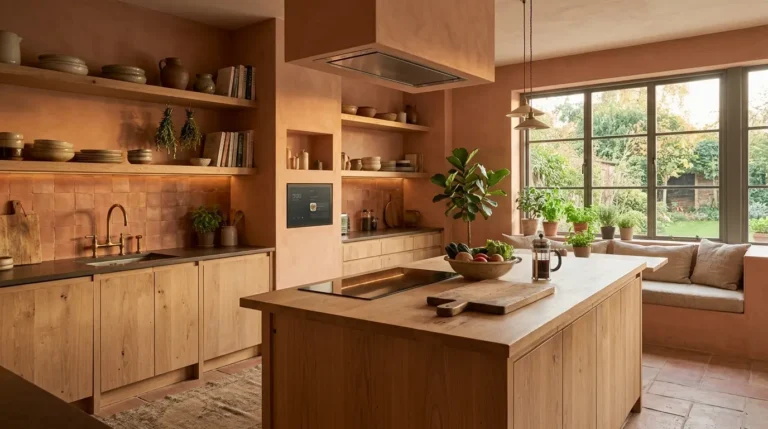
- Burnt Sienna and Blush Pink: This combination brings a warm yet soft feel to the kitchen. Burnt sienna adds richness, while blush introduces a gentle touch.
Monochromatic Schemes with Variations
Another trend is to take a single bold color and use various shades and tints to create depth and interest.
- Incorporating Texture: A monochromatic scheme works best when there are varying textures involved, such as matte versus glossy finishes, or different materials like velvet and metal, enhancing the visual impact of the color.
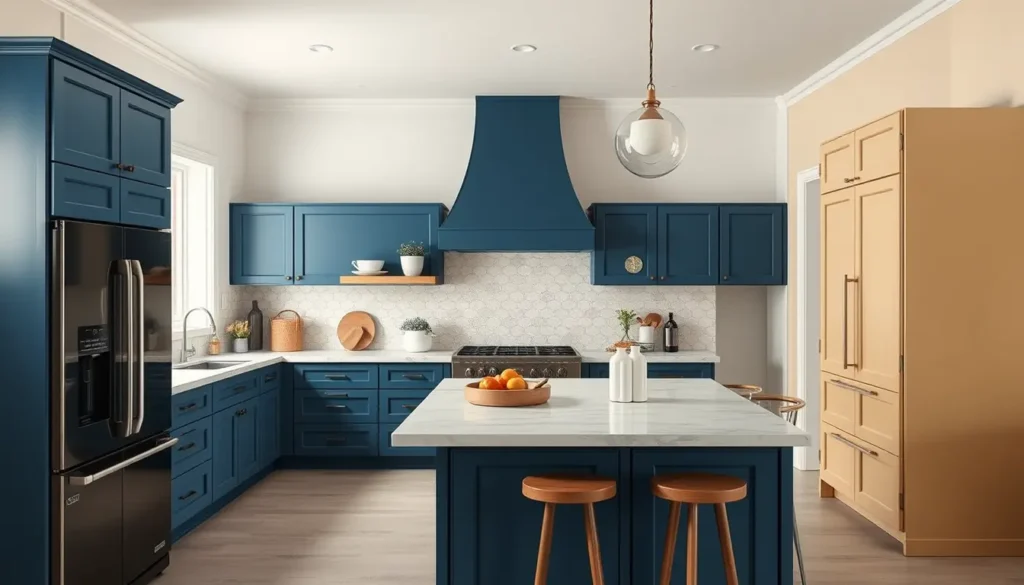
A modern kitchen features bold blue cabinetry and a matching range hood, complemented by a sleek white countertop island with wooden stools. A light fixture hangs above, while a beige refrigerator adds contrast, and various kitchen items are neatly arranged on the counters.
3. Balancing Vibrant Colors with Neutrals
The Role of Neutrals
To avoid overwhelming the space with bold colors, incorporating neutral shades is essential for balance.
- Warm Grays and Beiges: These colors can serve as a backdrop for vibrant hues, allowing bold colors to stand out without overpowering the design. A neutral palette allows vibrant colors to be the stars of the kitchen.
- Whites and Off-Whites: Crisp whites or soft off-whites can create a bright and airy feel that amplifies natural light, making the space feel more open while framing colorful accents beautifully.
Strategic Placement
Highlighting Key Features: Use neutral tones to highlight key design elements, such as cabinets or countertops, while reserving the bold colors for smaller areas like backsplashes, islands, or decorative accessories.
- Layering Colors: For instance, if adopting a deep blue for cabinetry, consider a lighter gray or white for the walls and countertops, creating a balanced look that allows the blue to pop without feeling heavy.
4. Textural Elements and Finishes
Utilizing textures can amplify the impact of color in the kitchen.
- Matte vs. Glossy Finishes: A matte finish can soften bold colors, making them more versatile, while glossy finishes can add vibrancy and shine, reflecting light and creating visual interest.
- Natural Elements: Incorporating natural stone, wood, or metals can complement bold hues without competing with them, creating a grounded and inviting environment and enhancing the overall aesthetic.
5. Conclusion
In 2026, kitchen design is set to embrace a palette that celebrates boldness and individuality while maintaining an essential balance with neutrals. By integrating deep greens, vibrant blues, and warm hues, alongside unexpected color combinations, homeowners can create kitchens that are not only visually stunning but also highly functional and welcoming. The strategic blending of bold colors with neutral backgrounds will ensure a cohesive, stylish look that resonates with personal style and enhances the heart of the home. As kitchens become more than just cooking spaces, but reflections of creativity and lifestyle, the possibilities for color are truly limitless.
About the Author