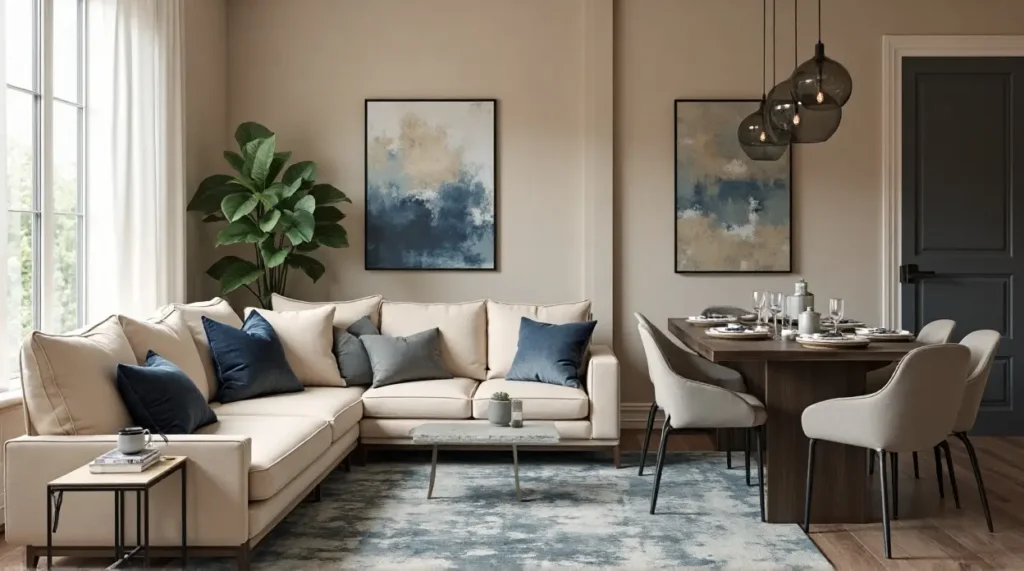
Let’s be real for a second: we’ve all looked at those sprawling interior design magazines with 40-foot ceilings and massive dining halls and thought, “Must be nice.” But back in the real world—the world of studio apartments, narrow townhomes, and “cozy” condos—we’re playing a different game. We’re playing “Apartment Tetris.”
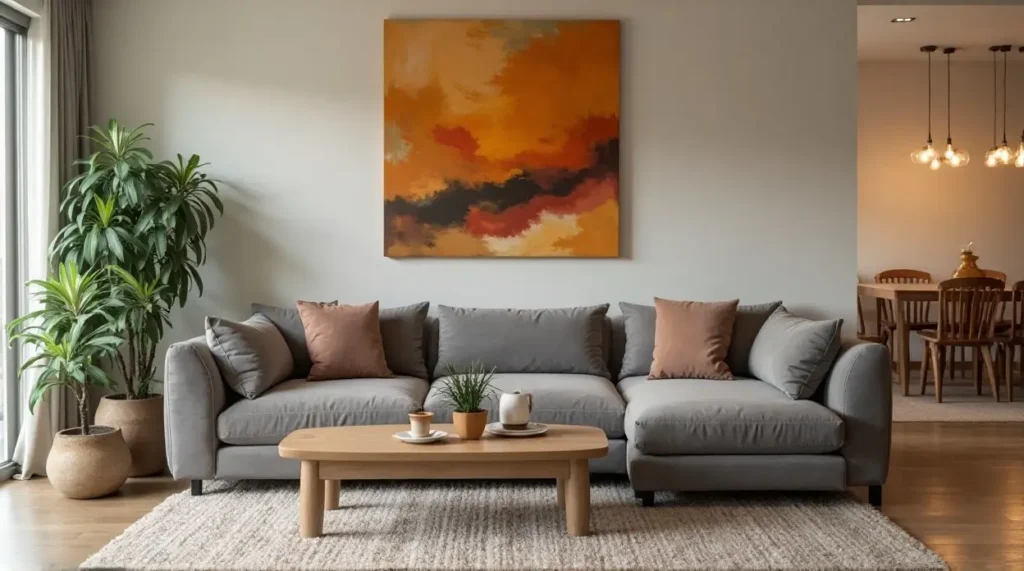
If you’re currently trying to figure out how to fit a comfortable couch and a functional dining table into a room the size of a postage stamp, take a breath. You don’t have to eat on your lap for the rest of your life. With a few interior design tips and some clever compact dining solutions, you can turn your cramped quarters into a stylish sanctuary where “style meets space” in every single corner.
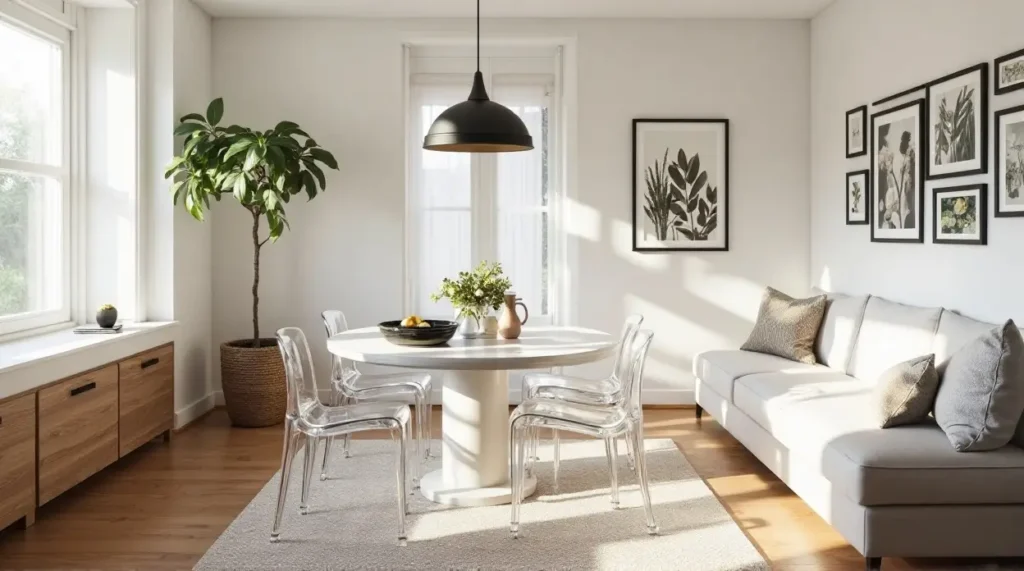
The “Small Space” Mindset: Why Square Footage is Just a Number
First things first: stop looking at your small living room as a limitation. Instead, think of it as a “curated cozy” experience. When you have less space, every single piece of furniture has to earn its keep. There’s no room for “filler.” This forces you to choose pieces you truly love and that actually serve a purpose.
Think of your small space like a Swiss Army Knife. It might be compact, but it’s packed with tools that pop out exactly when you need them. The goal isn’t to cram a “standard” home into a small footprint; it’s to rethink what a home looks like for you. Does a dining room need to be a separate room? Absolutely not. It just needs to be a designated vibe.
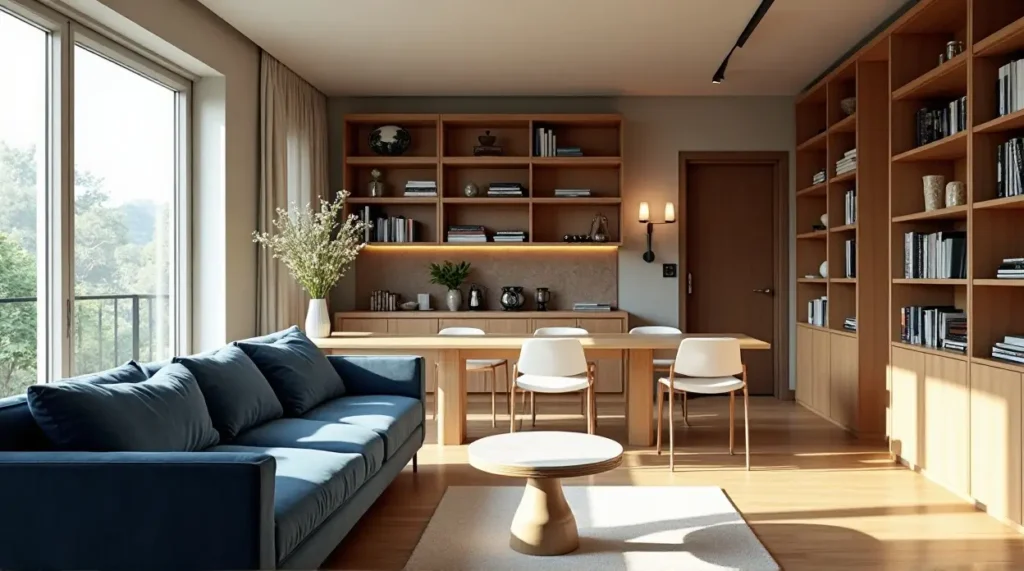
Mastering the Invisible Wall: How to Zone Your Room Without Construction
The biggest mistake people make in a small living room is letting the furniture float around like lost ships at sea. To make a multi-functional room work, you need “zones.” You want to walk into the room and immediately understand, “Okay, this is where I relax, and this is where I eat.”
The Rug Trick: Creating Islands of Functionality
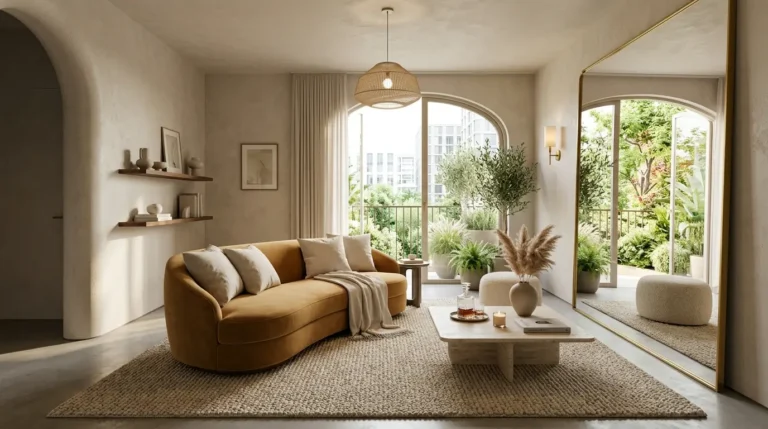
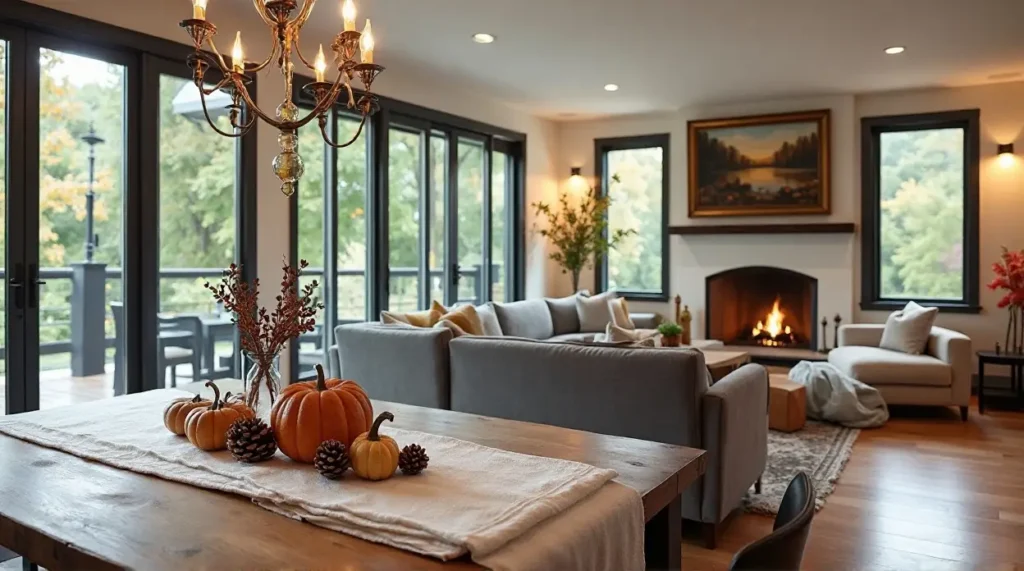
One of the easiest ways to create these zones is with rugs. Think of a rug as an “anchor.” If you place your sofa and coffee table on a large, plush rug, you’ve effectively built a “living room island.” Now, if you place your small dining set on a separate, distinct rug (maybe a flat-weave or a different pattern), you’ve created a “dining island.”
Even if the two rugs are only six inches apart, the visual boundary tells your brain they are two different rooms. It’s like magic—walls without the drywall dust.
Lighting as a Border: Anchoring Your Dining Zone
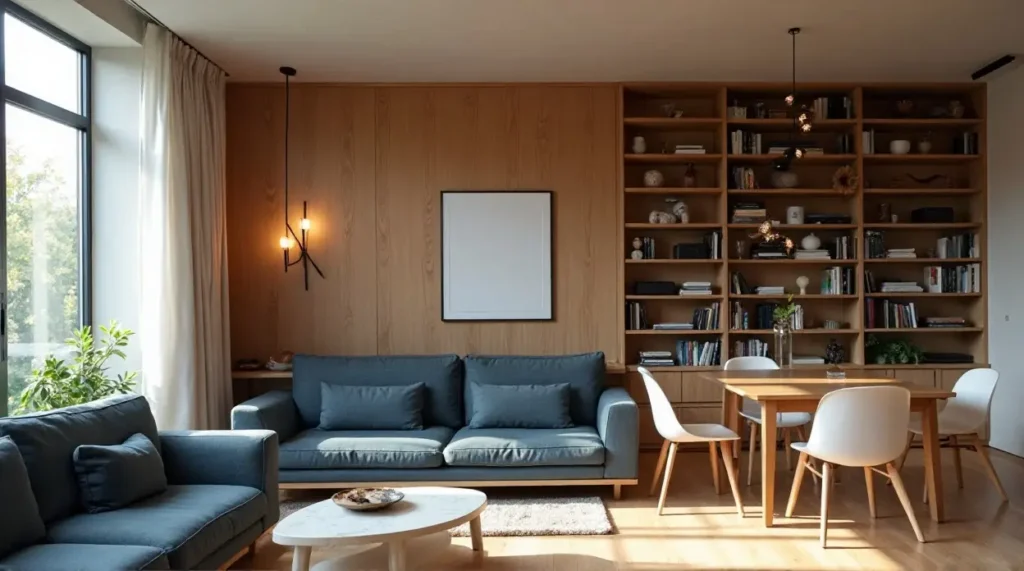
Lighting is your second-best tool for zoning. If you have a single overhead light in the middle of the room, everything feels washed out and singular. But, if you hang a low-profile pendant light or a stylish chandelier directly over your dining table, you’ve anchored that space. At night, when you turn off the “living room” lamps and dim the dining light, the rest of the room fades away, leaving you with an intimate, restaurant-style atmosphere.
Furniture That Pulls Double Duty: Multi-Functional Masterpieces
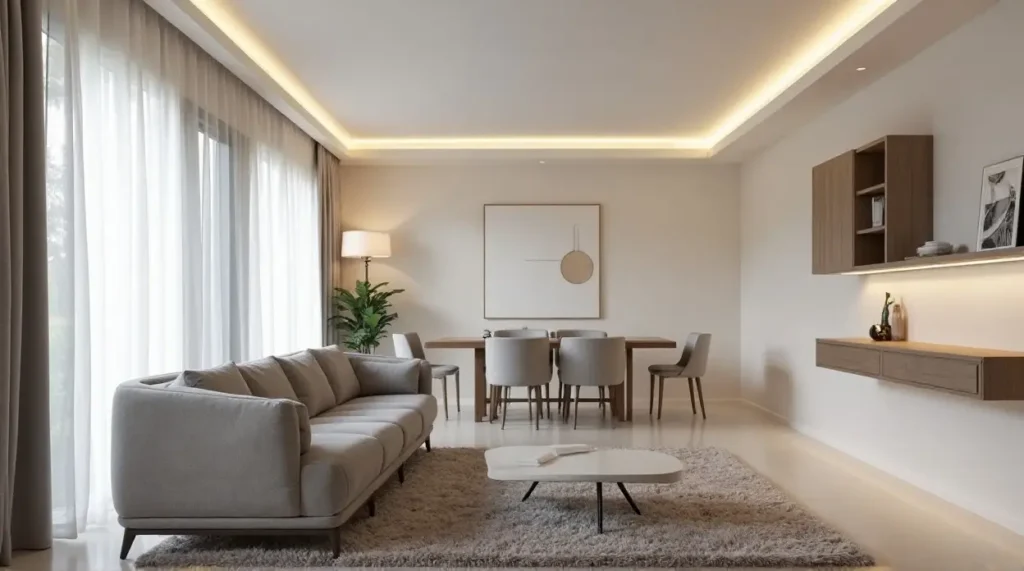
In a small space, “multi-functional” is the name of the game. If a piece of furniture only does one thing, it’s probably taking up too much real estate.
The Extendable Table: Your Secret Weapon for Dinner Parties
I’m a huge fan of the extendable table. For 90% of the week, it’s a tiny, two-person desk or a console table pushed against the wall. But when Friday night rolls around and your friends show up, it transforms into a six-person banquet. It’s the ultimate compact dining solution. Look for tables with “butterfly leaves” that store inside the table itself—no one has room to store extra table leaves in a closet!
Why Round Tables are the Unsung Heroes of Flow
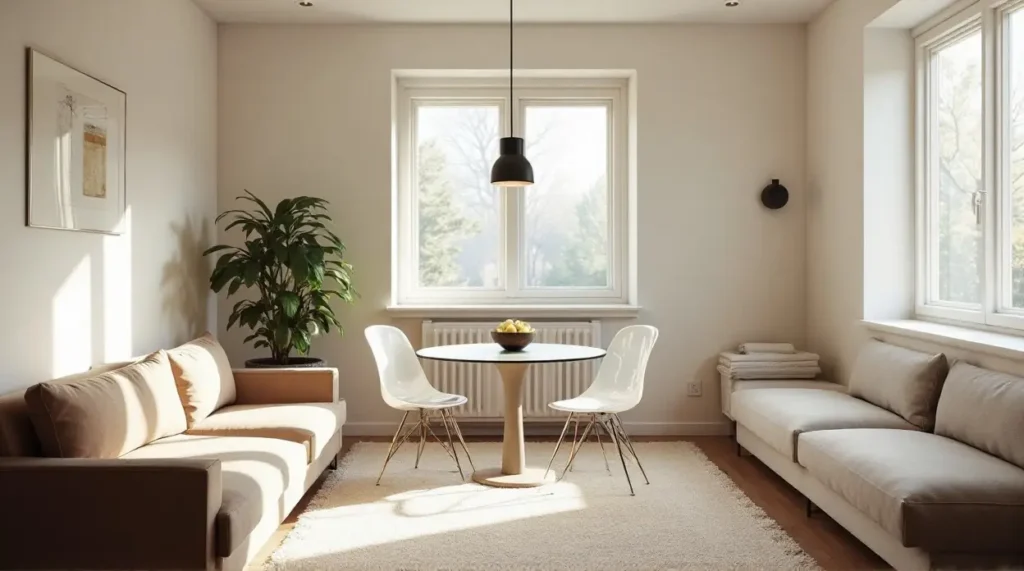
If you’re debating between a square and a round table, go round every single time. Why? Because corners are the enemies of small spaces. In a tight room, you’re constantly walking around furniture. A round table has no sharp edges to bang your hip on. Plus, round tables can usually squeeze in one extra person much more easily than a square one. They facilitate conversation and keep the “flow” of the room feeling organic rather than blocked.
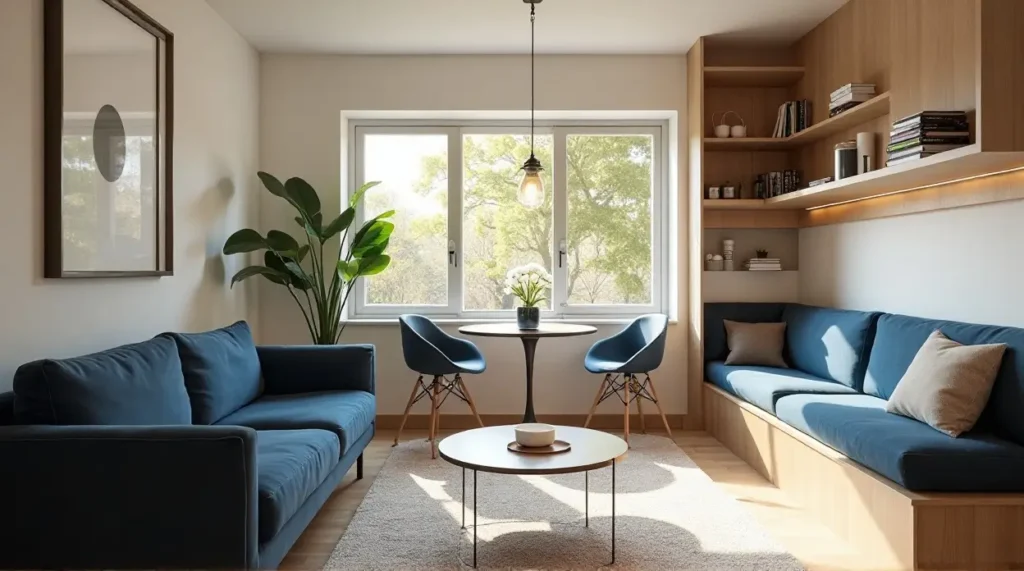
Nesting Tables and Stools: Hidden Seating on Demand
Don’t forget about nesting furniture. A set of nesting coffee tables can be pulled apart to provide extra “dining” surfaces for a casual movie night. Similarly, look for stools that can slide completely under your dining table when not in use. If the stools disappear, the floor space stays clear, making the room feel significantly larger.
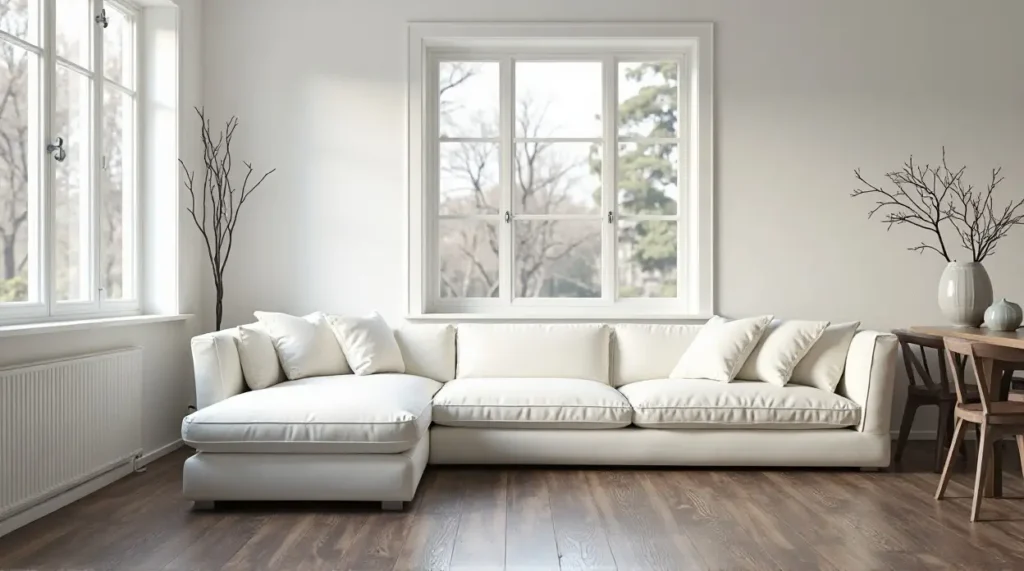
Bistro Vibes: Bringing the Parisian Café to Your Apartment
If you really only need space for one or two people, why fight for a full-sized table? The bistro table is a classic for a reason. It’s small, it’s light, and it’s undeniably stylish.
The Wall-Mounted Drop-Leaf: The Ultimate Disappearing Act
For the truly space-challenged, the wall-mounted drop-leaf table is a lifesaver. It’s essentially a shelf that hinges down. When you’re eating, it’s a sturdy table. When you’re done, it folds flat against the wall. Pair it with a couple of folding chairs that hang on decorative hooks, and you’ve reclaimed your entire floor in seconds. It’s the closest thing to a “vanishing” dining room you can get.
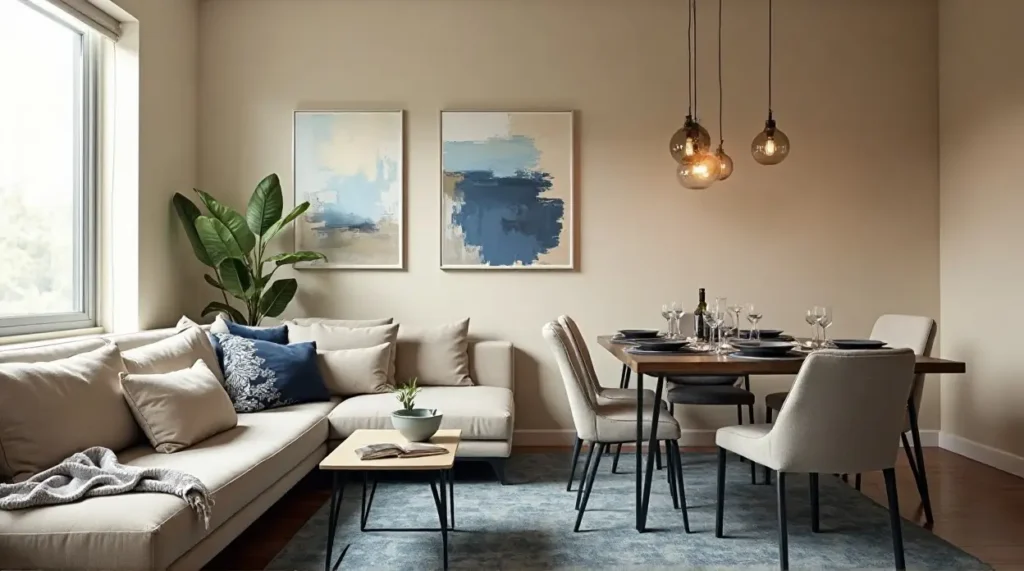
Visual Breathing Room: Design Tricks to Fool the Eye
Sometimes, it’s not about how much furniture you have; it’s about how much you can see. Stylish small spaces often rely on “visual weight.”
The Magic of Acrylic and Glass: Furniture That “Vanishes”
Have you ever seen “Ghost Chairs” or glass-topped tables? There’s a reason interior designers love them. Because you can see right through them, they don’t block your line of sight. A heavy, dark wood dining table can feel like a boulder in a small room. An acrylic table with glass top, however, feels like air. It provides the function of a table without the visual clutter.
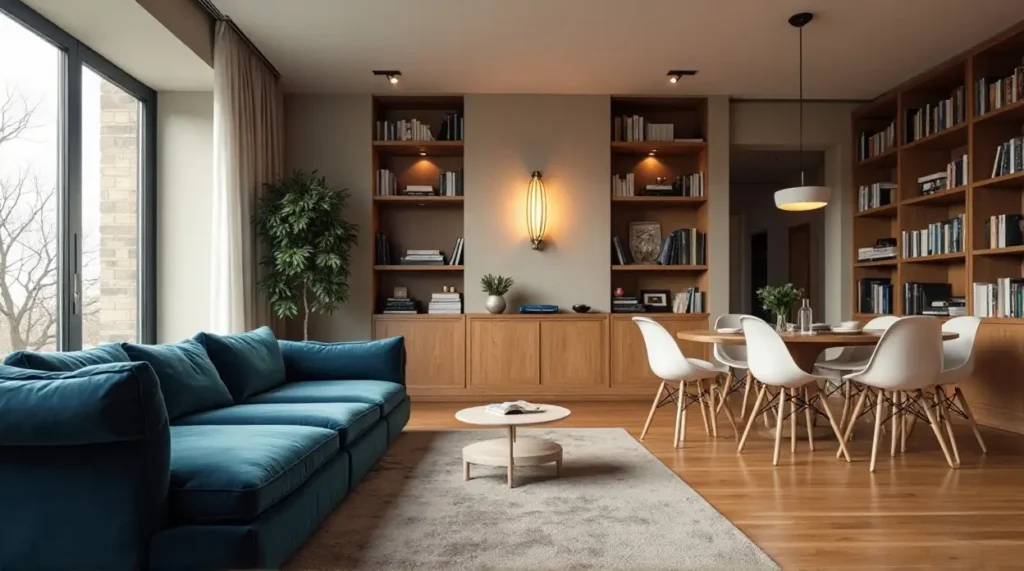
Going Vertical: Using Your Walls to Save Your Floor
When you run out of floor, look up. Instead of a bulky sideboard or china cabinet, use floating shelves for your plates and glassware. By keeping the floor clear, the room feels more expansive. You can even use a high-top “bar” table against the back of your sofa. This utilizes the “dead space” behind the couch and provides a perfect spot for eating while watching TV (we all do it, let’s be honest).
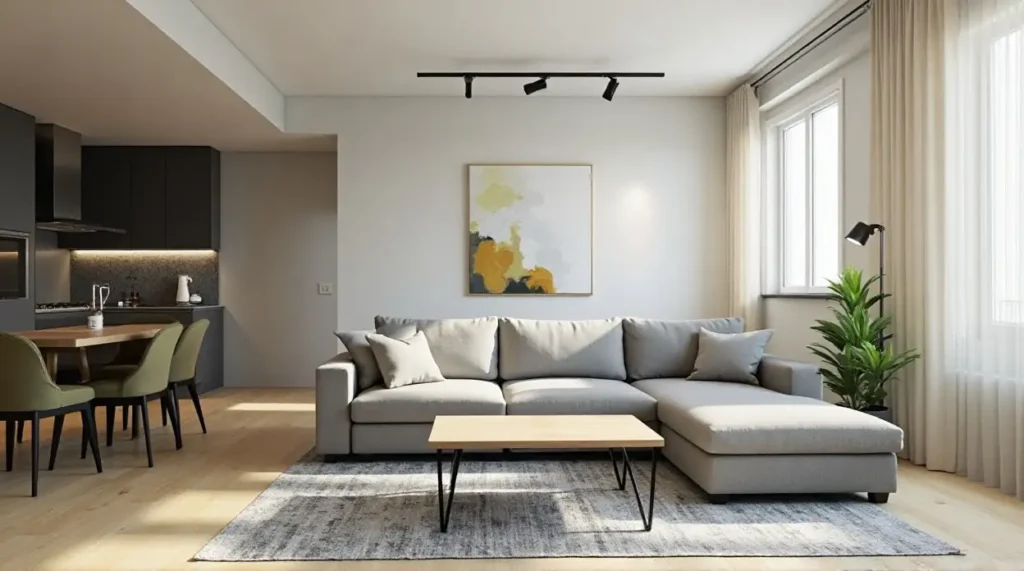
The Banquette Secret: Why Corner Seating is a Space-Saving Genius
In a traditional dining setup, you need at least 2-3 feet of “clearance” behind every chair so people can pull them out. In a small room, that’s a luxury you don’t have. Enter: the banquette or “booth” seating. By pushing a bench or an L-shaped sofa into a corner and pulling the table up to it, you eliminate the need for clearance on two sides. It’s incredibly efficient and gives your home a cozy, high-end cafe feel.
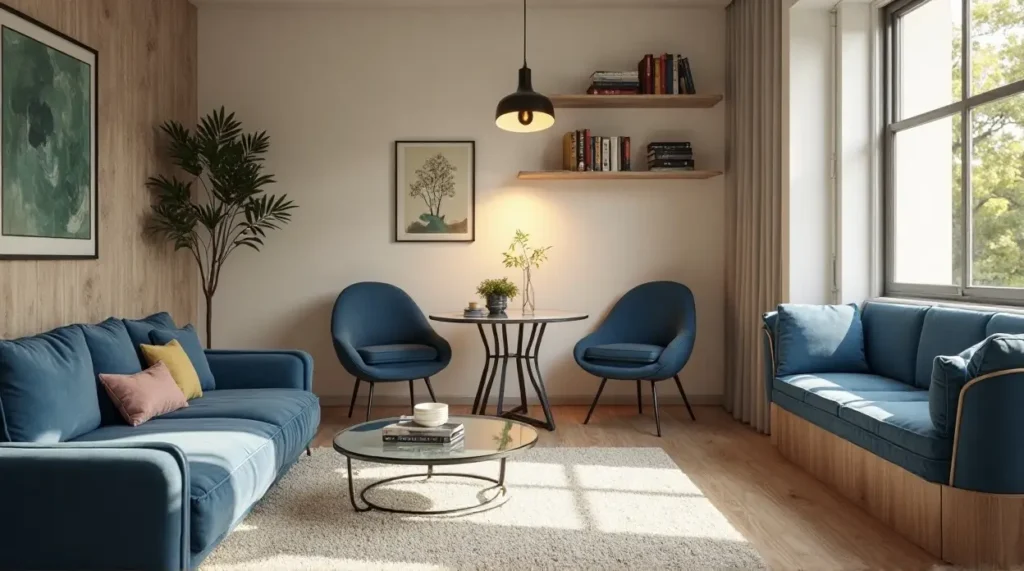
Integrating Storage Under Your Seating
If you’re building or buying a banquette, make sure it has storage. Flip-top benches are perfect for storing those “once-a-year” items like holiday tablecloths or slow cookers. In a small living room, every cubic inch is a storage opportunity.
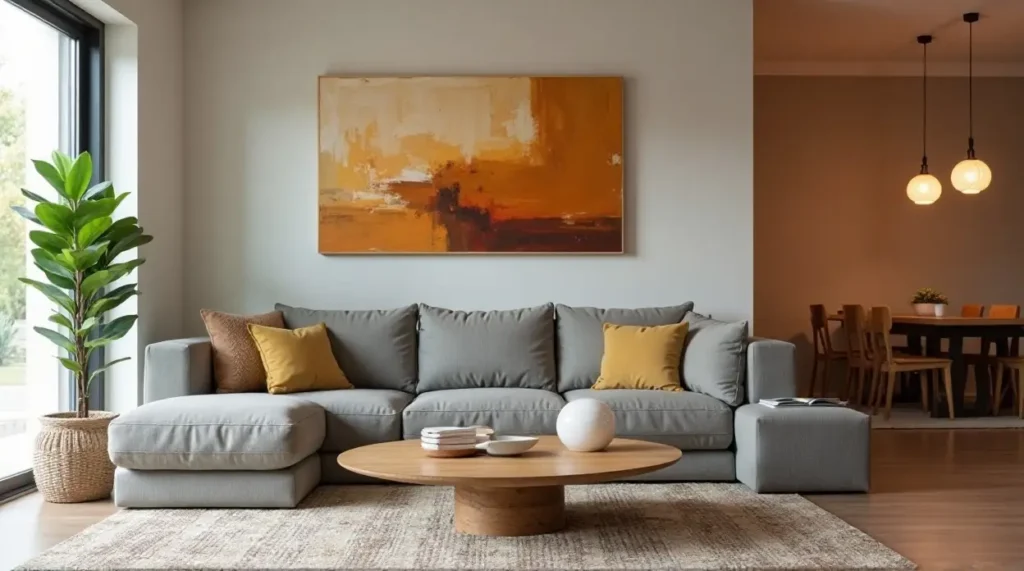
Color Palettes for Combined Spaces: Cohesion Over Chaos
When your living and dining areas are in the same room, you need a cohesive color story. If your living room is “Boho Jungle” and your dining area is “Ultra-Modern Chrome,” the visual “noise” will make the room feel smaller and more chaotic.
Stick to a consistent palette. Maybe your walls are a soft, “receding” white or light gray. Then, use pops of color—like a blue velvet sofa and matching blue dining chair cushions—to tie the two zones together. This “color threading” makes the room feel like one intentional, well-thought-out space rather than a collection of random furniture.
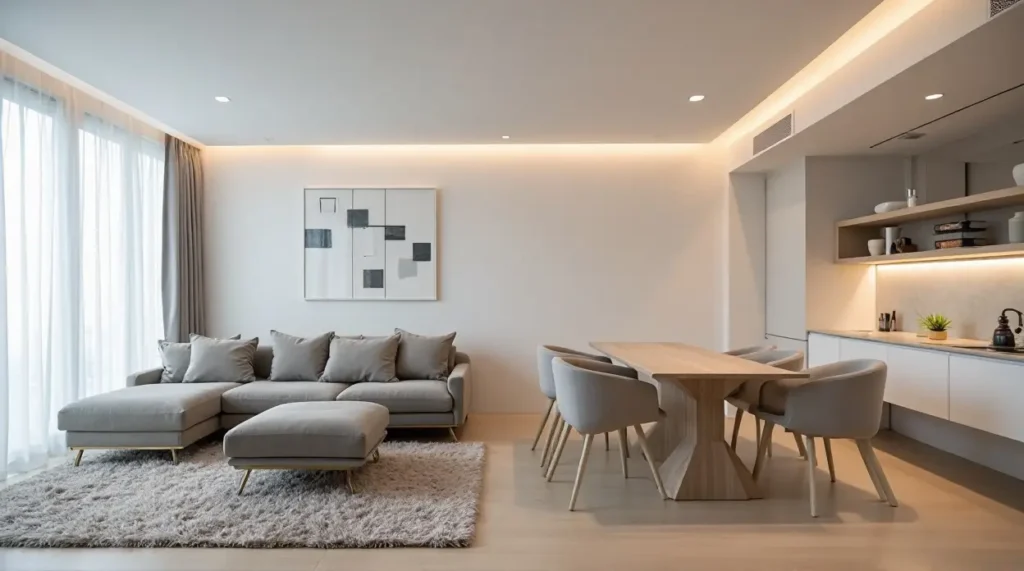
Conclusion: Your Small Space, Your Big Life
At the end of the day, your home should serve you, not the other way around. Don’t let a small floor plan stop you from hosting friends or enjoying a proper meal. By using rugs to zone, choosing “leggy” or transparent furniture to keep things light, and embracing multi-functional pieces like the extendable table, you can master the art of the small living room.
Remember: it’s not about how much space you have; it’s about how you use it. Your tiny apartment isn’t a “starter” home—it’s a sanctuary. So, grab that bistro table, hang that pendant light, and get ready to enjoy your stylish, space-saving masterpiece.
Frequently Asked Questions (FAQs)
1. Is a bar-height table better for a small space than a standard-height one? Bar-height or “counter-height” tables are great because they can double as extra prep space for your kitchen. However, standard-height tables are often better for “visual flow” because they sit lower and don’t block the view across the room as much.
2. Can I use a dining table as a desk in a small living room? Absolutely! This is one of the best ways to save space. Look for a table with a smooth surface and comfortable chairs. Just make sure you have a way to hide your laptop or paperwork during dinner so you can mentally “switch off” from work.
3. What kind of dining chairs are best for tiny rooms? Look for “armless” chairs. They have a smaller footprint and can be pushed further under the table, saving valuable inches of floor space. Transparent “Ghost” chairs are also a top-tier choice for visual clarity.
4. How do I stop my dining area from feeling like it’s “invading” my living room? Zoning is key. Use a different rug, a dedicated light fixture, or even a tall plant to create a soft “buffer” between the two areas. Consistency in color also helps the “invasion” feel more like a “cohabitation.”
5. Are benches better than chairs for small dining areas? Yes! Benches can be tucked completely under the table when you aren’t using them, and they can often seat more people (especially kids) than individual chairs. Plus, they offer a cleaner, less “cluttered” look.
About the Author