Have you ever pulled into your driveway after a long day and felt your shoulders instantly drop an inch? That’s the power of a well-designed front yard. It shouldn’t just be a patch of grass you have to mow every Saturday; it should be a transition zone—a place that whispers, “You’re home now, leave the world behind.”
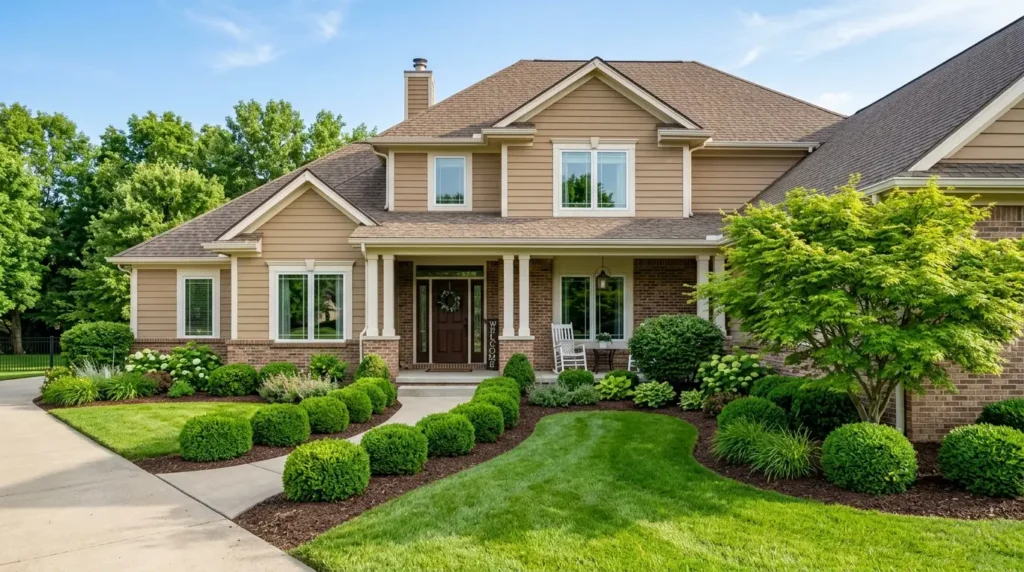
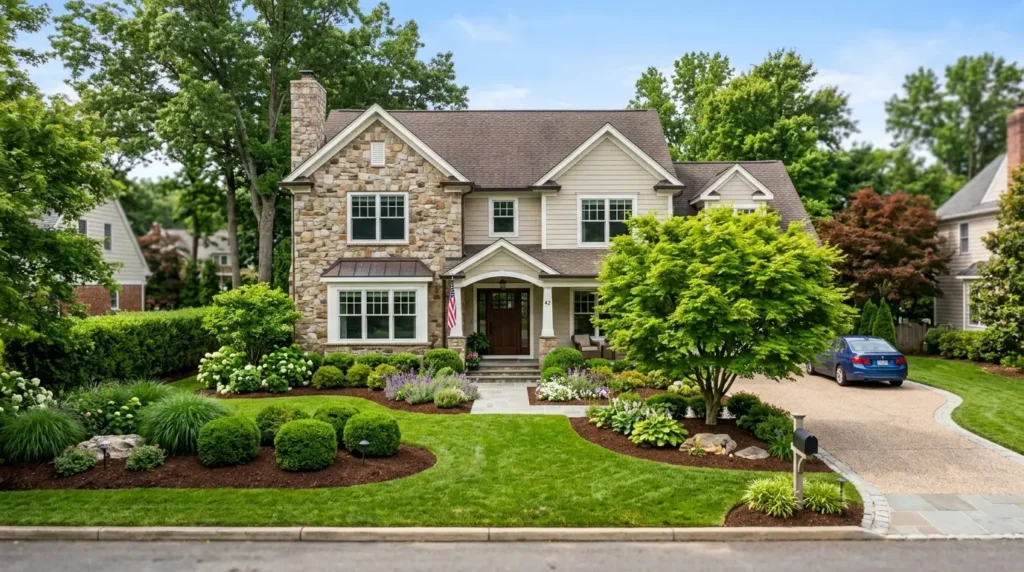
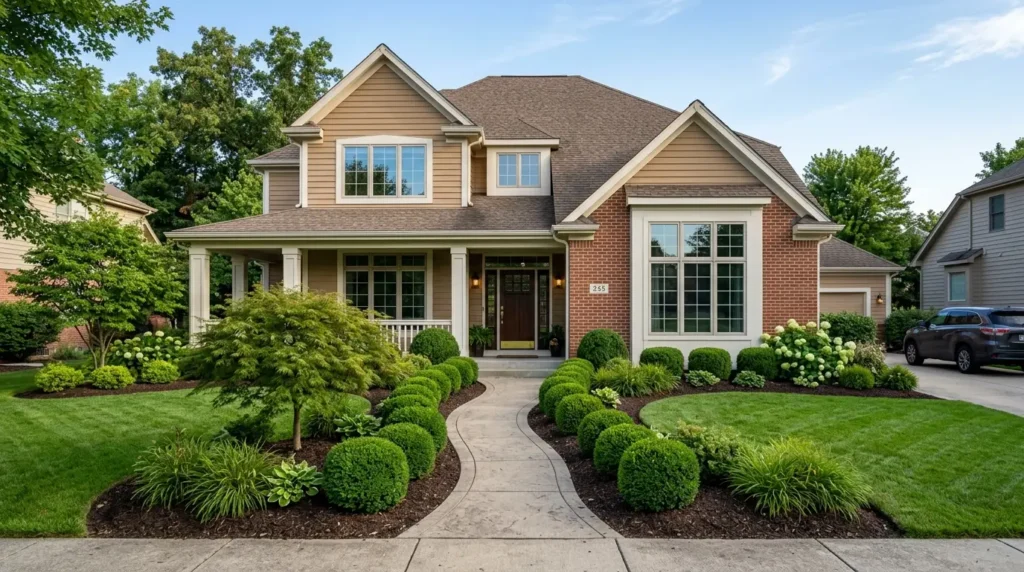
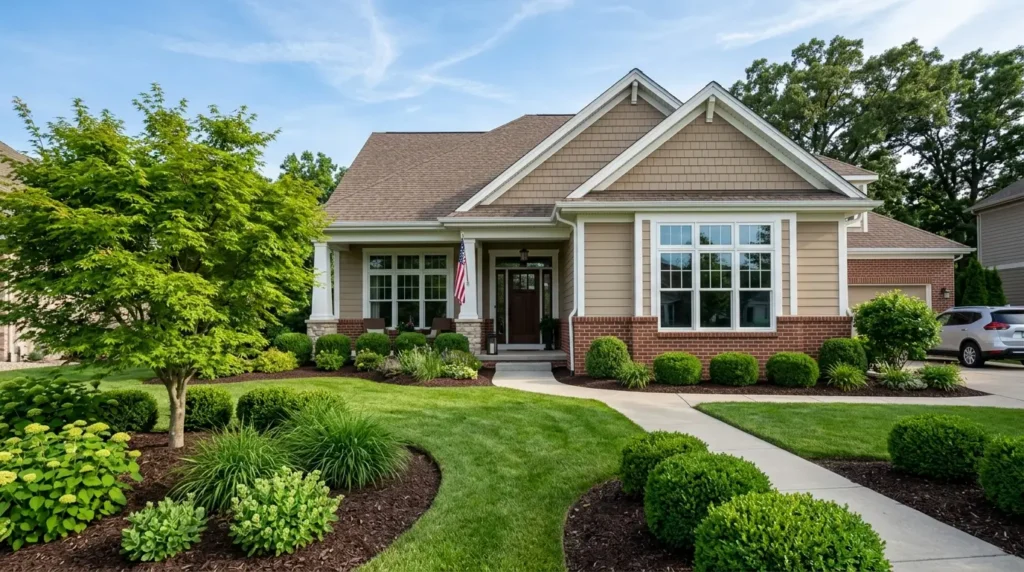
In this design, we aren’t just planting flowers. We’re creating a narrative. We’re using curved mulch beds to lead the eye, ornamental grasses to catch the wind, and a central grass path that feels like a green carpet rolled out just for you. Let’s pull back the curtain on why this specific layout works so well and how you can steal these ideas for your own slice of heaven.
The Power of the Curve: Why Straight Lines are So Last Year
Nature doesn’t really do straight lines. Think about it—rivers meander, clouds drift in swirls, and even the horizon has a gentle arc. When we force our gardens into rigid, rectangular boxes, it can feel a bit… well, clinical.
Softening the Edges of Modern Architecture
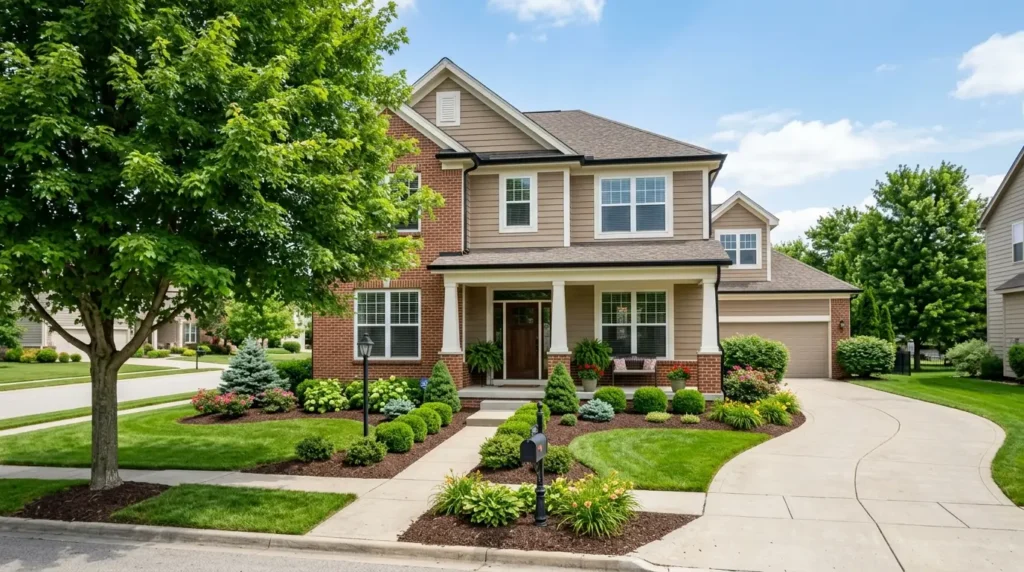
Most houses are full of sharp 90-degree angles. Rooflines, windows, and driveways are all very “pointy.” By incorporating curved mulch beds, we create a visual counterpoint. These sweeping arcs soften the hard lines of the house, making the entire property feel more organic and settled into the earth. It’s like putting a soft, knitted throw over a structured leather sofa—it just feels right.
How Curves Trick the Eye into Seeing More Space
Here’s a little designer secret: curves actually make a small yard look bigger. A straight path tells your brain exactly how far it is from point A to point B. But a curved bed? It forces the eye to follow the arc, creating a sense of mystery and depth. You aren’t just looking at a yard; you’re looking at a journey.
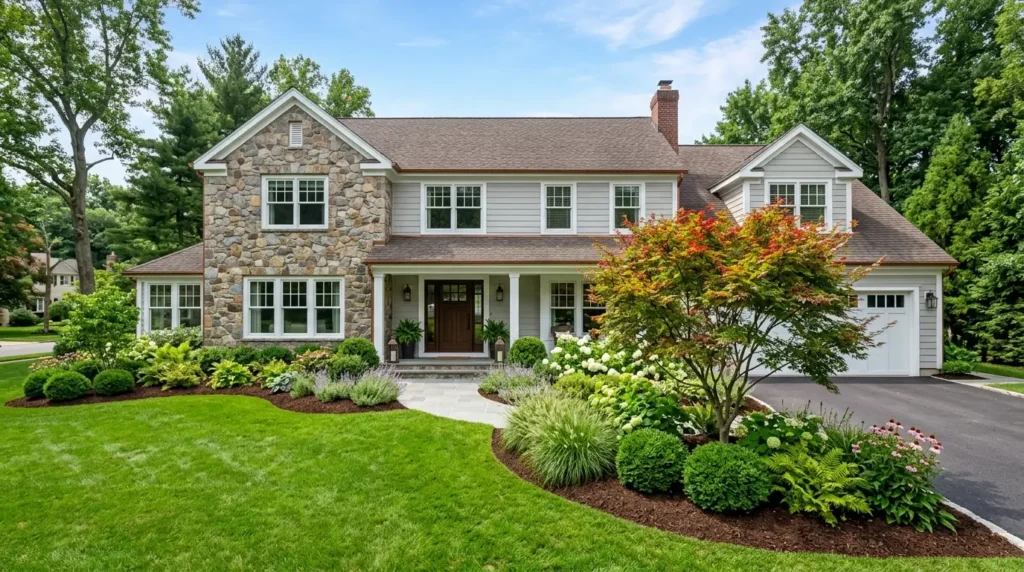
The “Green Carpet” Experience: Designing the Central Grass Path
In this design, we have a unique feature: a central grass path that leads toward a concrete walkway. It’s a brilliant move. Why? Because it keeps the “lush” factor front and center.
Creating a Natural Transition to the Concrete Walkway
Instead of the hard transition of “grass-to-concrete,” the central grass path acts as a foyer. It guides you toward the front door with a soft, tactile experience. When that grass path finally meets the concrete walkway, it feels intentional and structured. It’s the difference between a rough transition and a smooth hand-off in a relay race.
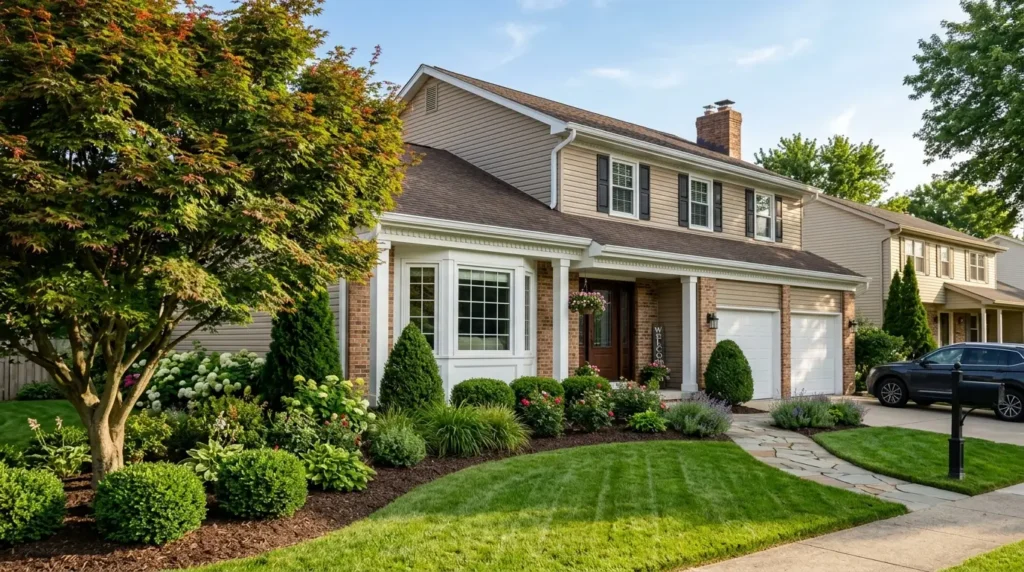
Meet the Stars: Why Ornamental Grasses are Your New Best Friend
If I could only pick one plant category to save a boring yard, it would be ornamental grasses. In this layout, they are used to flank the beds, providing height and texture.
Adding Movement and “Audio” to Your Garden
Most garden plants are static. They sit there and look pretty. But grasses? They dance. Even a tiny breeze makes them sway and whisper. This adds an “audio” element to your yard that most people overlook. Whether it’s Fountain Grass or Switchgrass, these plants provide a vertical contrast to the low-growing flowers, making the beds feel full and dynamic.
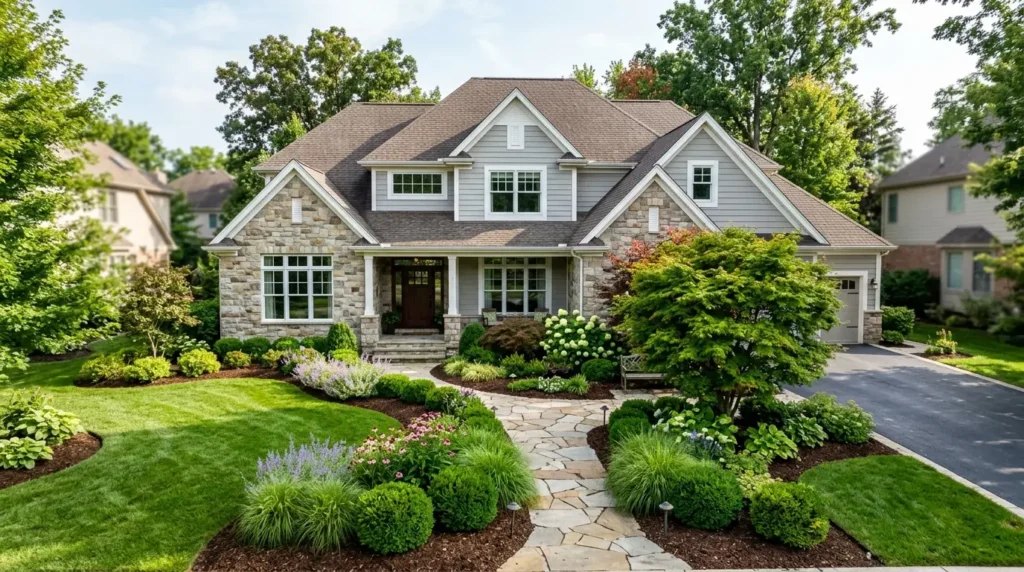
Hydrangeas: The Showstoppers of the Front Yard
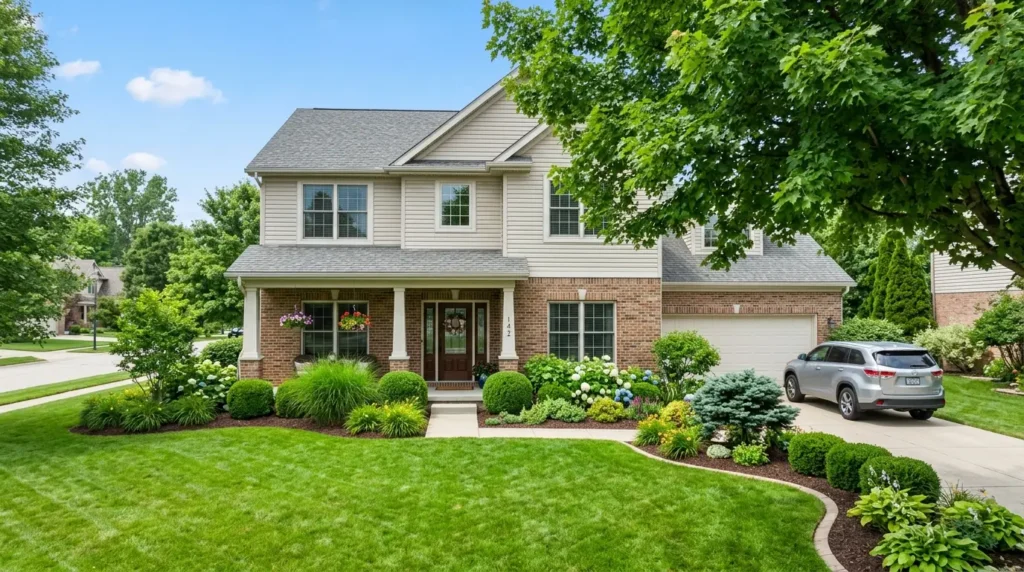
You can’t have a “picturesque” yard without the queen of the summer garden: the Hydrangea. These aren’t just plants; they’re bouquets that happen to grow on bushes.
Choosing Between Mopheads, Lacecaps, and Panicles
In a design like this, Panicle Hydrangeas (like the ‘Limelight’ variety) are often the winners because they are tough, sun-tolerant, and have those massive, cone-shaped blooms that turn from lime green to creamy white. They provide a massive “wow” factor that balances the finer texture of the ornamental grasses.
Soil pH Secrets for Perfect Blooms
Did you know you can play scientist with your hydrangeas? If you’re growing Macrophylla varieties, your soil’s acidity determines the color. Acidic soil gives you those deep “electric” blues, while alkaline soil produces pinks. It’s like a living mood ring for your front yard!
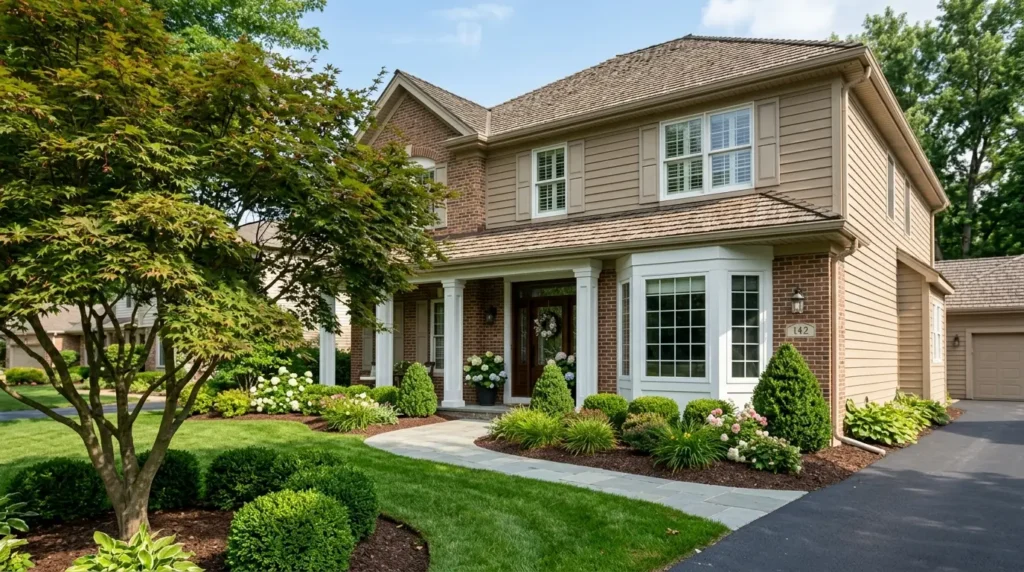
Rounded Shrubs: The “Bones” of Your Landscape Design
Flowering plants are the “jewelry,” but shrubs are the “bones.” Without them, your garden would look like a pile of colorful laundry in the winter.
Creating Year-Round Structure
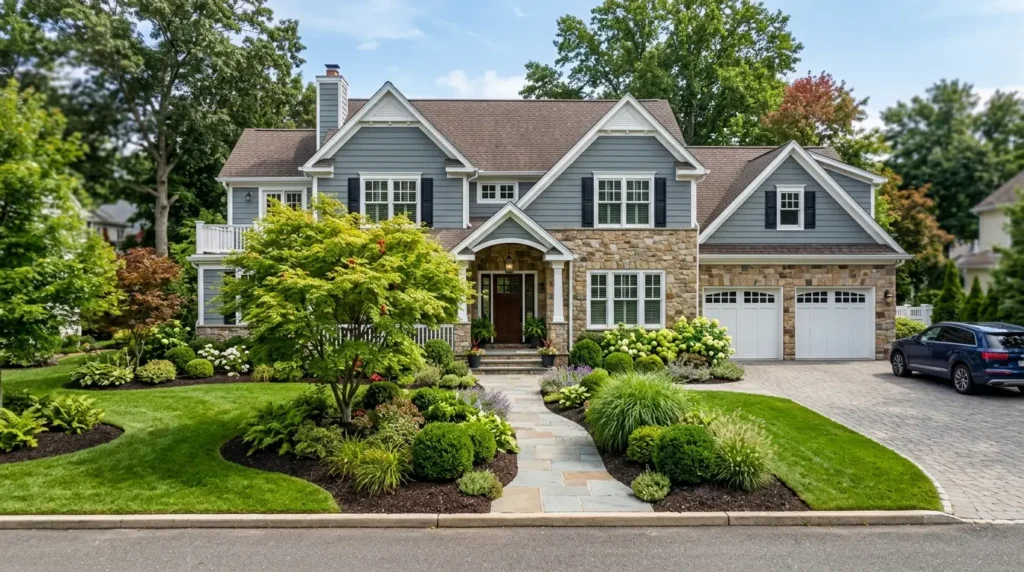
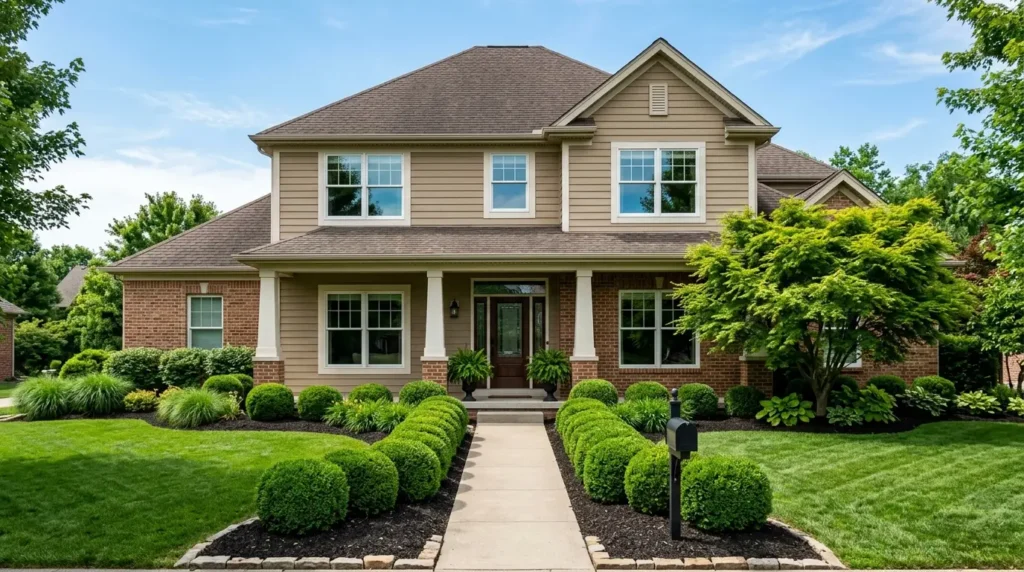
By using rounded shrubs (think Boxwoods or dwarf Spirea), you give the eye a place to rest. They provide a sense of order among the wilder, “bursty” flowers. In this design, these shrubs line the foundation of the house, acting as a green “skirt” that hides the concrete blocks and connects the building to the garden.
Dressing the Foundation: Making Your House Look at Home
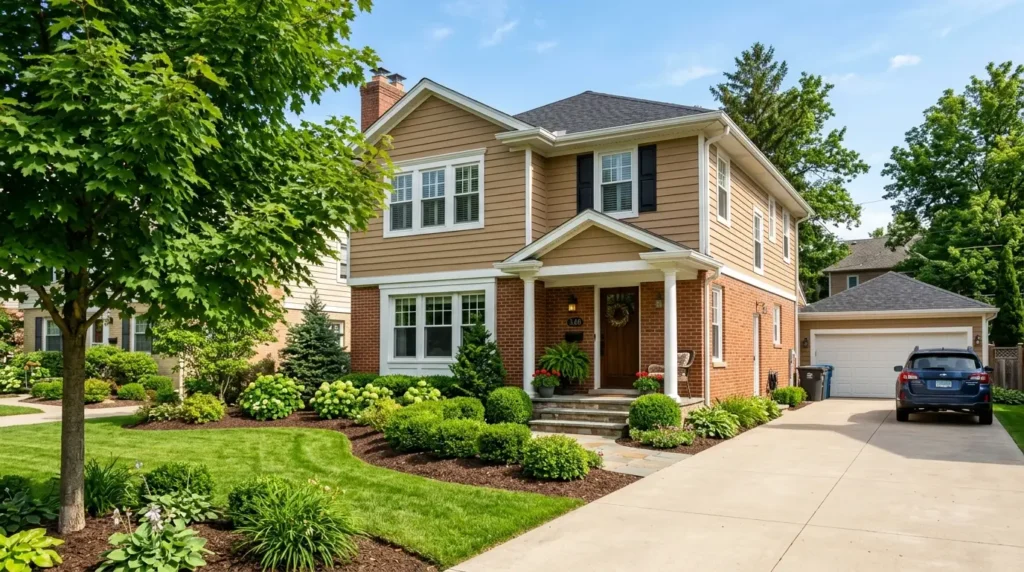
Speaking of the foundation, “foundation planting” is the most important part of curb appeal. If your house looks like it’s just “sitting” on top of the dirt, it feels disconnected. By lining the house with rounded shrubs and flowering perennials, we “anchor” the building. It makes the house look like it grew out of the landscape rather than being dropped there by a crane.
The Anchor: Why Every Yard Needs a Mature Focal Point Tree
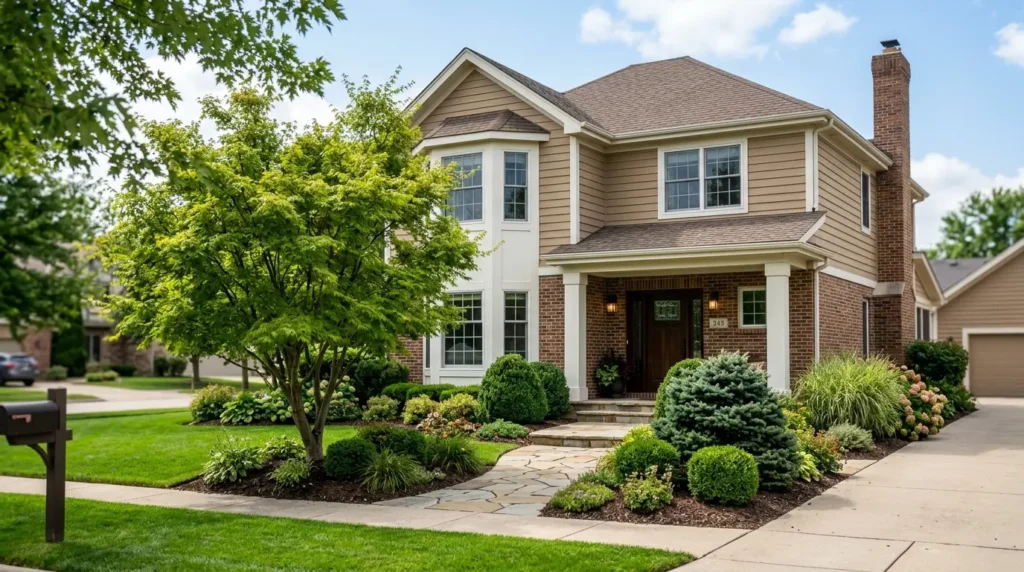
Every great painting has a focal point, and every great yard needs a tree. In this layout, a mature tree is planted centrally. It provides scale. Without a tree, your house can look exposed and “naked.” With a tree, you get shade, you get height, and you get a sense of history.
Selecting the Right Species for Your Climate
In 2026, we’re looking for “multi-season” trees. Think of a Serviceberry that has white flowers in spring, berries in summer, and fire-red leaves in fall. Or a classic Japanese Maple with its sculptural branches. The goal is to pick something that looks just as good in its “winter bones” as it does in full summer leaf.
Mulch: The Dark Chocolate of the Garden World
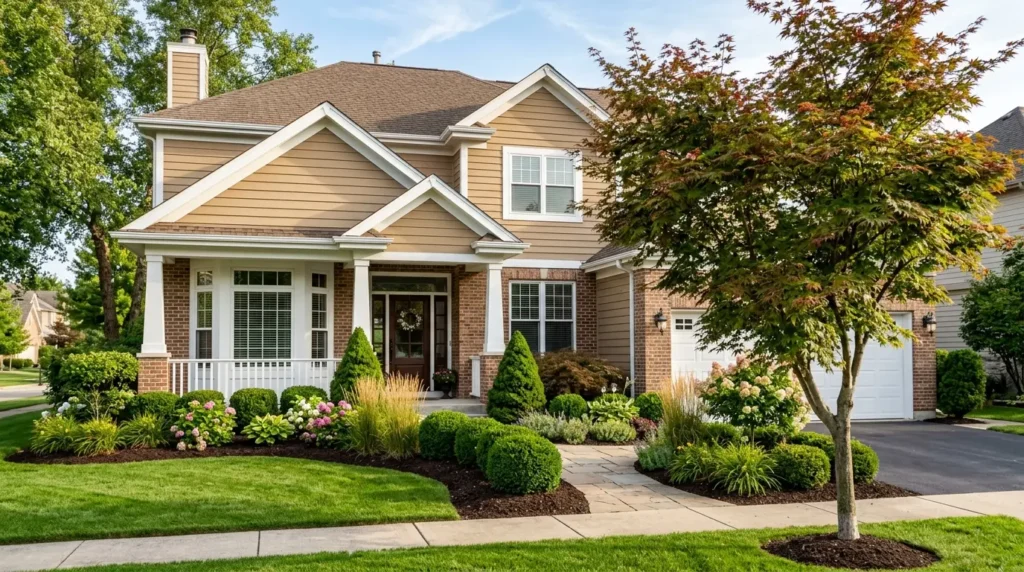
Let’s talk about mulch. It’s the unsung hero. Dark, rich mulch is like a fresh coat of paint for your dirt. It makes the green of the plants pop, it suppresses weeds (thank goodness!), and it keeps the roots cool. In this design, the mulch beds are deep and well-defined, which creates that “high-end” professional look we all crave.
Maintenance: Keeping the Magic Alive Through the Seasons
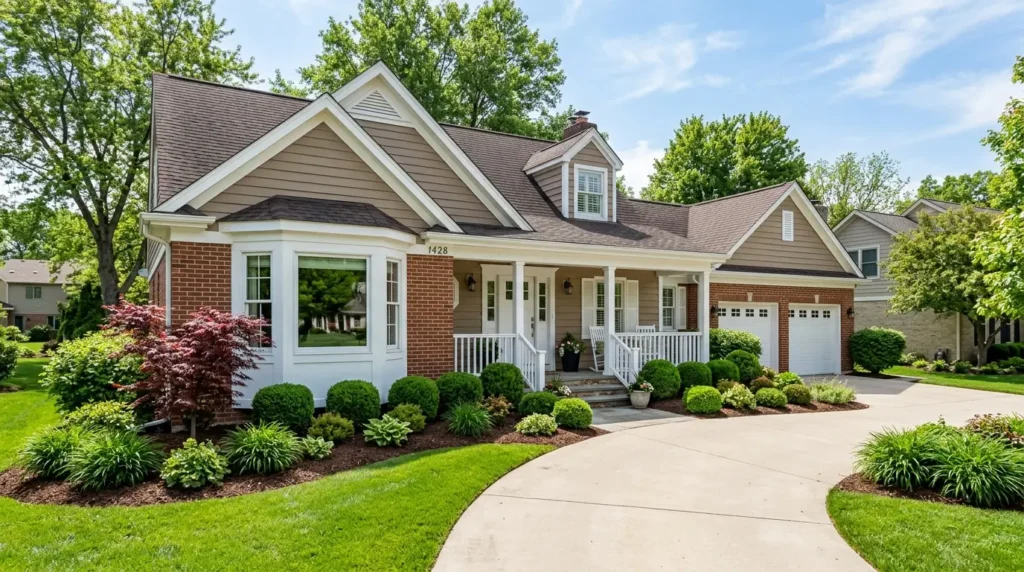
I’m not going to lie to you—a yard this beautiful needs a little love. But it’s “meditative” work, not “drudgery.”
-
Edging: Once a year, take a spade and re-cut those curves. It’s the “haircut” your garden needs.
-
Deadheading: Snip off those old hydrangea blooms to encourage the plant to put energy into its roots.
-
Mulch Top-offs: Every spring, add a fresh inch of mulch to keep things looking crisp.
Conclusion: Stepping into Your New Oasis
At the end of the day, your front yard is for you. Yes, the neighbors will love it, and yes, it adds value to your home. But the real win is that feeling you get when you walk down that grass path, past the swaying grasses and the blooming hydrangeas, and reach your front door. It’s a reminder that beauty isn’t something you just visit in a park—it’s something you can live with every single day.
Ready to grab a shovel and start those curves? Your oasis is just a few mulch beds away.
Frequently Asked Questions (FAQs)
1. How wide should my curved mulch beds be? Don’t be afraid to go big! Most people make their beds too narrow. A good rule of thumb is to make them at least 3 to 5 feet deep. This gives you enough room to layer your plants (tall in the back, short in the front) without things feeling cramped.
2. Is a grass path hard to maintain? Not really! You just mow it like the rest of the lawn. The trick is to keep the edges sharp. If the mulch starts “bleeding” into the grass path, use a physical edging like metal or plastic to keep that central path looking like a clean, green hallway.
3. What are the best ornamental grasses for a front yard? If you want something that stays tidy, ‘Karl Foerster’ Feather Reed Grass is a classic—it’s vertical, doesn’t flop, and looks great all winter. For something softer, try ‘Hameln’ Dwarf Fountain Grass.
4. Can I plant hydrangeas in full sun? It depends on the variety! Panicle hydrangeas (the ones with cone-shaped flowers) actually love the sun. However, the traditional blue “mophead” hydrangeas prefer morning sun and afternoon shade, or they might wilt in the heat.
5. How do I choose a focal point tree that won’t outgrow my yard? Always check the “mature height” on the tag. If you have a small yard, look for “columnar” or “dwarf” varieties. A Dogwood or a Redbud is usually a safe bet for most front yards, as they rarely grow tall enough to interfere with power lines or block your entire house.
About the Author