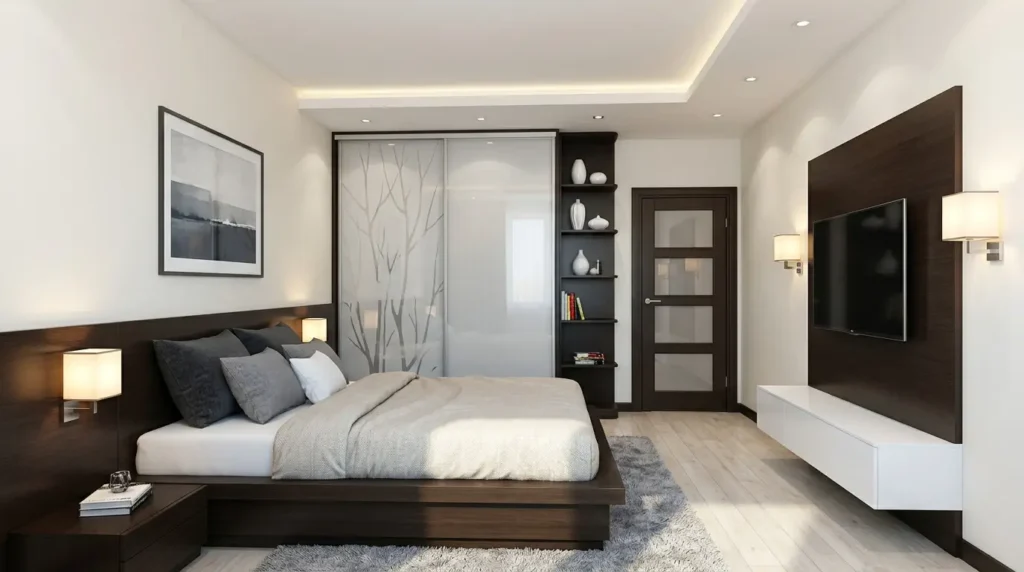
Have you ever walked into a hotel room, sat on the edge of the bed, and thought, “I never want to leave this room”? That feeling isn’t an accident. It’s the result of precise architectural choices, a specific color palette, and a deep understanding of human comfort. In 2026, we are finally bringing that “vacation feeling” home.
The bedroom is no longer just a place to crash for eight hours. It’s the place where we journal, meditate, read, and hide from the chaos of the outside world. Looking at these stunning modern interiors, it’s obvious that the trend is moving toward minimalist luxury. We’re talking about spaces that feel expensive but grounded—sophisticated but incredibly soft.
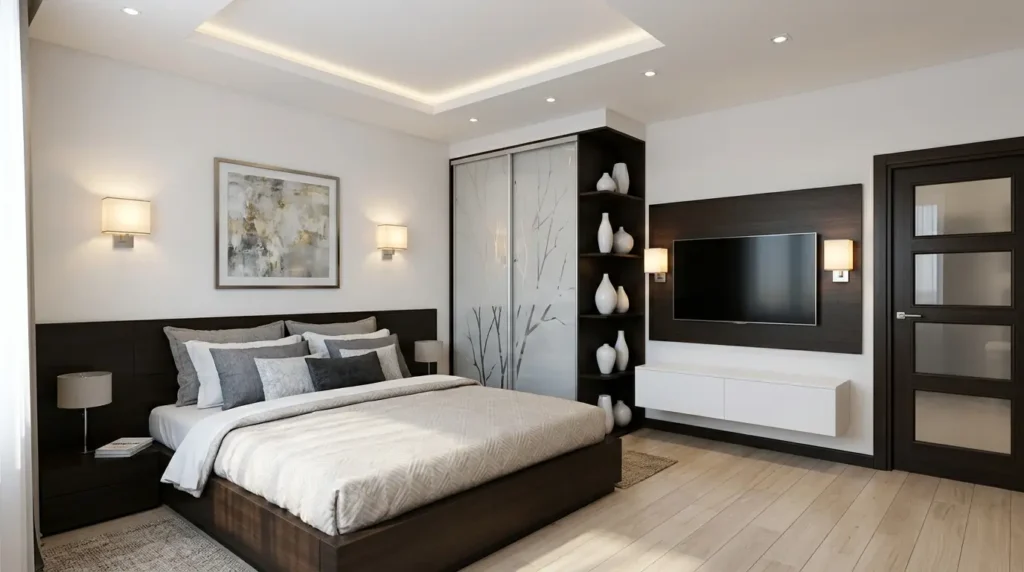
The Shift Toward Sanctuary: Why the Bedroom is the New Living Room
For years, we focused all our design energy on the kitchen and the living room. Those were the “social” spaces, the places where we entertained guests. But lately, the focus has shifted inward. We’ve realized that if our private sanctuary—the bedroom—isn’t right, our whole day feels off.
A modern bedroom in 2026 acts like a psychological reset button. When you walk through that door, the design should tell your nervous system to “stand down.” It’s like a warm hug in architectural form. How do we achieve that? By stripping away the clutter and focusing on a few high-quality elements that do the heavy lifting.
The Glass Wall Revolution: Bringing the Outdoors In
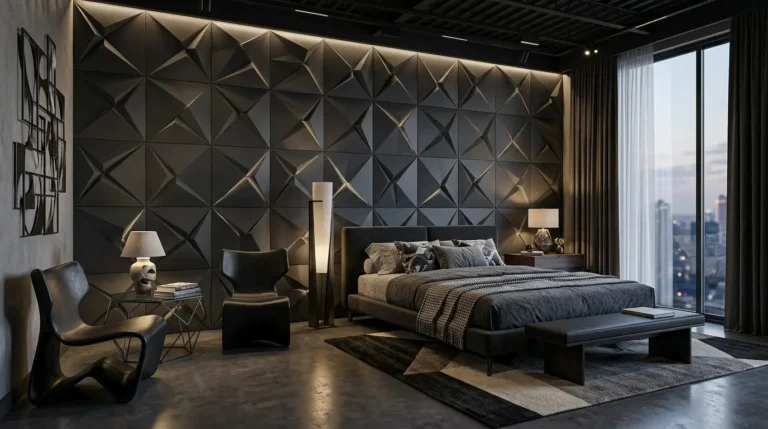
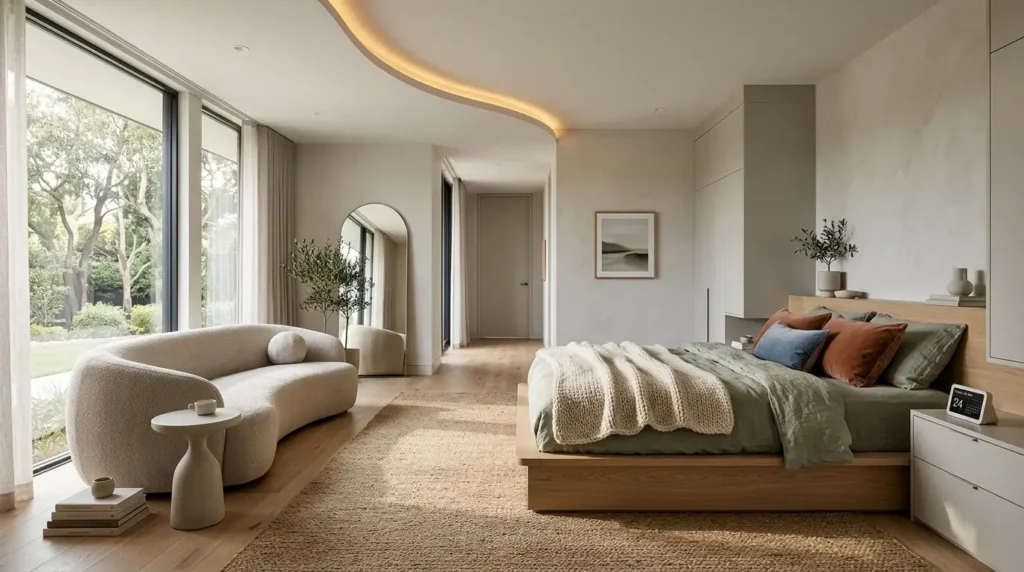
One of the most striking features of these 2026 designs is the use of floor-to-ceiling glass. If you’re lucky enough to have a view—whether it’s a city skyline or a backyard garden—the modern approach is to treat that view like living wallpaper.
Maximizing Natural Light Without Sacrificing Privacy
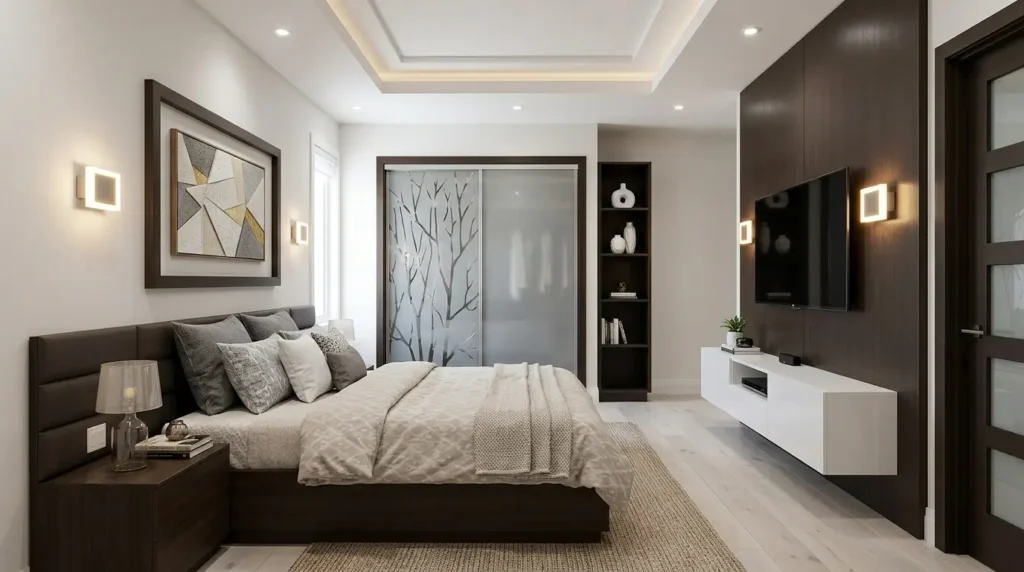
Windows this big are a double-edged sword. On one hand, you get that glorious morning sun that helps regulate your circadian rhythm. On the other hand, you don’t necessarily want the neighbors seeing your morning yoga routine. The trick here is layering. We’re seeing a lot of sheer “voile” curtains paired with heavy blackout drapes. It gives you the best of both worlds: soft, diffused light during the day and total “bat-cave” darkness at night.
Smart Glass and Automated Shading Solutions
Since we’re living in 2026, tech has caught up with our aesthetic needs. Smart glass (which can tint or frost at the touch of a button) is becoming the go-to for luxury builds. Imagine waking up and, instead of fumbling with a cord, you simply tell your house to “open the bedroom,” and the windows slowly transition from opaque to clear. It’s not just “cool”—it’s functional art.
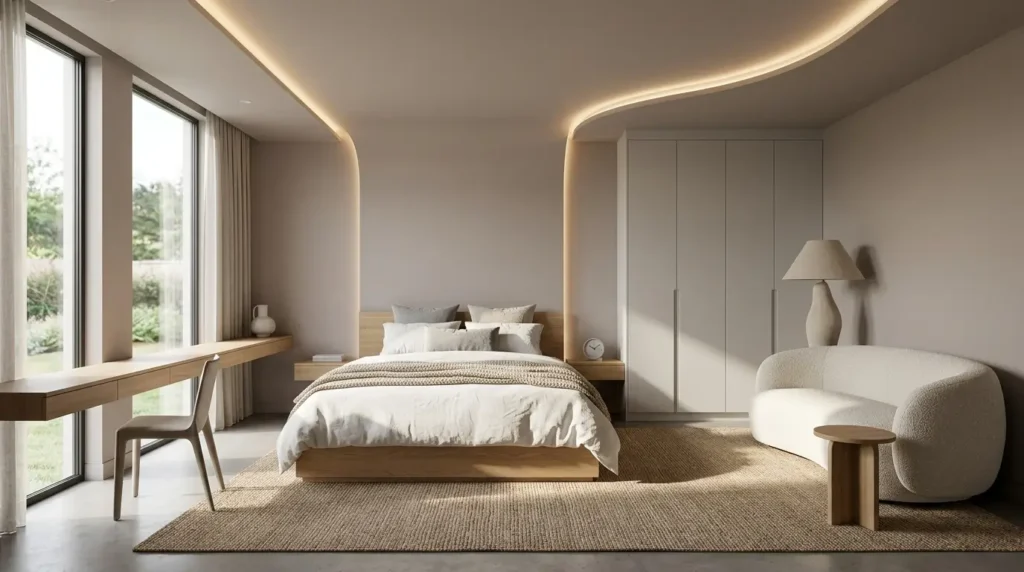
The “Cloud Bed” Aesthetic: Mastering Layered Comfort
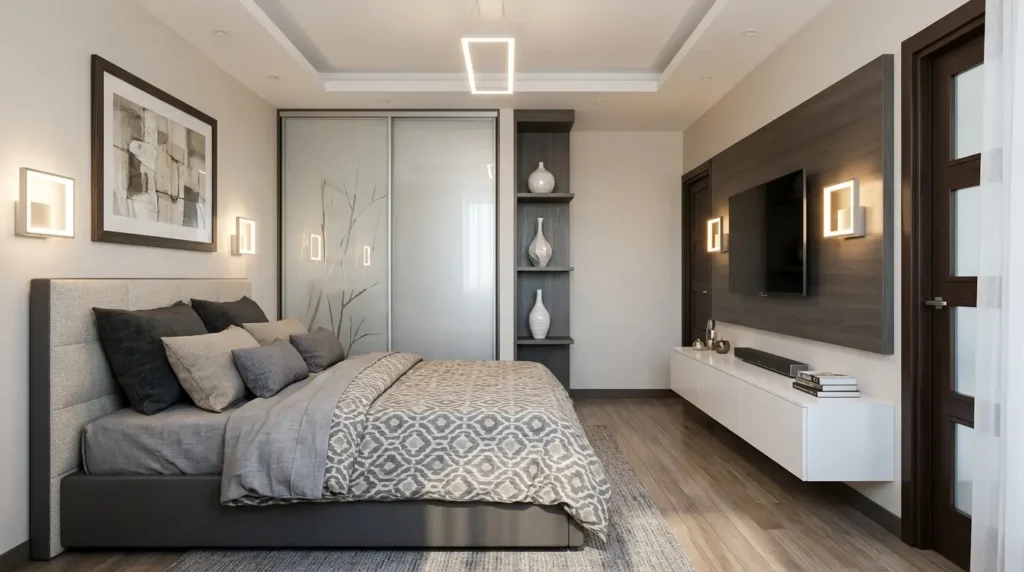
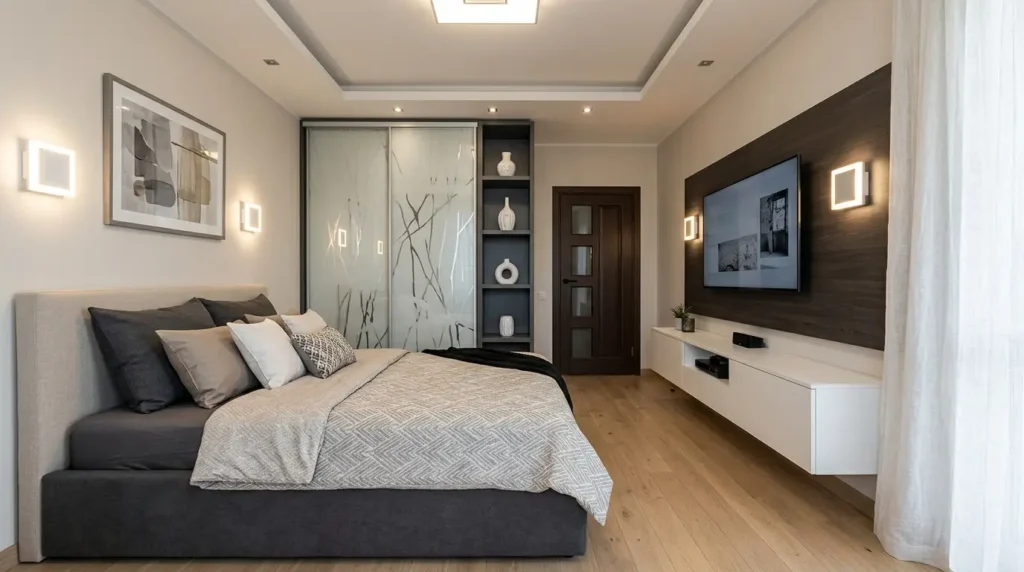
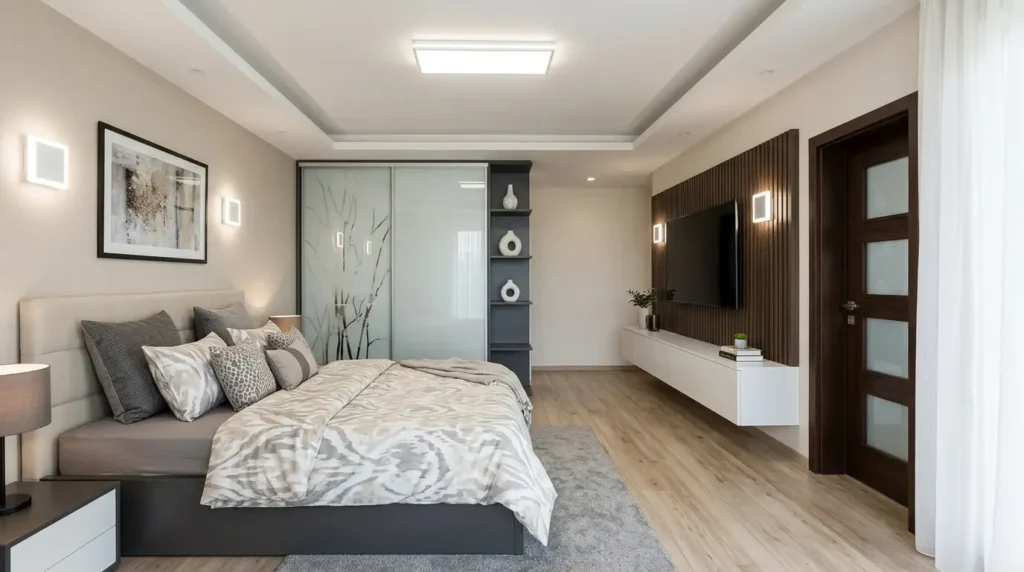
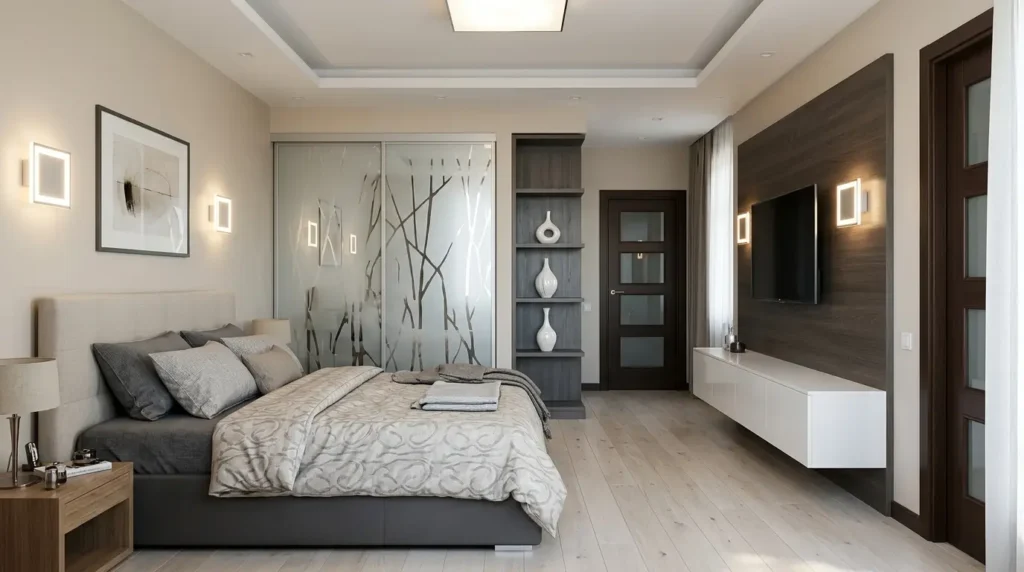
If the room is the body, the bed is the heart. In these images, you’ll notice that the beds aren’t just “neatly made”—they look like clouds. This is the Cloud Bed aesthetic, and it’s all about volume and texture.
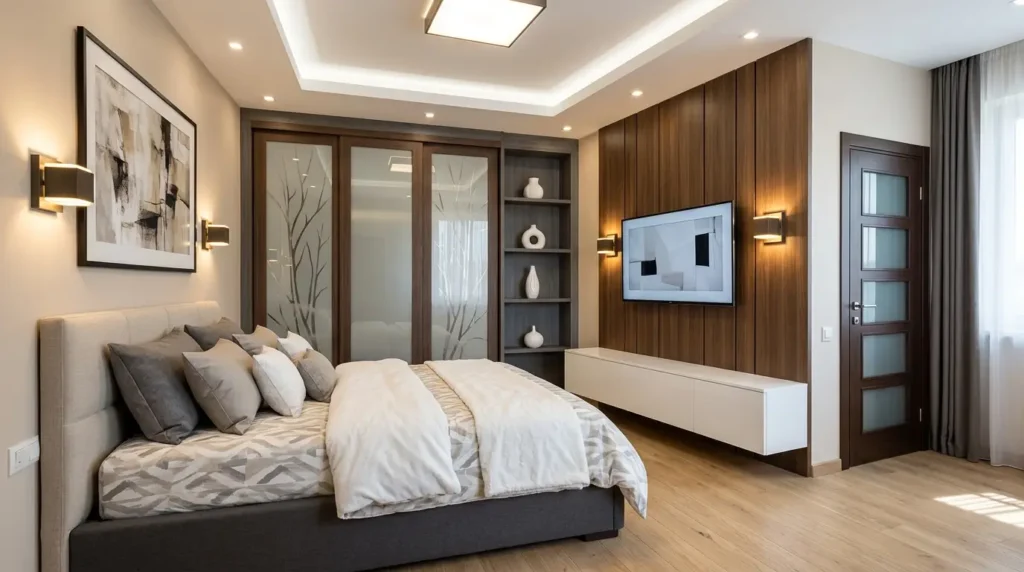
Why Texture Trumps Color in 2026
We’ve moved away from loud, bright patterns. Instead, we’re using a “monochrome” palette of creams, beiges, and soft tans. But wait—isn’t that boring? Not if you use texture. A bedroom without texture is like a cake without frosting; it’s technically functional, but nobody is excited about it.
Think about it: a chunky wool throw, linen sheets, a velvet headboard, and a silk rug. Even if they are all the exact same shade of “oatmeal,” the way they catch the light makes the room look rich and layered.
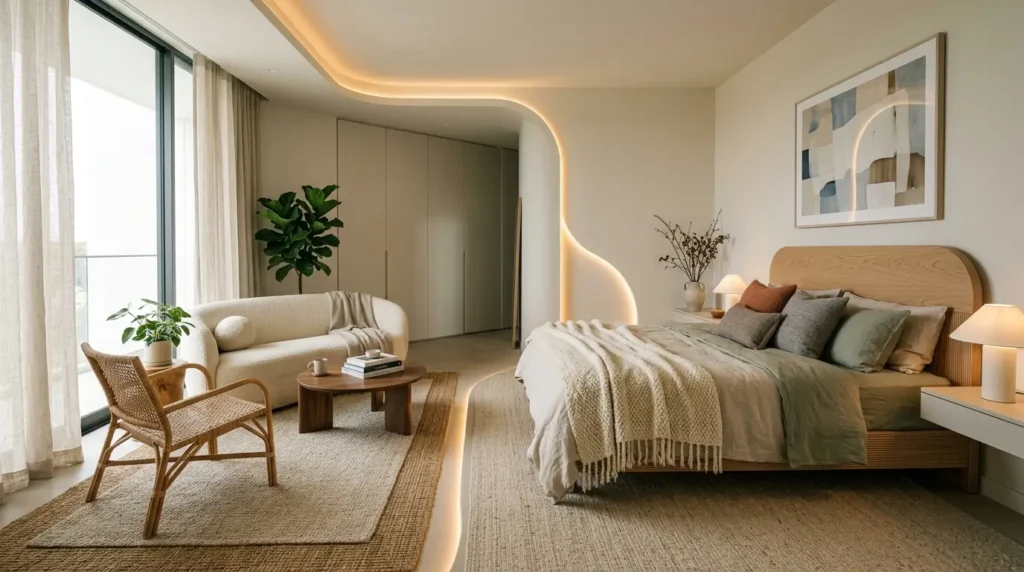
Choosing Fabrics That Breathe and Invite
In 2026, we’re obsessed with natural fibers. We want materials that feel good against the skin and don’t trap heat. Organic cotton, hemp-blends, and bamboo-silks are the stars of the show. They have a “burstiness” to them—a slight imperfection that makes the room feel lived-in rather than like a sterile showroom.
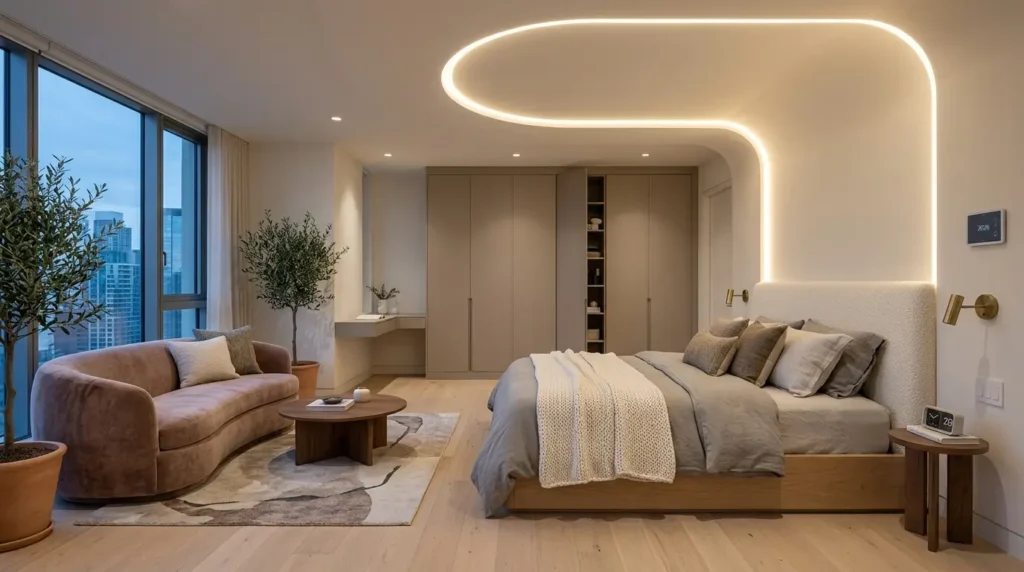
Architectural Accents: Wood Paneling and Slat Walls
Look at the walls in these designs. They aren’t just painted drywall. We’re seeing a massive return to wood paneling, but not the dark, heavy stuff from your grandfather’s basement.
Adding Warmth to Modern Minimalism
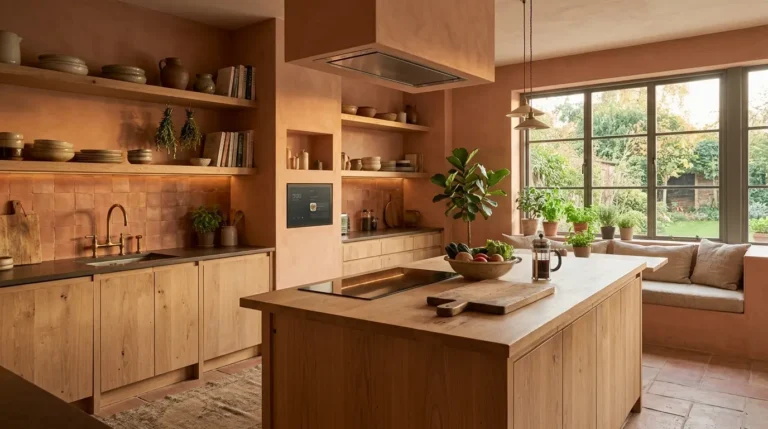
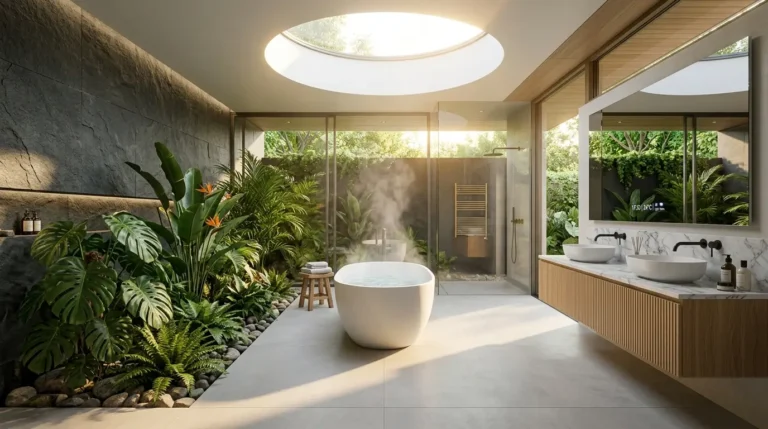
Modern wood accents—especially vertical slats—add a sense of height and warmth. They break up the “boxiness” of a room. Wood is an organic material, and having it near your bed helps ground the space. It’s a metaphor for being in nature, even if you’re in a high-rise apartment. It provides that “biophilic” connection that our brains crave.
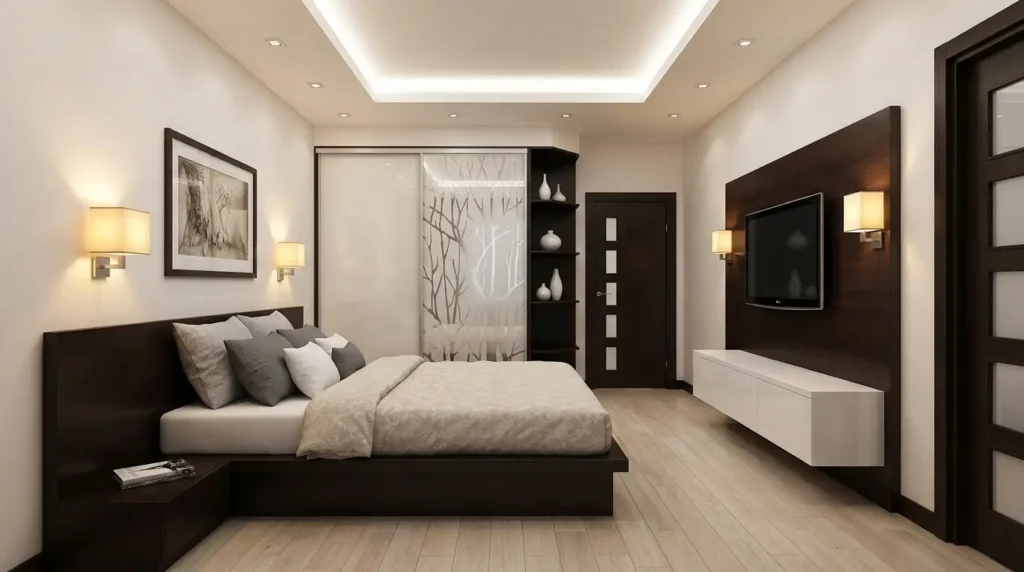
Lighting as an Art Form: Beyond the Ceiling Fan
If there is one thing that can absolutely ruin a beautiful bedroom, it’s a single, bright “boob light” in the center of the ceiling. In 2026, we are “painting” with light.
Layering Ambient, Task, and Accent Lighting
A well-designed bedroom needs at least three layers of light:
-
Ambient: The general glow (often from hidden sources).
-
Task: Focused light for reading in bed.
-
Accent: Light that highlights art or the texture of a wood wall.
The Magic of Recessed “Cove” Lighting
The real “wow” factor in these images comes from cove lighting. This is where LED strips are hidden in a recessed part of the ceiling or behind a headboard. It creates a soft, indirect glow that looks like the walls themselves are radiating light. It’s the ultimate way to set a mood without having a harsh bulb shining in your eyes while you’re trying to relax.
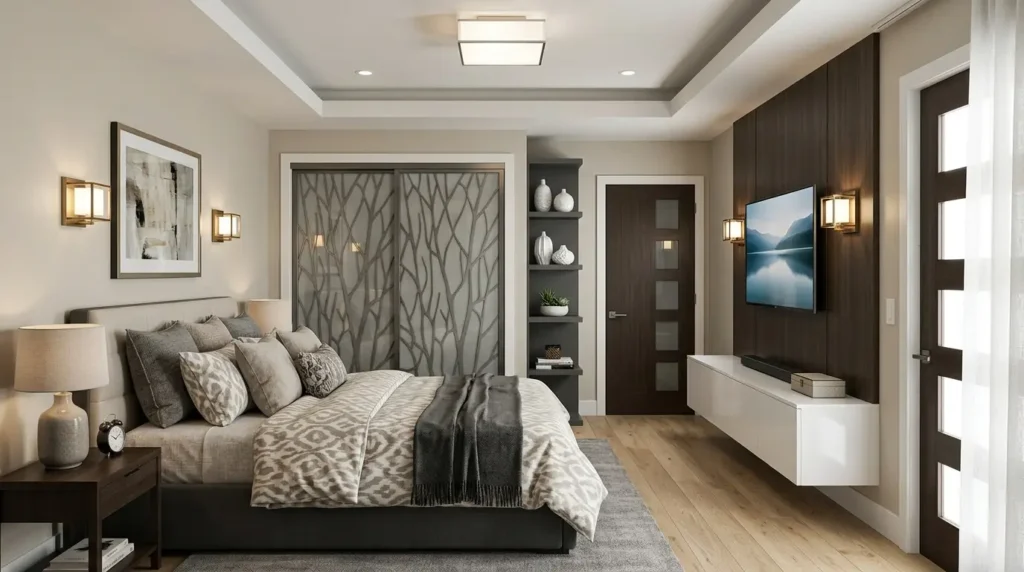
The Minimalist Wardrobe: Hidden Storage and Clean Lines
Clutter is the enemy of sleep. If you can see your laundry piles and your shoe collection from your bed, your brain is going to stay in “work mode.” The 2026 solution? Hidden storage. We’re talking about floor-to-ceiling wardrobes with no handles (push-to-open) that blend perfectly into the walls. When the storage is invisible, the room feels twice as large and infinitely more peaceful.
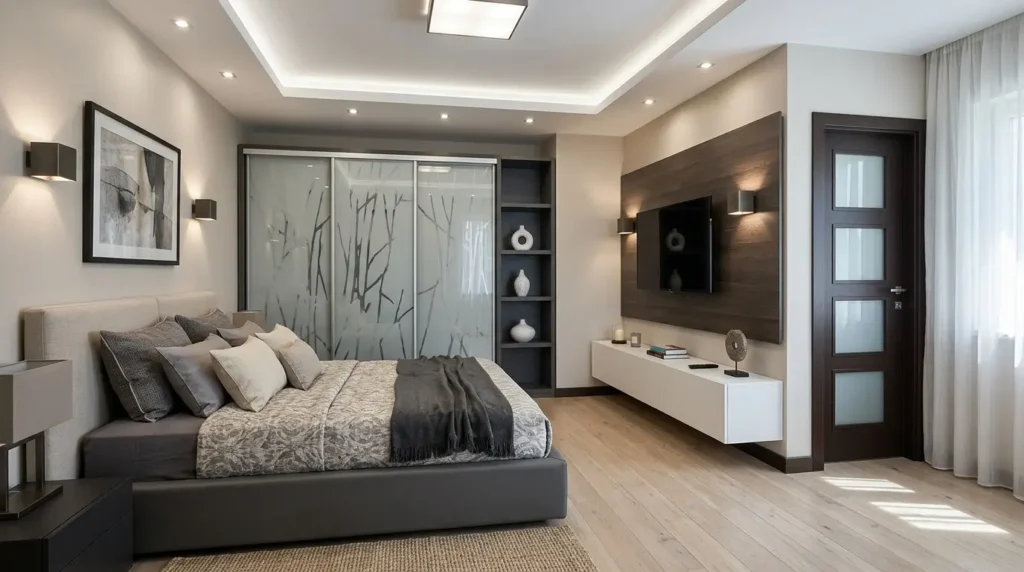
Tech-Free Zones: Creating a Digital Detox Sanctuary
While we love our smart glass and automated lights, the most “luxurious” thing you can have in a 2026 bedroom is silence. Designers are increasingly creating “analog corners”—a comfortable chair by the window with no charging ports in sight. It’s a place to read a physical book or just look at the view. By intentionally limiting tech in the sleeping area, you’re telling your brain that this space is for rest, not for scrolling.
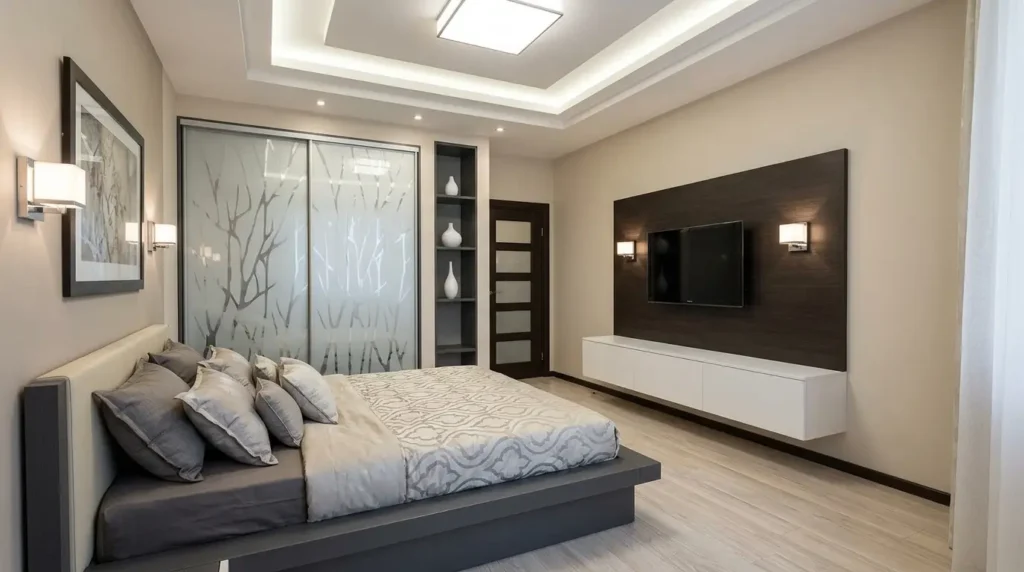
Conclusion: Your Morning Starts the Night Before
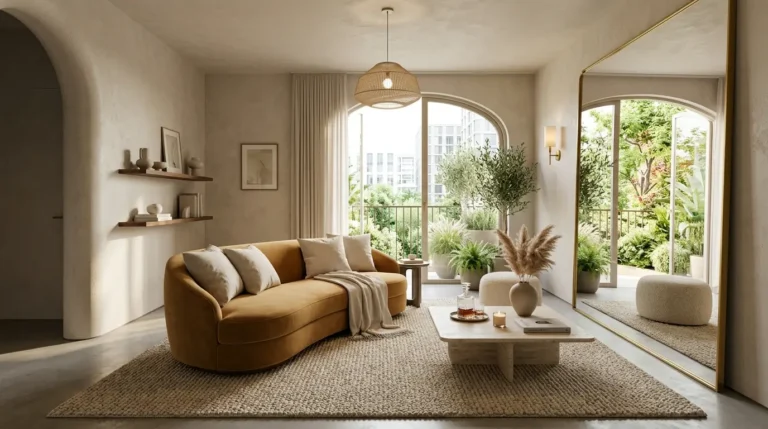
Designing a modern bedroom isn’t about buying the most expensive furniture. It’s about intentionality. It’s about choosing a curved sofa that invites conversation, a curved pathway of light that leads you to bed, and a palette that calms your soul.
When you invest in your bedroom, you’re investing in your “future self.” You’re ensuring that when you wake up in 2026, you’re doing it in a space that reflects who you are and where you want to go. So, take a page out of these designs: layer those textures, hide that clutter, and let the light in.
Frequently Asked Questions (FAQs)
1. How do I make a small bedroom feel as grand as these photos? Focus on vertical lines! Use tall headboards or floor-to-ceiling curtains. Also, keep your color palette light and monochromatic. When the walls, floor, and bedding are similar tones, the boundaries of the room seem to disappear, making it feel much larger.
2. Are wood slat walls hard to keep clean? A little bit, yes—dust loves to settle on those horizontal edges. However, in 2026, most people use a vacuum with a soft brush attachment once a month. The “warmth” they add to the room is well worth the five minutes of dusting!
3. What is the best lighting temperature for a bedroom? Always go for Warm White (around 2700K to 3000K). Cool blue light mimics daylight and will keep you awake. Warm, amber tones mimic the sunset and signal to your body that it’s time to produce melatonin.
4. Can I achieve the “Glass Wall” look without actually having big windows? Yes! Use oversized mirrors. A floor-to-ceiling mirror placed opposite a door or a smaller window will reflect the light and the view, creating the “illusion” of a glass wall. It’s a classic designer trick that never fails.
5. Is the “all-beige” trend going to stay in style? While trends come and go, “Neutrals with Texture” is timeless. In 2026, we are seeing people add small “pops” of color—like a terracotta pillow or a sage green throw—to their neutral base. It’s much easier to change a pillow than to repaint a whole room!
About the Author