Let’s be honest, for the longest time, “Modern Kitchen” was a nice way of saying “Clinical Bunkerr.” It was all flat white glossy cabinets, invisible handles, and a general vibe that said, “Please don’t cook anything too messy in here.” We were afraid of our own kitchens!
Thankfully, as we sail into 2026, the heart of the home has finally found its pulse again. The new modern kitchen isn’t just a showroom; it’s a Sanctuary. It’s warmer, more tactile, and deeply integrated into how we actually live, work, and connect. For original-ideas.net, we’ve curated the ultimate gallery: 25 groundbreaking ideas that are redefining culinary luxury.
The 2026 Kitchen: Where Sanctuary Meets Sophistication
The defining philosophy of the 2026 kitchen is Fluid Sophistication. Our spaces are no longer static. One minute it’s a gourmet prep station, the next it’s a homework hub for the kids, and an hour later it’s an ambient cocktail bar. This means the design has to be highly adaptable. We are moving away from rigid structures and embracing layout fluidity. It’s a move from simple “efficiency” toward autonomy and connection.
Defining Modernity: It’s Not Just Sleek Anymore
Forget everything you knew about “Minimalism.” The 2026 version is Warm Minimalism. It’s clean, yes, but it’s also full of texture. Modernity is now measured by Material Honesty—showing the raw grain of wood, the imperfections of stone, the rough texture of a hemp textile—rather than hiding everything behind a sheet of glossy plastic.
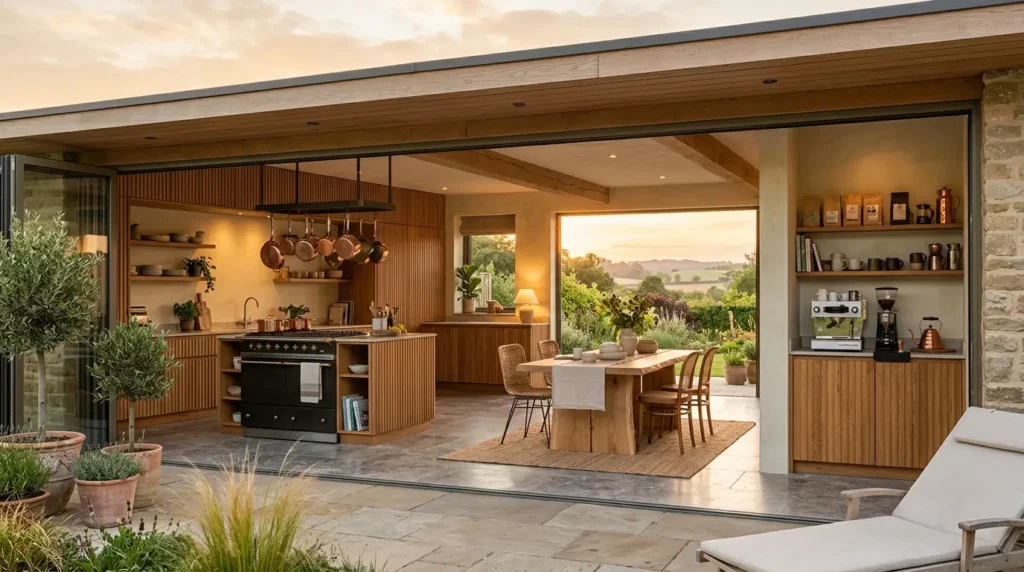
I. The Palette Shift: Nature’s Hug
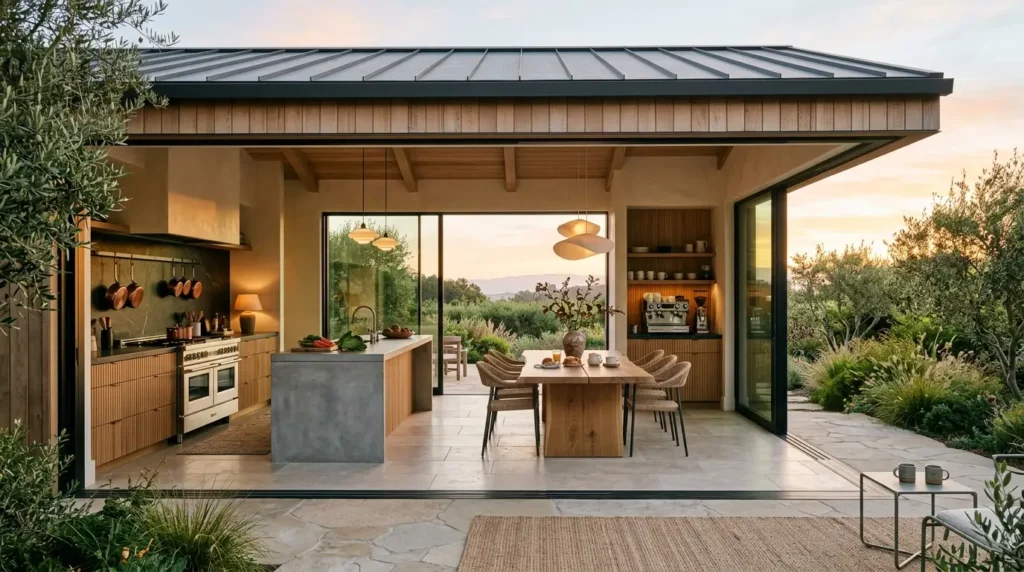
The most visible change is in the color palette. We are craving emotional comfort, and the sterile white kitchen of the last decade just doesn’t deliver. 2026 is all about colors that are Grounded, Warm, and “Edible.” Think of hues that feel like a full-bodied cup of coffee or a field of ripe grain.
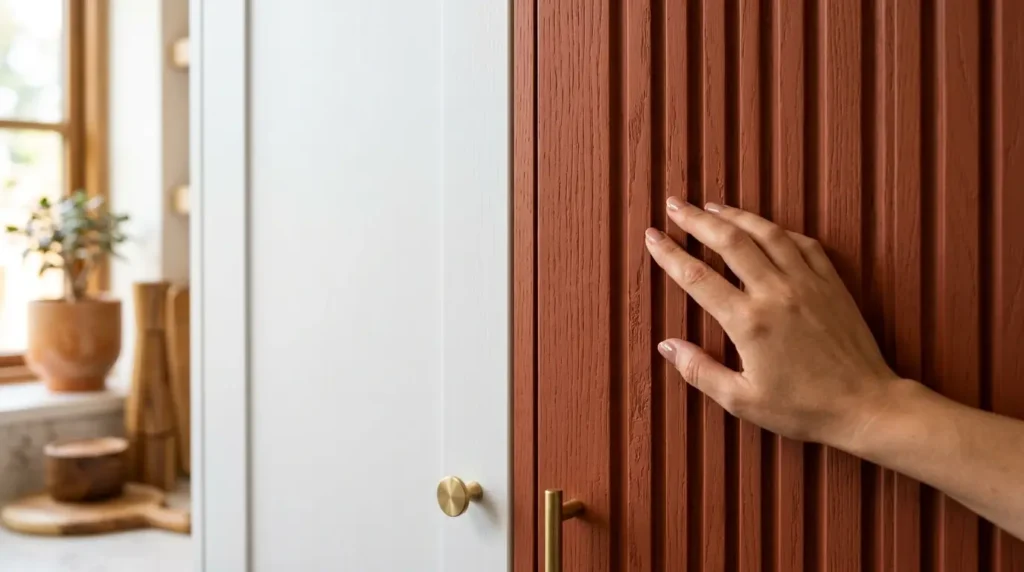
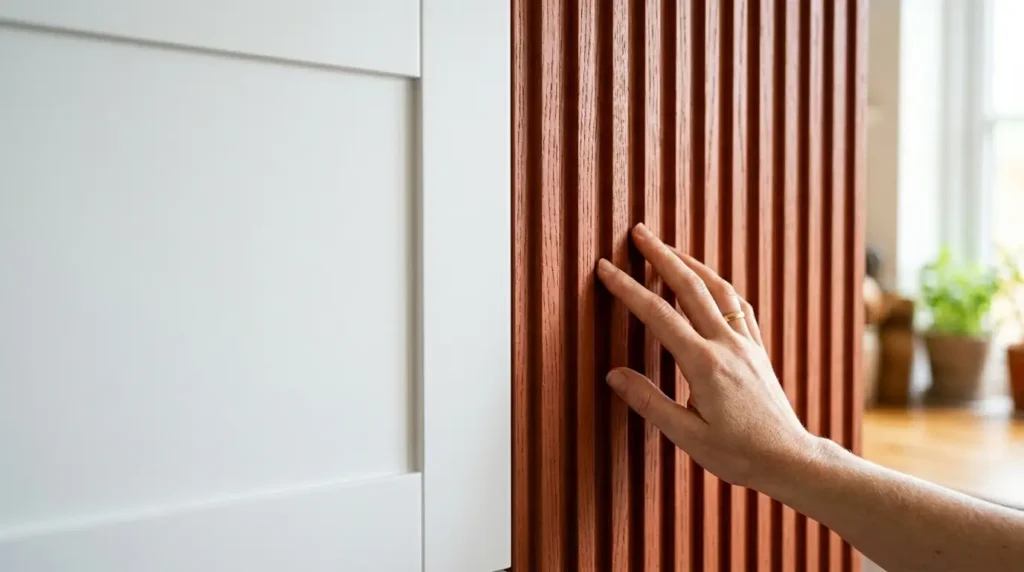
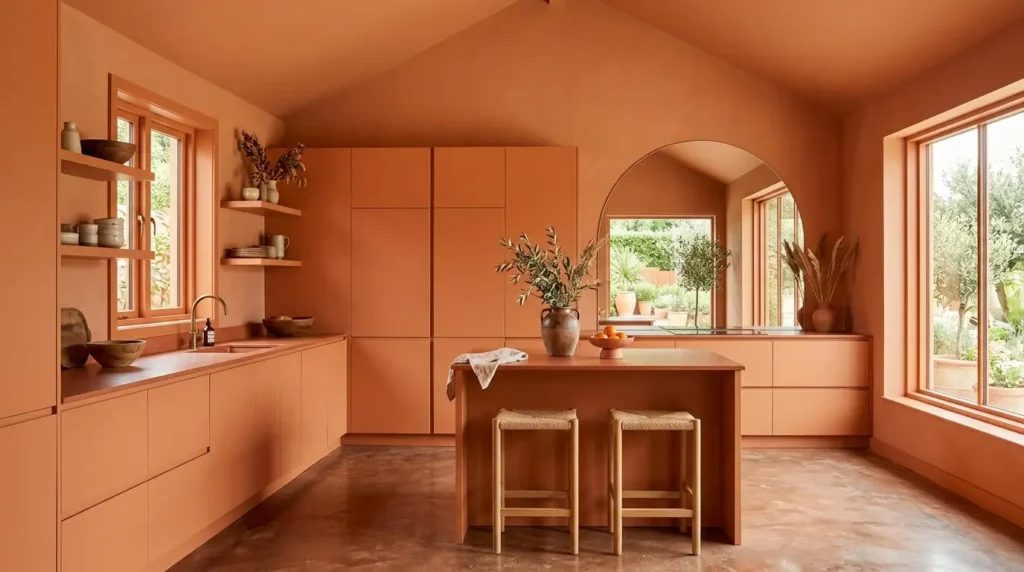
Idea 1: The Total Terracotta Wash
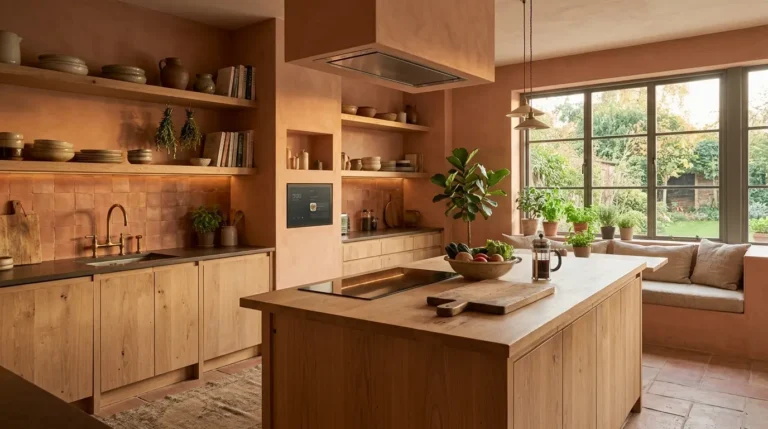
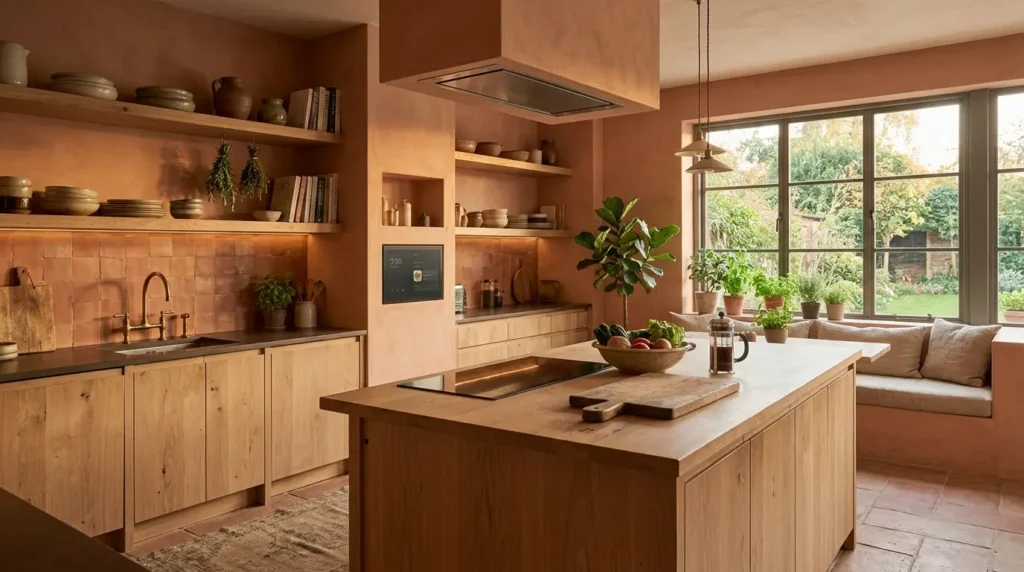
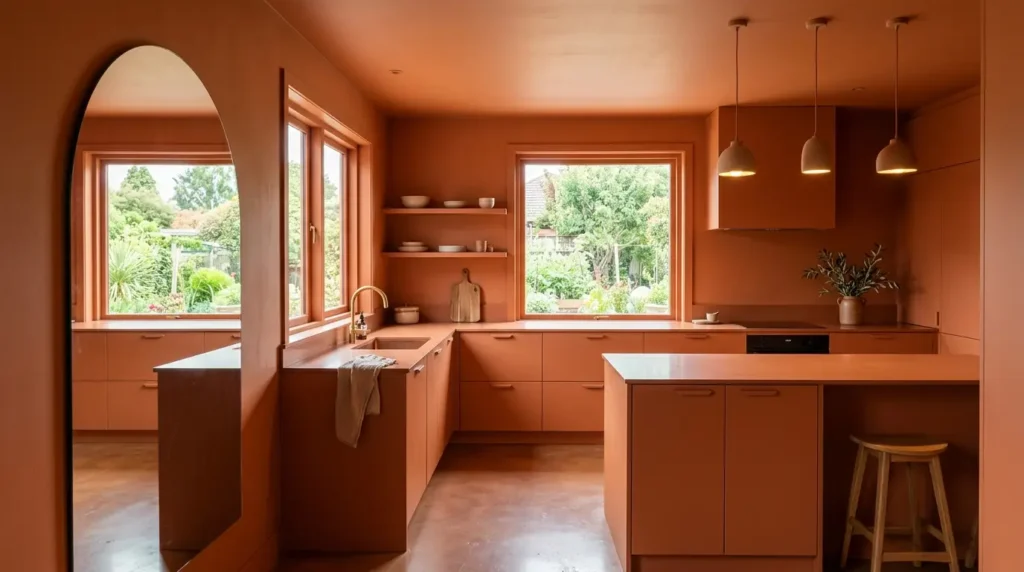
The absolute hottest color of the year is Terracotta and “Baked Clay.” We’re not just talking about an accent wall; we mean the “Total Terracotta Wash.” Paint your walls, your trim, your cabinetry, and even stain your floor in this rich, earthy shade. The blurring of visual boundaries makes a smaller space feel vast and unified. It’s an organic “hug” for your entire room.
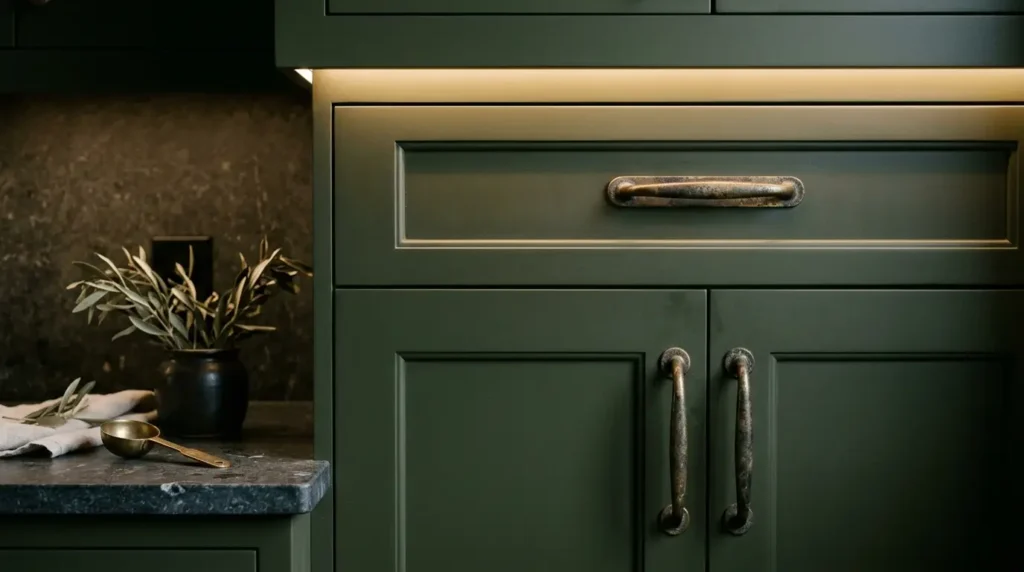
Idea 2: Midnight Olive & Brass Sophistication
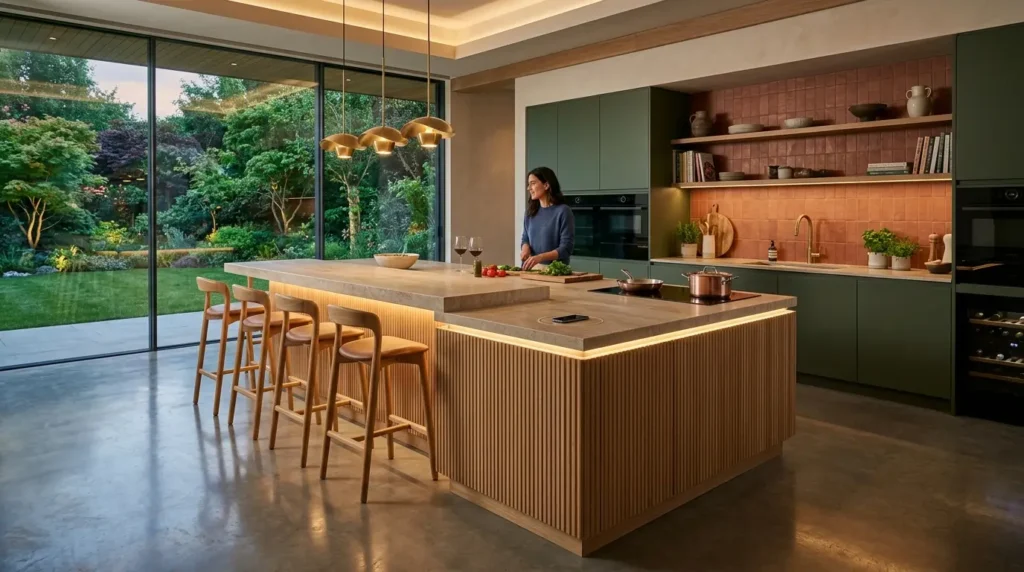
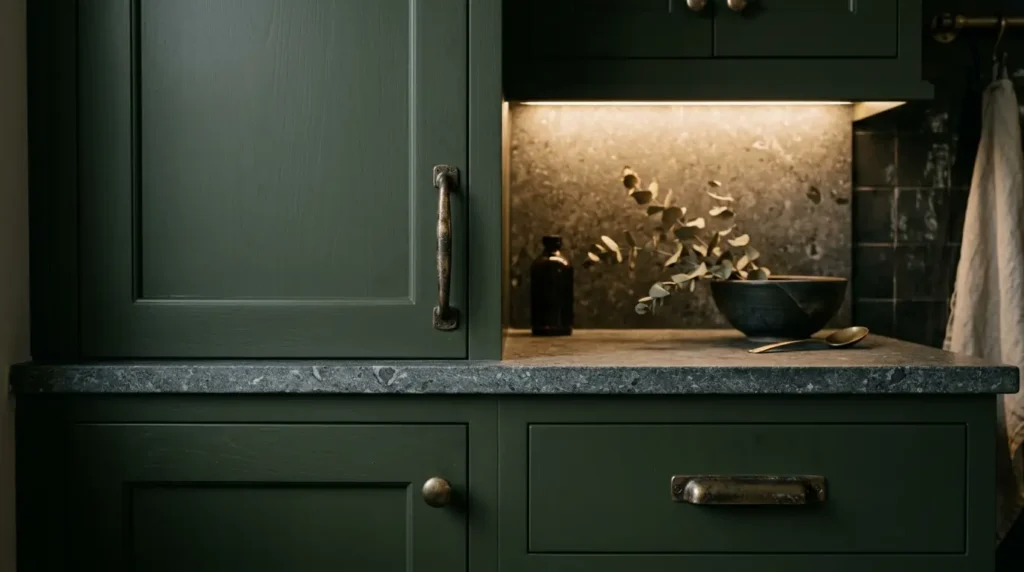
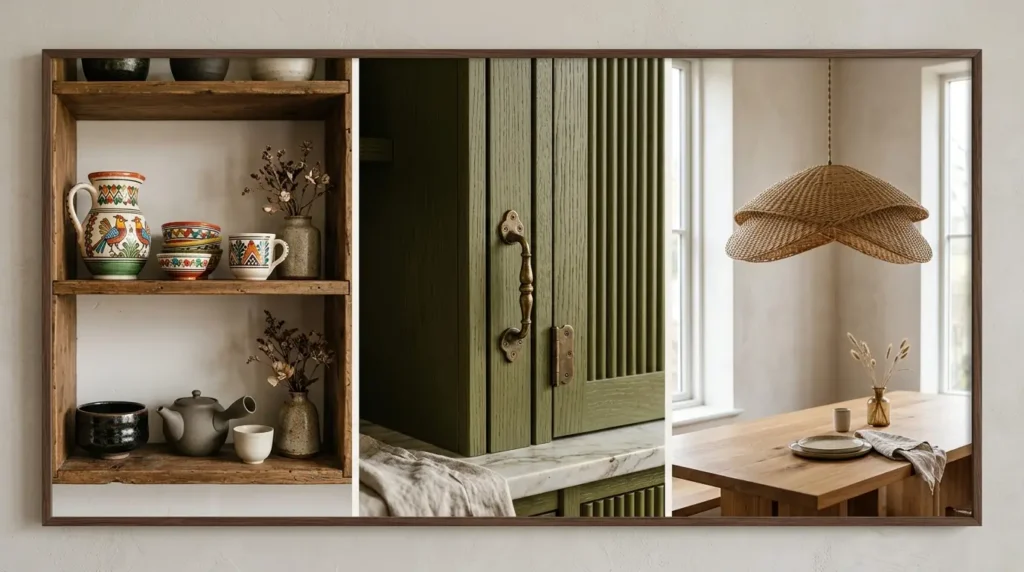
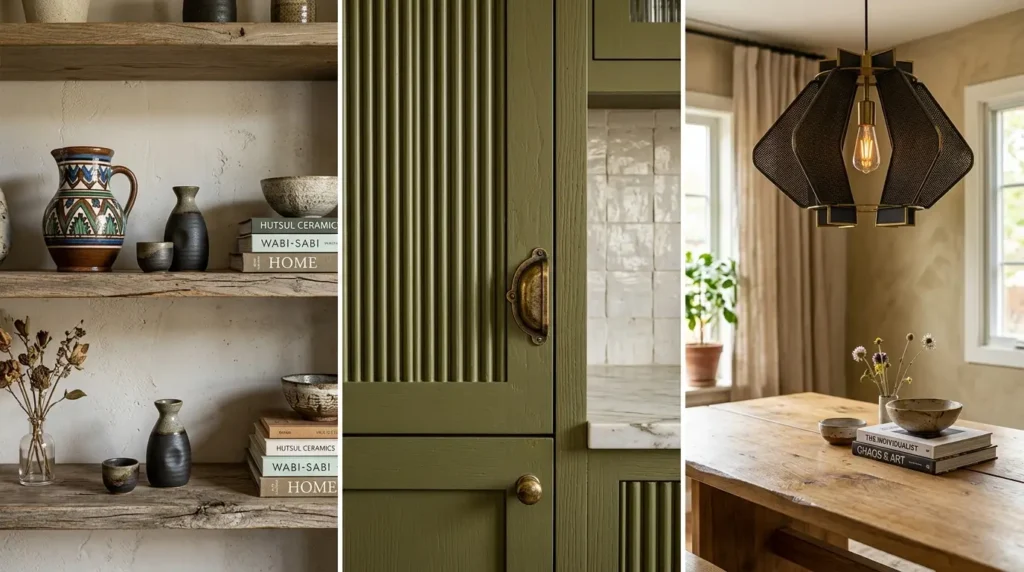
For those who want drama, the black kitchen is out, and “Midnight Olive” is in. This deep, moody green is almost black but shifts and shows its complex organic undertones depending on the light. We are pairing it with aged brass hardware and honed river stone countertops to create a quiet, moody luxury that feels incredibly sophisticated.
Idea 3: The Oatmeal & Oak Calm
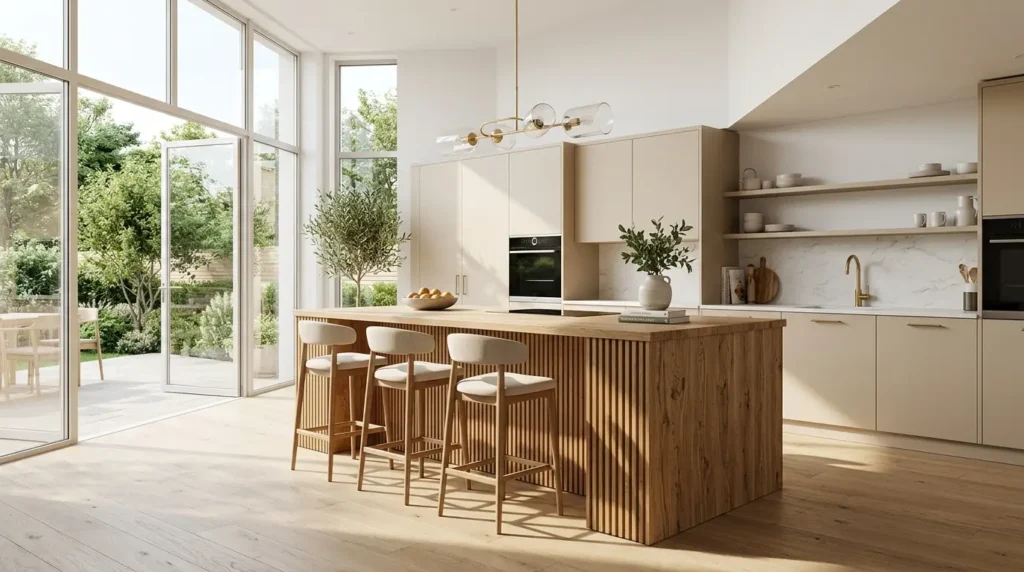
This is the ultimate evolution of the “white” kitchen: The Oatmeal & Oak Calm. Replace clinical white with a soft, warm Oatmeal sand tone. Use this color on your main cabinetry and walls, and pair it with Raw Carpathian Oak for your island and accents. It’s clean, light, and modern, but deeply grounded.
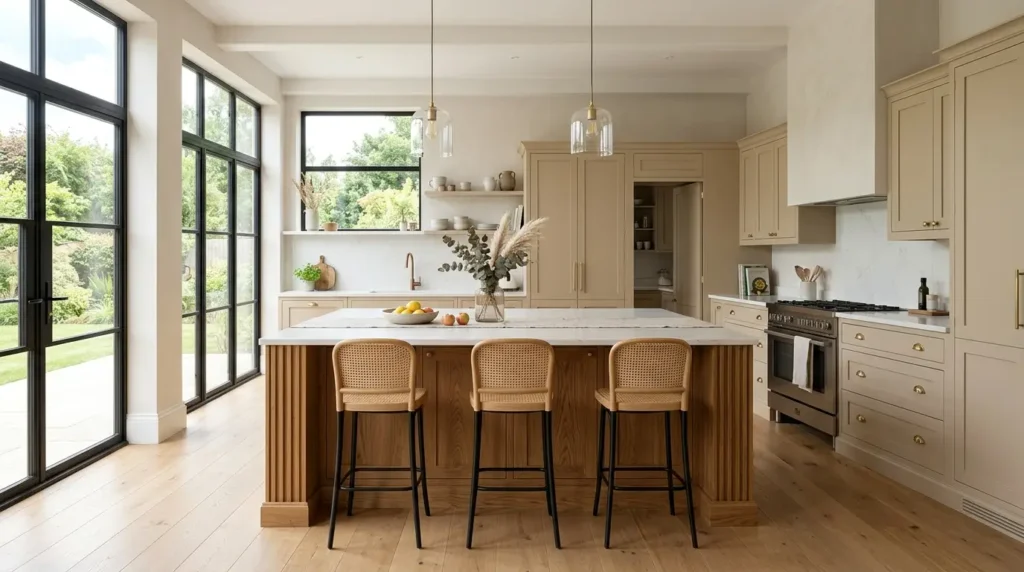
Color Psychology: Hues for a Happy Chef
We are designing for our mood. 2026 uses colors like Sage Green (proven to reduce anxiety) and Oatmeal (for mental stability) as our primary wall and cabinet colors. We are using these calming bases as a canvas for our artisanal decor, supporting the chef’s well-being as much as their culinary creation.
II. The Scullery Secret: Hiding the Chaos
This is the biggest structural shift we’ve seen in years: The Mess stays behind closed doors. With open-plan living, we want our main kitchen (which is usually visible from the living room) to remain flawlessly pristine. This is where the Scullery comes in.
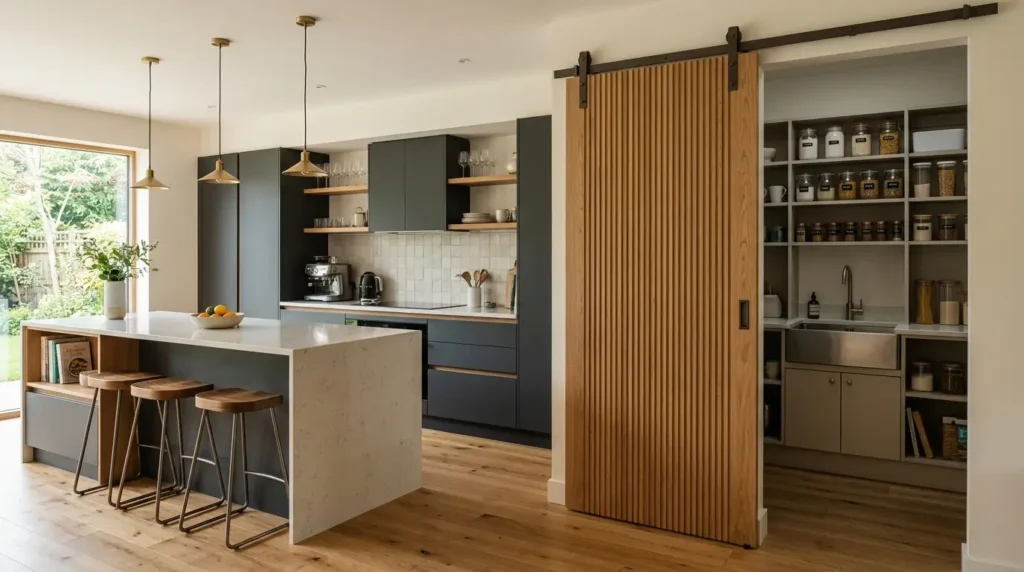
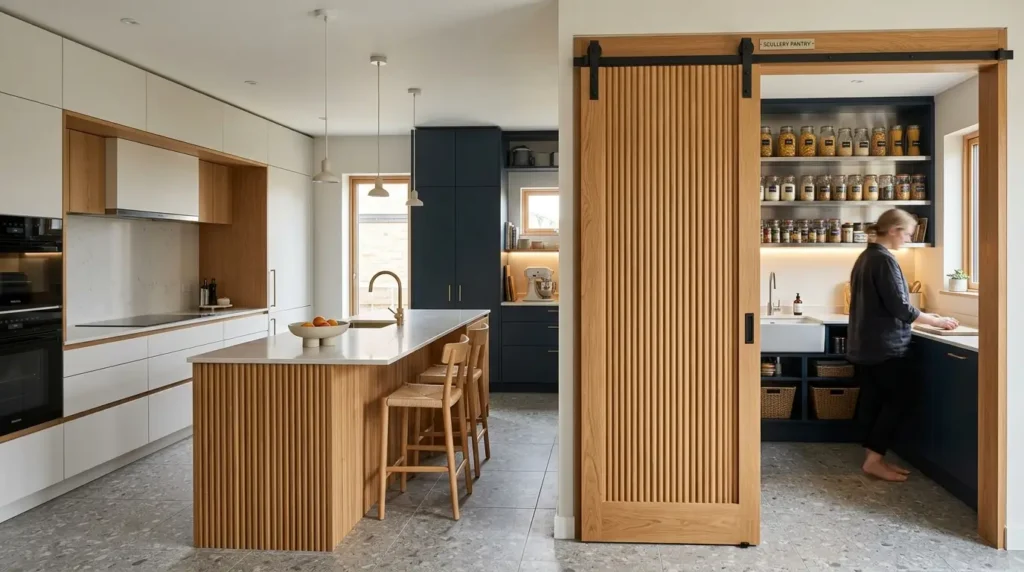
Idea 4: The Appliance Wardrobe
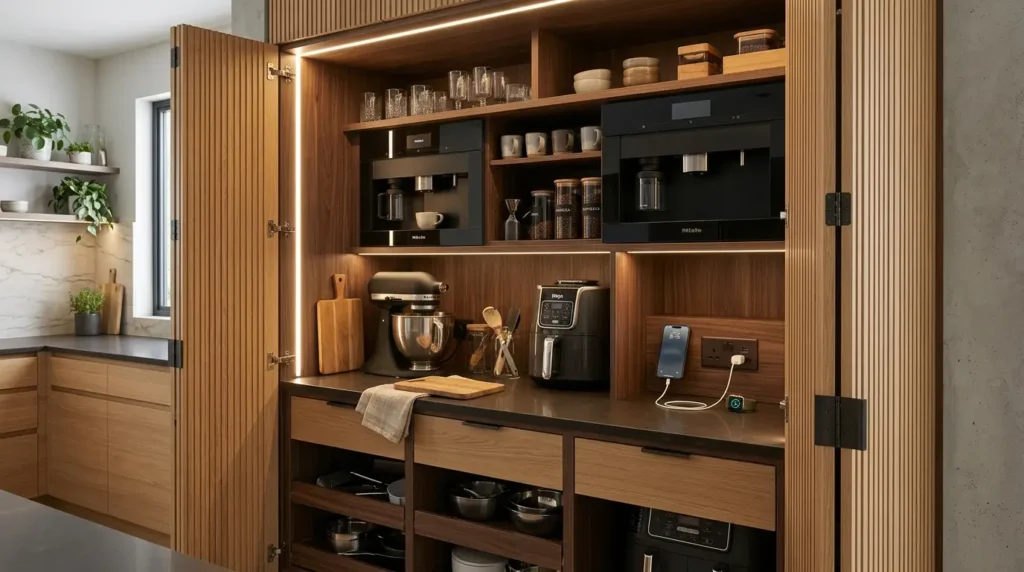
In smaller apartments, you can’t fit a separate room. The solution is The Appliance Wardrobe. These are floor-to-ceiling cabinets (often with fluted oak doors) that open up to reveal a full prep counter, a coffee station, and hidden, organized storage for all your appliances—air fryer, mixer, and the inevitable cluster of charging bricks. When you are done, you just slide the doors shut, and the room is instantly calm.
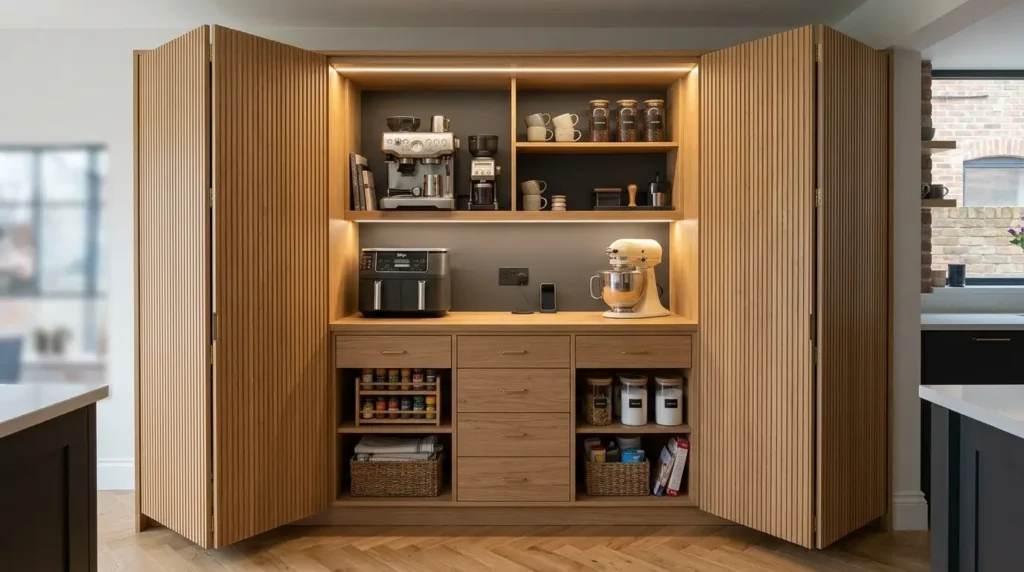
Idea 5: The Full-Blown Pantry Prep Zone
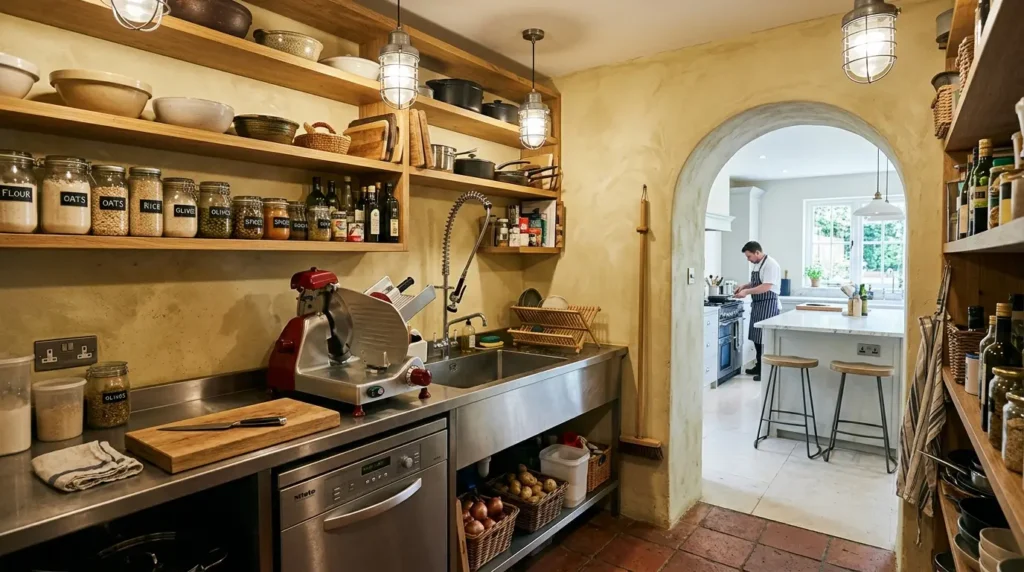
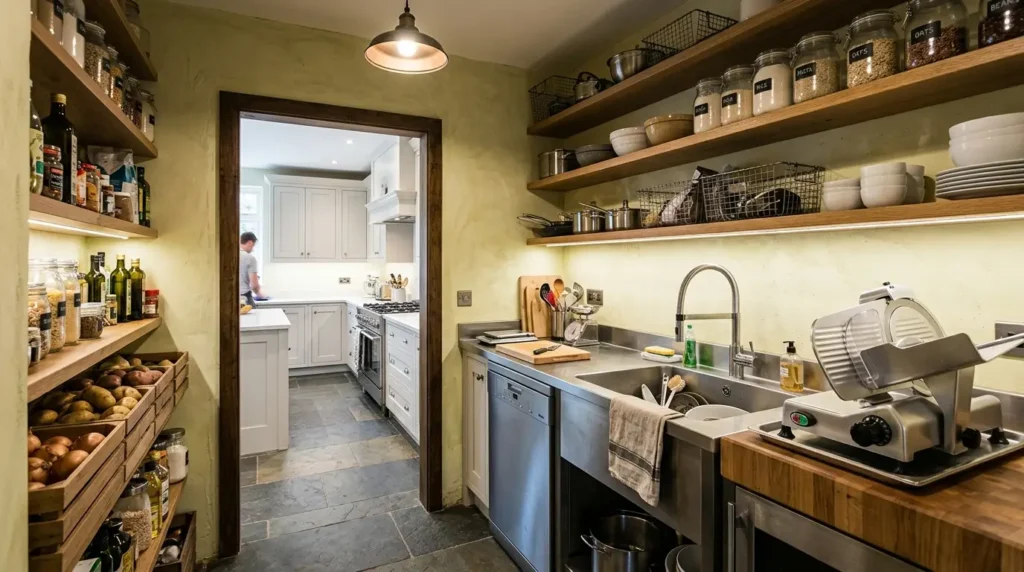
If you have the space, The Pantry Prep Zone is a dedicated scullery room. It houses the secondary sink, the powerful dishwasher, and all the “messy” appliances. The primary kitchen is reserved for light prep, cooking on a induction hob, and socializing. The messy prep happens in the back.
Layout Logic: Zone Planning Over Triangles
Modern life is too chaotic for a simple triangle. We are now Zone Planning. We’re creating dedicated functional “Pods”—a baking pod, a coffee/prep pod, and a cleaning pod. This approach allows multiple people to be in the kitchen at once without bumping elbows. This zone planning is perfect for multi-generational families who all contribute to meal prep.
III. Material Honesty: Raw & Tactile
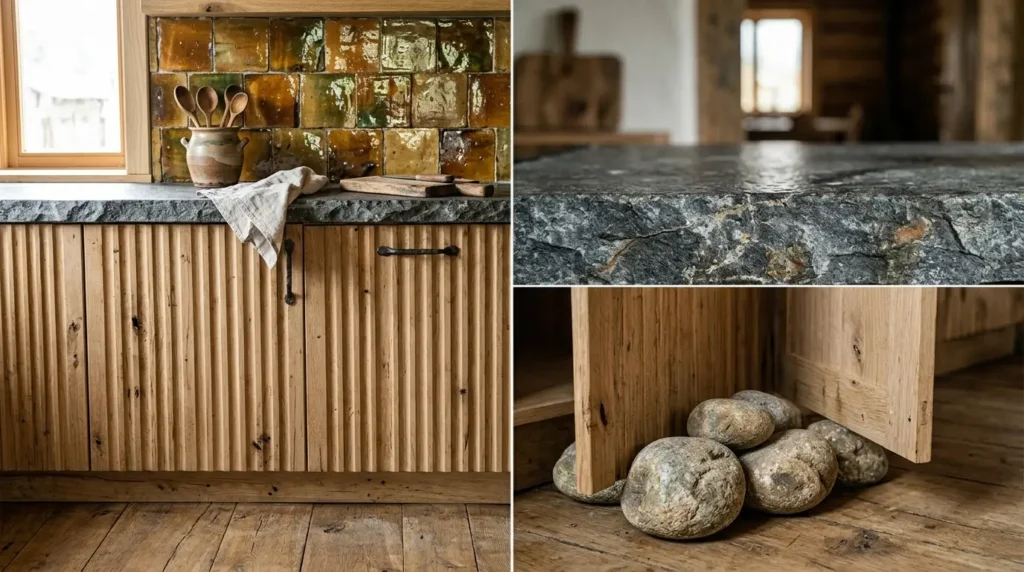
We are tired of faux-materials. If it’s pretending to be marble but it’s just printed plastic LVT, it’s out. 2026 values Material Honesty. We want to feel the raw grain of wood, the slight imperfection of a river stone, and the rough texture of a hemp textile.
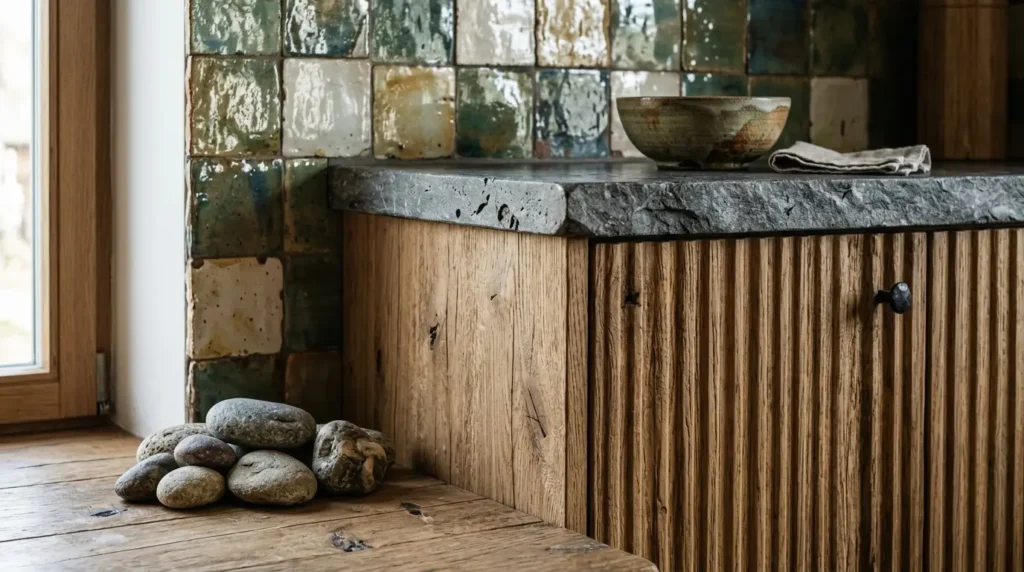
Idea 6: Fluted Oak Cabinetry
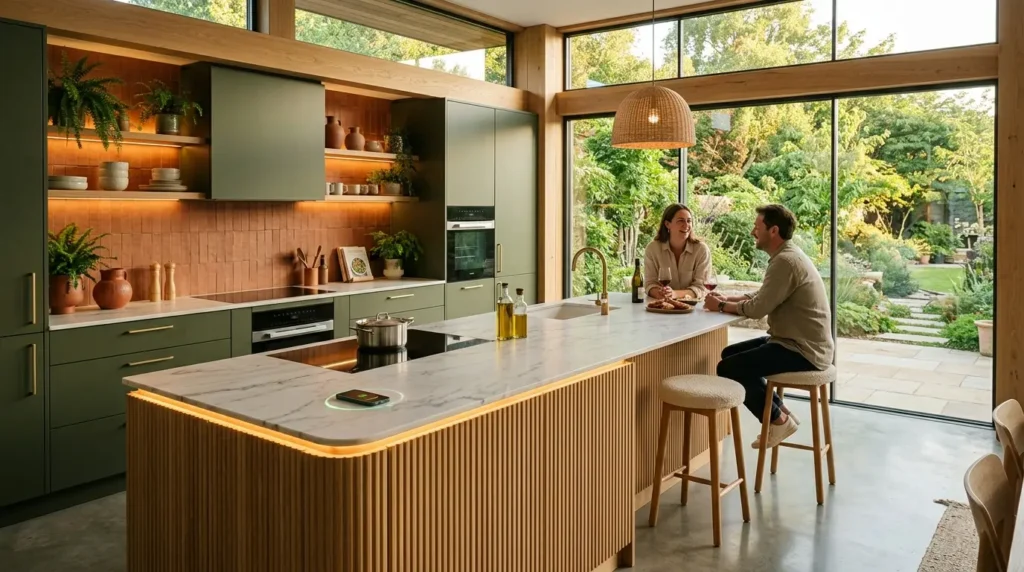
One of the key textures of the year is Fluted Cabinetry. These vertical grooves add a sense of rhythm and tactile beauty to a space that flat panels simply can’t. They soften the hard lines of a modern layout, making it feel more human and artisanal.
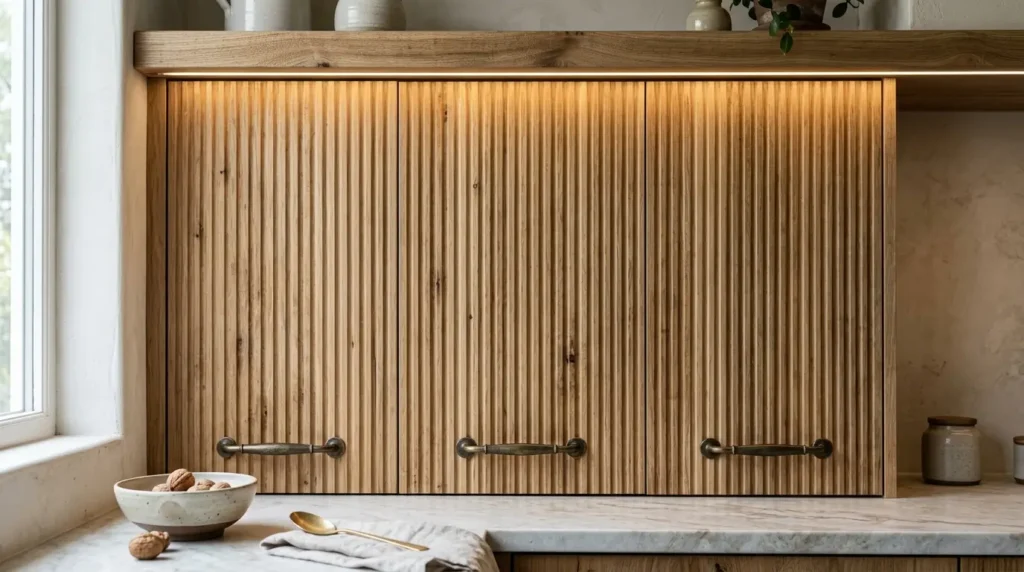
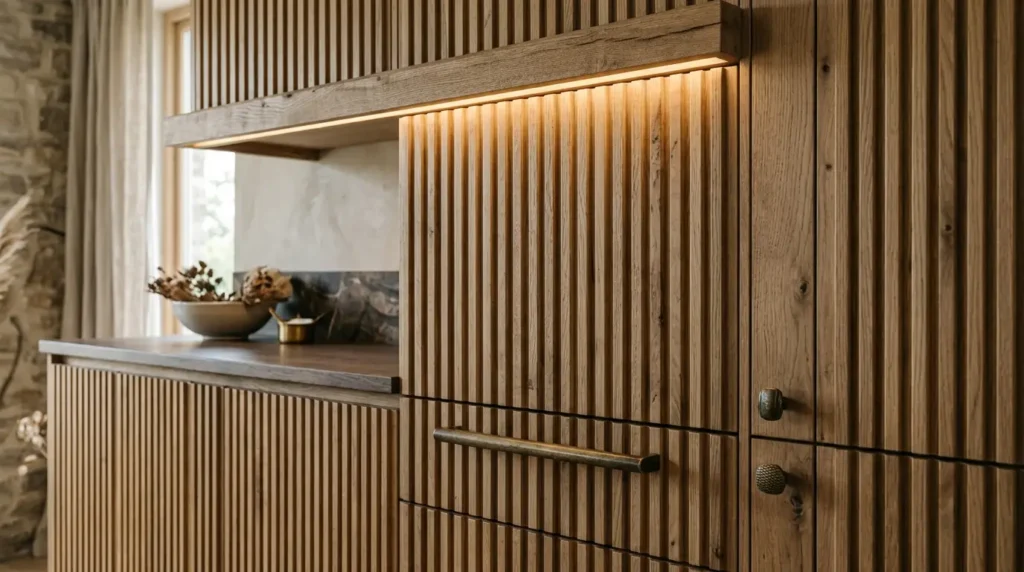
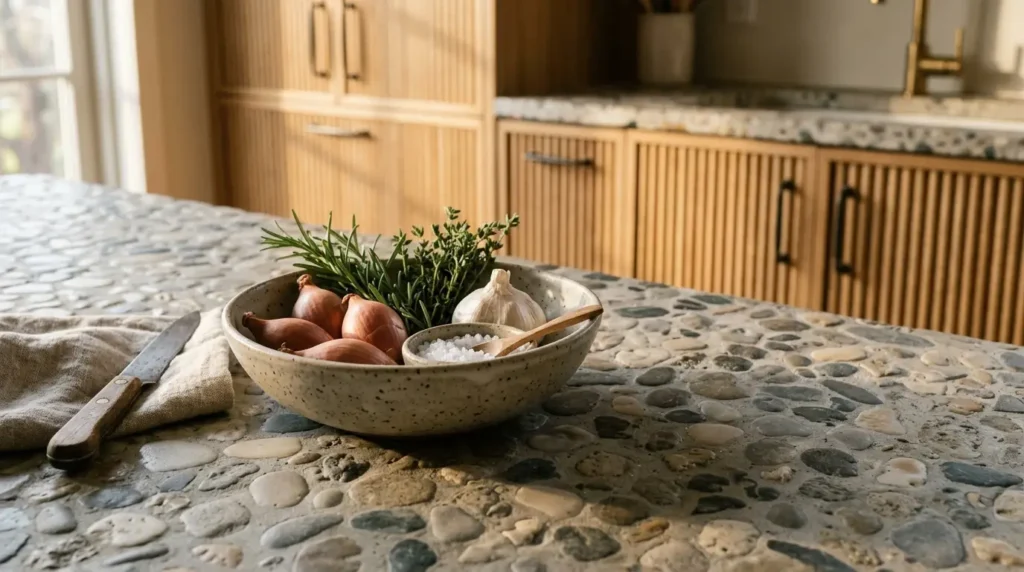
Idea 7: Honed River Stone Countertops
Shiny is out; “Velvety” is in. High-gloss polished marble can feel cold. In 2026, we are obsessed with Honed Stone (which is matte and soft to the touch) rather than polished surfaces. We’re using local river stone for a unique texture that grounds the space in its geographic context.
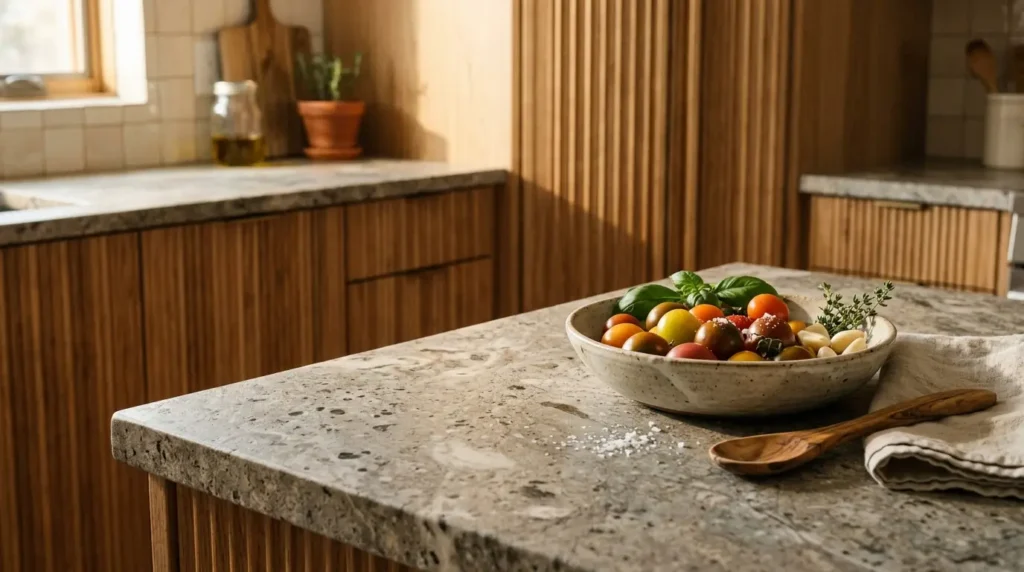
Idea 8: Local Hutsul Ceramic Backsplash
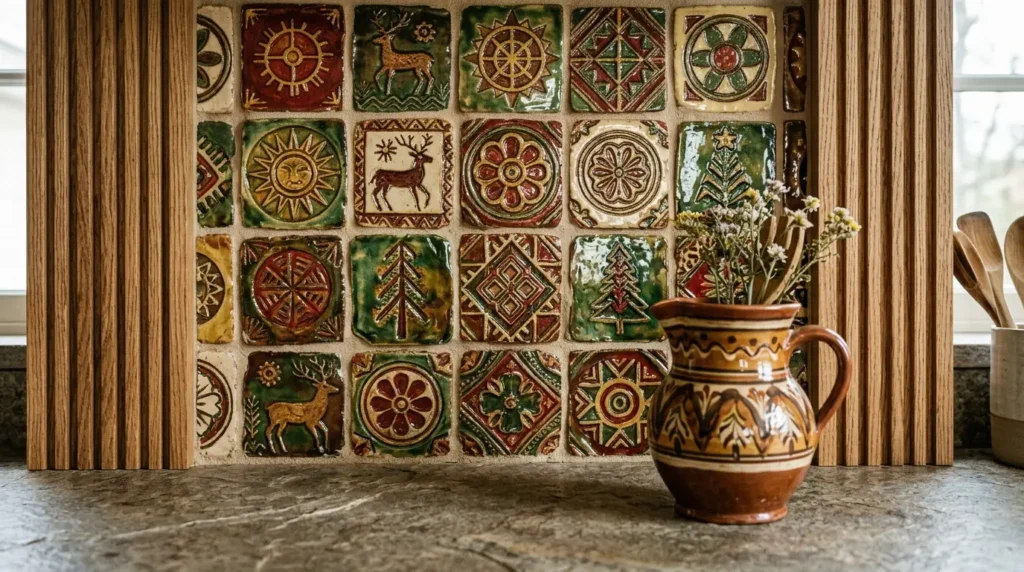
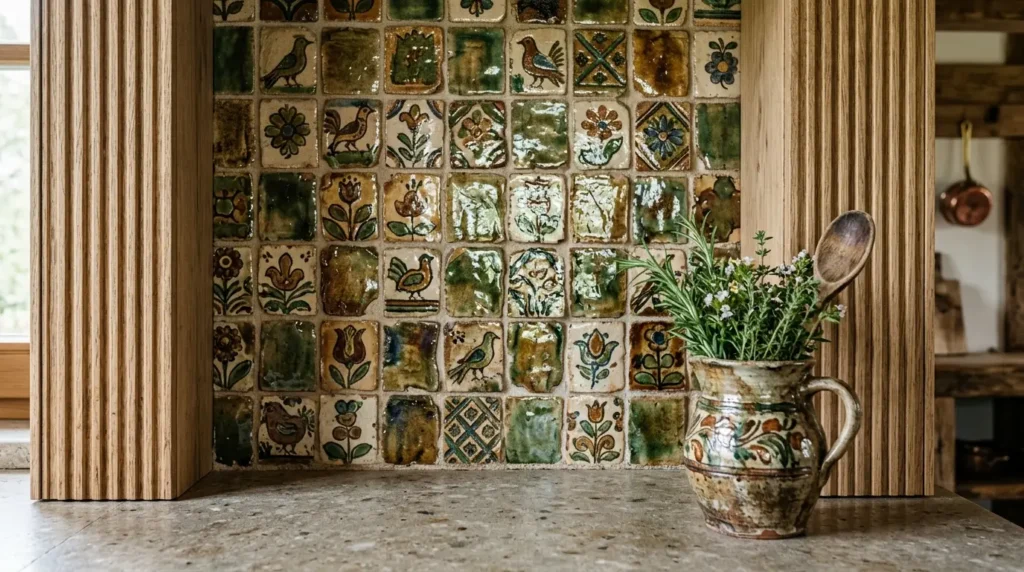
In Ukraine, we have incredible artisanal resources. In 2026, we are seeing a massive trend toward using local materials—Carpathian Raw Oak, local river stone for accents, and handmade Hutsul Ceramics used as functional art for a unique, localized backsplash. This movement not only supports our local economy but grounds the home in a specific cultural context.
IV. Lighting as Architecture
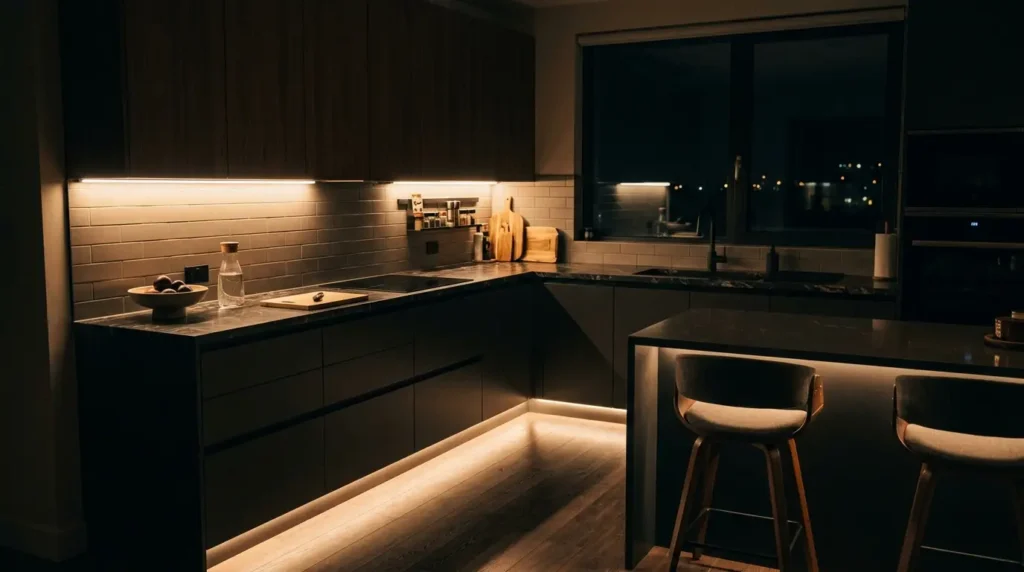
Lighting in 2026 is architectural, not decorative. We’re moving beyond the simple “pendant light” and thinking about how light defines the volume of the space.
Idea 9: Hidden LED Toe-Kick Glow
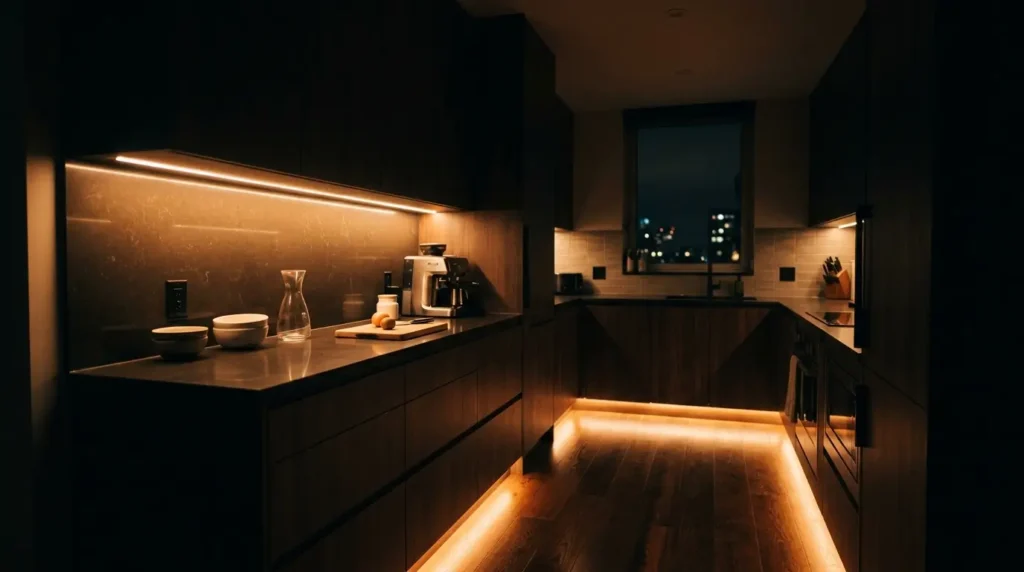
Nothing screams “cheap apartment” like a single, harsh ceiling light. Instead, we are using Layers of Light: Ambient Glow: (Like LED strips hidden behind a curtain valance or under-cabinet toe-kicks). This hidden glow makes the cabinetry feel like it’s floating, adding lightness to the entire room.
Idea 10: Integrated Light Shelving for Art
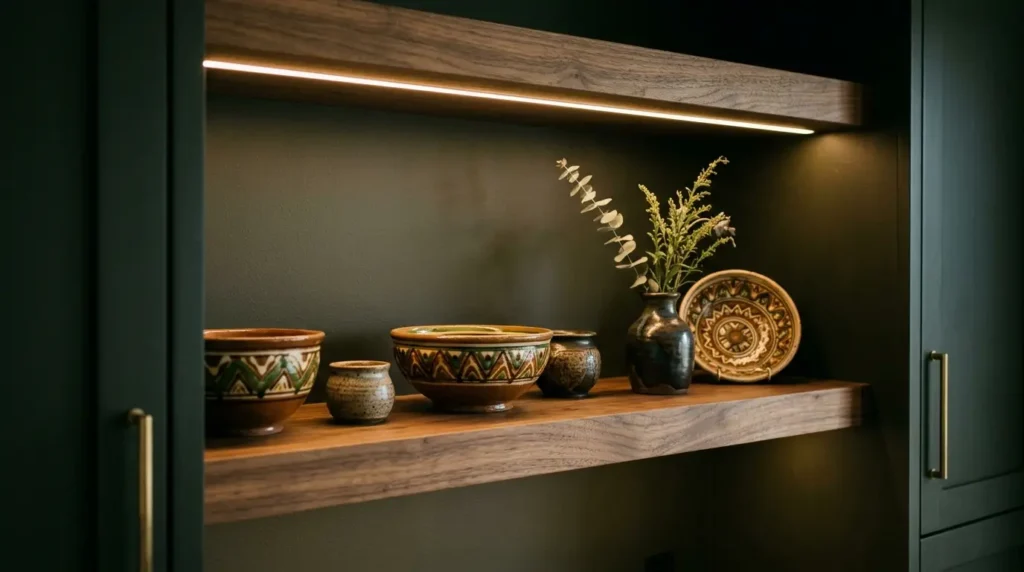
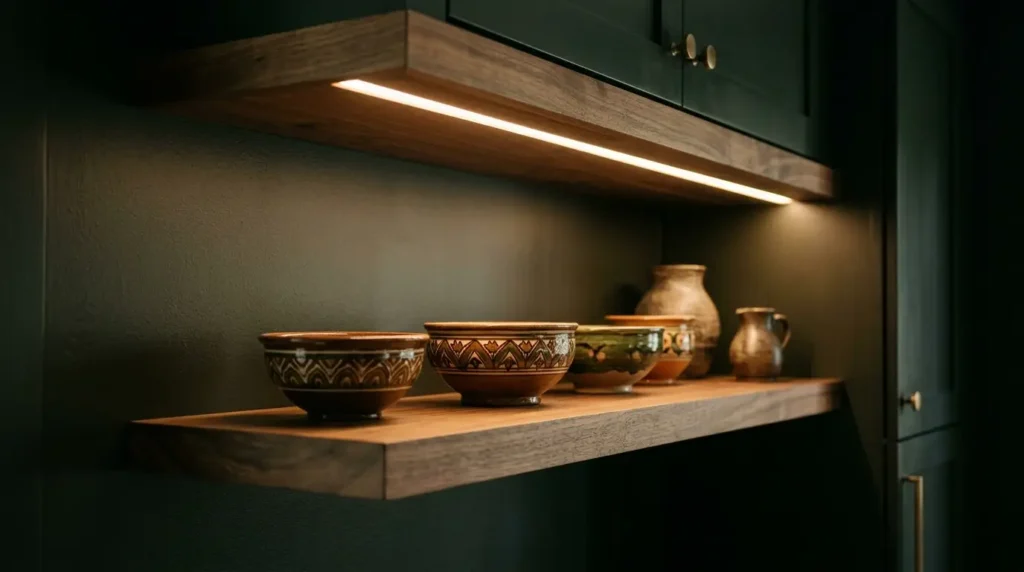
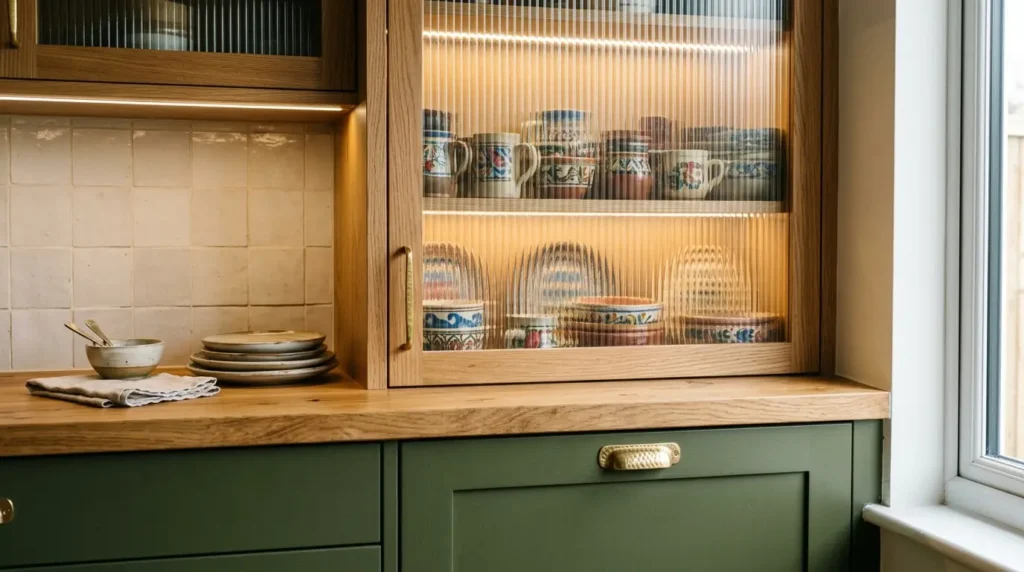
Lighting can also act as an accent. We are seeing integrated Light Shelving—floating shelves with flush-mounted LED strips that light the objects on the shelf, effectively treating your artisanal ceramics or local pottery as museum art.
V. Invisible Tech & Smart Storage
In 2026, the best technology is the tech you don’t see. We want all the high-tech functionality without our kitchen looking like an electrical warehouse.
Idea 11: Wireless Charging Counters
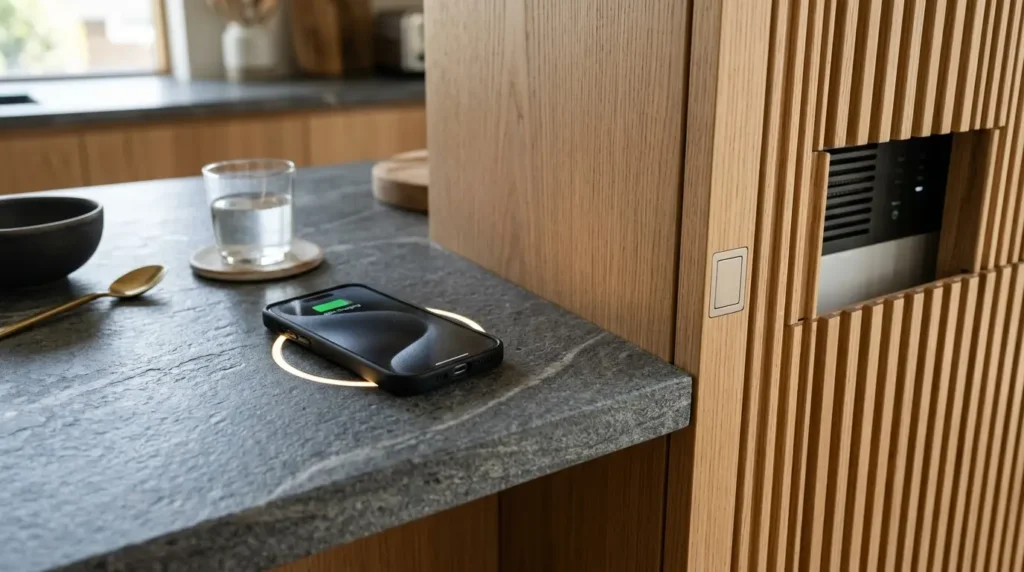
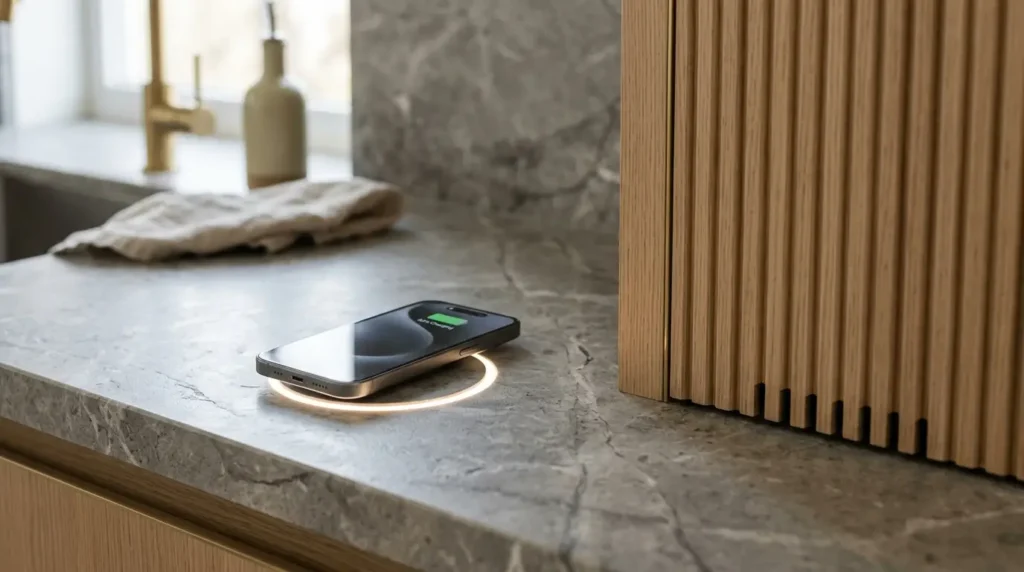
Modern luxury is Invisible Tech. We’re talking about inductive charging pads built directly into the stone countertop. Just rest your phone on the designated spot, and it charges. In regions where energy autonomy is critical (like ours here in Ukraine), we are designing sleek, fluted oak cabinetry that treats your EcoFlow or home battery system as an integrated part of the furniture, not a messy corner of wires.
Idea 12: Drawer-in-Drawer Organization
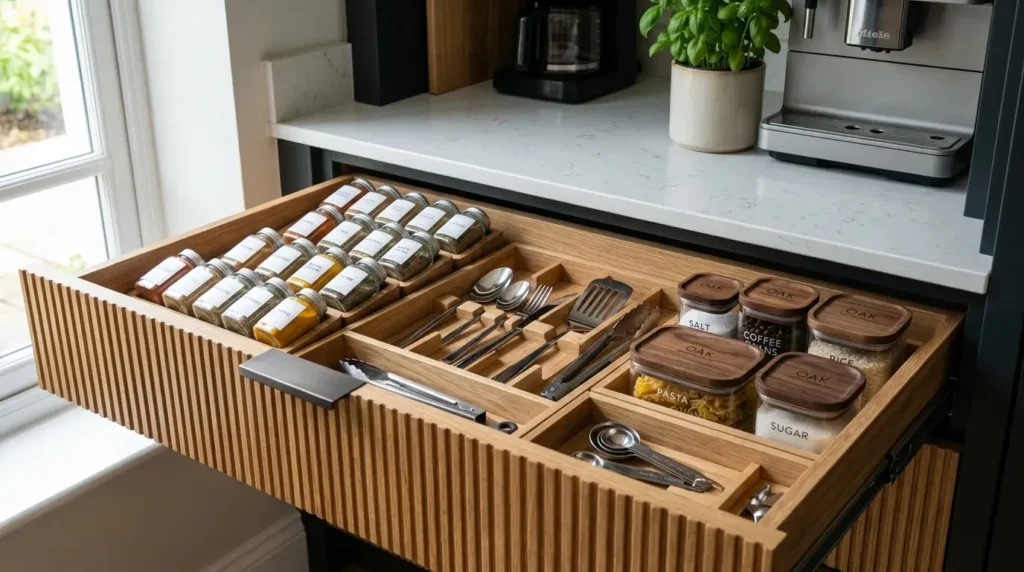
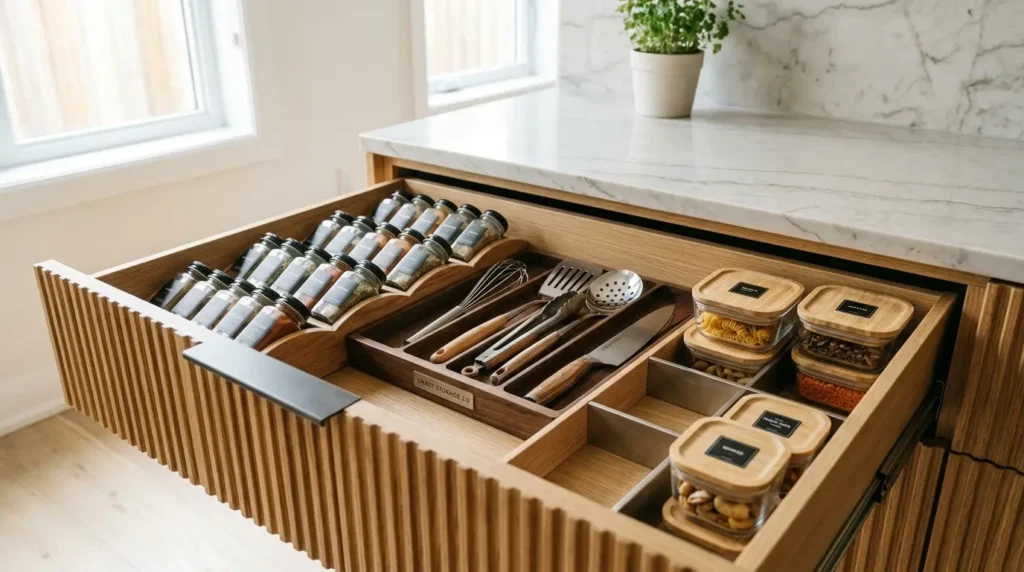
Clutter is an emotional burden. The 2026 kitchen is designed to minimize visual noise. We are obsessed with modular internal storage. Drawer-in-drawer systems and customized spice racks that fold into the wall create “Active Storage”—where the items you use every day are accessible but out of sight.
The Remaining 13 Ideas: A Gallery Snapshot
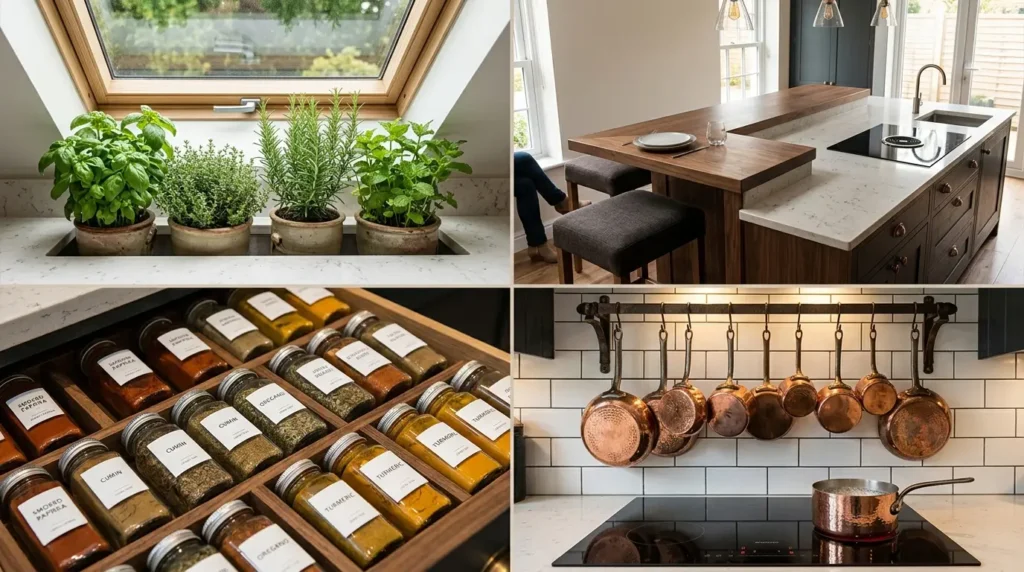
Here is a quick snapshot of the remaining 13 ideas that are shaking up kitchen design in 2026. For the full experience, dive into the image gallery below!
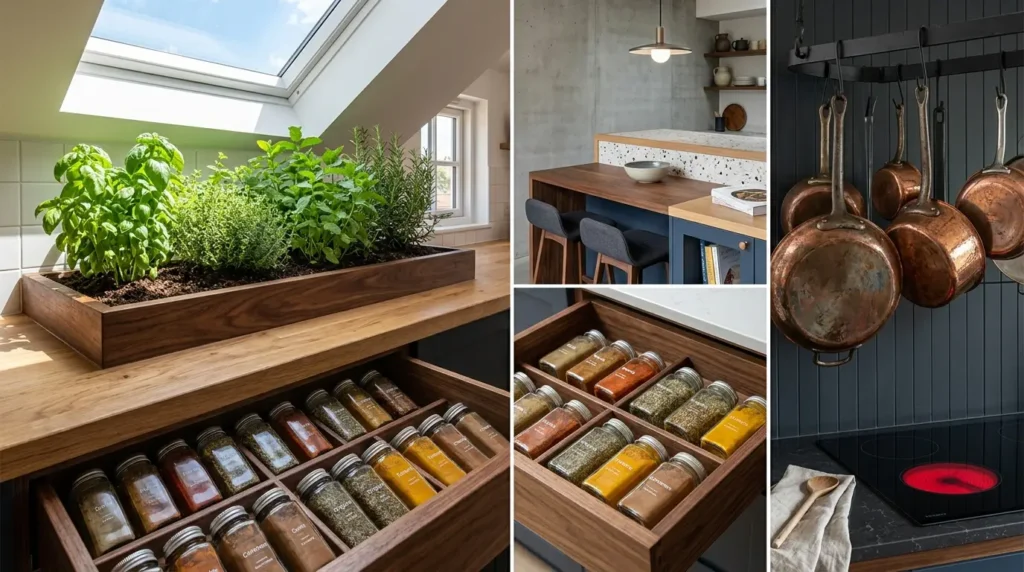
Idea 13: Integrated Herb Wall
The ultimate expression of Biophilic Design 2.0: a Smart Green Wall integrated into the kitchen design that doesn’t just hold ivy but grows actual herbs and microgreens.
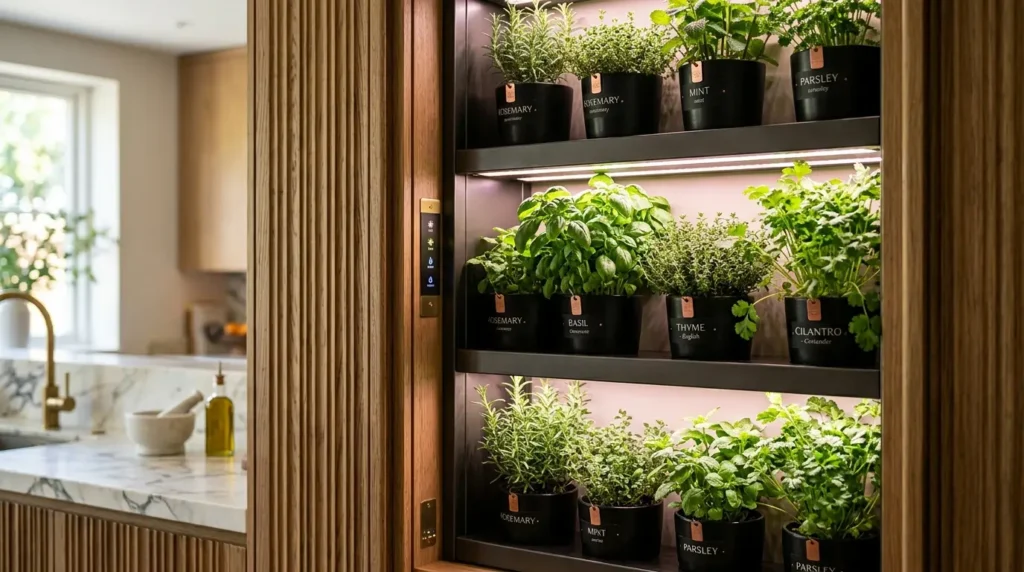
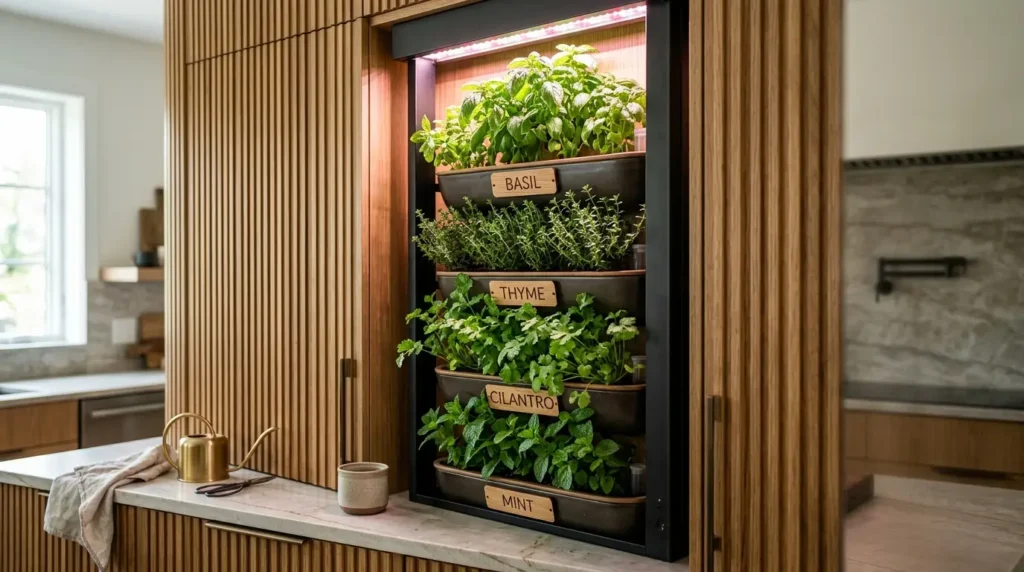
Idea 14: Multi-Level Dining Islands
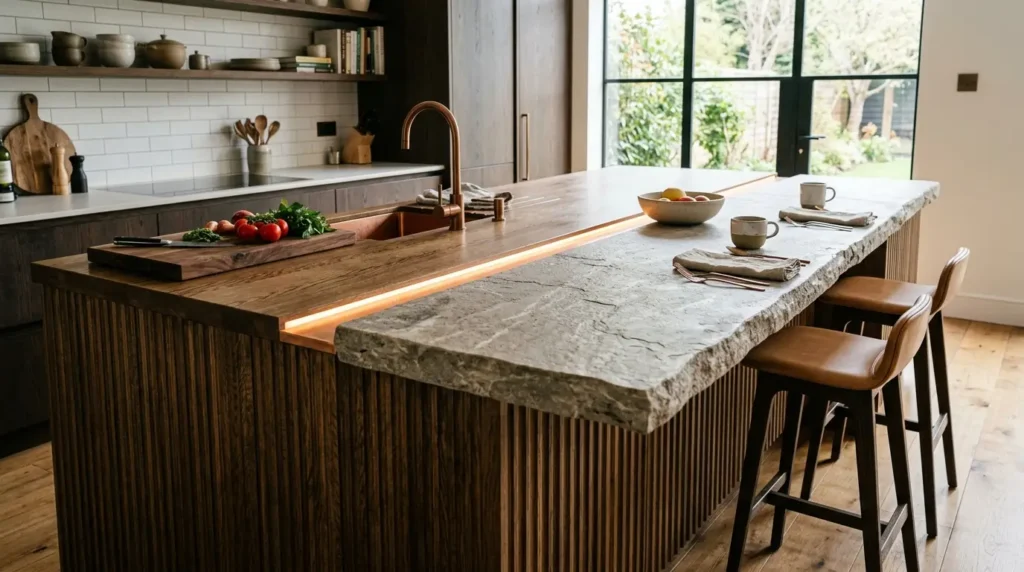
Islands designed for connection. They are often multi-level: one side is standard counter height for prep, while the other lowers down to table height for dining or homework. In our region, these multi-level hubs are perfect for those large, communal Sunday dinners.
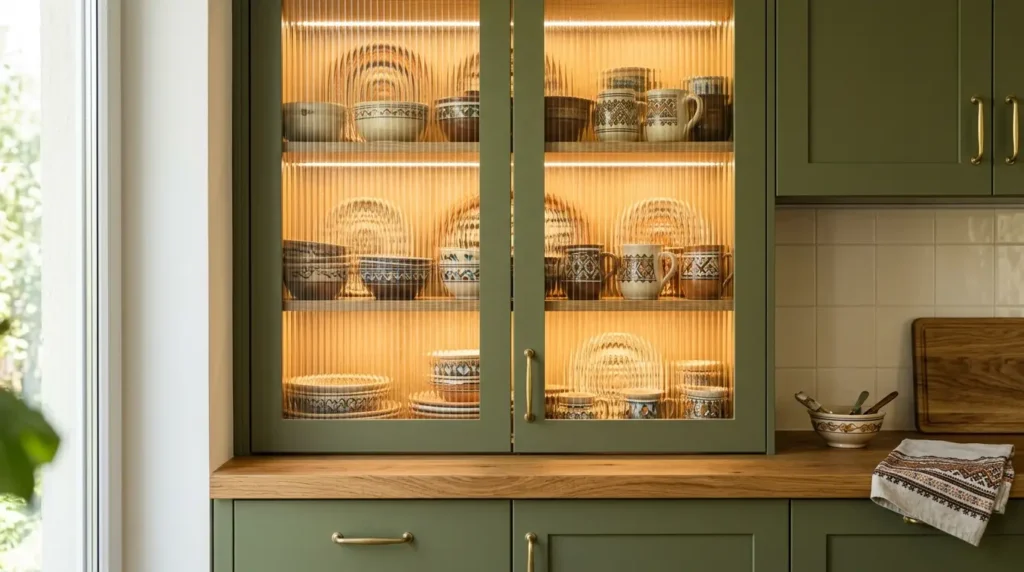
Idea 15: Textured Glass Front Cabinets
Moving away from transparent glass, we are seeing Fluted Glass or Reed Glass fronts. It allows a subtle view of your local ceramics while maintaining a clutter-free aesthetic.
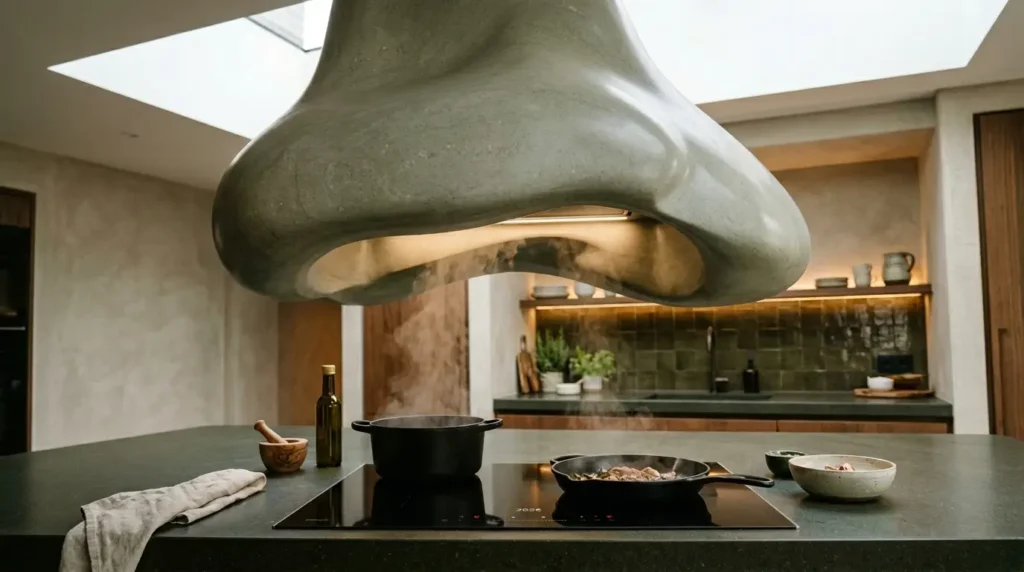
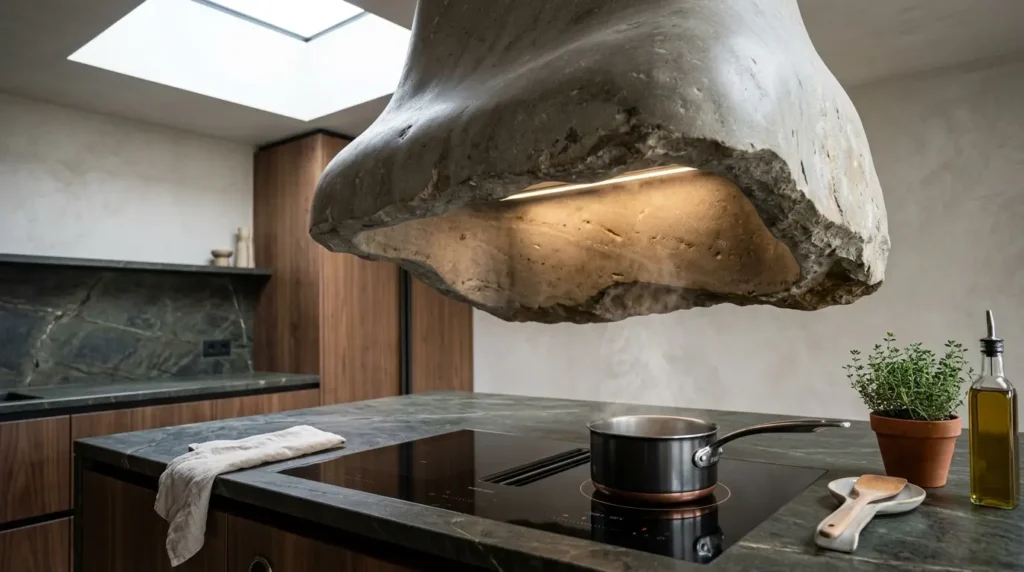
Idea 16: The Sculptural Extraction Hood
The ugly industrial vent hood is dead. In 2026, the hood is a work of art. We’re seeing hoods finished in lime-wash plaster, aged brass, or sculptural stone that makes them a true focal point, not an eyesore.
Idea 17: Copper Accents & Open Pot Racks
Copper is back, but not in the shiny, cheap way of previous years. We mean Patinaed Copper. Think aged brass and copper open pot racks over the induction hob. It feels soulful and grounded.
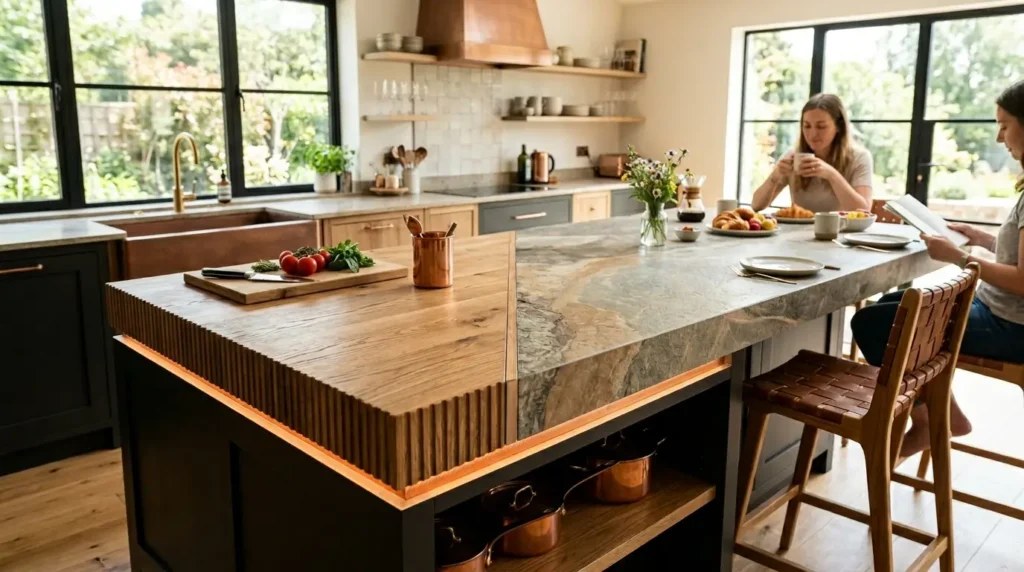
Idea 18: Mixed-Material Countertops
Why choose just one? 2026 is about Mixed Materials. An island that uses fluted Carpathian Oak for the prep zone and seamlessly transitions into a honed stone slab for the dining zone.
Idea 19: Touch-Latch Minimalist Cabinetry
For a completely clean look, the handle is truly gone. Advanced Touch-Latch Minimalist Cabinetry allows you to open doors and drawers with a slight nudge, maintaining a flawless facade.
Idea 20: The Seamless Induction Hob
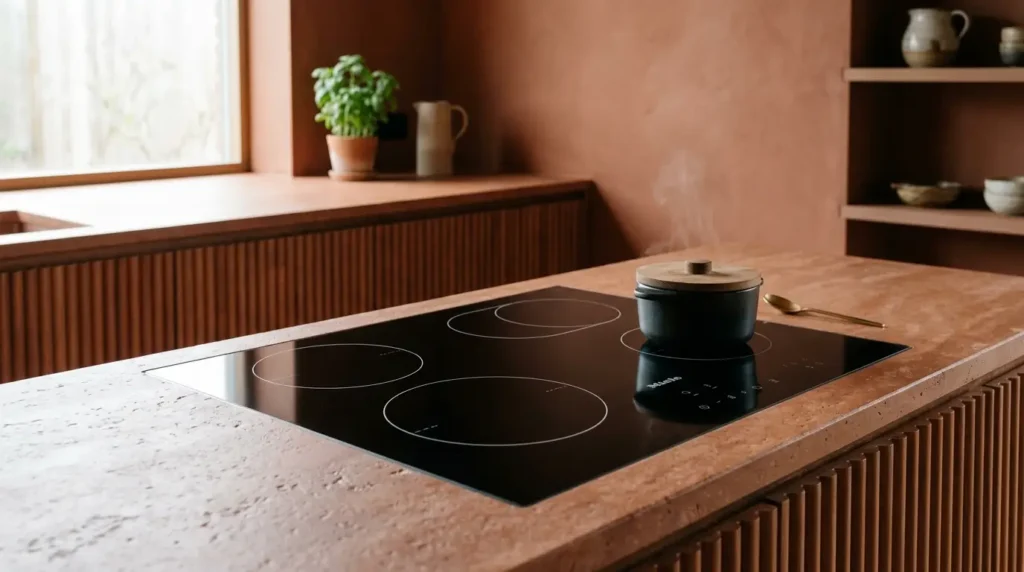
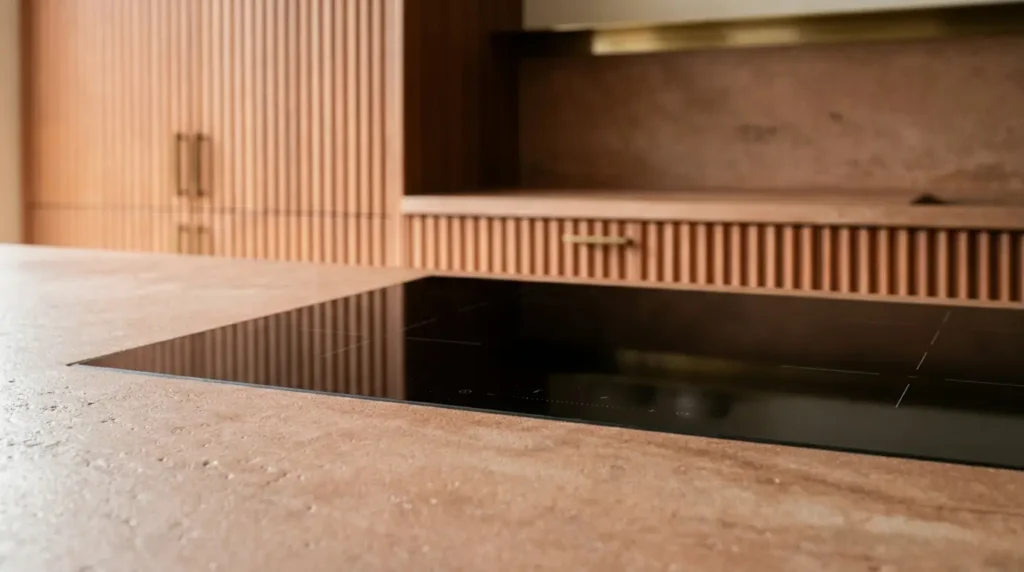
The induction hob is becoming an architectural element. We’re seeing Flush-Mount Induction Hobs that sit perfectly flush with the stone countertop, making the boundaries disappear for a completely smooth surface.
Idea 21: Integrated Recycling Hubs
Storage is now hyper-functional. We are obsessed with customized spice racks, drawer-in-drawer systems, and completely customized Internal Recycling Centers that fold seamlessly into the cabinet work, clears visual “noise” to reduce anxiety.
Idea 22: Plaster & Lime-Wash Walls
Move over, flat paint. 2026 is about Tactile Walls. Lime-wash and Venetian Plaster add a sense of movement and warmth to a room, making it look alive as the light changes.
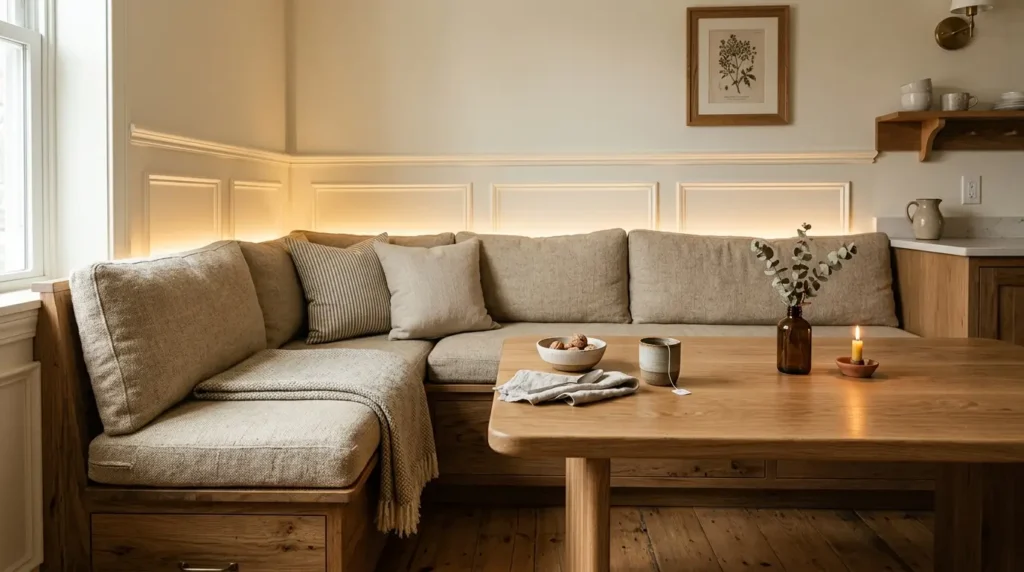
Idea 23: The Integrated Dining Nook
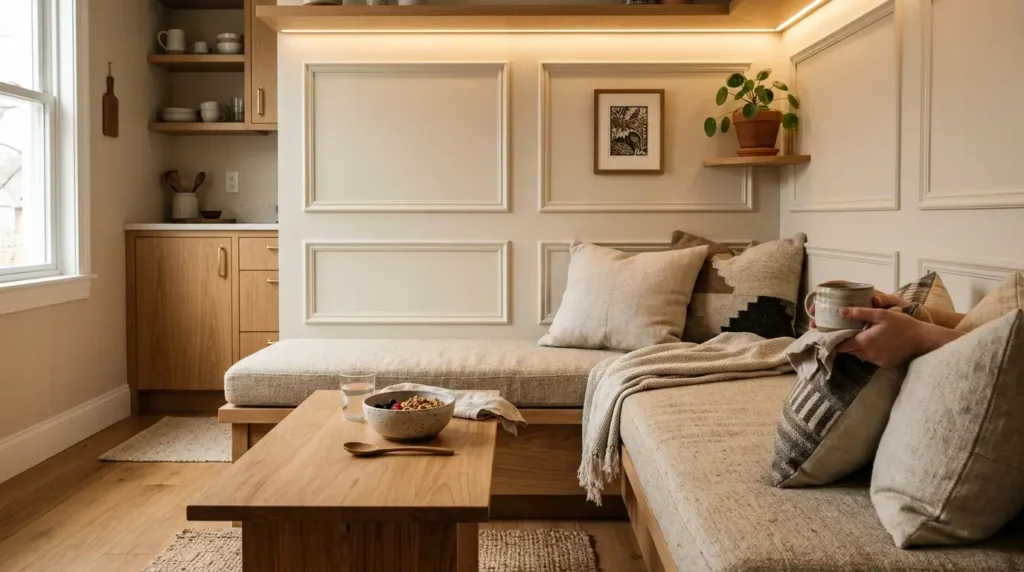
The kitchen is a social space. We are seeing integrated Breakfast Nooks and cushioned bench seating built directly into the cabinet design, creating cozy pockets of comfort in the heart of the home.
Idea 24: Curated Chaos (Individualism)
The biggest trend of 2026 is Individualism. We are tossing out the “showroom rulebook.” It’s about “Curated Chaos”—mixing styles in “weird” ways. Pair a Japanese low-profile bed with a vintage local sideboard. Contrast is beautiful. If you love it, it belongs in the room. Period.
Idea 25: A Home That Heals
Finally, we are designing for emotional groundedness. This isn’t just about what’s “pretty”—it’s about how we live, breathe, and recharge. We are optimizing our homes for well-being and emotional comfort, making our culinary spaces sanctuaries for the soul as much as they are labs for gastronomy.
Conclusion: Your Unique Culinary Sanctuary
At the end of the day, the biggest trend of 2026 is You. The future of kitchen design is hyper-individual. Whether you are creating a “Total Terracotta Wash” sanctuary, investing in “Material Honesty” with raw Carpathian oak, or integrating high-tech features like “Invisible Tech” to maintain a clutter-free aesthetic, the goal is the same: to create a home that heals you.
A modern kitchen isn’t a showroom; it’s the place where we connect, create, and find our groundedness. We hope this gallery of 25 ideas has given you the inspiration to begin planning your own sanctuary on original-ideas.net. The heart of your home is waiting to beat again.
Frequently Asked Questions (FAQs)
1. Is the Scullery pantry a good idea for small apartments? Absolutely! In small spaces, you can use a massive “Appliance Wardrobe” with folding or pocket doors. It gives you all the benefits of a Messy Kitchen—a full prep zone that you can simply “slide shut” when guests arrive. It’s a spatial miracle!
2. Is copper truly sustainable in kitchen design? Yes, highly! Copper is 100% recyclable and is incredibly durable. It can be re-patinated multiple times, adding character over generations rather than needing replacement.
3. Will the monochromatic look make my small kitchen feel claustrophobic? Actually, it’s the opposite! A “Total Color Wash” blurs the corners of the room, making it feel “infinite” because you can’t easily see where the room begins or ends. If you go dark (like Midnight Olive), it creates a cozy, cocooning effect that feels safe and grounded.
4. How do I start with Biophilic Design if I don’t have a green thumb? Start simple! Invest in easy-to-maintain “microgreen” grow kits. You can also integrate a small, LED-lit garden box that is automated, providing the benefits of fresh herbs and “living green” with minimal effort.
5. How do I blend high technology with raw local craft (like Hutsul ceramics)? This is the art of “Warm Minimalism.” Place a sleek, integrated induction hob adjacent to a textured backsplash of handmade Hutsul tiles. The contrast between the clinical utility and the organic craft is exactly what makes 2026 design feel so rich and interesting.
About the Author