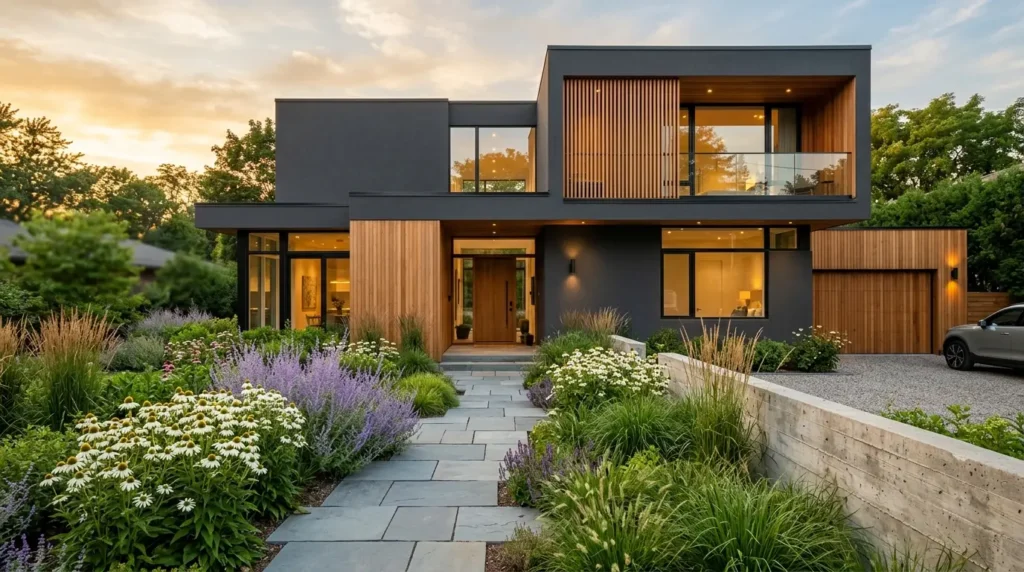
Have you ever walked past a house that stopped you dead in your tracks? Not just because the architecture was stunning, but because the house and the garden seemed to be having a conversation. The crisp lines of the roof were softened by the delicate sway of blooming lavender; the dark, moody siding made the bright yellow coneflowers pop like fireworks.
For a long time, home design treated the house and the garden like two completely separate projects. You built the house, and then you threw some bushes in front of it to hide the foundation. But we aren’t doing that anymore. Designing a flower garden for the front of a house is no longer an afterthought—it’s an integral part of the architecture itself.
Think of your home’s facade as a beautifully tailored suit. The architectural lines—the roof, the windows, the siding—are the cut and the fabric. The flower garden? That’s the silk pocket square, the statement tie, the perfect watch. It brings the whole look to life. If you’re looking to elevate your curb appeal, you need to understand how to harmonize your home’s structural elements with blooming botanicals. Let’s dig in and explore how to marry hardscaping with soft, natural beauty.
1. The Intersection of Architecture and Botany
Before we start picking out paint swatches and seed packets, we have to talk about balance. Why does a modern house look so much better with a garden in front of it?
1.1. Why Hardscaping Desperately Needs Softscaping
Modern architecture loves hard, unforgiving materials: steel, glass, concrete. While these materials look incredibly sleek, they can easily veer into feeling sterile or imposing. They lack a pulse. Softscaping—the living, breathing elements of a landscape like flowers, grasses, and trees—provides the essential counter-weight. When you place a delicate, wildly blooming hydrangea bush next to a stark, smooth concrete wall, both elements look better. The concrete gives the flower a geometric backdrop, and the flower gives the concrete a soul.
1.2. The Modern Organic Minimalist Approach to Florals
You might be thinking, “Wait, does minimalism allow for lush flower gardens?” Absolutely. But it’s all about curation. We aren’t talking about a chaotic, overgrown cottage garden where a hundred different species battle for sunlight. The Modern Organic Minimalist style uses mass plantings of a few select varieties to create striking “drifts” of color. It’s organized, it’s architectural, and it is overwhelmingly beautiful.
2. Color Theory: Matching Your Siding to Your Blooms
The color of your house is the canvas. The flowers are the paint. Getting this combination right is the single most important step in harmonizing your elevation.
2.1. Dark Facades and Vibrant Pops of Color (Idea 1)
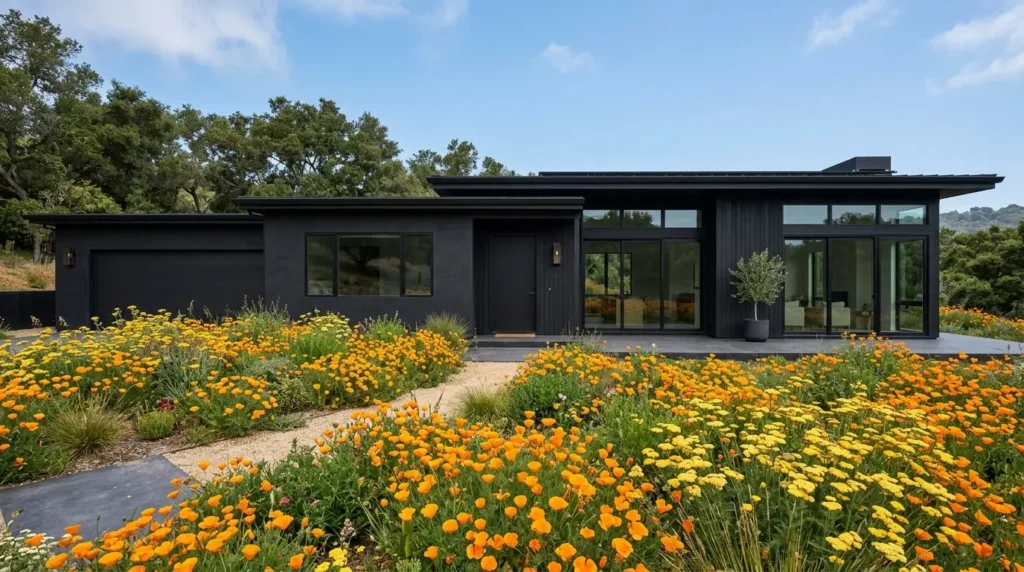
Dark, moody exteriors—think matte black, deep charcoal, or dark navy—are incredibly popular right now. But a black house sitting on a plain green lawn can look a bit like a black hole. To bring it to life, you need high-contrast botanicals. Imagine a matte black facade paired with vibrant, fiery colors. Drifts of bright orange California Poppies, golden Black-Eyed Susans, or intense magenta Yarrow. The dark background acts like a jeweler’s velvet display pad, making the bright colors of the flowers absolutely sing.
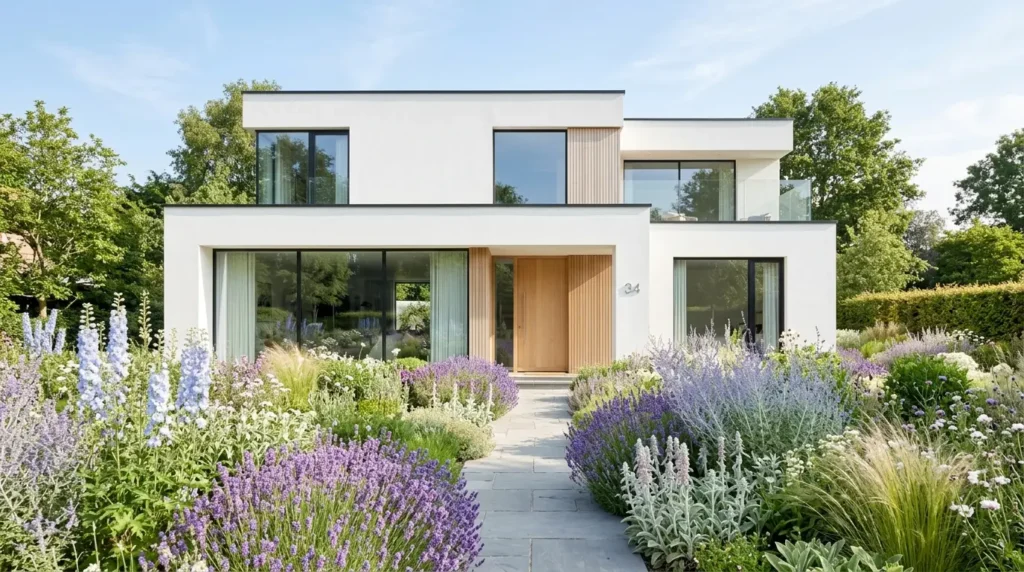
2.2. Crisp White Stucco with Pastel Meadows (Idea 2)
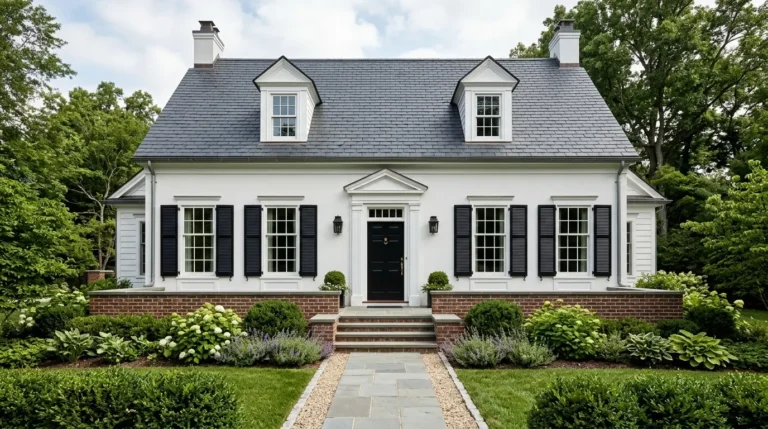
On the opposite end of the spectrum, we have the crisp, clean white facade. White stucco or painted brick reflects the sun and feels inherently fresh and airy. To complement this, lean into a softer, more romantic color palette. Plant large swaths of lavender, soft blush roses, pale blue Delphiniums, and silvery dusty miller. This combination creates an ethereal, coastal, or Mediterranean vibe that is incredibly soothing to the eye.
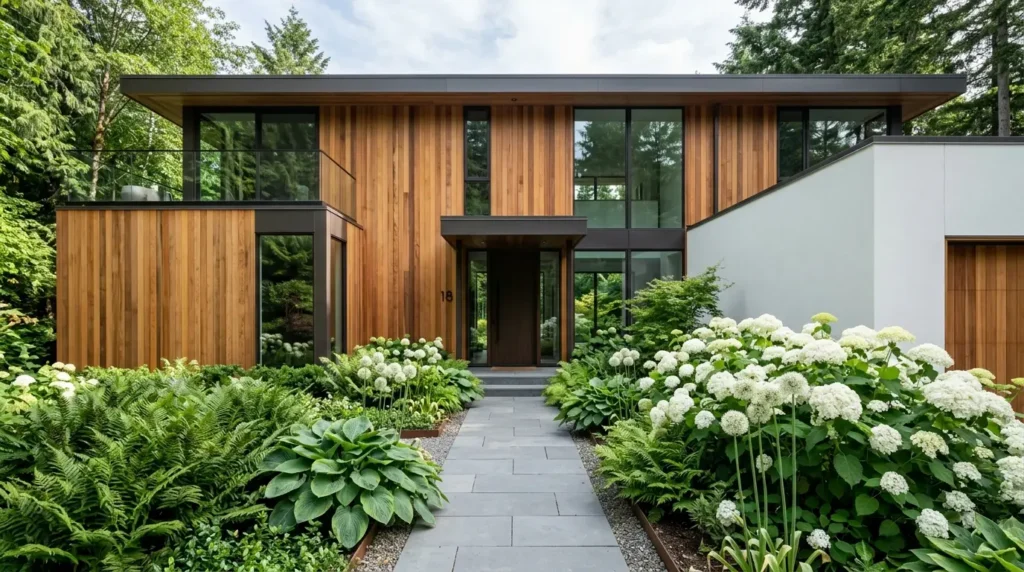
2.3. Natural Wood Tones and Monochromatic Greens/Whites (Idea 3)
If your home’s exterior relies heavily on natural wood—like warm cedar, rich mahogany, or thermally modified ash—you already have a very active, highly textured facade. You don’t want your flowers to compete with the wood grain. Instead, opt for a monochromatic garden palette consisting purely of varying shades of green and stark white flowers. White Alliums, white Hydrangeas, and sweet alyssum paired with deep green ferns create a sophisticated, calming environment that lets the architecture remain the star of the show.
3. Structural Elements That Embrace the Garden
How do we actually connect the house to the garden physically? Through intentional, structural hardscaping that bridges the gap.
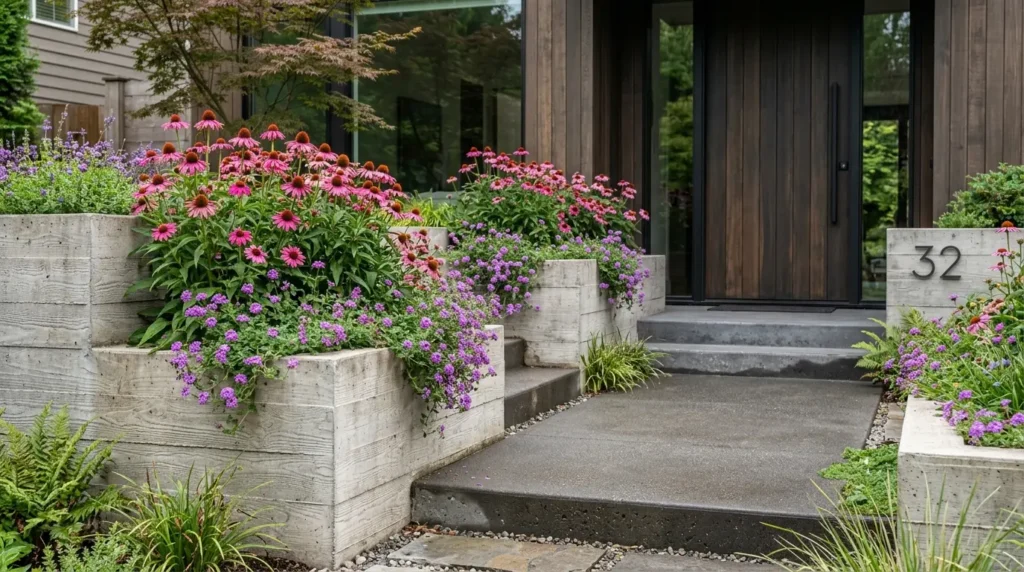
3.1. Built-In Concrete Planters for Seamless Transitions (Idea 4)
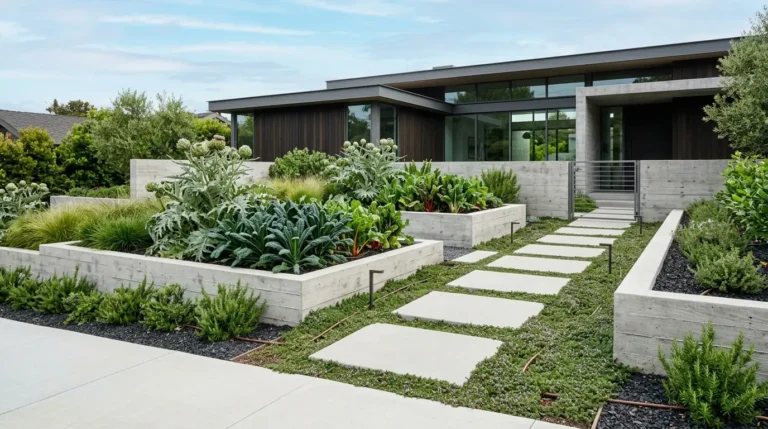
Don’t just plant flowers next to your house; plant them in it. Designing built-in, board-formed concrete planter boxes directly into the foundation walls, porch, or entryway creates a seamless transition from the built environment to the natural one. When vibrant pink Echinacea or trailing purple Verbena spills over the sharp edge of a concrete planter, the visual tension is simply spectacular.
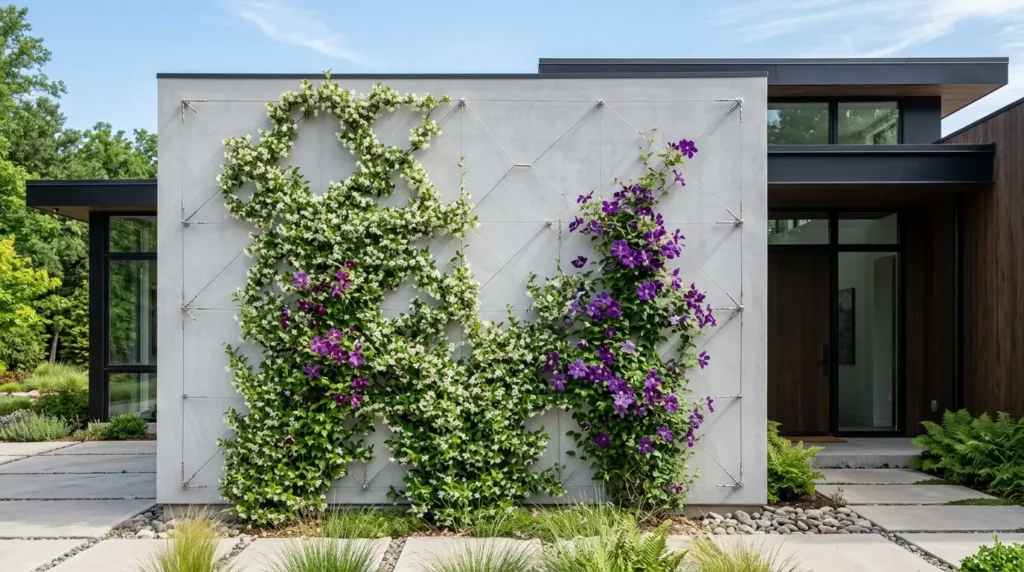
3.2. Living Walls and Vertical Floral Trellises (Idea 5)
Why restrict your garden to the ground? Vertical gardening is a hallmark of modern eco-design. Instead of leaving a massive, blank stucco wall exposed, install a sleek, minimalist steel trellis system. Train climbing florals like Star Jasmine, Clematis, or modern climbing roses up the wall. Not only does this soften the architecture, but it also physically cools the house by providing natural shade to the exterior walls.
3.3. Deep Roof Overhangs Sheltering Shade Gardens (Idea 6)
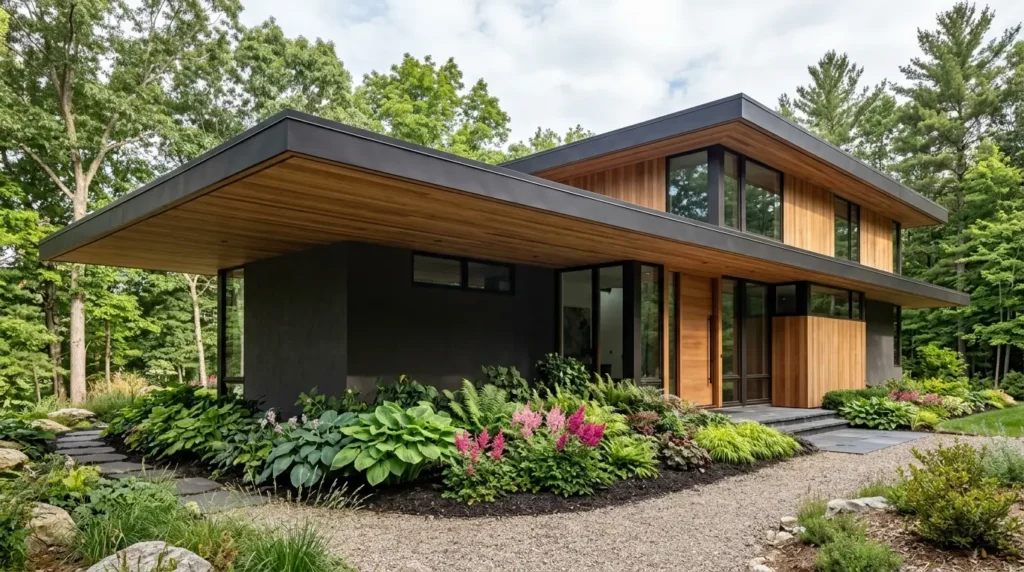
Modern homes often feature dramatic, cantilevered flat roofs with deep overhangs. These architectural features do more than just look cool; they create microclimates. The deep shade provided by a large overhang is the perfect place to curate a lush shade garden. Think broad-leafed Hostas, delicate bleeding hearts, and Astilbes. You are essentially using the home’s architecture to protect delicate woodland blooms.
4. The Approach: Walkways and Entrances
The journey from the sidewalk to the front door is your opportunity to immerse visitors in your design. Make them walk through the beauty.
4.1. Floating Steps Over Thyme and Creeping Phlox (Idea 7)
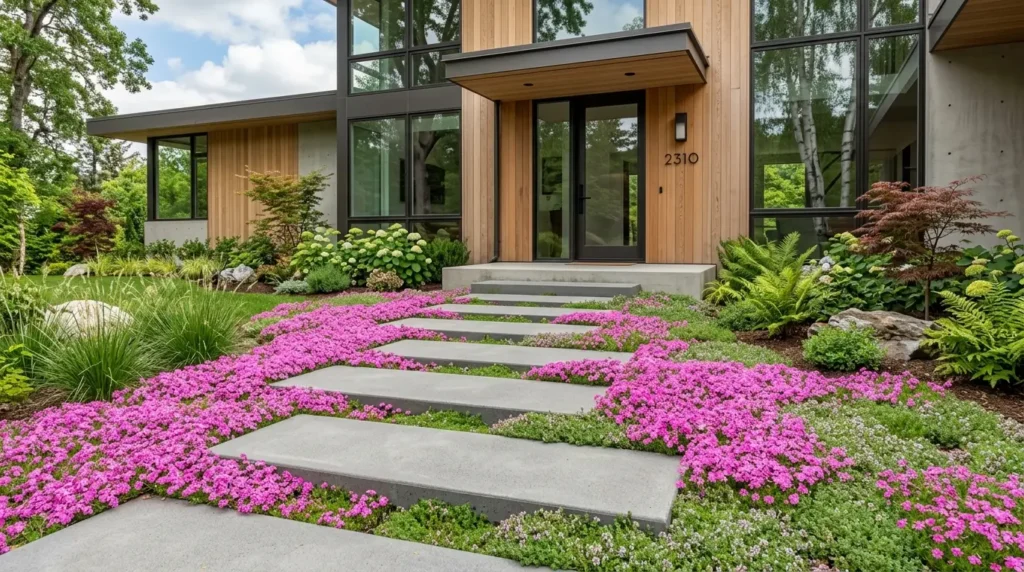
Instead of a solid ribbon of concrete for a walkway, use oversized, rectangular concrete step pads spaced a few inches apart. Plant low-growing, blooming ground covers between the stones. Creeping thyme, which releases a wonderful scent when brushed against, or vibrant pink creeping phlox, creates a “living mortar” that makes your walkway look like it is floating on a sea of flowers.
4.2. The Floral Courtyard Entryway (Idea 8)
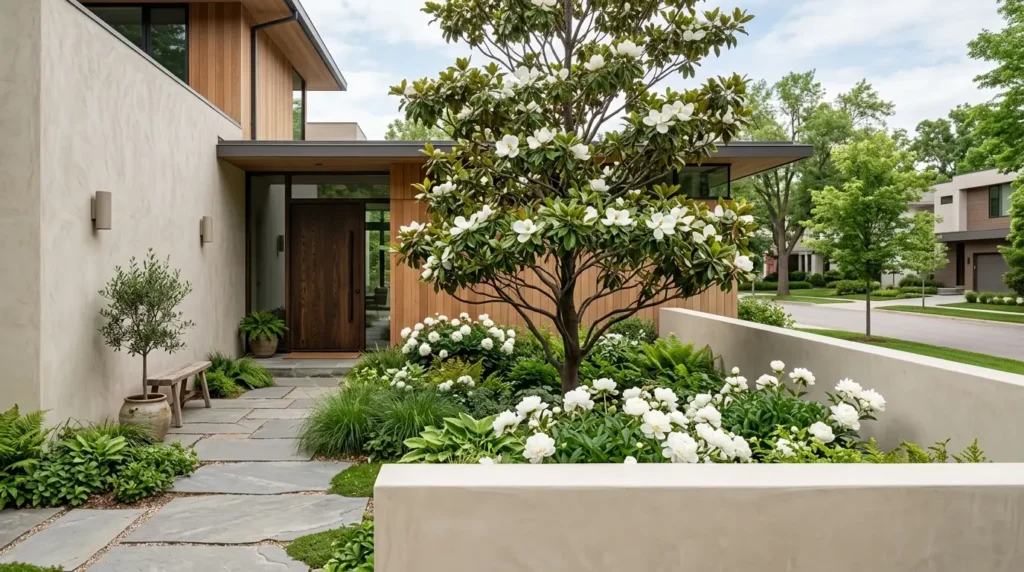
If you have the space, enclosing your front entrance behind a low privacy wall creates an intimate courtyard. This is an incredibly luxurious modern feature. Fill this semi-enclosed space with highly fragrant blooms like Gardenias, Peonies, or a solitary, sculptural Magnolia tree. The walls of the courtyard trap the floral scents, creating an intoxicating olfactory experience before you even open the front door.
4.3. Flanking the Pivot Door with Symmetrical Blooms (Idea 9)
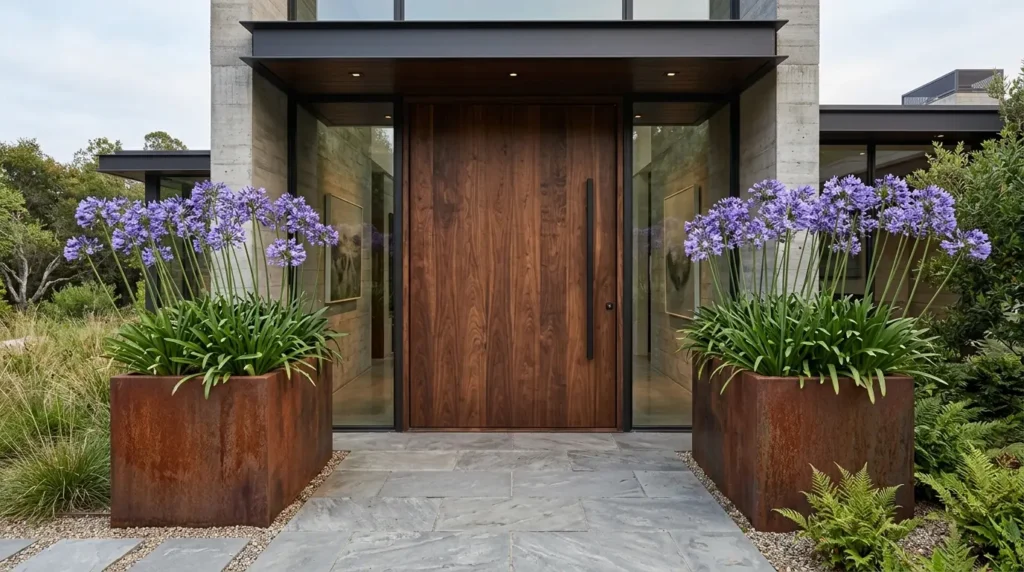
The modern oversized pivot door is an architectural marvel. To frame it perfectly, use the power of symmetry. Place two massive, minimalist planters (perhaps made of rusted Corten steel or polished concrete) on either side of the door. Fill them with towering, structural flowers like Agapanthus (Lily of the Nile) or tall ornamental alliums. The symmetry draws the eye directly to the entrance, offering a grand, welcoming gesture.
5. Layering and Texture: Creating Architectural Depth
Great front elevation design isn’t flat. It has depth, movement, and layers that draw the eye from the street level all the way up to the roofline.
5.1. Mixing Ornamental Grasses with Bold Florals (Idea 10)
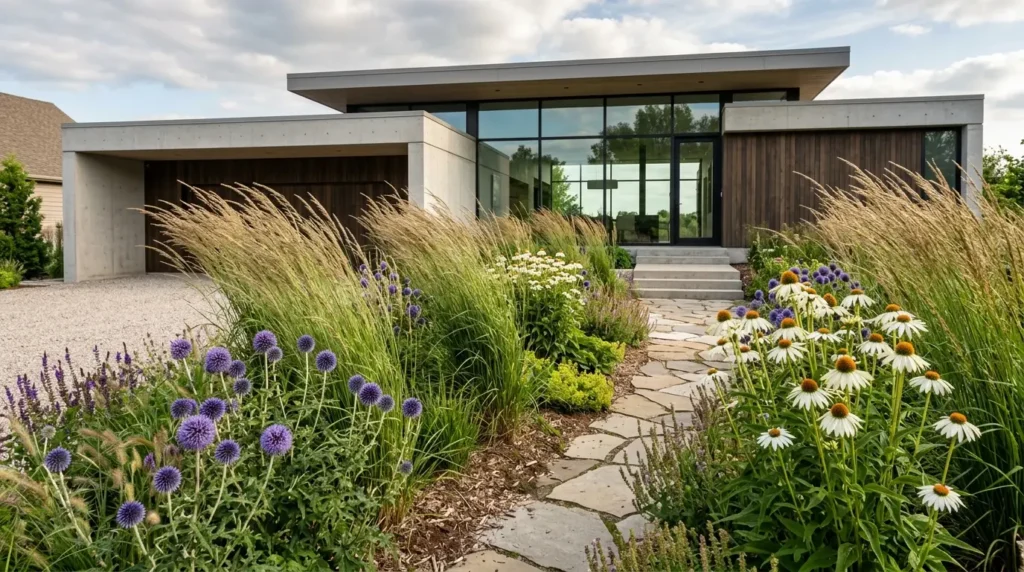
Flowers provide color, but grasses provide movement. If your modern facade feels too rigid, mixing ornamental grasses with your flowers is the ultimate antidote.
5.1.1. The Magic of Movement in Landscape Design
When the wind blows, a modern house stands perfectly still, but a garden of Mexican Feather Grass or Karl Foerster grass ripples like the ocean. Interplanting these grasses with bold, structural flowers like tall Coneflowers or Globe Thistle creates a dynamic tension. The rigidity of the architecture contrasts beautifully with the wild, kinetic energy of the planted layers.
5.2. Corten Steel Retaining Walls with Wildflower Spills (Idea 11)
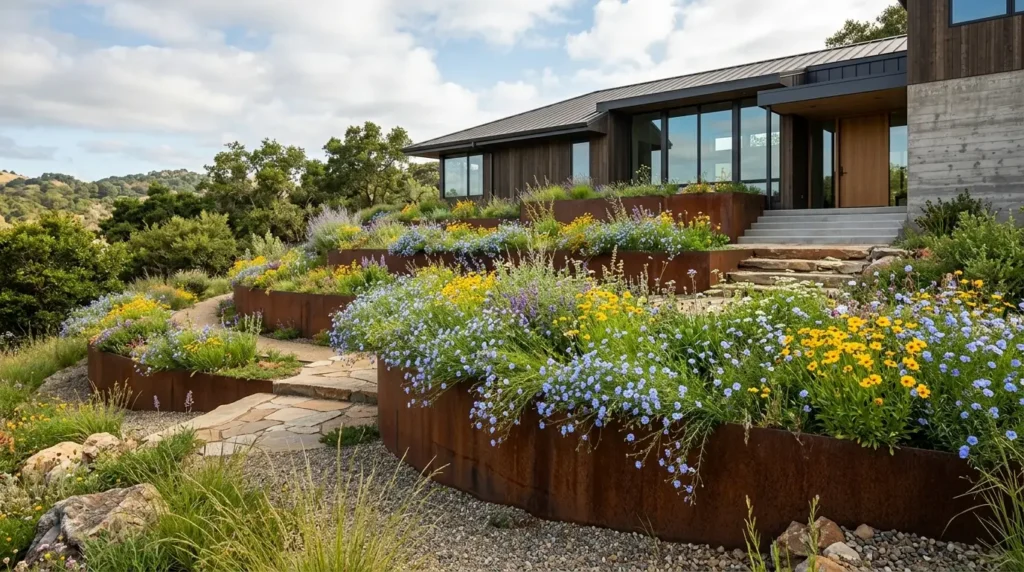
If your property is on a slope, retaining walls are a necessity. Turn them into a feature by using Corten steel. This weathering steel develops a rich, rusty patina that is synonymous with organic modernism. Plant native, low-water wildflowers at the top of the wall and allow them to spill over the rusted edge. The combination of industrial steel and delicate, wild blooms is breathtaking.
5.3. Gravel Gardens with Drought-Tolerant Blossoms (Idea 12)
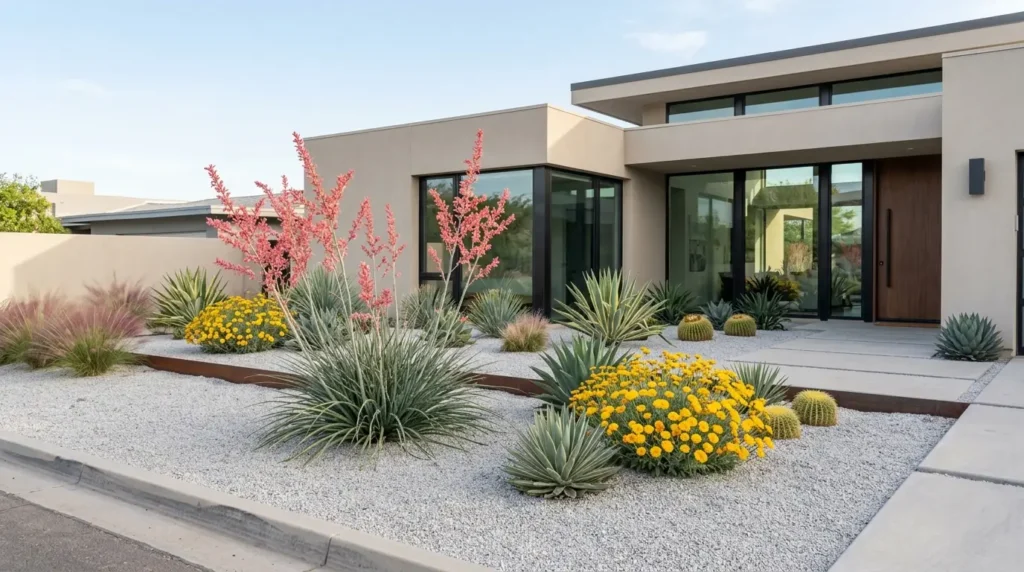
For those in arid climates, the Modern Organic Minimalist style translates perfectly to a gravel garden. Replace the thirsty lawn with a bed of crisp, light-colored decomposed granite or pea gravel. Sparsely plant structural, drought-tolerant blooming succulents like Red Yucca, flowering Aloe, and Desert Marigold. The negative space of the gravel makes every single bloom look like a deliberate piece of art.
6. Illuminating Your Floral Elevation
The sun goes down, but your curb appeal shouldn’t. Lighting is the final, crucial step in merging your house and garden.
6.1. Strategic Uplighting for Nighttime Drama
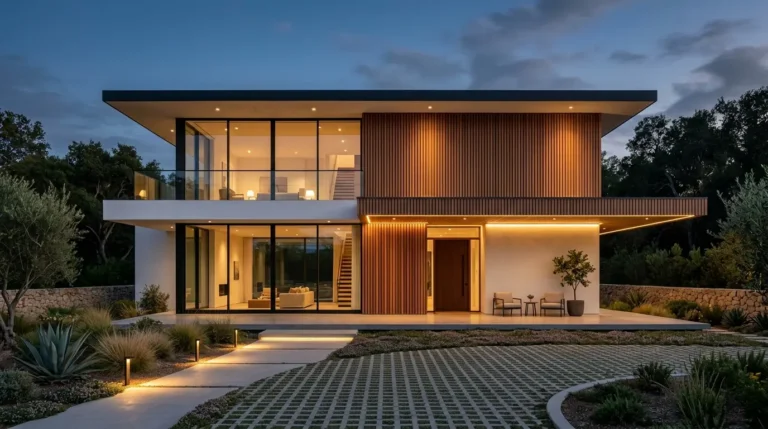
Do not use cheap, blinding floodlights. Instead, use warm-toned (2700K) LED uplighting. Place small fixtures at the base of your most structural plants or built-in planters to cast dramatic shadows against the flat walls of your home’s facade. This lighting technique highlights the textures of your flowers and siding, turning your nighttime elevation into an entirely new, theatrical experience.
7. Conclusion: Your Home, Blooming
Integrating a lush flower garden with a modern front elevation is not about wrestling nature into submission; it’s about giving nature a beautiful frame in which to thrive. By thoughtfully considering color contrast, embracing structural planters, and layering textures, you can transform a standard, rigid modern house into a living, breathing sanctuary. Remember, the best architecture doesn’t fight the earth it sits on—it celebrates it. Take these blueprints, pick your palette, and let your home’s facade burst into brilliant, unapologetic life.
8. Frequently Asked Questions (FAQs)
Q1: How do I keep a flower garden looking “modern” and not messy? A: The secret is restraint and repetition. Avoid buying one of everything at the nursery. Instead, choose a tight palette of 3 to 5 plant varieties and plant them in large groups or “drifts.” Also, maintaining sharp, clean edges between your garden beds and your hardscaping (using steel edging or concrete) keeps the look crisp and intentional.
Q2: What are the best low-maintenance flowers for a modern front yard? A: Look for hardy perennials that require little deadheading and are drought-tolerant once established. Russian Sage, Coneflower (Echinacea), Ornamental Alliums, Sedum ‘Autumn Joy’, and Black-Eyed Susans are all fantastic structural plants that require minimal fuss but deliver massive visual impact.
Q3: Is it a bad idea to plant flowers right against the foundation of the house? A: It depends on the execution. You should always leave a gap of at least 12 to 18 inches between the plants and your siding to allow for air circulation and to prevent moisture from damaging your facade. Using built-in concrete planters or gravel drip edges between the house and the soil is a great modern solution.
Q4: How do I incorporate flowers if my front yard is mostly shade? A: Shade gardens are incredibly luxurious! Instead of sun-loving blooms, lean into texture and subtle color. Use large swaths of white Astilbe, Bleeding Hearts, Foxglove, and various species of Hostas and Ferns. White flowers actually “glow” beautifully in shaded areas, brightening up the dark corners of your architecture.
Q5: Can I have a modern flower garden if I live in a cold climate with long winters? A: Absolutely. This is where combining flowers with ornamental grasses and evergreens is crucial. Choose flowers that leave interesting structural seed heads behind in the winter, like Coneflowers or Sedum. When paired with the golden stalks of dormant ornamental grasses, your garden will provide architectural interest even when covered in snow.
About the Author