Let’s get straight to the point: living in a smaller home is a beautifully smart choice. It means cozier evenings, drastically lower utility bills, and far less time spent maintaining rooms you never use. But just because you’ve opted for a compact floor plan doesn’t mean you have to settle for an exterior that looks like an unremarkable, squished little box.
If you’re frustrated by a cramped, unassuming facade, I have fantastic news. Creating awe-inspiring curb appeal for a small house is entirely a game of optical illusions. Think about a perfectly tailored pinstripe suit. Why does it make the wearer look taller, broader, and more imposing? It’s all about guiding the human eye. By utilizing the time-tested rules of traditional, classic architecture, you can stretch your facade, manipulate proportions, and trick the brain into seeing a sprawling estate where a modest home actually sits.
Ready to leave the “cramped cottage” look in the dust? We are going to explore the intersection of clever architectural trickery and the enduring, elegant classic house aesthetic. Let’s dive into 12 genius front elevation design ideas that will make your small property look absolutely massive.
1. The Grandeur of Classic Design for Compact Homes
Before we start adding dormers and painting bricks, we need to understand why classic architecture is the ultimate cheat code for small houses.
1.1. Escaping the “Cramped Cottage” Stereotype
Small houses naturally trend toward a squat, low-to-the-ground appearance. When a home is narrow and capped with a low, flat, or gently sloping roof, it visually collapses in on itself. It feels heavy. To make a small house look big, we have to fight gravity. We have to push the lines of the house upward into the sky and pull them outward into the yard.
1.2. Why Timeless Classic Architecture Tricks the Eye
Classic architectural styles—think Georgian, Colonial, or Greek Revival—were literally invented to project power, stability, and grandeur. They rely on strict symmetry, vertical pillars, tall windows, and sweeping rooflines. When you apply these historically grand elements to a small footprint, the brain gets confused in the best way possible. It sees the markers of a massive mansion and automatically scales up its perception of your home. It’s not just a house anymore; it’s a manor.
2. Elevating the Roofline: Reaching for the Sky
If you want your house to look bigger, you need to raise the visual ceiling. The roof is your home’s hat—and a tall hat makes you look taller.
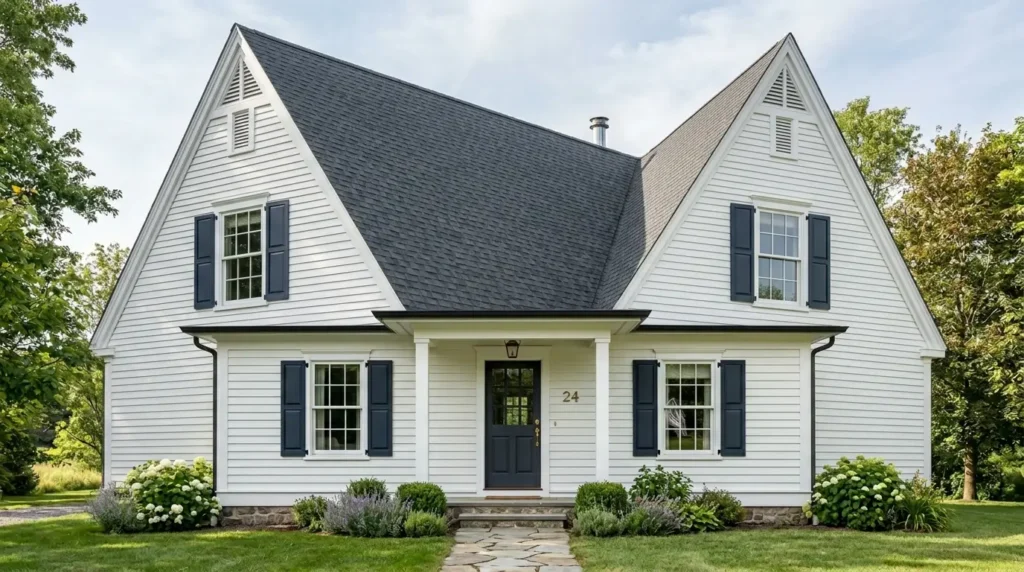
2.1. Idea 1: The Majestic Steeply Pitched Gable Roof
A low-sloped roof makes a house look like it’s hunkering down to hide. By altering the roofline to a steeply pitched gable roof (a classic hallmark of traditional architecture), you instantly add sweeping vertical height to your elevation. The sharp, high triangle draws the eye straight up, making the overall structure feel towering and significant from the curb.
2.2. Idea 2: Adding Stately Dormer Windows
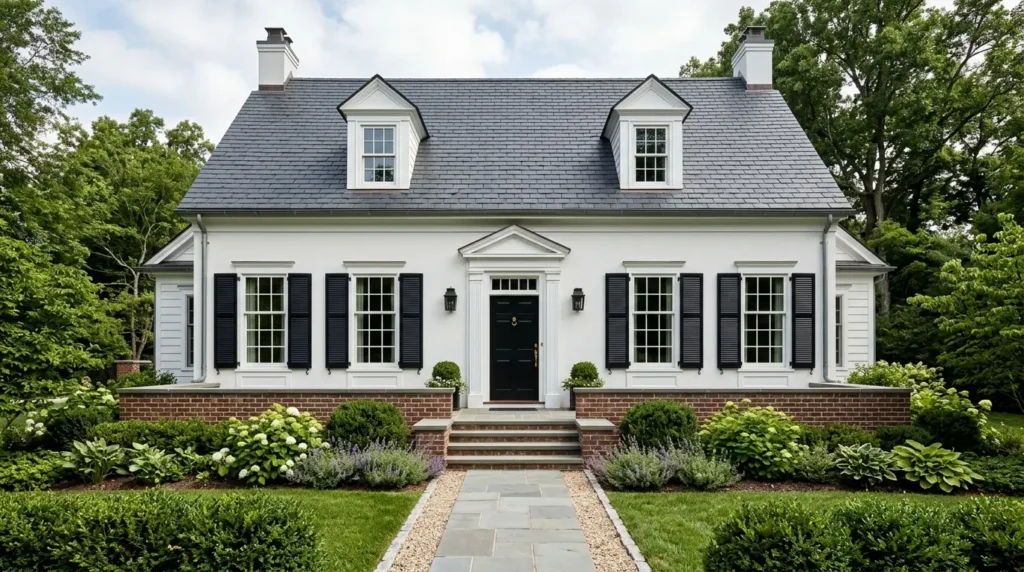
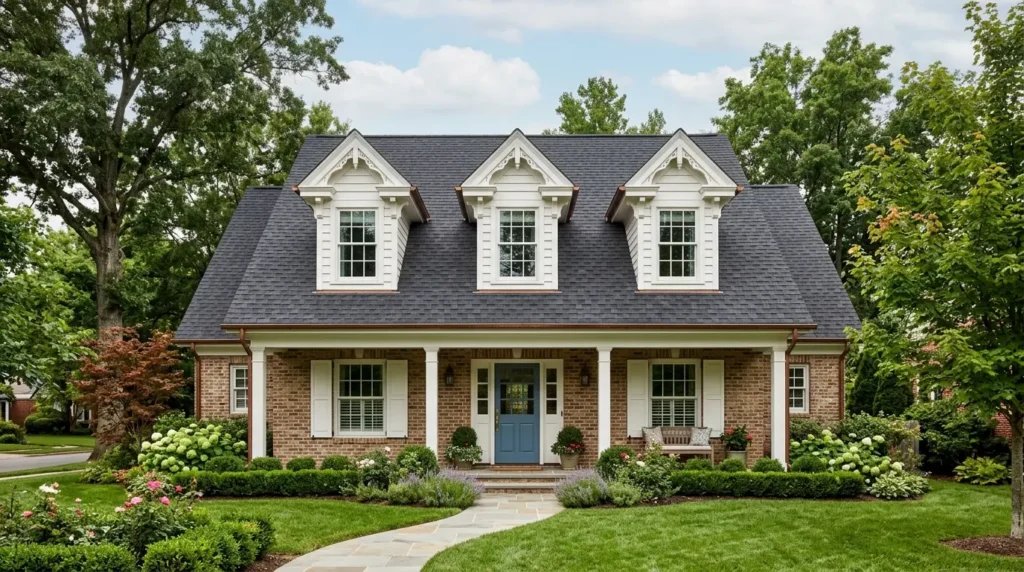
What if you only have a single-story home? You fake a second story. Dormer windows—those beautiful, small windowed structures that project vertically from a sloping roof—are the ultimate classic design hack.
2.2.1. Creating the Illusion of a Grand Second Story
Even if the space behind the dormer is just an empty attic, adding two symmetrical dormers to your roofline tricks the passerby into assuming your home boasts a sprawling, spacious upper floor. It adds incredible architectural complexity and physical volume to the top half of your house.
3. Windows and Doors: Framing the Illusion
Your windows and doors are the “eyes” of the house. If they are small and wide, your house will look small and wide. We need to stretch them.
3.1. Idea 3: Tall, Narrow Double-Hung Windows for Verticality
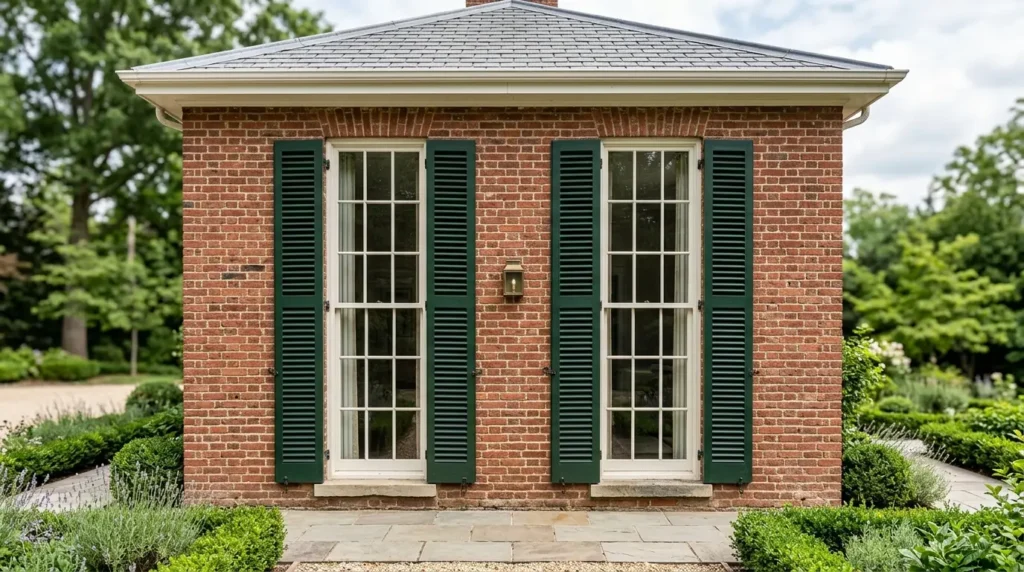
Standard, squarish windows punch awkward holes in your facade, interrupting the vertical flow. If you want your house to feel grand, install tall, narrow double-hung windows with classic divided light (mullions). These act as visual columns. By emphasizing the vertical axis, these tall windows make your ceilings look incredibly high from the outside, stretching the height of your walls.
3.2. Idea 4: The Imposing Pediment Entryway
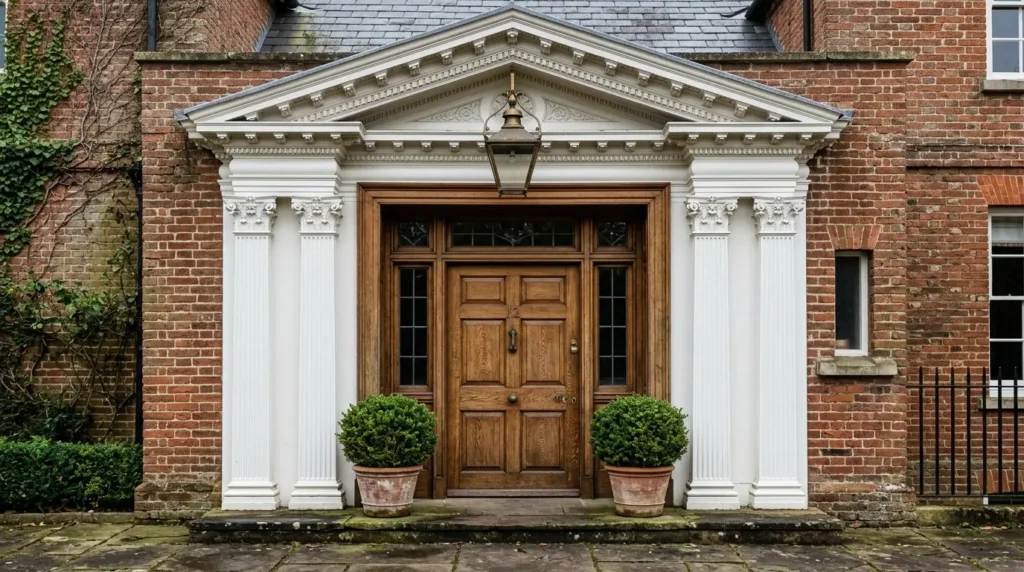
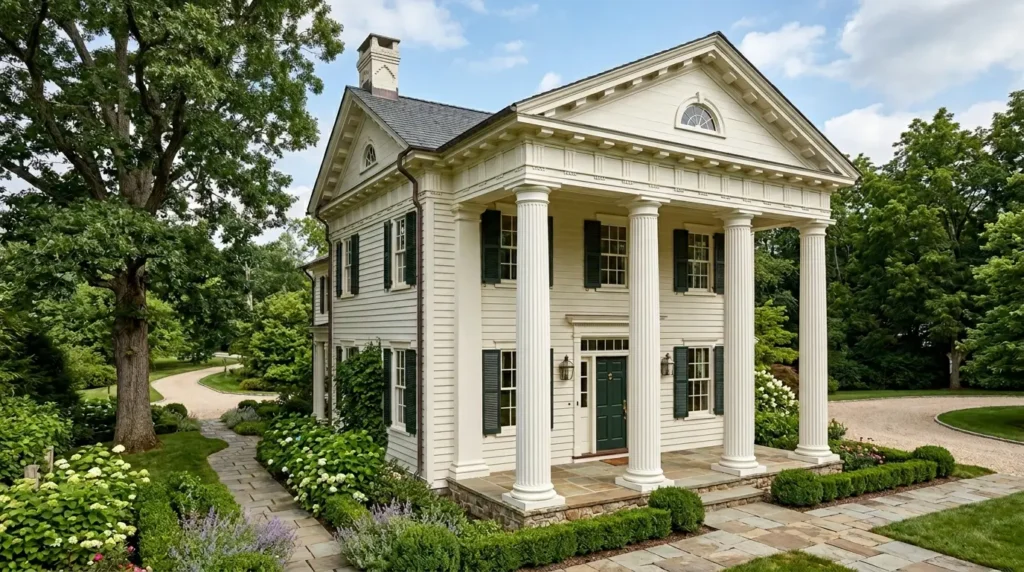
Your front door is the focal point of your elevation. A flat, flush door makes a home look like an afterthought. By framing your entrance with a classic pediment (the triangular upper part of a classical building, often supported by columns), you create a grand sense of arrival. It pushes the entryway out and up, giving your modest home the imposing presence of a historic courthouse or manor.
3.3. Idea 5: Mastering Symmetrical Facade Layouts
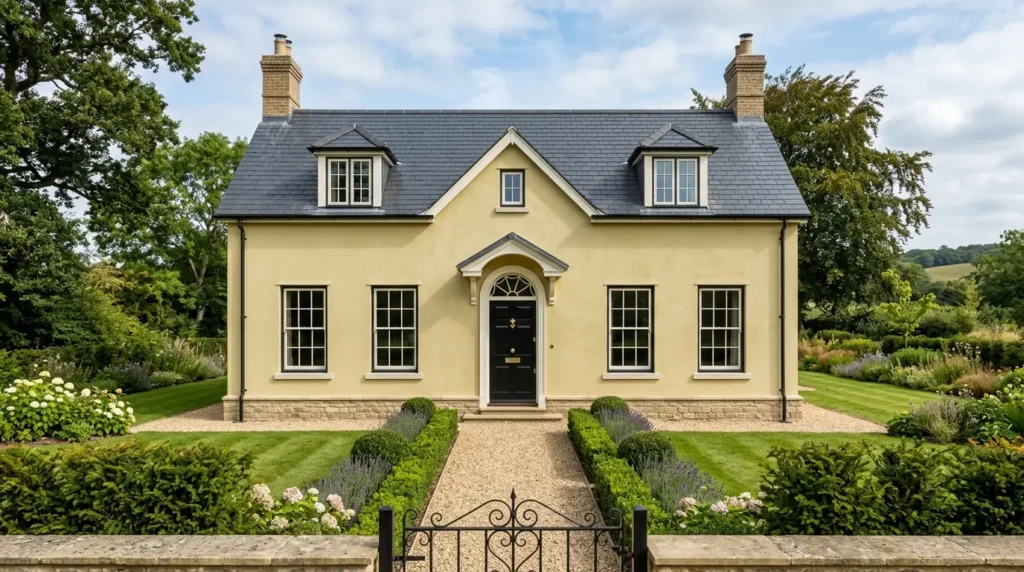
The human brain associates perfect symmetry with stability, wealth, and grandeur. If your small house has a door on the far left, a tiny window in the middle, and a large window on the right, it looks chaotic and disjointed. By centering the front door and mirroring the windows perfectly on either side, you create a harmonious, unified block of architecture. This makes the house read as one single, substantial estate rather than a collection of random parts.
4. Architectural Details That Add Visual Weight
Sometimes you need to add “heavy” classical details to the exterior to change the entire narrative of the architecture.
4.1. Idea 6: Incorporating Elegant Columns and Pilasters
Nothing screams “massive classical architecture” quite like columns. Even if you don’t have the space for a massive, sweeping two-story porch, you can add half-columns (pilasters) directly to the facade around the door or at the corners of the house. These vertical lines ground the house and draw the eye straight up to the roof, acting like the structural ribs of a much larger building.
4.2. Idea 7: Pronounced Cornices and Dentil Molding
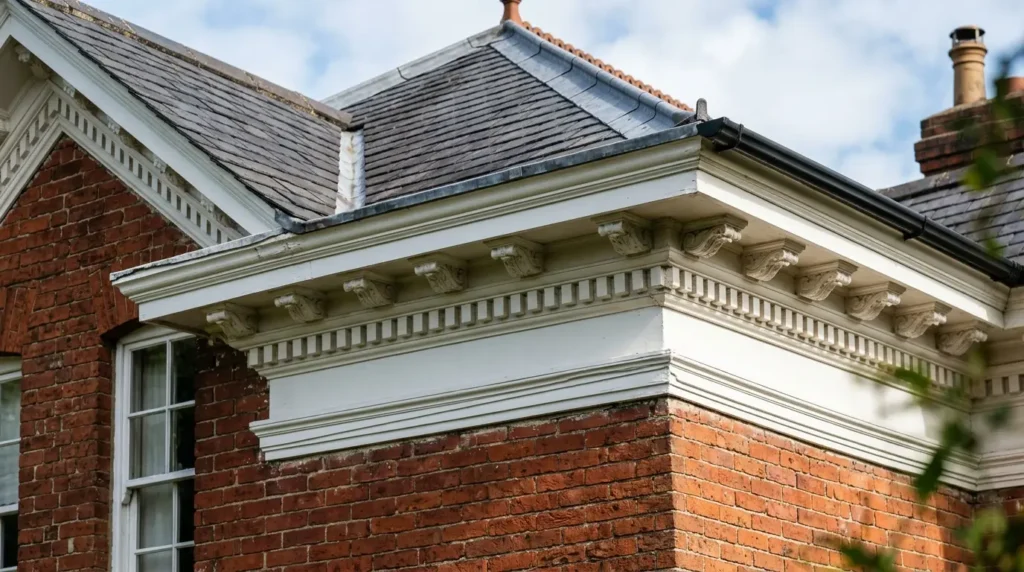
The transition between your exterior walls and your roof is a prime piece of real estate for visual trickery. By beefing up the eaves with a pronounced cornice and classic dentil molding (the tooth-like blocks under the roofline), you add a heavy, intricate “crown” to your home. This rich detailing widens the visual top of the house, making it feel robust and expensive.
4.3. Idea 8: Elevated Foundations with Sweeping Brick Stairs
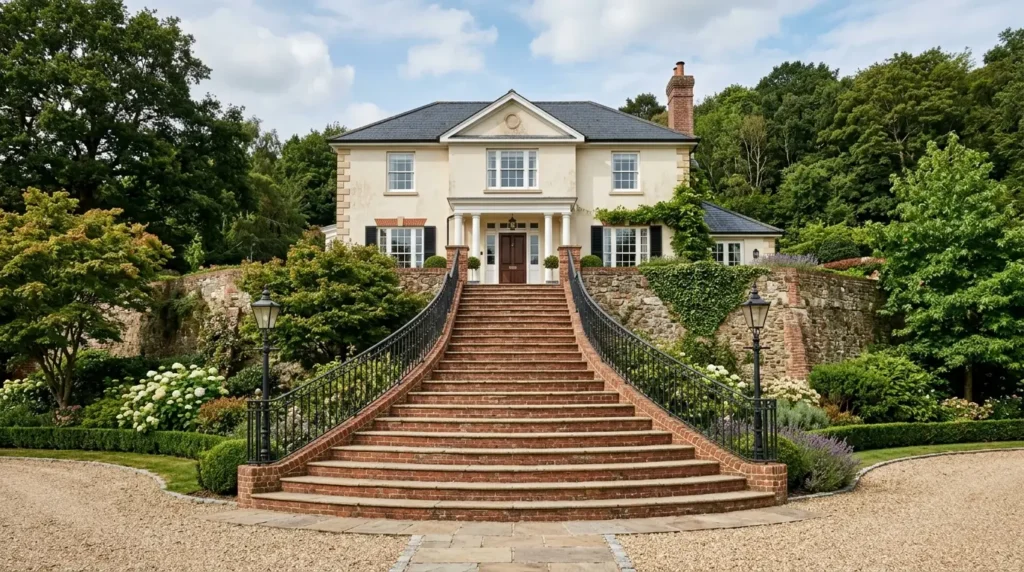
If your house is built low to the ground, it will always look a bit diminutive. You can’t literally lift your house, but you can build up the approach. Adding a wide, sweeping set of brick or stone stairs that lead to an elevated front landing gives the impression that the house sits upon a grand pedestal. The wider the stairs at the base, the wider and more imposing the house feels.
5. Cladding and Color: Expanding the Canvas
You can completely alter the perceived geometry of a house just by how you apply color and texture.
5.1. Idea 9: The Power of Monochromatic Classic Color Palettes
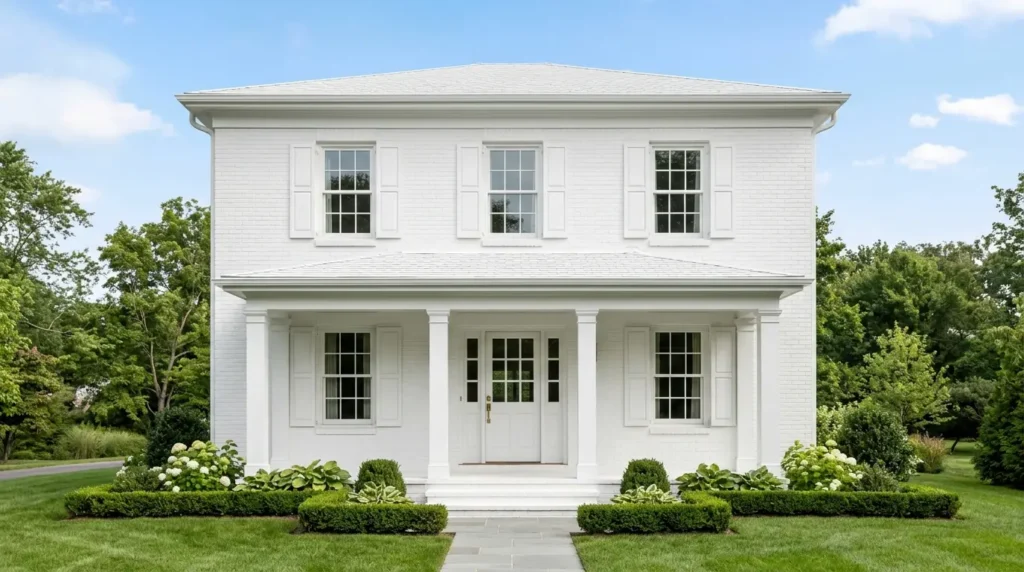
If you paint your foundation grey, your siding blue, your trim white, and your shutters black, you are chopping your small house into four tiny, distinct visual pieces. To make a small house look massive, wrap it in a single, classic monochromatic palette. An all-white house (white brick, white trim, white columns) creates a seamless, unbroken visual field. Without harsh contrasting borders to stop the eye, the house looks boundless.
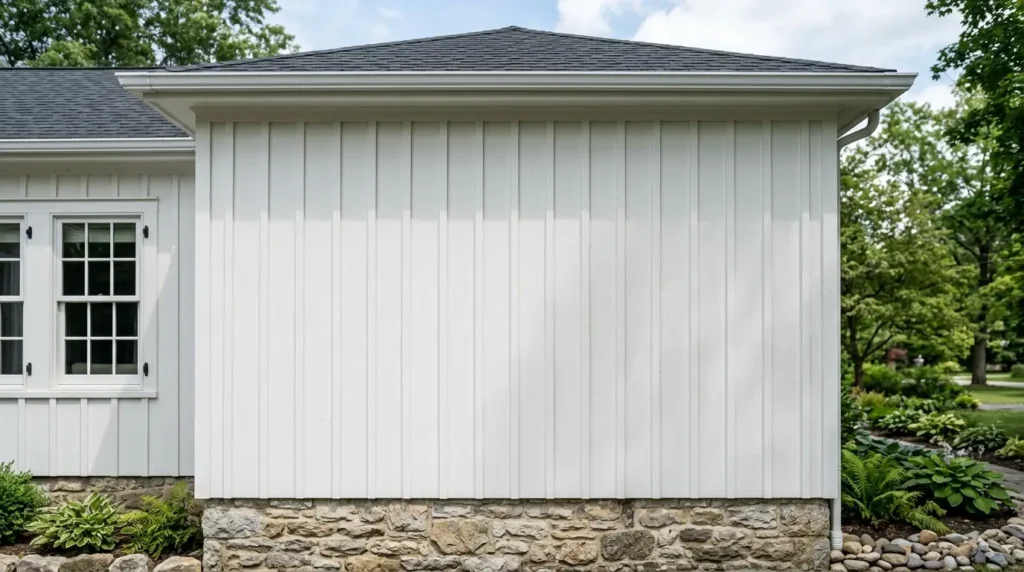
5.2. Idea 10: Vertical Board-and-Batten and Imposing Brickwork
Remember our vertical stripe rule? If your small classic house currently has horizontal vinyl siding, it’s being visually squished. Swap it out for traditional board-and-batten siding. The vertical ridges draw the eye to the sky. Alternatively, if you have a brick home, utilizing a darker, richer brick color with light mortar highlights the vertical stacking, adding a sense of historic, impenetrable weight to the compact structure.
6. Stretching the Footprint with Porches and Landscapes
Your house doesn’t end at the front door. The landscaping and hardscaping are the frame for your artwork; use them to stretch the canvas.
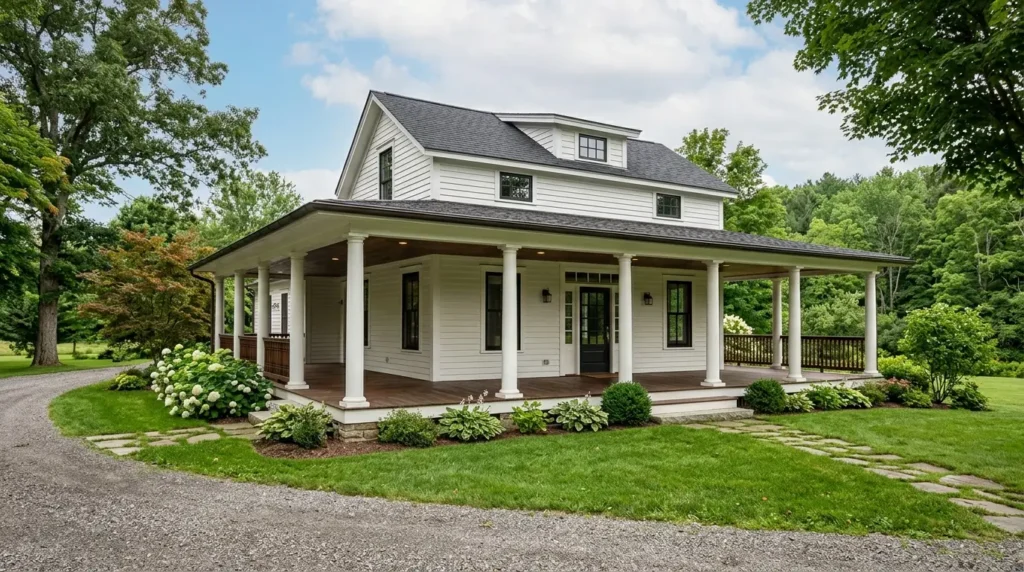
6.1. Idea 11: The Extended Wrap-Around Porch
A small house can double its visual footprint simply by adding a classic wrap-around porch. By extending the porch floor and roofline far past the actual interior walls of the house, you claim extra horizontal space. From the street, the viewer’s eye reads the edge of the porch as the edge of the house, instantly making your tiny property look twice as wide.
6.2. Idea 12: Formal, Structured Landscaping Pathways
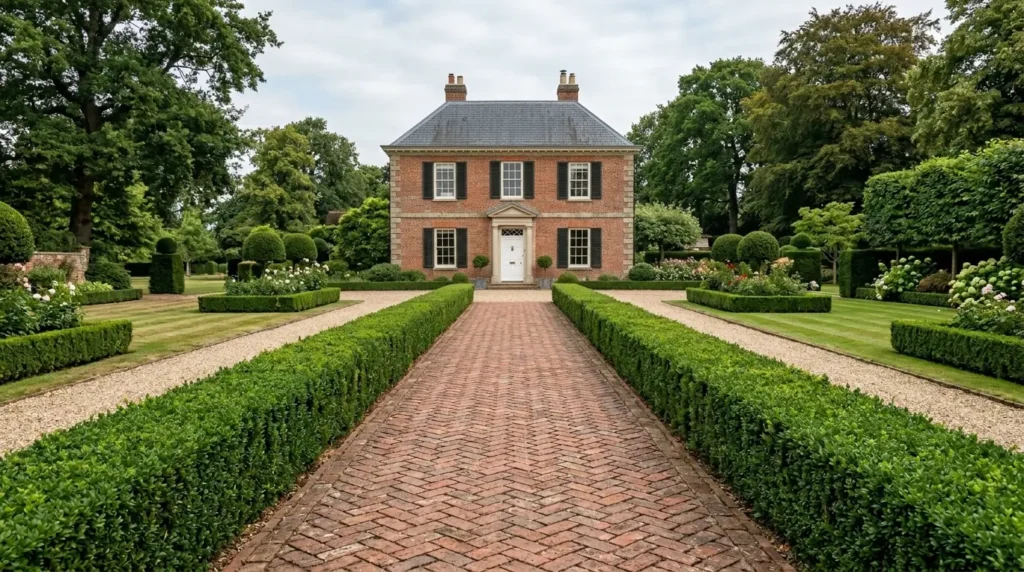
A narrow, winding, chaotic garden path makes an entrance feel quaint and cottage-like—which makes the house look small. For a massive impact, use formal, highly structured landscaping. Think of a wide, straight brick pathway lined with perfectly symmetrical, manicured boxwood hedges leading directly to the front door. This plays with forced perspective, making the approach feel like the grand entrance to a historic estate.
7. Conclusion: Your Compact Classic Masterpiece
Having a small house is never a design disadvantage; it is simply a canvas that requires a more thoughtful brush. When you stop fighting the compact nature of your home with busy, cluttered, and fragmented modern trends, you open the door to incredible architectural potential. By leveraging the timeless principles of the classic house aesthetic—stretching lines vertically with tall windows, pulling the roofline up with dormers, and framing your facade with majestic columns and pediments—you can construct an awe-inspiring exterior. You don’t need 4,000 square feet to drop jaws. You just need intention, classic symmetry, and a few brilliant optical illusions to make your small home the grandest estate on the block.
8. Frequently Asked Questions (FAQs)
Q1: Will painting my small classic house a dark color make it look smaller? A: Dark colors can make an object appear heavier and denser. If your goal is to make the house look larger, a light, monochromatic palette (like creams, whites, or soft greys) is generally safer because it blurs the edges of the house against the sky, creating an expansive feel. However, a dark brick with contrasting white trim can look incredibly stately if the landscaping is kept wide and structured.
Q2: What is the most cost-effective way to update a small house’s exterior to a classic style? A: Paint, shutters, and landscaping. If you can’t afford a new roof or a wrap-around porch, focus on symmetry. Paint the house a unifying classic color, add tall, properly sized louvered shutters to the windows to fake vertical height, and upgrade your front door with elegant brass hardware and classic flanking light fixtures.
Q3: Are dormer windows actually functional, or just for show? A: They can be both! “Blind” or “false” dormers are built solely on top of the roof structure to add visual height to the exterior without penetrating the attic space. However, functional dormers are much better as they add real natural light and headroom to a cramped second story or attic, genuinely increasing your usable space.
Q4: How do I add classic columns to a house that doesn’t have a big porch? A: You don’t need a massive porch to utilize columns. You can use pilasters, which are essentially flat, rectangular columns attached directly to the wall on either side of your front door. They provide the exact same classical, vertical visual cue as a freestanding column without requiring any extra square footage.
Q5: What kind of outdoor lighting makes a small classic house look bigger? A: Avoid a single, dim porch light. Instead, use architectural uplighting. Placing warm-toned spotlights in your landscaping, shining up onto your columns, brickwork, or into the eaves of your roof, highlights the vertical height of the home and washes the entire classic facade in a grand, dramatic glow at night.
About the Author