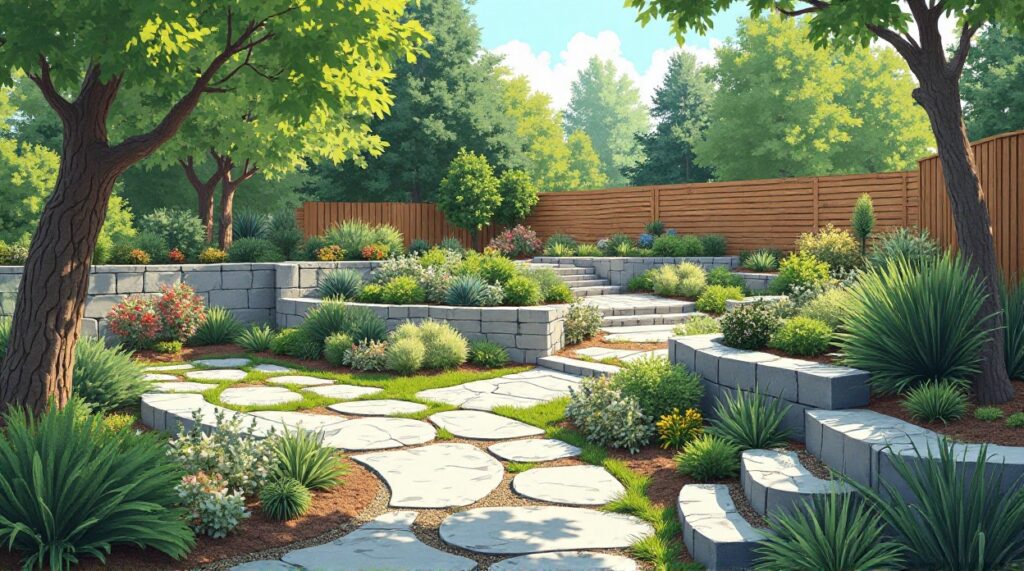
In multi-level garden designs, hardscaping elements play a vital role in enhancing both functionality and aesthetics. Pathways, steps, and retaining walls not only facilitate movement through a garden but also contribute to the overall visual appeal and structure of the landscape. By carefully selecting materials and techniques, you can create hardscapes that harmonize with the natural surroundings while emphasizing the layered design of the garden.
1. The Role of Hardscaping in Landscape Layering
Visual Structure: Hardscaping elements provide essential structure to a layered garden, helping define spaces and creating focal points. They help organize the landscape, guiding the eye and enhancing the depth of the design.
Functionality: Pathways and steps offer practical solutions for navigating the garden, especially in areas with varying elevations. Retaining walls can manage erosion and support slopes, creating usable space for planting while maintaining plant health.
Integration with Nature: Well-designed hardscapes can complement natural materials and plantings, blending seamlessly into the surroundings. They provide a contrast that highlights plant life, making gardens more visually dynamic.
2. Creating Pathways
Pathway Materials:
- Stone and Pavers: Natural stone or interlocking concrete pavers lend a rustic, classic feel and can be arranged in various patterns. Flagstone, slate, and granite are durable options that can create seamless transitions with the environment.
- Gravel: A cost-effective and versatile option, gravel provides excellent drainage and can create a casual, organic look. It can be edged with landscape timbers or stone borders to define the path.
- Wood Decking or Boardwalks: Wooden pathways can evoke a warm, inviting atmosphere, especially in natural settings. Pressure-treated lumber or composite materials provide durability while offering a soft texture that contrasts well with plant foliage.
Pathway Techniques:
- Curved Paths: Opting for a winding path creates an exploratory feel and draws visitors through the garden, allowing for revealing glimpses of plantings along the way.
- Width and Accessibility: Ensure pathways are wide enough to accommodate foot traffic and maintenance equipment. A minimum width of 3-4 feet is often recommended for comfortable access.
3. Incorporating Steps
Step Materials:
- Natural Stone Steps: Large, flat stones can be used to create elegant, durable steps that blend with the landscape. They provide cohesion when integrated with stone pathways.
- Timber Steps: Using treated wood or composite materials allows for a rustic look while offering flexibility in design. Railings can be added for safety and aesthetic appeal.
- Concrete Steps: For a contemporary aesthetic, poured concrete can create smooth, sleek steps that contrast with softer landscaping elements.
Step Techniques:
- Terracing: In steep landscapes, terracing creates usable garden beds while allowing for gradual elevation changes. Each level can incorporate distinct plantings.
- Gentle Grades: Steps should be designed with a gentle slope when possible to enhance accessibility, especially for those who may have difficulties with traditional steps.
4. Designing Retaining Walls
Retaining Wall Materials:
- Natural Stone: Using boulders or cut stone creates a natural, rustic appearance and fits well in most landscape designs. Stone walls can blend beautifully with garden flora.
- Segmental Block Walls: Pre-cast concrete blocks specifically designed for retaining are easy to work with and are available in numerous colors and textures, allowing customization to fit the garden’s theme.
- Timber Walls: Wood retaining walls provide a familiar, softer look; however, they may require more maintenance compared to stone or concrete options.
Retaining Wall Techniques:
- Tiered Walls: Using multiple retaining walls at different heights can create dynamic levels in the garden while providing flat areas for planting and other landscape features.
- Backfill and Drainage: Proper construction requires attention to backfill materials and drainage systems to prevent water retention, which could compromise the structural integrity of the wall. Use gravel behind the wall and include weep holes for efficient drainage.
5. Harmonizing Hardscapes with Landscape Design
To ensure that your hardscapes enhance, rather than detract from, the natural beauty of your garden, consider the following:
- Complementary Design: Choose materials that match or enhance existing architectural and landscaping elements. Color palettes, textures, and finishes should work together to unify the garden space.
- Organic Shapes: Avoid rigid lines and shapes; aim for organic forms that mimic the natural terrain. Curvilinear designs in pathways and plant beds can soften hardscaping and create a more harmonious look.
- Layering Materials: Utilize various materials and textures in hardscaping to create visual interest within itself while ensuring that it complements the overall planting scheme.
Conclusion
Incorporating hardscapes into multi-level garden designs brings structure, practicality, and aesthetic appeal. By selecting the right materials and employing creative techniques for pathways, steps, and retaining walls, you can create a harmonious landscape that emphasizes the beauty of layered gardening. Thoughtfully designed hardscaping enhances the overall experience of the garden, offering delightful views and safe navigation through your outdoor space while complementing the natural environment.
About the Author