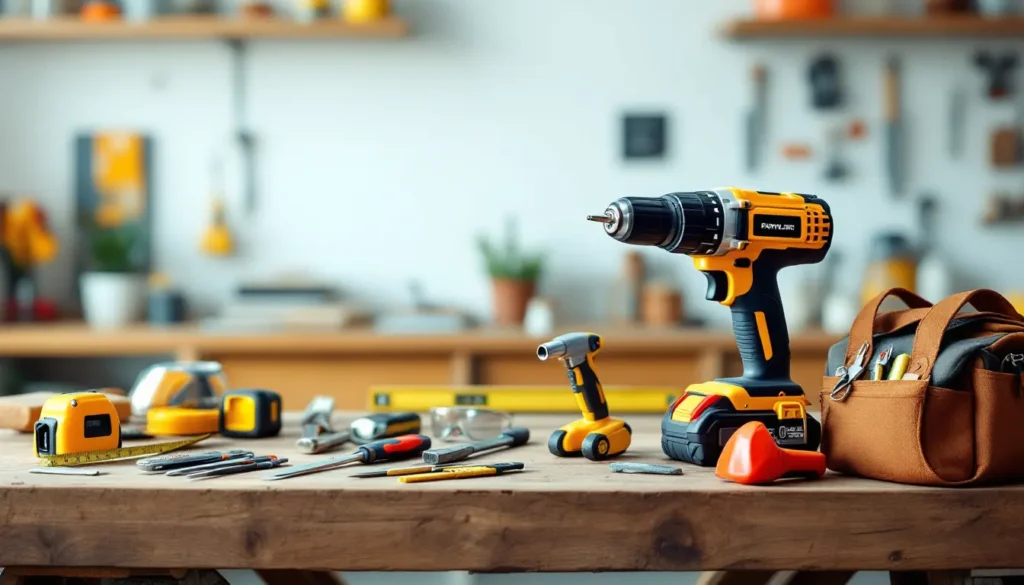
Embarking on a DIY room renovation project requires the right tools to ensure a smooth and successful process. Here’s a comprehensive list of the must-have tools every DIY enthusiast should have on hand, complete with descriptions of their uses and tips for selecting quality equipment.
1. Tape Measure
Use: A tape measure is essential for taking accurate measurements of rooms, furniture, and materials.
Tip: Look for a tape measure that is at least 25 feet long and has a locking mechanism for easy measuring. A wider blade offers better readability, especially when measuring alone.
2. Level
Use: A level ensures that shelves, pictures, and furniture are perfectly horizontal or vertical, preventing crooked installations.
Tip: Consider a laser level for larger spaces, which projects a straight line over long distances, making it easier to align multiple items accurately.
3. Cordless Drill
Use: A cordless drill is versatile for drilling holes and driving screws into various materials like wood, drywall, and metal.
Tip: Choose a drill with adjustable speed settings and a rechargeable lithium-ion battery for optimal performance. A model with a keyless chuck makes switching bits simple.
4. Utility Knife
Use: A utility knife is perfect for cutting various materials, including drywall, cardboard, and carpet, making it a go-to tool for any renovation.
Tip: Look for a knife with a retractable blade and a comfortable grip for better control and safety.
5. Hammer
Use: A claw hammer is essential for driving nails into wood or pulling them out, making it indispensable for basic carpentry tasks.
Tip: Select a hammer that feels comfortable in your hand, with a weight that matches the type of work you’ll be doing. A forged steel hammer tends to be more durable.
6. Screwdriver Set
Use: A comprehensive screwdriver set includes various sizes and types (flathead, Phillips) for assembling furniture, installing hardware, and more.
Tip: Invest in a magnetic screwdriver set to make handling screws easier. Consider a ratcheting model for faster work on repetitive tasks.
7. Pry Bar
Use: A pry bar is ideal for removing nails, lifting materials, and breaking apart old fixtures or flooring during renovation.
Tip: Choose a pry bar with a curved end for better leverage and a flat end for accessing tight spaces. A durable steel construction will provide longevity.
8. Stud Finder
Use: A stud finder helps locate wooden or metal studs behind walls, ensuring that you hang heavy items securely.
Tip: Opt for a model that detects both wood and metal and offers an audible alert to simplify the locating process.
9. Paintbrush and Roller Set
Use: A good paintbrush and roller set is crucial for applying paint evenly and efficiently on walls, ceilings, and trim.
Tip: Choose high-quality brushes and rollers designed for the specific type of paint you’re using (latex or oil-based). Look for angled brushes for cutting in and achieving clean lines.
10. Safety Gear
Use: Safety gear, including goggles, gloves, and masks, is essential to protect yourself from dust, debris, and harmful fumes during renovation work.
Tip: Invest in high-quality, comfortable gear that fits well. Gloves should provide a good grip, dust masks must be rated for fine particles, and goggles should give adequate coverage.
Conclusion
Equipping yourself with these 10 must-have tools will prepare you for a successful DIY room renovation. Selecting quality equipment ensures durability and effectiveness throughout your projects while enhancing both safety and efficiency. With the right tools in hand, you’ll be well on your way to transforming your space with confidence! Happy renovating!
About the Author