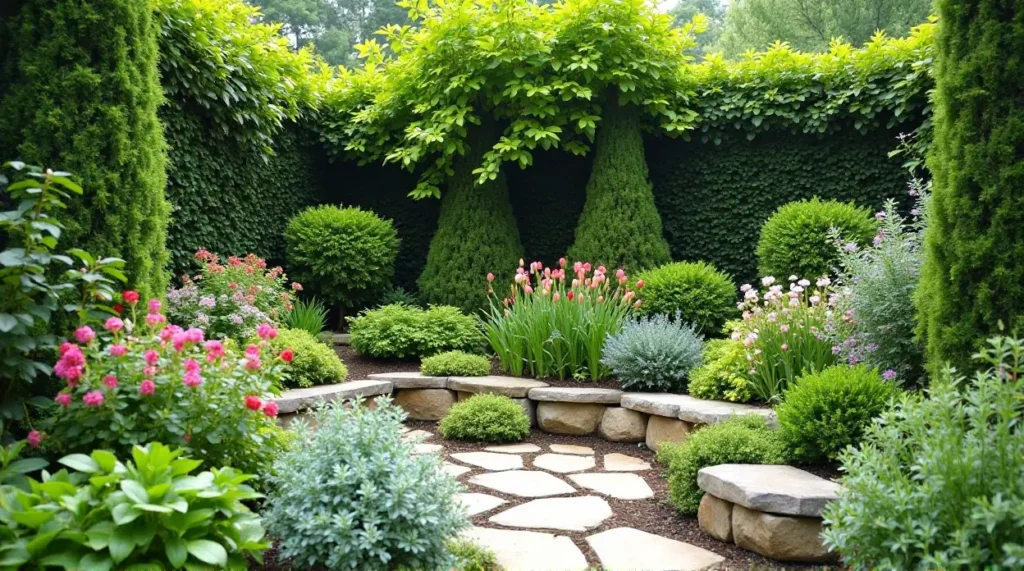
Designing a corner garden that remains visually appealing throughout the year requires careful selection of plants, attention to seasonal transitions, and incorporating decorative elements that complement each season. Here’s a guide to creating a corner garden that thrives in every season, featuring annuals, perennials, and evergreens for lasting beauty and interest.
1. Selecting the Right Plants
Annuals
Annuals can add vibrant colors and seasonal interest to your corner garden. These plants complete their life cycle in a single growing season, making them perfect for seasonal updates and adding bursts of color.
- Spring/Summer Annuals: Consider planting petunias, marigolds, or geraniums for lively colors in spring and summer. They are easy to maintain and bloom profusely during these warmer months.
- Fall Annuals: In the fall, swap out spent annuals for seasonal choices like chrysanthemums or pansies that can provide chic fall colors and withstand cooler temperatures.
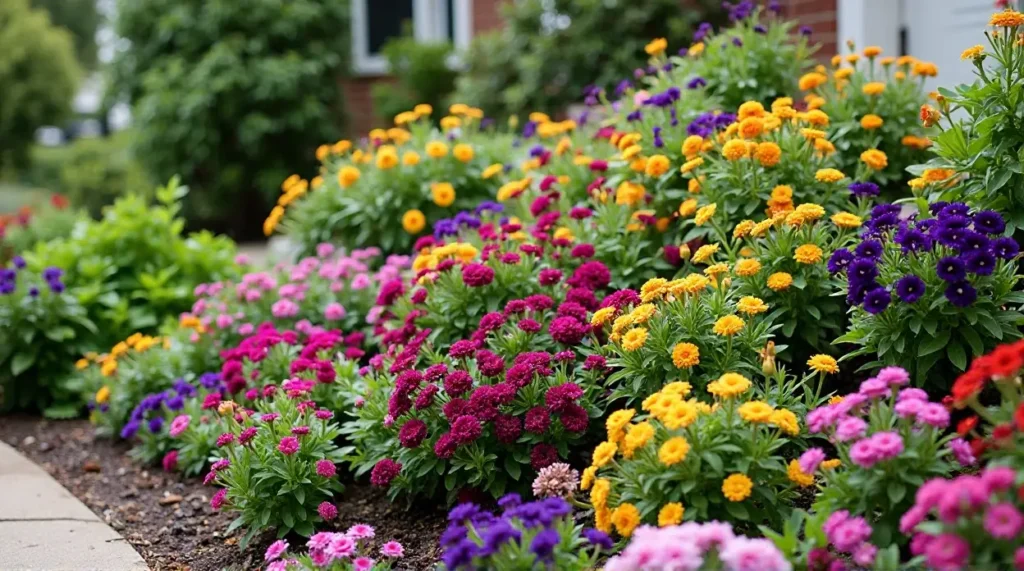
A vibrant garden bed displays a colorful array of flowers, including bright yellow marigolds, deep purple petunias, and rich pink blooms. The flowers are densely packed, creating a lush, eye-catching scene alongside a paved walkway. Green foliage surrounds the blossoms, adding to the lively atmosphere.
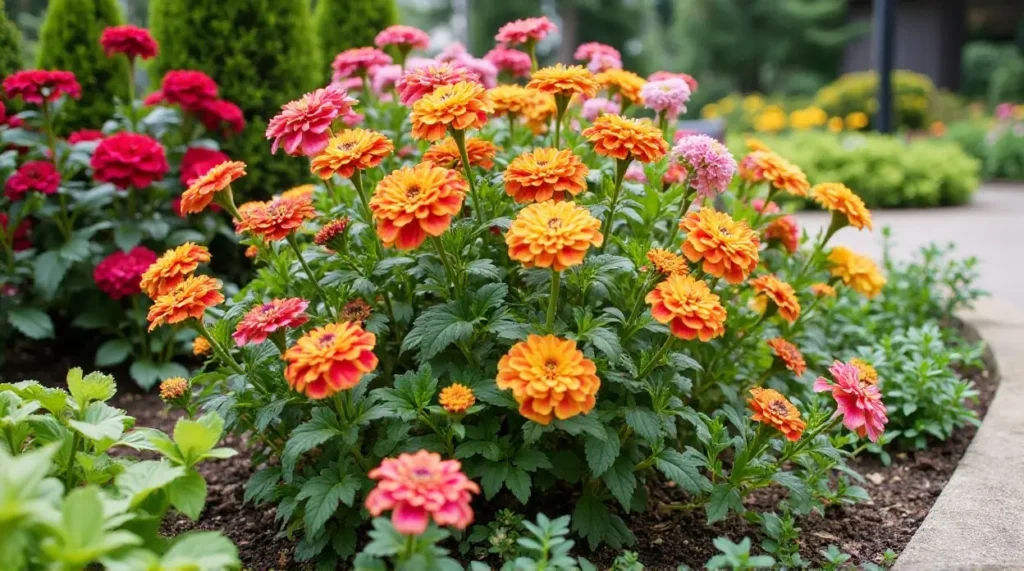
A vibrant garden bed features clusters of orange and pink zinnias in full bloom, surrounded by lush green foliage, with a blurred background of more colorful flowers and a walkway.
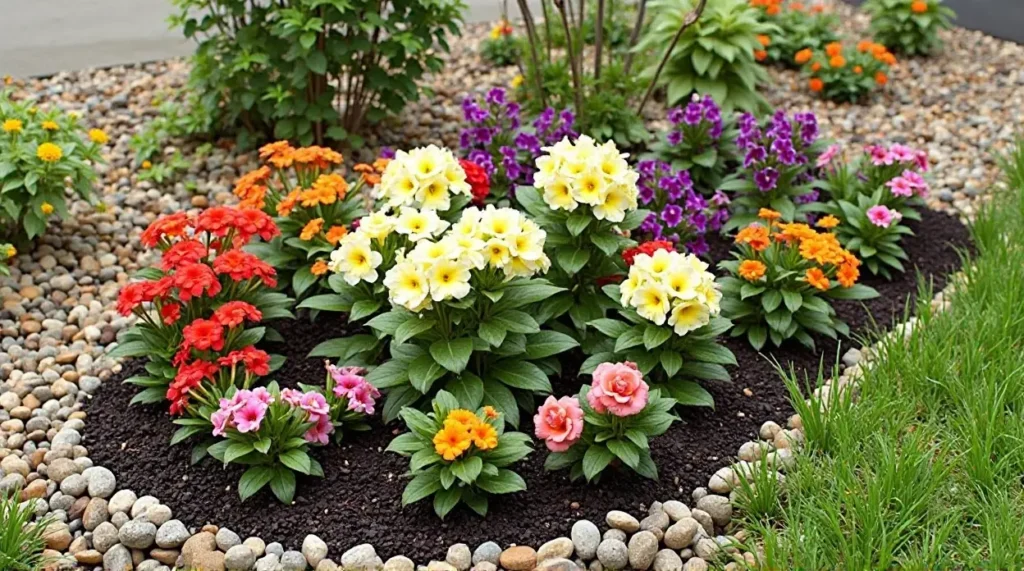
A vibrant flower bed featuring a variety of colorful blooms, including yellow, red, pink, orange, and purple flowers, surrounded by smooth pebbles and lush green grass.
Perennials
Perennials are an essential component for providing structure and color across seasons. These plants return year after year, making them a great investment for long-term garden design.
- Spring Bloomers: Choose early bloomers like daffodils, tulips, and hyacinths for a vibrant start to the gardening year. They provide a cheerful welcome after winter.
- Summer Favorites: Incorporate perennials such as daylilies, coneflowers, or lavender, which thrive during the warmer months and offer continuous blooms with little maintenance.
- Fall-Winter Interest: Consider adding sedums, asters, or ornamental grasses, which can provide late-season interest and structure as other perennials fade.
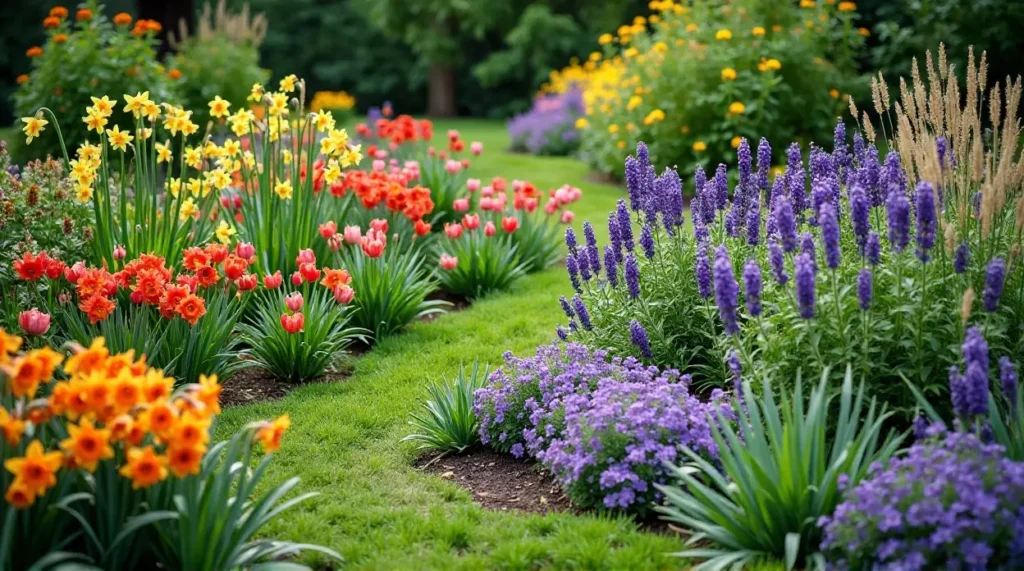
A vibrant garden features a lush array of colorful flowers, including bright yellow daffodils, vivid red and pink tulips, and clusters of purple blooms, all set against a backdrop of green grass and foliage.
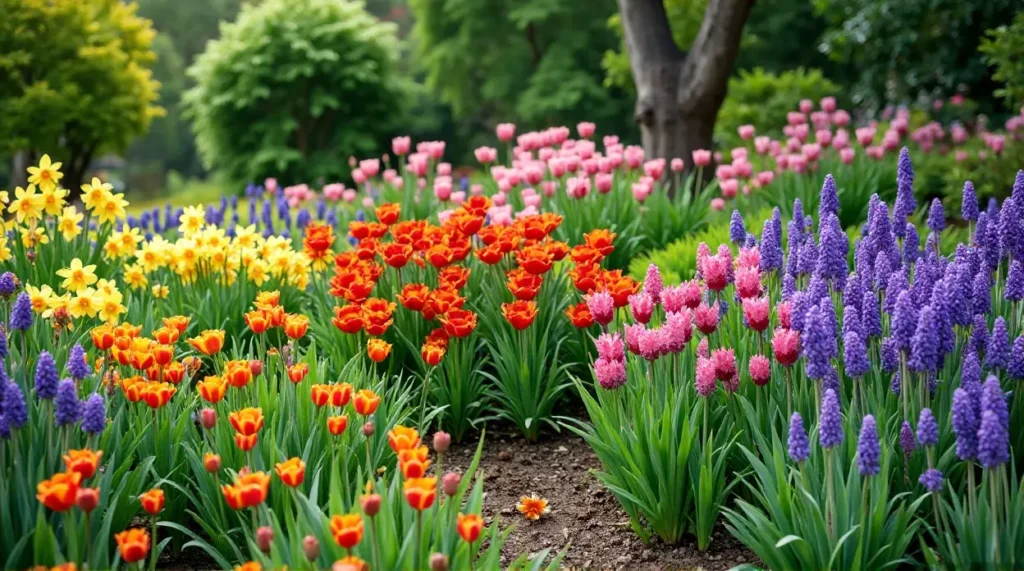
A vibrant garden with a variety of colorful flowers, including clusters of red tulips, yellow daffodils, pink hyacinths, and purple grape hyacinths, set against lush green foliage and a tree in the background.
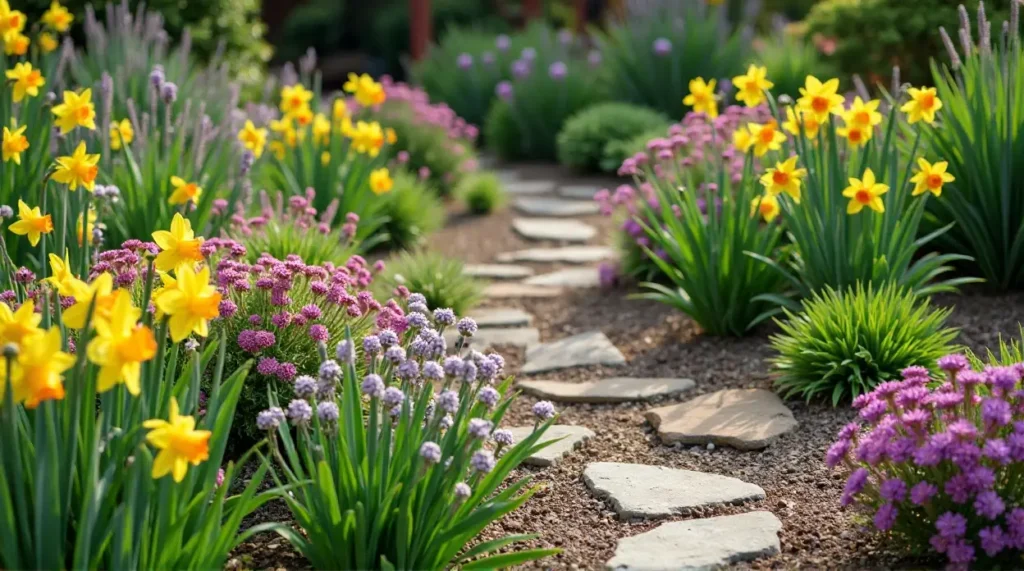
A charming garden path is lined with vibrant yellow daffodils and clusters of purple flowers, bordered by lush green foliage, under a clear sky.
Evergreens
Evergreens are crucial for providing year-round structure and greenery in your corner garden, even during the coldest months.
- Types of Evergreens: Select a mix of evergreen shrubs and small trees such as boxwoods, junipers, or dwarf pines. These plants maintain their foliage year-round and can provide a lush backdrop for seasonal plants.
- Texture and Color: Some evergreens, like variegated varieties, can add additional visual interest with contrasting colors and textures, enhancing the overall appeal.
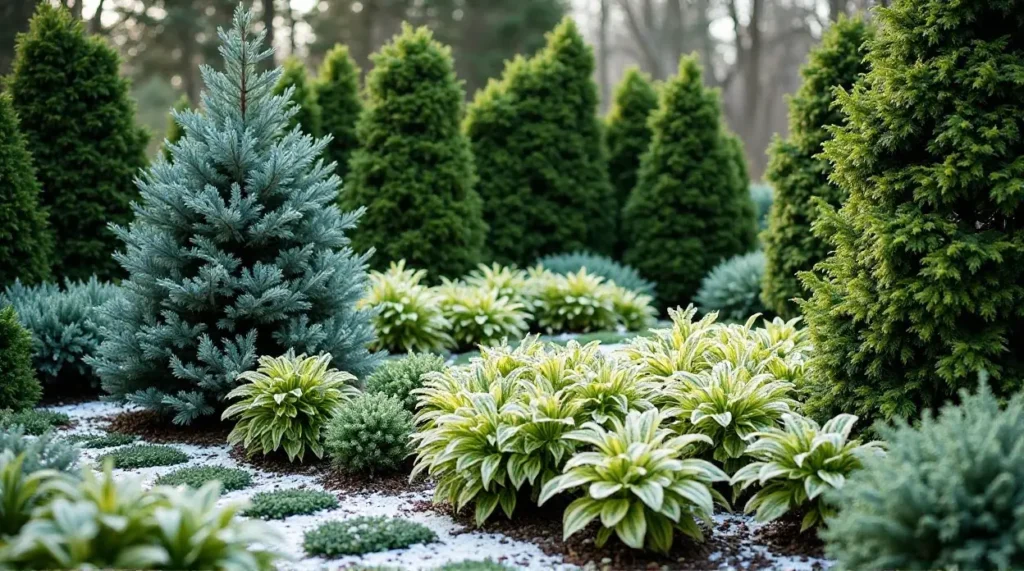
A garden scene featuring a variety of lush plants, including a prominent blue spruce tree surrounded by vibrant green hostas with variegated leaves. In the background, tall, dense conifers create a rich, textured backdrop, while the ground is lightly dusted with snow, adding a touch of winter charm.
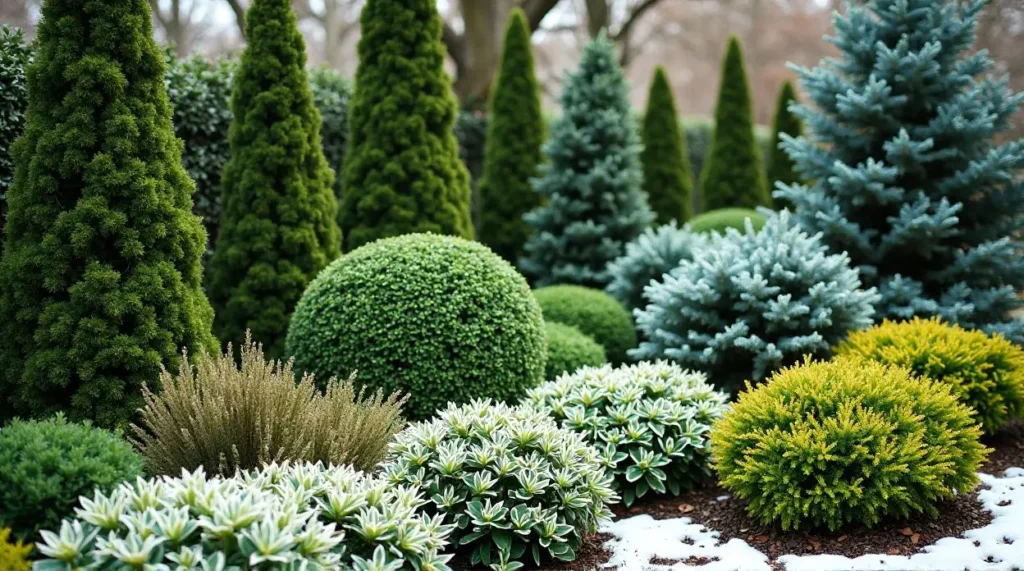
A beautifully arranged garden features a variety of evergreen plants, including tall, conical trees and rounded shrubs, with a mix of vibrant green and bluish hues. Some plants are dusted with a light layer of snow, creating a serene winter landscape.
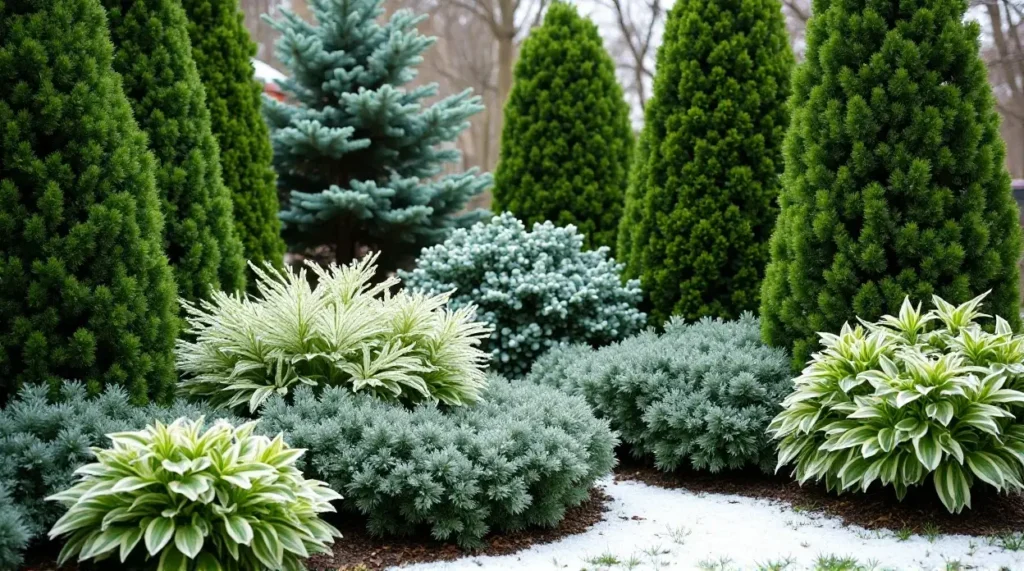
A beautifully landscaped garden features tall, lush evergreen trees and various shrubs with different shades of green and white foliage, creating a harmonious and vibrant scene.
2. Designing for Seasonal Transitions
Seasonal Planning
To ensure your corner garden transitions smoothly between seasons, consider implementing a design that includes layered plantings.
- Layering: Position taller plants at the back or center (if the garden is circular), medium-height plants in front, and groundcovers or low-growing plants at the front. This design allows for continuous visual interest as different plants bloom and fade at various times of the year.
- Seasonal Swaps: Regularly change out annuals or add seasonal decor for holidays to keep the space dynamic. For example, pumpkins in the fall, festive greenery in winter, or bright flower pots in spring.
Decorative Elements
Incorporating decorative features can enhance the aesthetic appeal of your corner garden regardless of the season.
- Seasonal Decor: Use decorative planters, garden ornaments, or trellises that can be updated regularly to reflect seasonal changes. In spring, incorporate birdhouses or colorful planters; in autumn, use rustic elements or gourds.
- Lighting: Install soft outdoor lighting, such as fairy lights or lanterns, to enhance the ambiance in the evening and add a magical touch to your corner garden year-round.

A vibrant garden features a winding stone path surrounded by lush greenery and colorful flowers, including red, yellow, and purple blooms. Tall trees and neatly trimmed bushes provide a serene backdrop, creating a picturesque and tranquil setting.
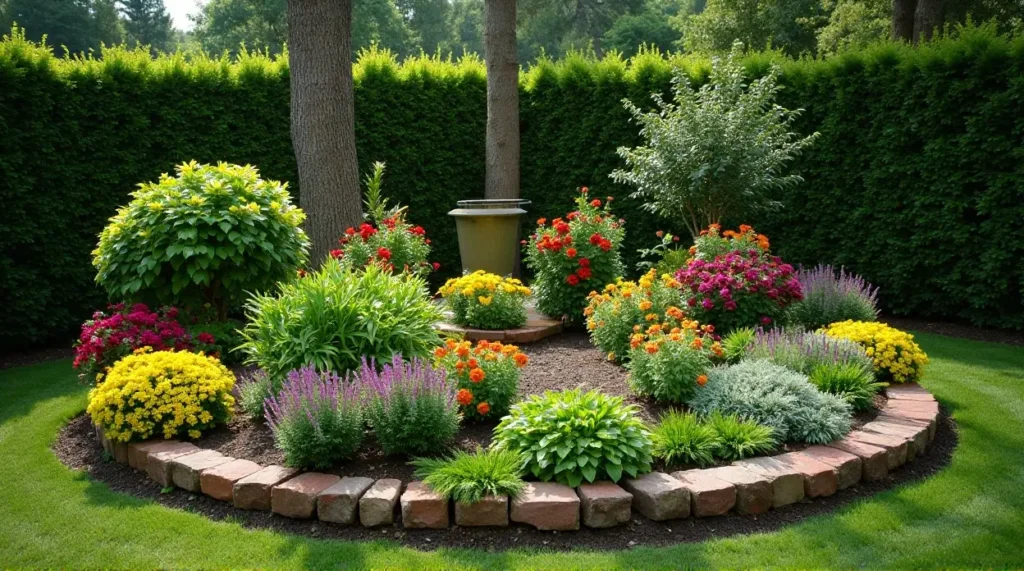
A vibrant circular flower bed is filled with a variety of colorful blooms, including red, yellow, and purple flowers, surrounded by a neat border of bricks. The lush greenery and neatly trimmed lawn enhance the garden’s lively appearance, while tall hedges provide a natural backdrop.

A vibrant garden features a variety of colorful flowers, including clusters of yellow, pink, and white blooms, surrounded by lush greenery. A tall, conical evergreen tree stands prominently in the center, with a backdrop of dense trees and neatly trimmed grass.
3. Maintenance and Care
Regular Monitoring
Ensure your corner garden remains healthy and appealing by keeping up with maintenance like pruning, deadheading, and watering.
- Seasonal Care: Adjust your care routine according to the seasons. For example, ensure adequate watering during hot summers, and apply mulch in the fall to protect perennials through the winter.
Soil Health
Healthy soil is the foundation for a thriving garden. Amend the soil as needed, using compost or organic fertilizers to promote plant health and vitality throughout the seasons.
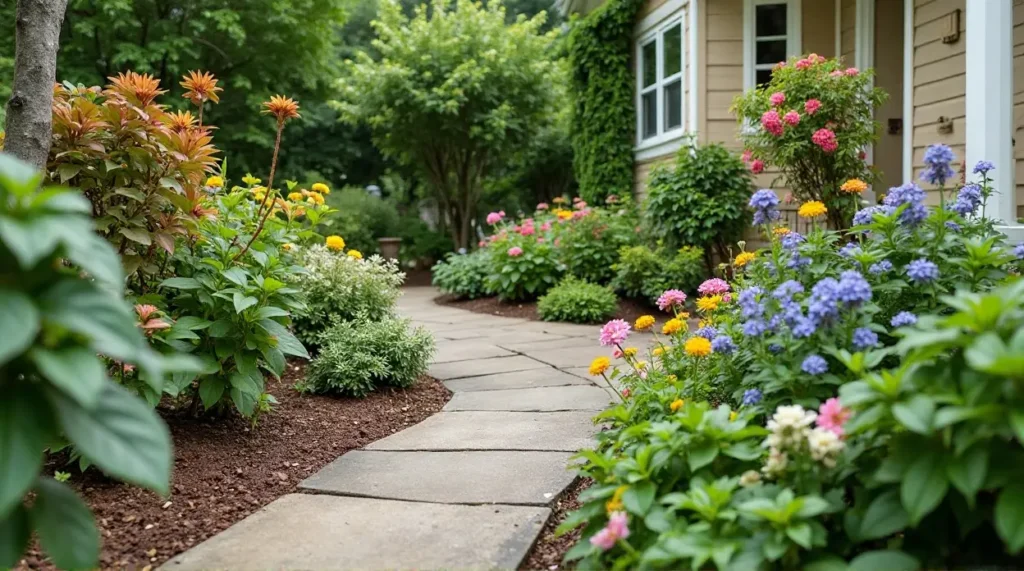
A charming garden path winds through lush greenery and vibrant flowers in various colors, leading to a cozy house with light-colored siding.

A vibrant garden with a variety of colorful flowers, including red, yellow, white, and pink blooms, lines a stone pathway leading to a gray house with black shutters. Lush green bushes and trees enhance the lively, well-maintained landscape.
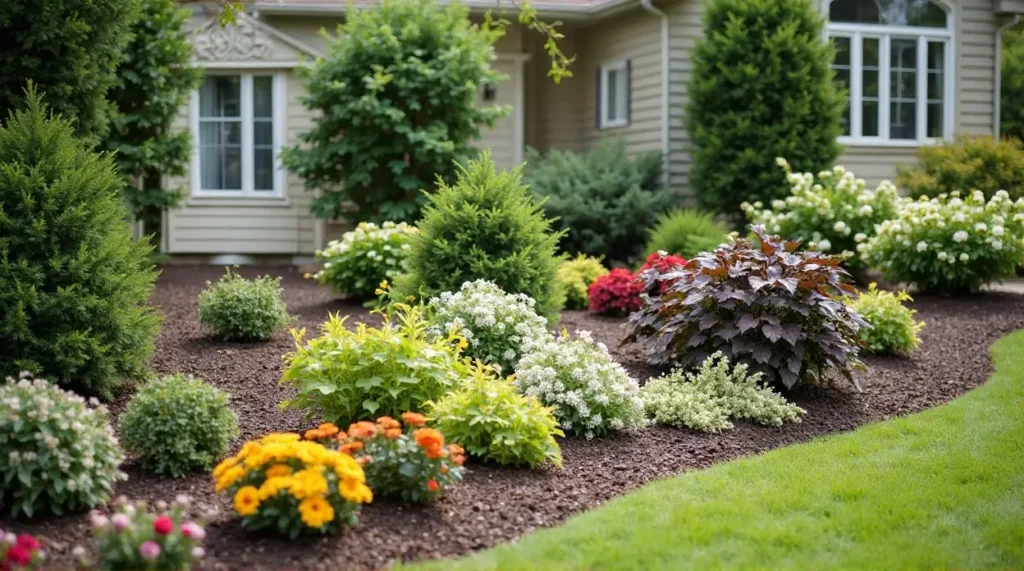
A beautifully landscaped garden with a variety of colorful flowers and shrubs is seen in front of a house with beige siding and white-trimmed windows.
Pros and Cons of Seasonal Corner Gardening
Pros:
-
Visual Interest Throughout the Year: By incorporating a variety of plants that bloom in different seasons, seasonal corner gardening can provide continuous visual appeal, enhancing the landscape regardless of the time of year.
-
Biodiversity: A diverse array of plants can attract various pollinators and wildlife, contributing to a healthier ecosystem and promoting biodiversity in the local environment.
-
Personalized Design: Seasonal corner gardening allows for creative expression, enabling gardeners to tailor the design to their personal preferences and seasonal themes, making the space uniquely theirs.
-
Enhanced Property Value: Well-designed gardens can significantly increase the aesthetic and monetary value of a property, making it more attractive to potential buyers.
-
Educational Opportunities: Engaging in seasonal gardening can provide valuable learning experiences about plant cycles, seasonal changes, and ecological interactions, suitable for both adults and children.
Cons:
-
Maintenance Requirements: Seasonal gardens often require regular maintenance, including planting, pruning, and seasonal swaps, which can demand significant time and effort from the gardener.
-
Initial Investment: Designing a seasonal corner garden can involve considerable upfront costs for purchasing a variety of plants, soil amendments, and landscaping materials.
-
Planning Complexity: Successfully designing a garden that appeals year-round may require extensive planning and knowledge about plant compatibility, growth cycles, and seasonal color themes, which can be daunting for novice gardeners.
-
Climate Dependency: The effectiveness of a seasonal garden is heavily reliant on climate conditions. Extreme weather events or unseasonable temperatures can adversely affect plant growth and overall garden aesthetics.
-
Potential for Seasonal Gaps: If not carefully planned, seasonal gardens can have periods of sparse growth or unattractive bare patches, detracting from the desired year-round appeal.
Conclusion
Creating a corner garden that offers year-round appeal involves thoughtfully selecting plants, embracing seasonal transitions, and incorporating stylish decorative elements. By combining annuals, perennials, and evergreens, you can ensure continuous visual interest while enjoying the calming benefits of greenery throughout every changing season. With proper design, maintenance, and a little creativity, your corner garden can become a vibrant and inspiring retreat in any urban setting, celebrating the beauty of nature all year long.
About the Author