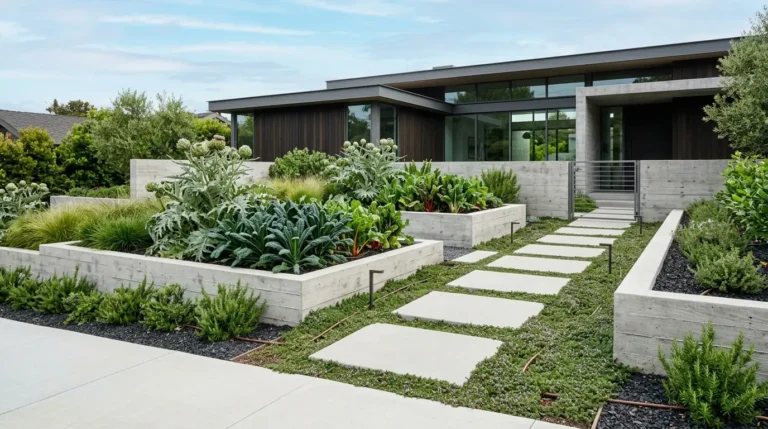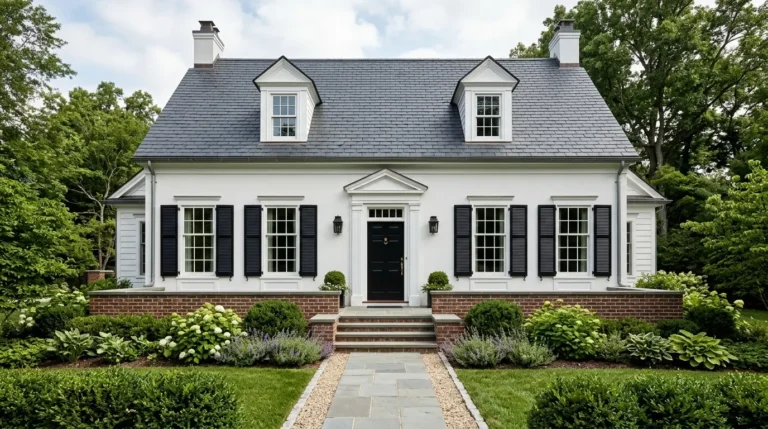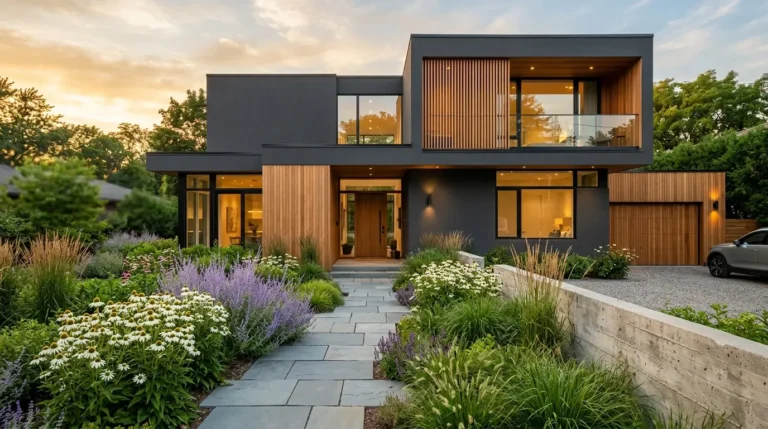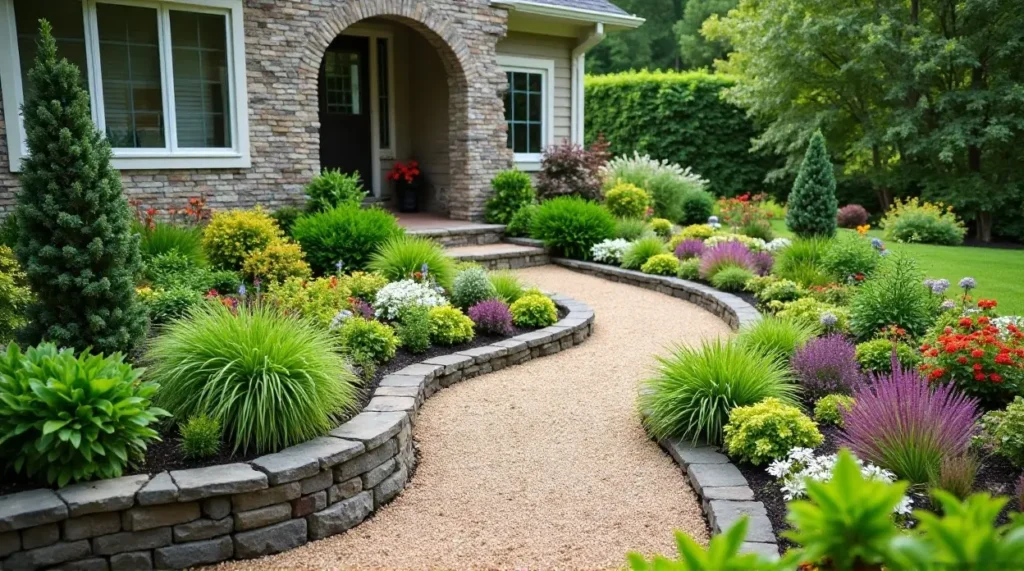
Integrating hardscaping features such as stone borders and gravel pathways into front garden beds can significantly enhance the overall structure and aesthetic of your landscape. By effectively balancing hardscaping and soft landscaping elements, you can create a polished look that elevates curb appeal while providing functional benefits. This guide explores how to incorporate hardscaping into your garden beds, ensuring a harmonious relationship between solid surfaces and vibrant plant life.
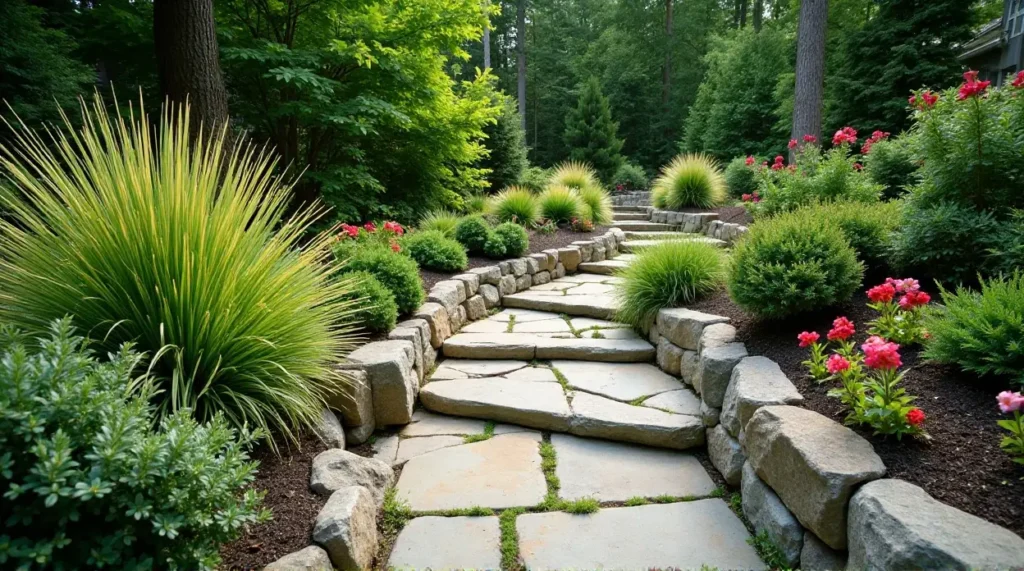
A serene garden path made of large stone slabs winds through lush greenery, bordered by neatly arranged rocks. Vibrant plants, including ornamental grasses and pink flowers, add color and texture to the landscape, while tall trees provide a tranquil backdrop.
1. Understanding Hardscaping Features
Stone Borders:
- Definition and Purpose: Stone borders are solid, durable structures that define the edges of garden beds. They help keep mulch or soil contained while preventing weeds from intruding.
- Materials: Options include natural stone, bricks, pavers, or decorative concrete. Choose materials that complement your home’s architecture and the surrounding landscape for a cohesive look.
Gravel Pathways:
- Functionality: Gravel pathways provide durable, permeable surfaces that allow easy access for maintenance while enhancing the visual flow of your outdoor space.
- Types of Gravel: Consider using crushed stone, river rock, or decomposed granite, depending on your design preference and the desired aesthetic.
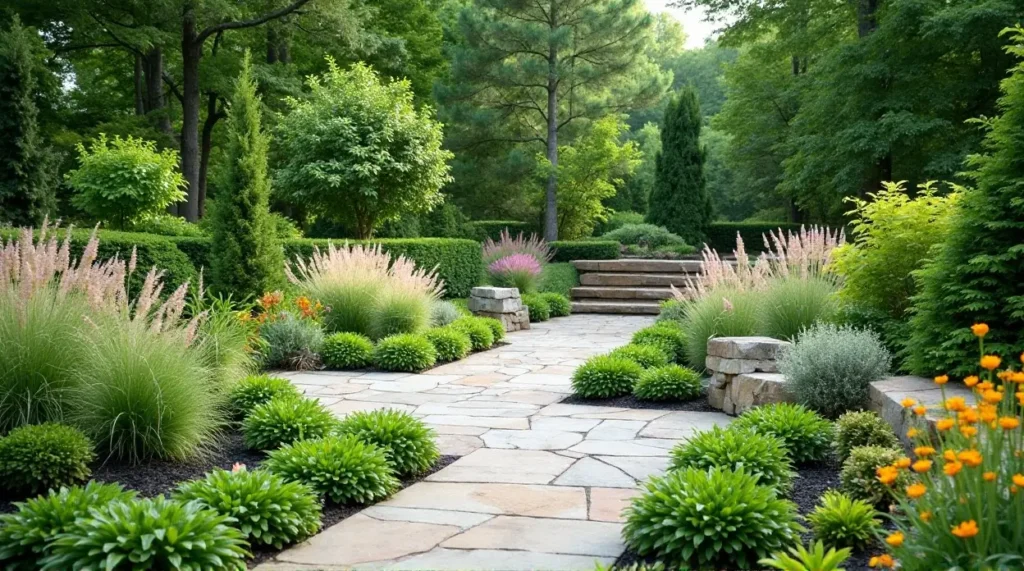
A beautifully landscaped garden features a stone pathway lined with lush green shrubs and vibrant flowering plants. Tall trees and neatly trimmed hedges provide a serene backdrop, while soft pink and orange blooms add a pop of color. Steps at the end of the path lead to a slightly elevated area, enhancing the garden’s depth and charm.
2. Design Principles for Integration
1. Defining Spaces:
- Use stone borders to clearly delineate different areas within your garden. This could include separating flower beds from lawn space, creating defined vegetable patches, or isolating seating areas.
2. Creating Flow with Pathways:
- Incorporate meandering gravel pathways that lead through garden beds, guiding visitors through the landscape. Ensure pathways are wide enough for easy navigation and can accommodate foot traffic and maintenance equipment.
3. Cohesive Aesthetic:
- Maintain consistency in design by choosing hardscaping materials that tie together with the existing architecture of your home and outdoor structures. For instance, if your home features a brick facade, using similar bricks for borders will create a harmonious look.
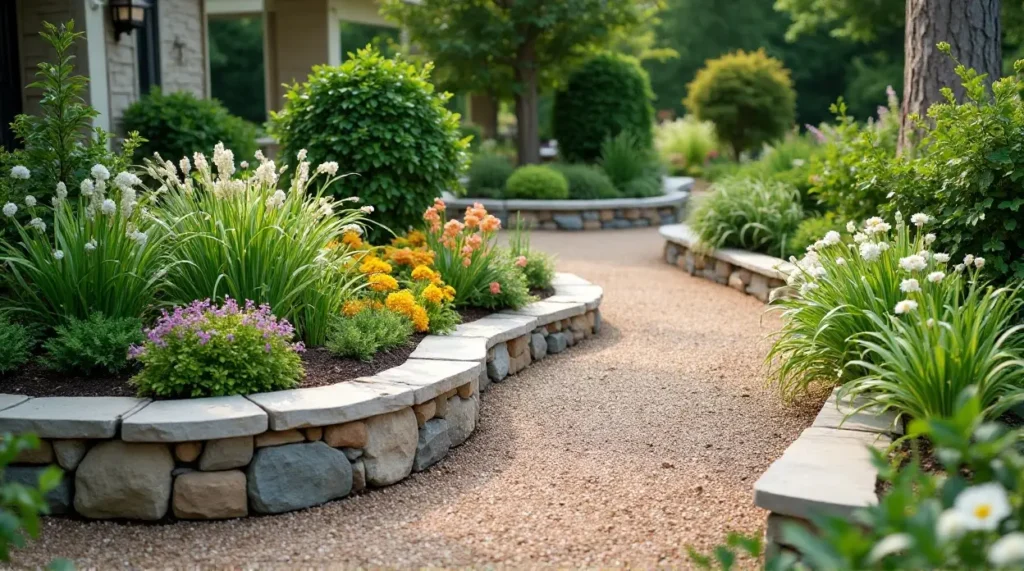
A charming garden path winds through neatly landscaped flower beds, bordered by stone retaining walls. Vibrant flowers in shades of orange, purple, and white bloom amid lush greenery, creating a serene and inviting atmosphere.
3. Balancing Hardscaping and Soft Landscaping
1. Consider Proportions:
- Strive for a balanced ratio of hardscaping to soft landscaping. Overly rigid designs with too much hardscape can create a stark appearance, while an excess of soft landscaping can look chaotic. Aim for a harmonious proportion that showcases both elements effectively.
2. Layering Textures:
- Contrast the hard surfaces of borders and pathways with the soft textures of plants. Pair smooth stones with feathery grasses, and combine rough textures from natural stone with velvety flowers to create visual interest.
3. Seasonal Considerations:
- Choose plants that will complement your hardscaping throughout the seasons. For example, evergreen plants can provide year-round foliage, while perennials can offer bursts of color during blooming seasons to soften the harsh lines of hardscape.
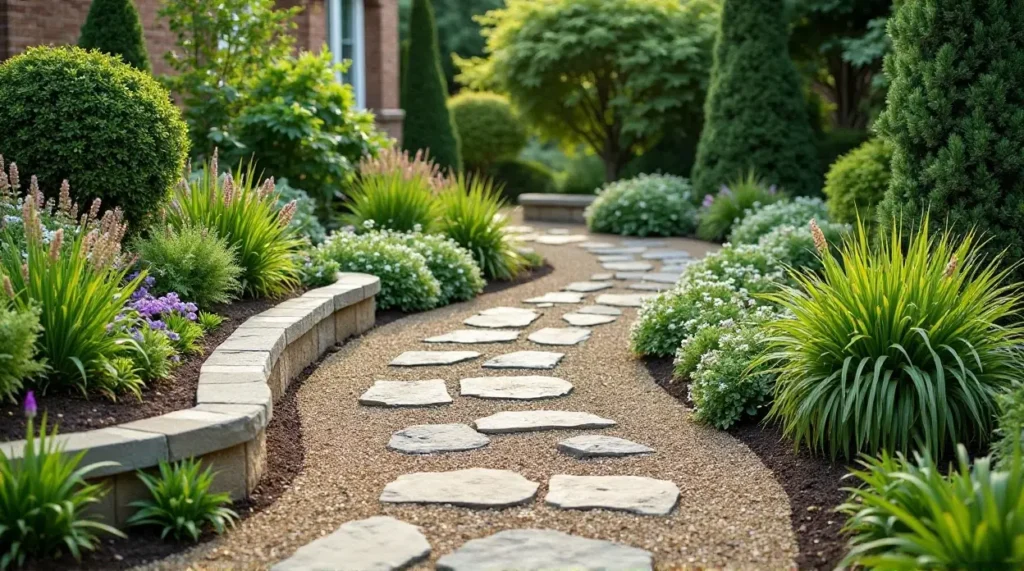
A charming garden pathway is lined with neatly arranged stone slabs, surrounded by lush greenery and colorful flowering plants. The path curves gently through the landscape, bordered by low stone walls and well-manicured bushes, creating a serene and inviting atmosphere.
4. Maintenance Practices for Longevity
1. Weed Control:
- Implementing gravel pathways can help reduce weed growth in your garden beds; however, you may still need to employ weed barriers under gravel or regularly pull weeds that sprout along the edges.
2. Regular Upkeep:
- Hardscaping requires minimal upkeep compared to soft landscaping, but periodic cleaning and maintenance are essential. Sweep pathways to prevent debris accumulation and check borders for any shifting or wear over time.
3. Pruning and Deadheading:
- Maintain your soft landscaping through regular pruning and deadheading to keep the plants looking neat and thriving, ensuring they complement your hardscape elements.
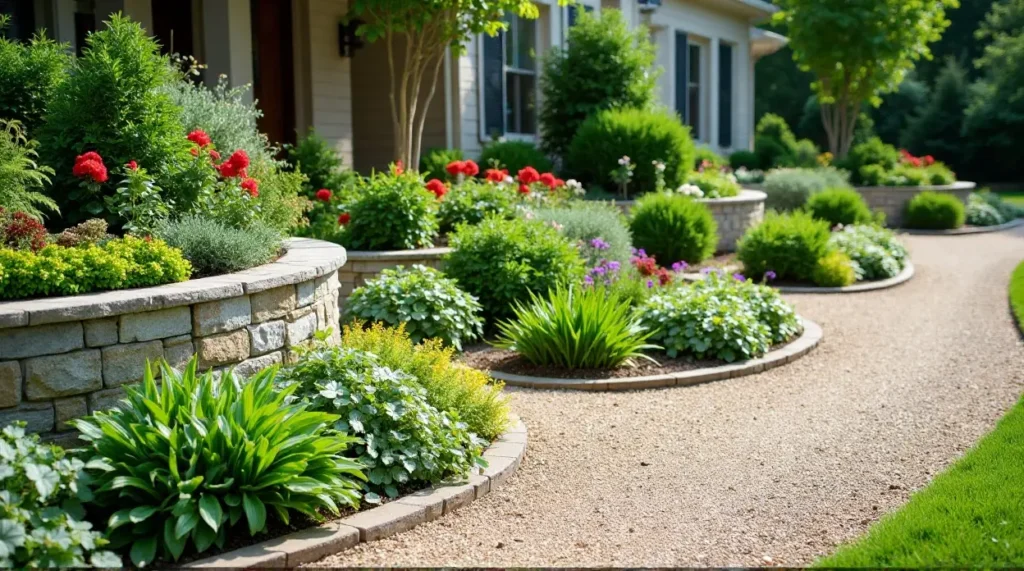
A beautifully landscaped garden features lush greenery and vibrant flowers, including red blooms, arranged in stone-bordered beds along a curved gravel pathway leading to a house.
5. Creative Ideas for Hardscaping Integration
- Boulders as Focal Points: Utilize large boulders as natural focal points within your garden beds. They add an element of rugged beauty while enhancing the structure of your landscape.
- Curved Borders: Instead of straight edges, consider creating curves with your stone borders to introduce a more organic, natural feel to your garden design.
- Integrated Seating: Incorporate built-in seating areas using hardscape materials for a functional and attractive space within your garden. This allows for a place to relax and enjoy your landscape while complementing the surrounding beds.
A beautifully landscaped garden features curved stone retaining walls and a gravel path, surrounded by lush greenery and vibrant red and purple flowers, with a house in the background.
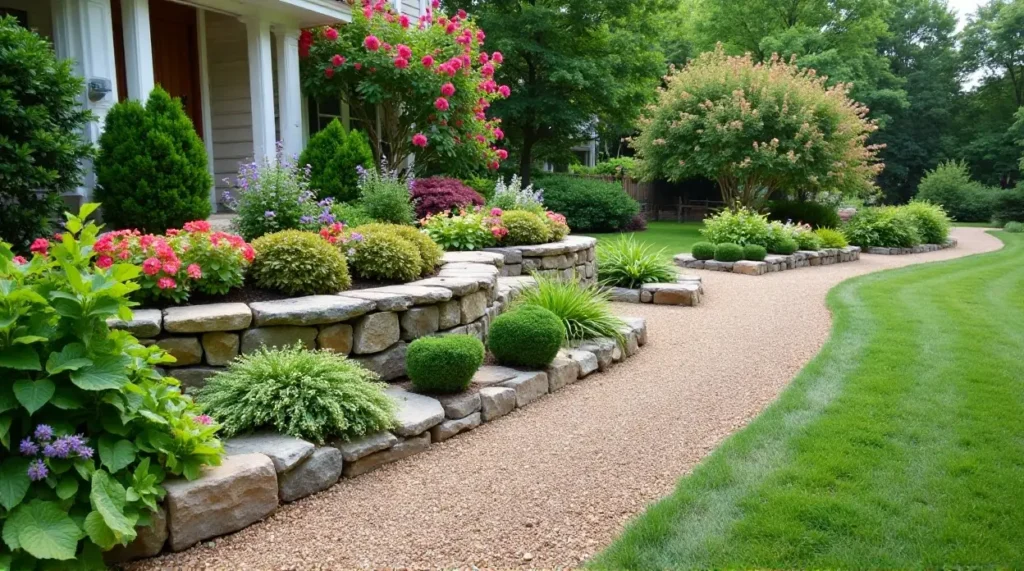
A beautifully landscaped garden features vibrant flowers and lush shrubs arranged on stone terraces. A gravel pathway winds through the well-manicured lawn, leading to a large flowering tree. The house in the background adds a charming touch to the serene setting.
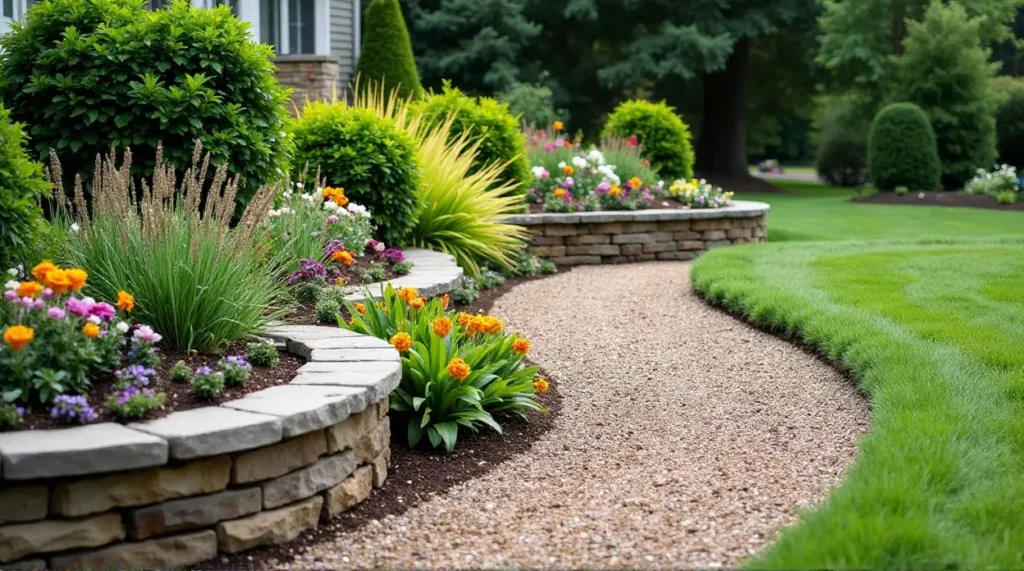
A beautifully landscaped garden features a curved gravel path bordered by lush green grass and vibrant flower beds. The stone retaining walls support a variety of colorful blooms and ornamental grasses, creating a serene and picturesque setting.
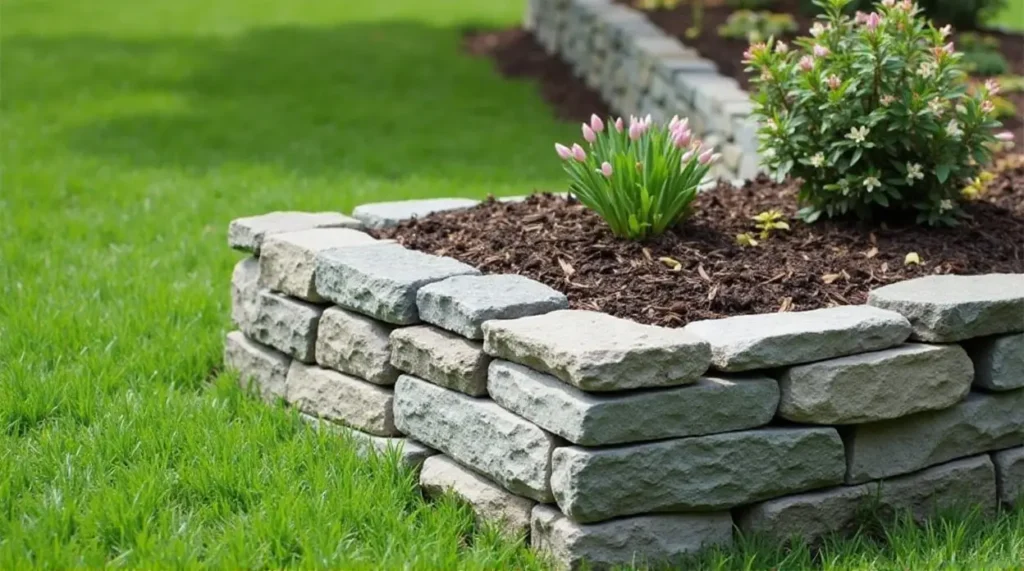
A raised garden bed made of stacked gray stones, filled with mulch, features blooming pink tulips and a green shrub, set against a backdrop of lush green grass.
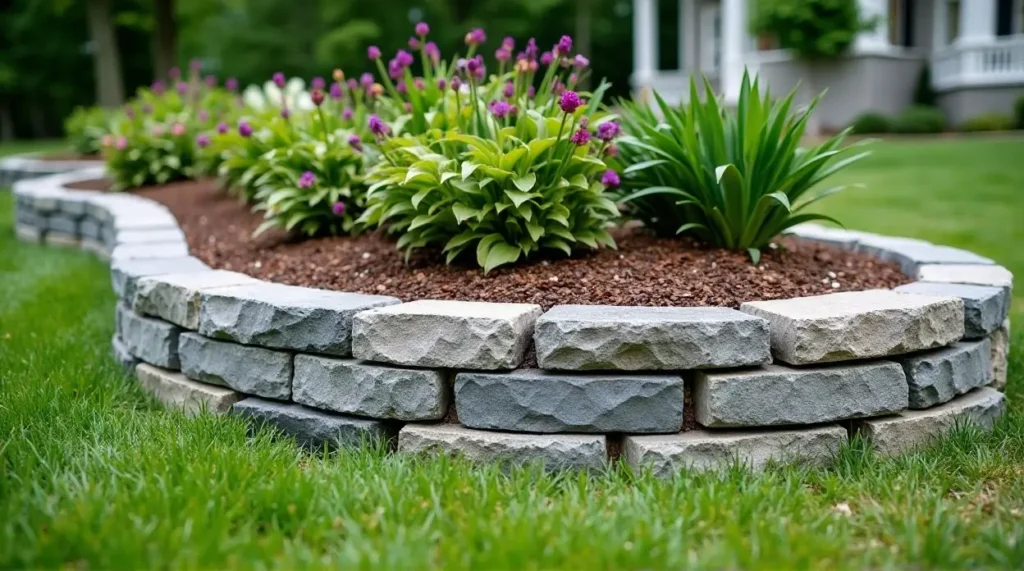
A beautifully landscaped garden features a curved stone border surrounding vibrant green plants and purple flowers. The neatly stacked gray stones create a raised bed, enhancing the lush greenery and colorful blooms. In the background, a well-maintained lawn and a glimpse of a house add to the serene outdoor setting.
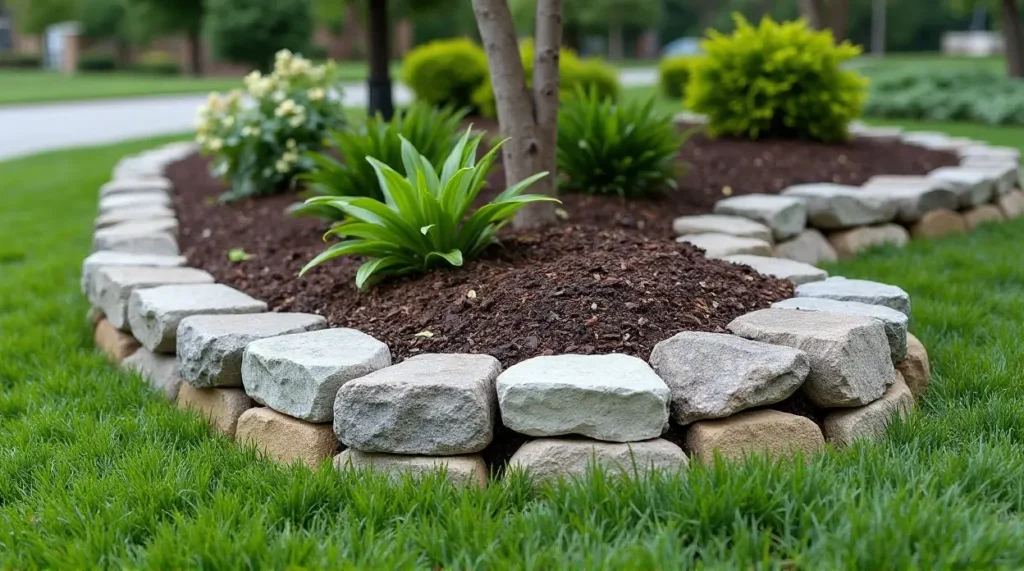
A neatly landscaped garden bed bordered by a row of gray stones, featuring lush green plants and small shrubs, surrounded by well-maintained grass.
Conclusion
Incorporating hardscaping features such as stone borders and gravel pathways into your garden beds can enrich the aesthetic and functional aspects of your front yard. By skillfully balancing these elements with soft landscaping, you can achieve a polished, cohesive look that enhances curb appeal and functionality. Thoughtful integration of these features fosters visual interest, promotes accessibility, and creates a landscape that is both inviting and well-structured. With careful consideration of design principles and maintenance practices, your front garden will become a beautiful reflection of your style and creativity.
About the Author