In recent years, the minimalist design philosophy has garnered immense popularity, steering not only interiors but extending its reach to outdoor spaces. Minimalism emphasizes simplicity, functionality, and a disconnection from excess. As homeowners embrace this ideology, incorporating minimalistic landscaping becomes paramount to creating a harmonious environment that reflects these same principles. This article explores the nuances of landscaping for minimalist homes, emphasizing the importance of thoughtful landscaping that complements the architecture. We will delve into how native plants, particularly drought-resistant varieties like agave, can enhance the aesthetic appeal of minimalist homes while requiring less maintenance. Additionally, we will provide insights and practical tips on selecting plants that resonate with the home’s design narrative.
Understanding Minimalist Landscaping
The Essence of Minimalism
Minimalism, at its core, is about clarity and simplicity. When applied to landscaping, this means creating an outdoor space that looks clean and organized while still being functional and aesthetically pleasing. The aim is to evoke a sense of peace, tranquility, and connection with nature without overwhelming the senses.
The Role of Landscaping in Minimalist Design
Landscaping plays a critical role in enhancing the character of a minimalist home. It serves to bridge the gap between the built environment and nature, creating a seamless integration that embodies tranquility and order. Well-thought-out landscaping can enhance curb appeal, increase property value, and provide a serene escape for homeowners.
Key aspects of effective minimalist landscaping include:
-
Simplicity in Design: Clean lines and geometric shapes are crucial. Landscaping should not be overly complex; rather, it should mirror the simplicity found in minimalist architecture.
-
Purposeful Plant Selection: Choosing the right plants and materials that serve a clear purpose adds to the overall cohesiveness of the landscape with the home.
-
Functional Elements: Incorporating features such as pathways, seating areas, and low-maintenance garden beds can enhance usability while maintaining aesthetic simplicity.
The Importance of Thoughtful Landscaping
Complementing the Home’s Architecture
Thoughtful landscaping ensures that the outdoor space complements the home’s architectural style rather than competing with it. Minimalist homes often feature large windows, open spaces, and neutral colors, so the landscaping should reinforce these elements rather than distract from them.
-
Consistent Use of Materials: Utilize materials that mirror those found in the home, such as concrete, wood, or stone. This creates a connection between the indoors and outdoors.
-
Balance and Symmetry: Achieving visual balance through symmetrical arrangements or purposeful asymmetry can elevate the landscape without introducing chaos.
Enhancing Aesthetics with Native Plants
Native plants are a cornerstone of minimalist landscaping. By opting for plants that naturally thrive in the local environment, homeowners can ensure sustainability, ease of care, and compatibility with the minimalist ethos. Plants like agave, succulents, and ornamental grasses are not only visually appealing but also require less maintenance compared to non-native species.
Benefits of Using Native Plants
-
Water Efficiency: Native plants are well-adapted to local climate conditions and typically require less water, which is particularly beneficial for those looking to minimize their environmental impact.
-
Biodiversity: By choosing native flora, homeowners can help support local ecosystems, providing habitats for wildlife and promoting biodiversity.
-
Low Maintenance: Native plants usually require less pruning, fertilizing, and pest management, which suits the minimalist desire for simplicity and low upkeep.
-
Visual Appeal: The unique aesthetic of native plants, such as the sculptural form of agave, can add depth and character to the landscape while staying true to natural beauty.
Choosing the Right Plants for Minimalist Landscapes
Key Considerations for Plant Selection
When selecting plants for a minimalist landscape, there are several factors to consider:
-
Scale and Proportion: Choose plants that match the scale of your home and outdoor space. Larger plants can serve as focal points, while smaller varieties can act as ground cover or accents.
-
Form and Texture: Embrace a variety of shapes and textures to create visual interest. For example, the spiky architecture of an agave plant contrasts beautifully with the soft fronds of ornamental grasses.
-
Color Palette: Minimalist landscapes often favor a restrained color palette. Stick to a few key colors focusing on greens, greys, and earth tones to create unity and enhance the minimalist aesthetic.
-
Seasonality: Opt for plants that offer year-round interest. Select species that have different flowering seasons or varying foliage colors throughout the year to maintain visual appeal in all seasons.
Recommended Plants for Minimalist Landscaping
Here are some native plants, including agave, that align seamlessly with minimalist design:
Agave
- Description: Agave plants are succulent species that feature thick, fleshy leaves arranged in a rosette form, giving them a sculptural quality.
- Benefits: They are drought-tolerant and require minimal watering, making them perfect for low-maintenance gardens.
Ornamental Grasses
- Description: Grasses like Blue Oat Grass (Helictotrichon sempervirens) or Mexican Feather Grass (Nassella tenuissima) provide soft textures and movement.
- Benefits: Their natural sway in the breeze adds dimension to the landscape without cluttering it.
Yucca
- Description: Yucca plants are striking with their upright growth and unique flower spikes.
- Benefits: These plants are low-maintenance and drought-tolerant, making them ideal for landscapes aiming for sustainability.
Sedums
- Description: Sedums are low-growing succulent plants known for their ability to thrive in poor soil conditions and minimal water.
- Benefits: Their versatility allows them to be used in ground cover, containers, or rock gardens, creating a lush, green space with minimal effort.
Desert Marigolds
- Description: This native flowering plant produces bright yellow blooms that stand out against a neutral landscape.
- Benefits: Desert marigolds attract pollinators and add pops of color without overwhelming the senses.
Creating a Cohesive Landscape Design
Design Techniques
-
Zoning: Break the landscape into zones for different functions—such as relaxation, entertainment, or food production. This can guide plant selection and layout.
-
Use of Hardscaping: Incorporate hardscape elements like stones, wood, or metal to create structure and contrast with the organic forms of plants.
-
Natural Pathways: Design simple, clean pathways using materials like gravel or stone, which can guide visitors through the property while maintaining a minimalist aesthetic.
Tips for Implementation
-
Plan Ahead: Before diving into landscaping, take the time to plan your layout, considering the flow of light and space within your garden.
-
Layering Plants: To achieve depth, layer plants by height. Place taller plants in the back and shorter varieties at the forefront.
-
Group Planting: Avoid scattering one plant throughout the landscape. Use cluster planting to create pockets of color and texture that make a stronger visual impact.
-
Maintenance: Regularly maintain your landscape by removing weeds, deadheading flowers, and ensuring that the plants receive appropriate care. This maintenance preserves the minimalist aesthetic and health of the plants.
Sustainability in Minimalist Landscaping
The Minimalist Commitment to Sustainability
Incorporating minimalist landscaping isn’t just about aesthetics; it also promotes sustainable living. By reducing the need for resources such as water and pesticides, homeowners can minimize their ecological footprint. Sustainable practices like composting and mulching can further enhance soil quality and support plant health.
Techniques for Sustainable Landscaping
-
Rain Gardens: Design a rain garden that captures stormwater runoff, promoting natural drainage while providing a habitat for local flora and fauna.
-
Edible Landscaping: Consider incorporating edible plants like herbs or vegetables that can blend seamlessly into the landscape while serving a purpose.
-
Mulching: Use organic mulch to suppress weeds, retain moisture, and enrich soil—an eco-friendly solution that complements minimalist gardening principles.
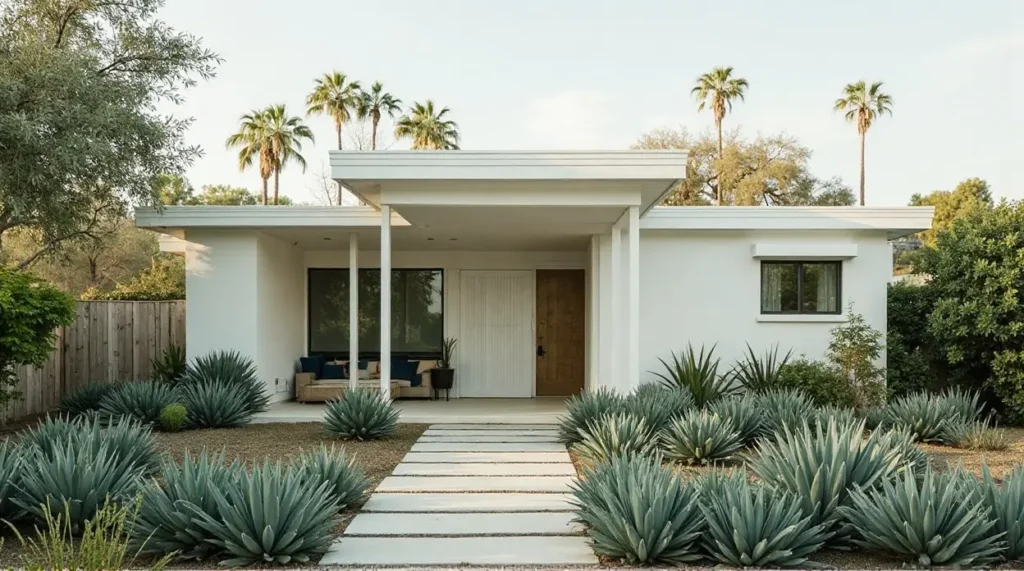
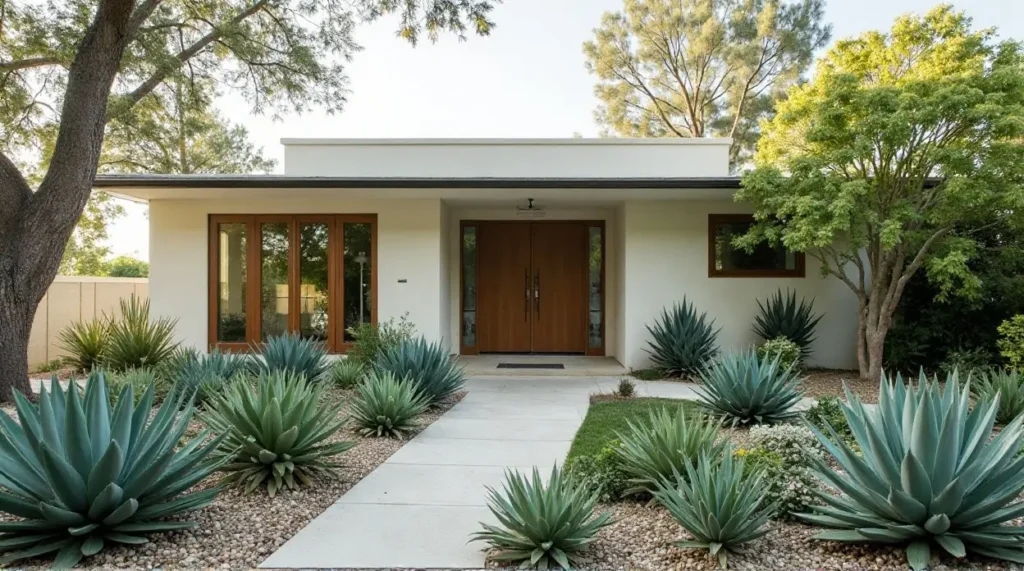
A modern, single-story house with a flat roof is surrounded by a beautifully landscaped garden featuring large agave plants and neatly trimmed shrubs. A stone pathway leads to the entrance, flanked by trees and gravel, creating a serene and inviting atmosphere.
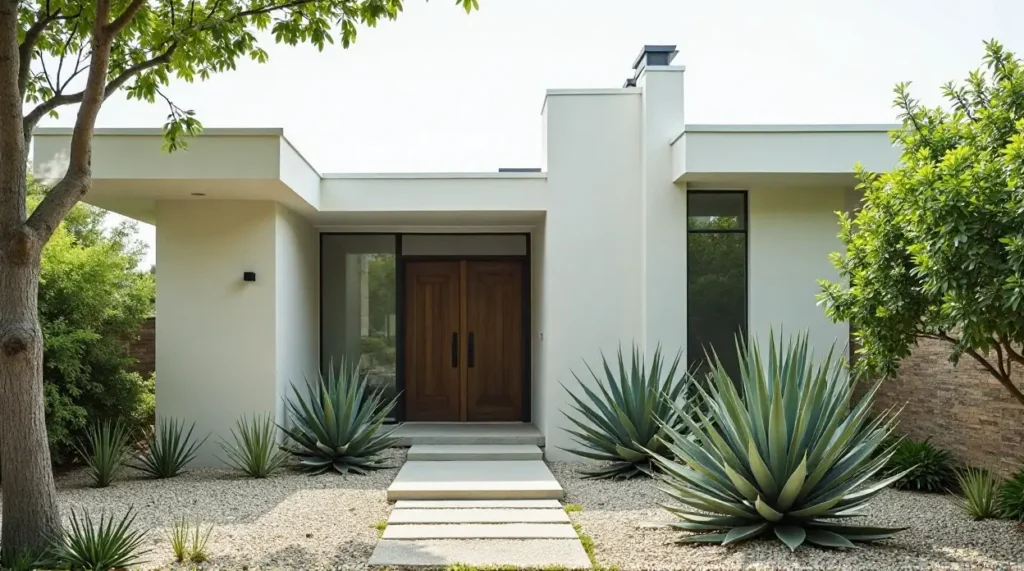
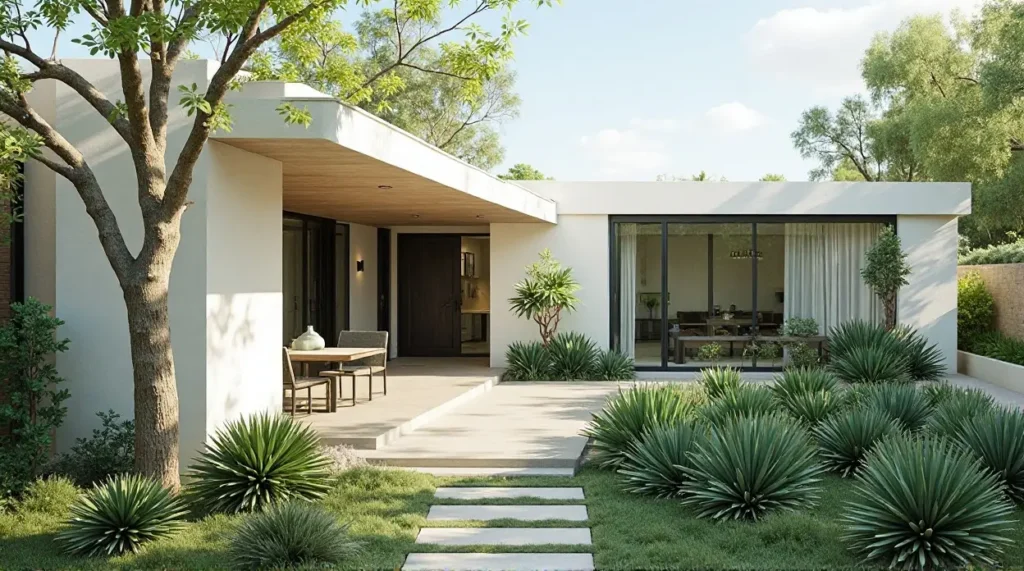
A modern house with a sleek white exterior features a wooden front door and large windows, surrounded by a minimalist garden with agave plants and a tree, set on a gravel pathway.
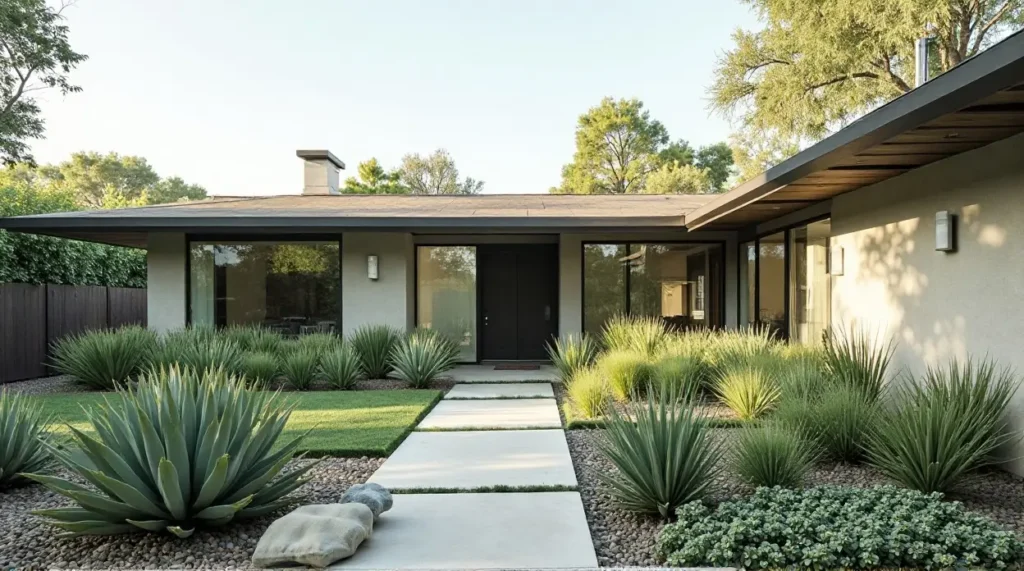
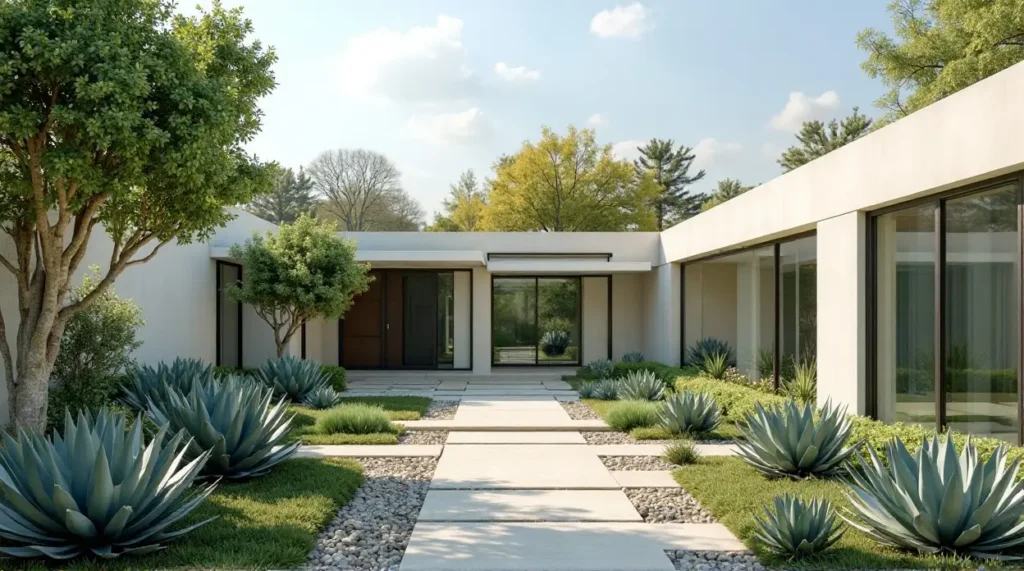
A modern single-story house features a flat roof and large windows, surrounded by a meticulously landscaped garden with agave plants and ornamental grasses lining a stone pathway.
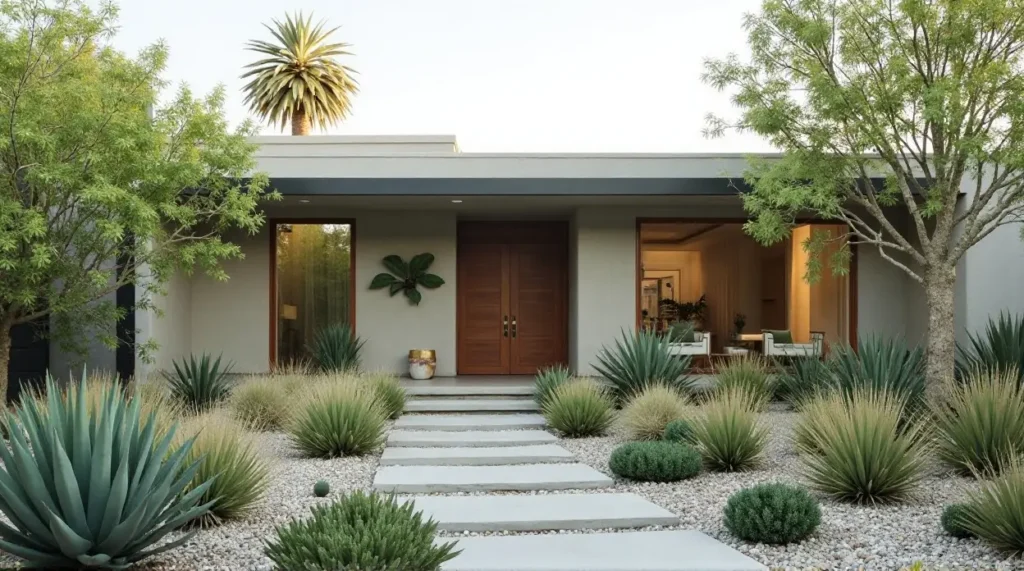
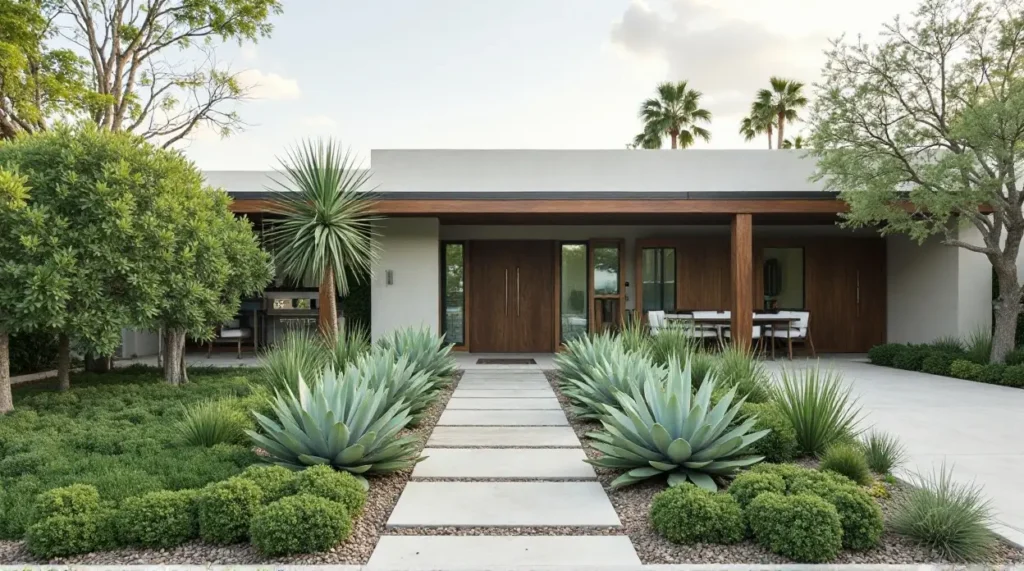
A modern house entrance features a sleek design with a wooden door, flanked by large windows. The front yard is landscaped with various desert plants, including agave and small shrubs, set among white gravel. A pathway of rectangular stone slabs leads to the entrance, with a tall palm tree visible in the background.
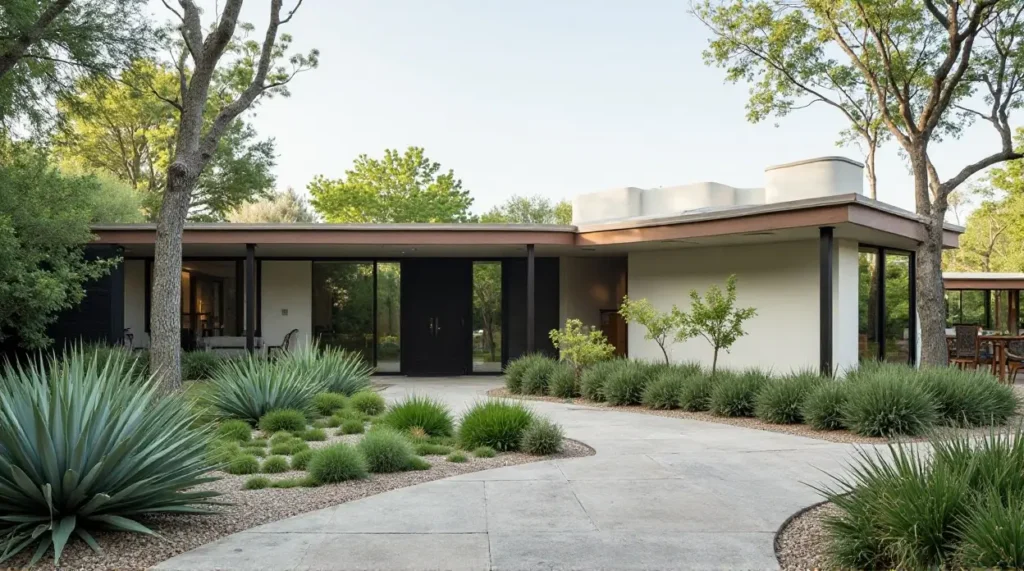
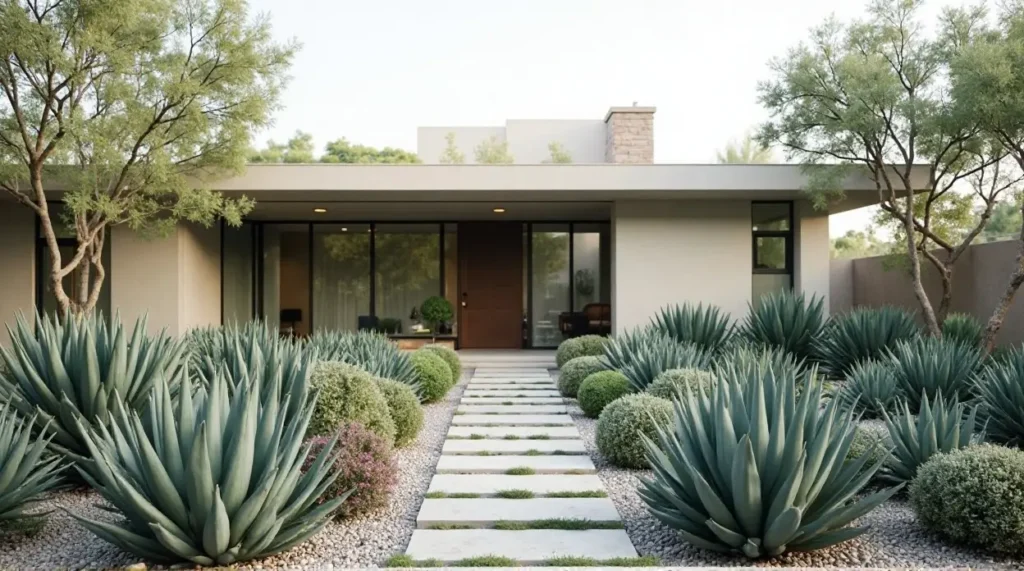
A modern, single-story house with large glass windows and a flat roof is surrounded by lush greenery and desert landscaping, featuring agave plants and neatly trimmed shrubs along a curved concrete walkway.
Conclusion
Landscaping for minimalist homes embodies the art of subtlety, blending simplicity and functionality to create visually stunning outdoor spaces. By opting for thoughtfully selected native plants like agave and employing design strategies that harmonize with architectural elements, homeowners can achieve a landscape that not only enhances the beauty of their homes but also aligns perfectly with the minimalist ethos. Embracing these principles invites tranquility, sustainability, and aesthetic appeal to any minimalist landscape, reflecting a lifestyle that values simplicity while enjoying the richness of nature. Through careful consideration and intentional design, you can achieve a serene outdoor haven that mirrors the essence of minimalist living.
About the Author