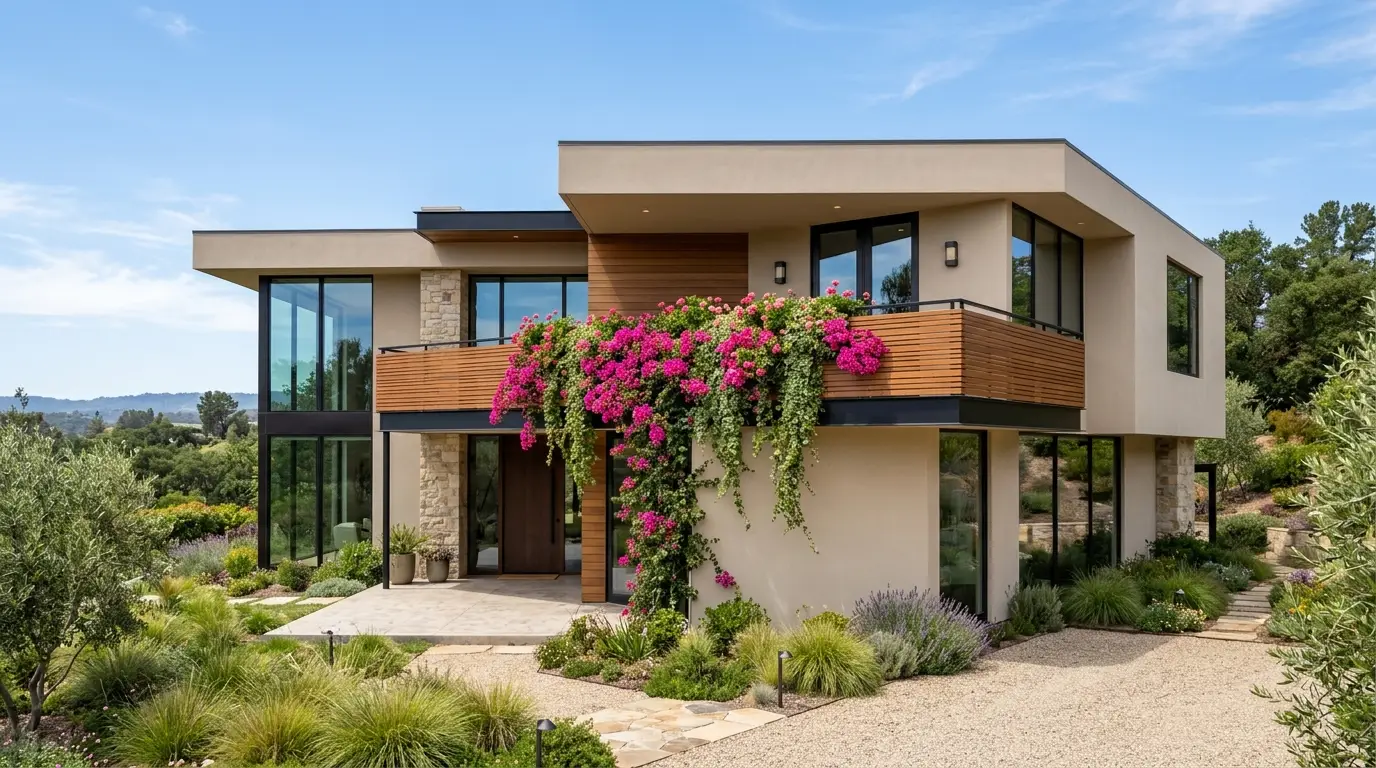
Step out onto your driveway, turn around, and look up at your home. What do you see? If you’re like most homeowners, the ground level is a meticulously manicured masterpiece of trimmed hedges, vibrant borders, and perfectly edged lawns. But as your eyes travel upward to the second story, the narrative often stops dead. The upper facade is just… flat.
A bare second-story balcony is the ultimate missed opportunity in exterior design. Think of it like wearing a perfectly tailored bespoke suit but forgetting the pocket square. It’s functional, sure, but it lacks that crucial visual punch.
If you are tired of looking at an uninspired, empty upper level, I have fantastic news. You do not need to hire a contractor to alter your roofline or add expensive architectural bump-outs. You simply need to harness the power of high-altitude container gardening. By pairing warm brown railings with strategically chosen potted plants and cascading pink flowers, you can draw the eye upward and turn a boring facade into a jaw-dropping focal point.
Ready to bridge the gap between hardscape architecture and organic beauty? Let’s explore ten breathtaking balcony flower designs—grounded in the incredibly popular Modern Organic Minimalist style—that will completely elevate your two-story home.
1. The Second-Story Dilemma: Why Balconies Are Often Forgotten
Why do we spend thousands on the front yard while leaving the balcony completely bare? It usually comes down to intimidation.
1.1. The “Floating Blank Canvas” Syndrome
When a space isn’t connected to the ground, we often struggle to figure out how to landscape it. The balcony feels like an isolated, floating box. Watering seems like a hassle, and the fear of heavy pots damaging the structure keeps many homeowners paralyzed. But a balcony is actually the easiest place to make a massive impact, precisely because it is elevated and visible from down the street.
1.2. Drawing the Eye Upward: The Psychology of Curb Appeal
In high-end landscape design, we use a concept called “vertical visual pull.” If everything interesting is happening at ground level, the house feels squat and heavy. By placing vibrant, cascading blooms on the second story, you force the viewer’s eye to travel the full height of the property. This optical illusion makes your home appear taller, grander, and vastly more expensive.
2. Decoding the Modern Organic Minimalist Balcony
We aren’t going for a cluttered, chaotic cottage garden here. We want sophistication.
2.1. Why Warm Brown Railings Are Your Best Friend
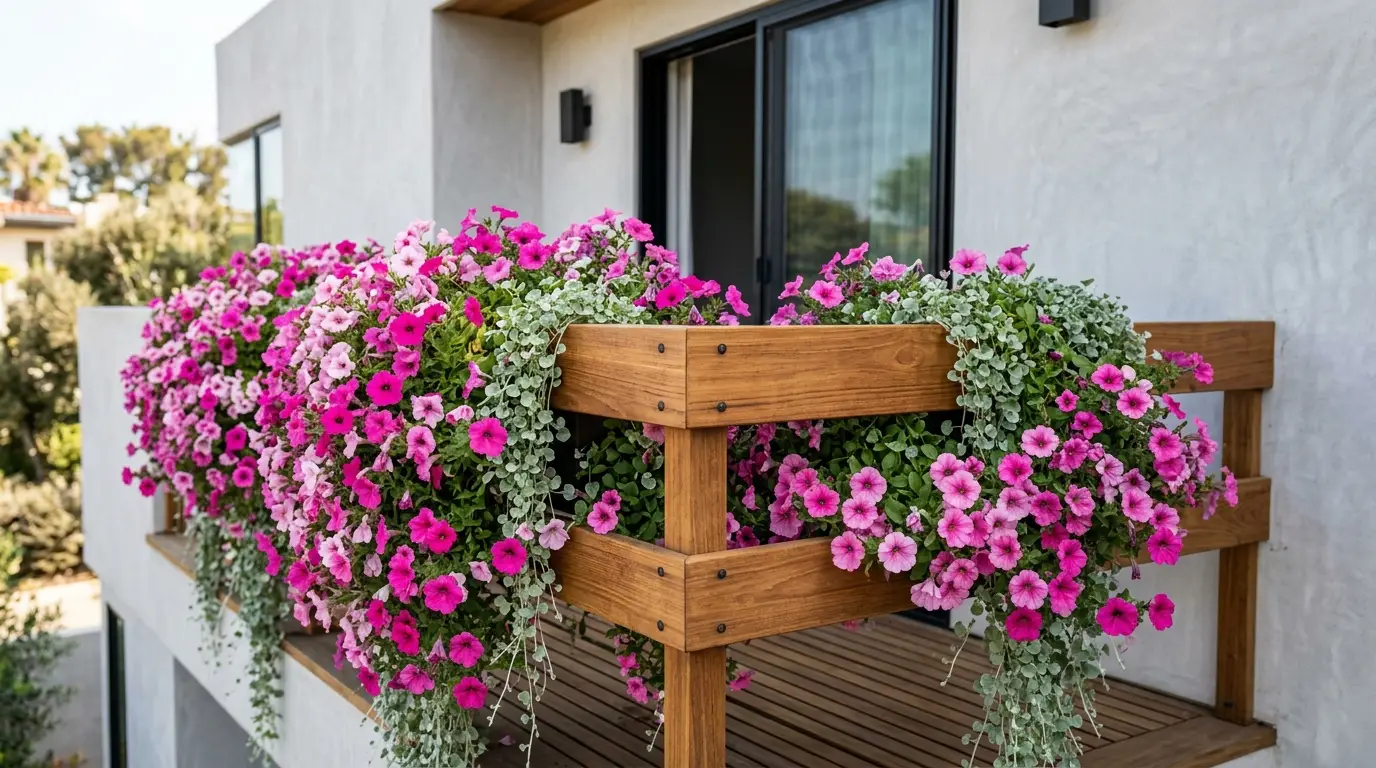
In Modern Organic Minimalism, we rely on the tension between sleek lines and natural elements. Stark black or white metal railings can feel sterile. Warm brown railings—whether natural stained wood or composite materials—act as the perfect transitional element. They provide an earthy, organic foundation that makes the bright colors of your flowers pop without feeling overly engineered.
2.2. The Power of Intentional Contrast
When you pair the warm, earthy tone of a brown railing with a hyper-vibrant color like hot pink, the contrast is magnetic. The geometry of the railing provides the structure; the chaotic, spilling flowers provide the soul.
3. The Foolproof Formula for Container Gardening
Before we dive into the specific designs, you need to understand the mechanics of building a successful balcony box. It’s not just throwing dirt and seeds into a plastic trough.
3.1. Thrillers, Fillers, and Spillers: The Golden Rule
Every high-end container garden follows this trio:
-
The Thriller: A tall, structural plant placed in the center or back to give the arrangement height and drama.
-
The Filler: Mounding plants that cover the soil and provide a dense block of color or texture.
-
The Spiller: Trailing vines or cascading flowers that tumble over the edge of the planter, softening the hard lines of the balcony.
3.2. Soil Science: Keeping Heavy Planters Light
Balcony weight limits are real. Never use dense garden soil from your yard. You must use a premium, lightweight potting mix heavily cut with perlite and peat moss or coconut coir. This provides excellent drainage—crucial for preventing root rot—and keeps the planters light enough that they won’t strain your railings.
4. Design 1: The Cascading Pink Waterfall
This is the showstopper. If you want maximum curb appeal with minimal fuss, this is your blueprint.
4.1. Petunias as the Ultimate Spiller
For a jaw-dropping display, look specifically for “Supertunias” or spreading wave petunias in shades of vivid fuchsia and soft bubblegum pink. These are aggressive growers that don’t need constant deadheading. Plant them densely along the front edge of your balcony boxes. Within weeks, they will create a literal waterfall of pink that can trail down several feet, completely obscuring the hardware of the planter boxes and creating a floating cloud of color.
5. Design 2: Structural Greenery with Pink Accents
If the “waterfall” is a bit too loud for your taste, you can dial it back while maintaining the Modern Organic Minimalist ethos.
5.1. Balancing Wild Blooms with Architectural Foliage
In this design, the focus is on texture. Use tall, spiky structural plants like Dracaena spikes or upright ornamental grasses as your thrillers. Fill the base with deep green Heuchera (coral bells), and use a more restrained, delicate pink flower—like calibrachoa (million bells)—as a subtle spiller. This creates a highly structured, architectural look where the pink acts as a sharp accent rather than the main event.
6. Design 3: The “Floating Meadow” Concept
Minimalism doesn’t have to mean perfectly manicured. Sometimes, the most modern choice is a highly curated form of wildness.
6.1. Creating a Wild, Undone Aesthetic
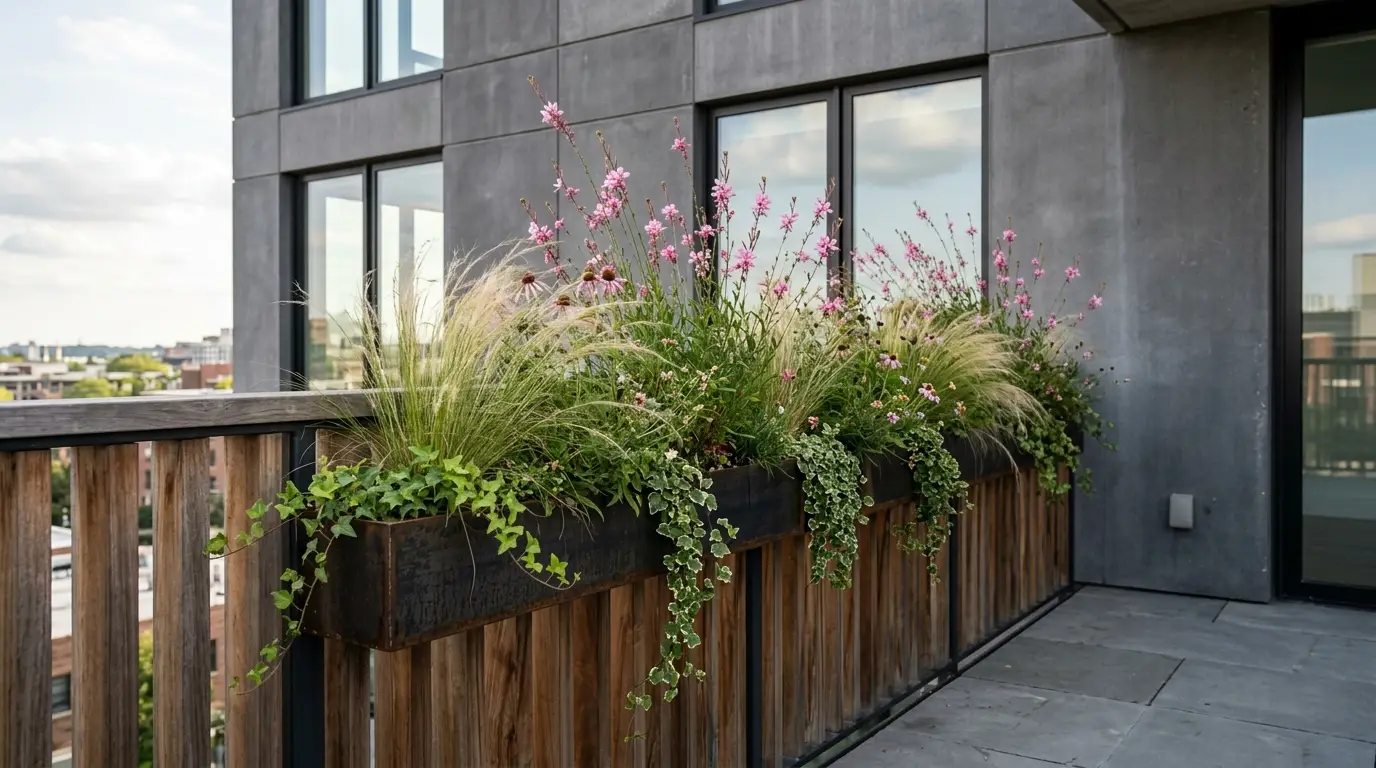
Instead of tightly packed mounds, use airy, delicate plants. Mix pink Gaura (which looks like tiny butterflies hovering on long stems) with wispy stipa grasses and trailing ivy. When the wind blows, the entire balcony arrangement sways and dances. It softens the hard, rigid lines of a modern two-story facade and makes the balcony feel like a slice of a wild meadow suspended in the sky.
7. Practical Magic: Choosing the Right Planters
The containers you choose are just as important as the flowers inside them.
7.1. Matte Finishes and Weather-Resistant Materials
Avoid cheap, shiny plastic planters; they degrade in the UV light and look terrible from the street. For a Modern Organic Minimalist look, choose fiberglass or high-density resin planters with a matte, textured finish that mimics concrete, slate, or raw clay. They are incredibly lightweight but look exceptionally heavy and expensive.
7.2. Securing Your Boxes Against Wind and Weather
The second story experiences significantly more wind than the ground floor. Never simply rest a planter on top of a railing. Invest in heavy-duty, powder-coated steel brackets that securely lock the boxes to the brown railings. Safety must always come before aesthetics.
8. Design 4: Trailing Vines for Architectural Softening
Sometimes, you don’t need flowers to make an impact. The color green can be just as arresting when used correctly.
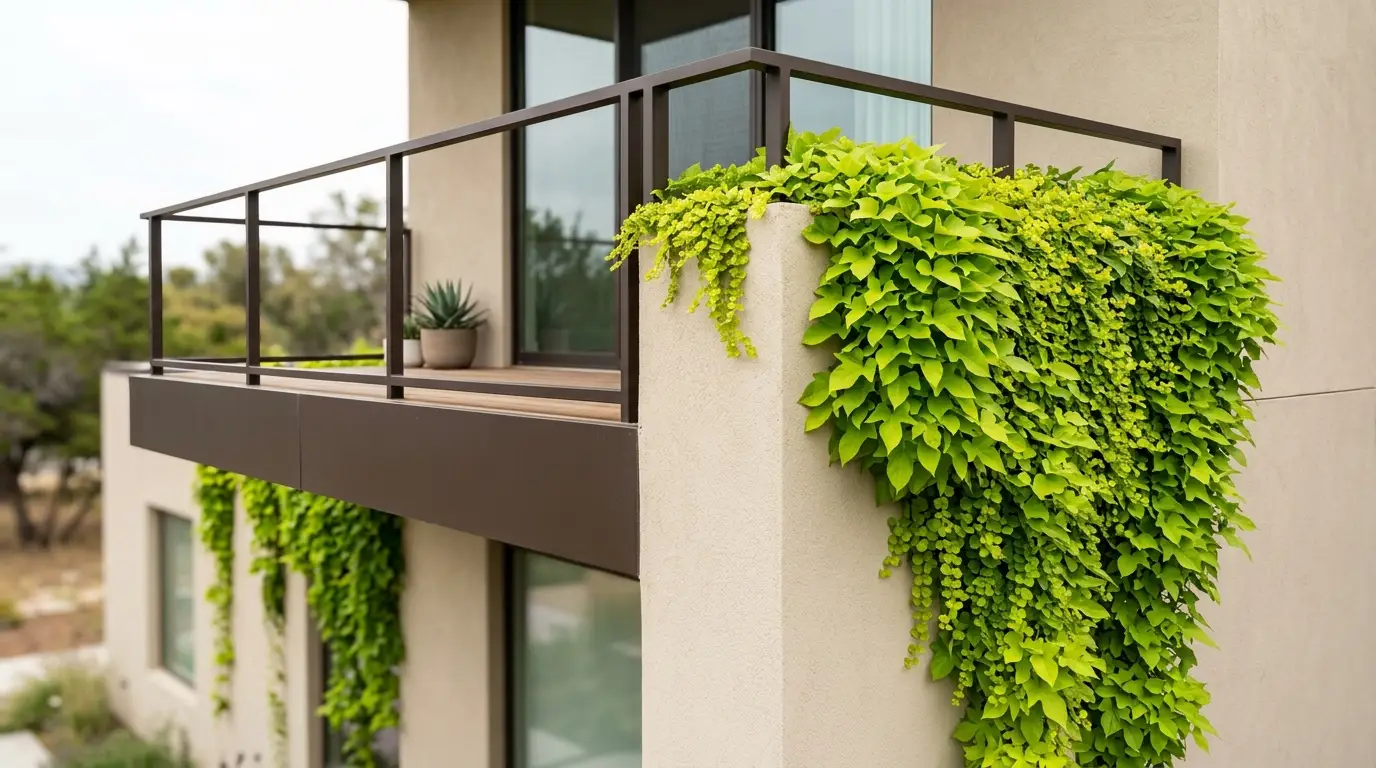
8.1. Sweet Potato Vine and Creeping Jenny
If your two-story home features sharp, boxy, uncompromising architecture, trailing vines are the ultimate antidote. Plant vibrant lime-green Sweet Potato Vine alternating with dark purple foliage. As these vines grow, they will drape dramatically over the warm brown railings, softening the hard 90-degree angles of the balcony and making the structure look like it is being reclaimed by nature.
9. Design 5: Symmetry and the Formal Approach
If you prefer order and calm, symmetry is the path to achieving a deeply soothing exterior.
9.1. Framing the Upper Windows
If your balcony features a sliding glass door or French doors, use two identical, oversized square planters placed exactly on either side of the doors. Fill them with identical arrangements: a tall, conical evergreen in the center, surrounded by a dense ring of soft pink blooms. This frames the entryway perfectly and creates a sense of regal, organized calm that reads beautifully from the street below.
10. Design 6: The Asymmetrical Organic Drip
For the bold homeowner, breaking the rules of symmetry can yield the most striking results.
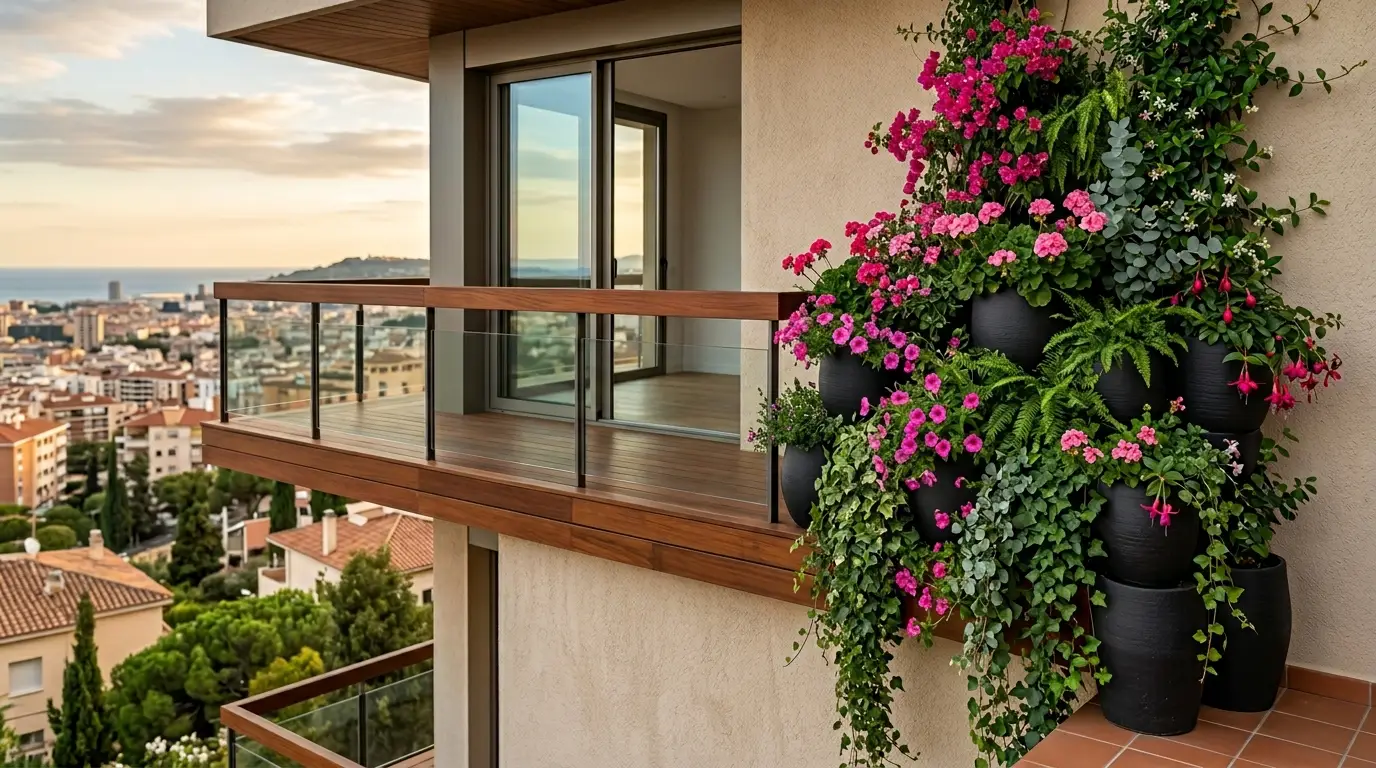
10.1. Breaking the Rules for Visual Interest
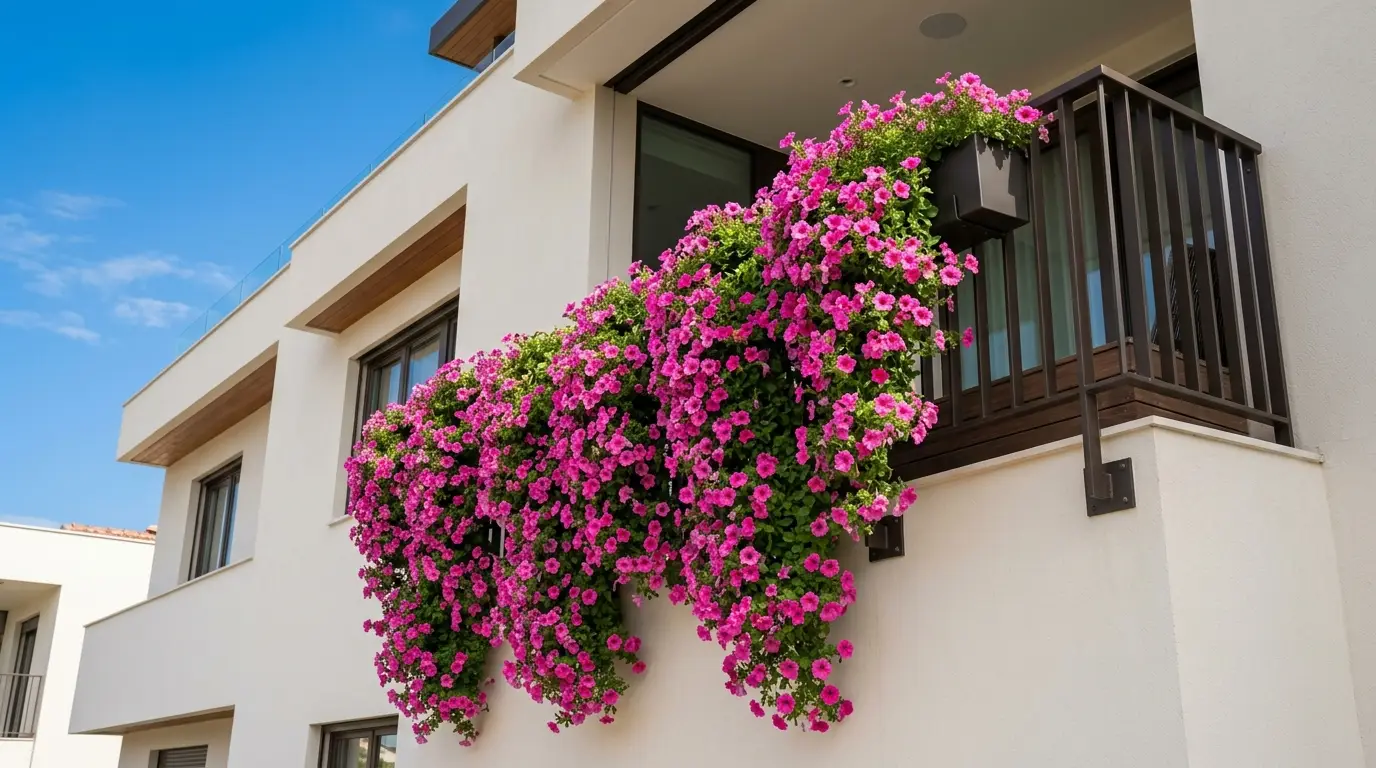
Instead of lining the entire railing with boxes, cluster a series of planters only on one far corner of the balcony. Let an absolute profusion of pink flowers and vines “drip” heavily from just that one side. This asymmetry forces the eye to pause and examine the design. It feels incredibly modern, artistic, and deeply organic.
11. Design 7: Fragrance First—Integrating Sweet Aromas
Why just design for the eyes when you can design for the nose?
11.1. Plants That Smell as Good as They Look
If you actually sit on your balcony (perhaps enjoying a hot cup of coffee and a slice of freshly baked bread in the morning), you want to curate the scent. Mix your pink cascading flowers with trailing sweet alyssum or heliotrope. These plants release an intoxicating, honey-vanilla fragrance that will waft into your second-story bedroom every time you leave the doors open.
12. Design 8: Edible Ornamentals
The Modern Organic Minimalist style champions functionality as much as beauty.
12.1. When Herbs Meet Florals
Who says a flower box can’t feed you? Integrate trailing rosemary, purple sage, and creeping thyme among your pink ornamental flowers. The herbs provide incredible, textured greenery and drought tolerance, while the pink flowers provide the pop of color. It is a stunning, utilitarian approach to balcony gardening that looks incredible and saves you a trip to the grocery store.
13. Design 9: The Golden Hour Glow
Your balcony shouldn’t disappear when the sun goes down. In fact, evening is when it can look its most magical.
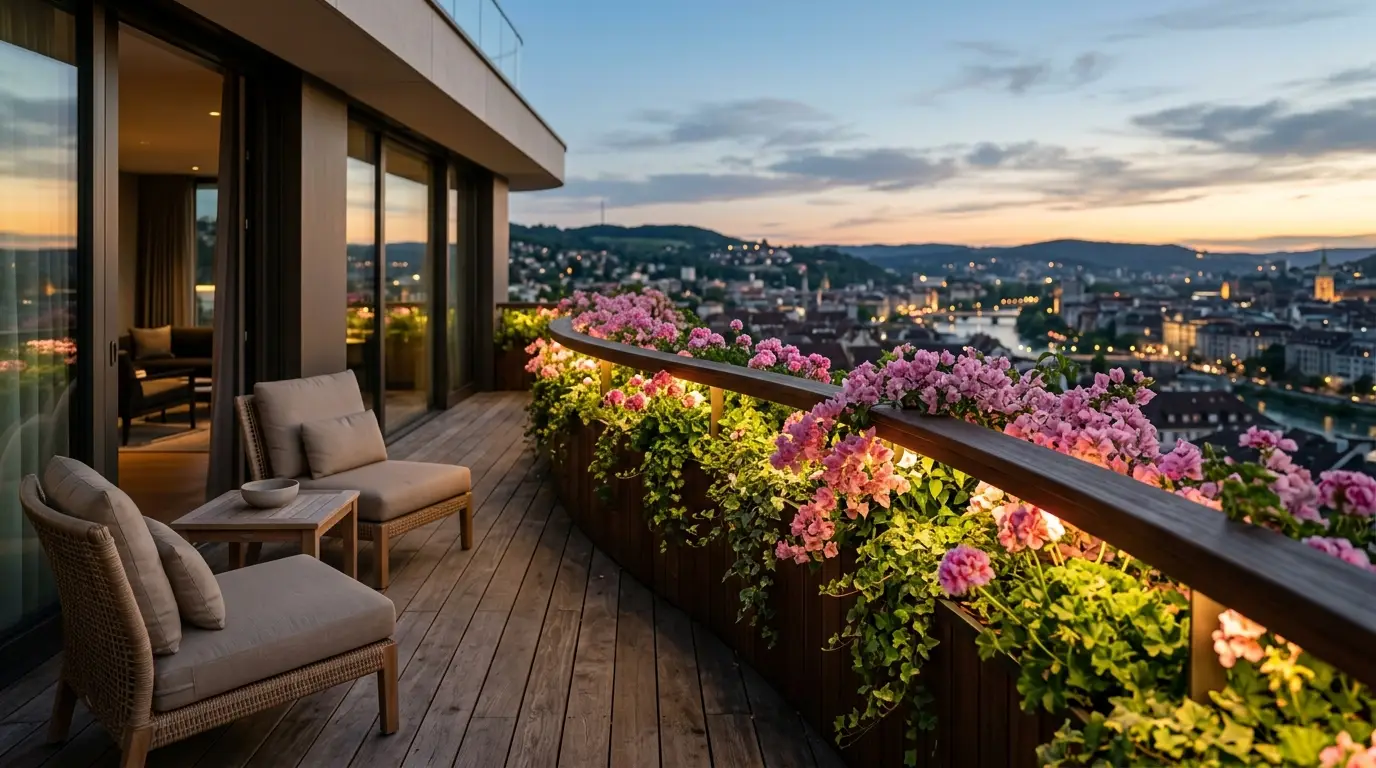
13.1. Integrating Subtle Lighting into Your Railing Boxes
Don’t rely on a harsh, glaring overhead porch light. Instead, tuck small, warm-toned, solar-powered LED uplights directly into the soil of your planter boxes. When the sun sets, these lights will cast a soft, upward glow through the leaves and pink petals, highlighting the texture of the plants and casting beautiful, dancing shadows against your second-story walls.
14. Design 10: Seasonal Transitions for Year-Round Impact
A truly breathtaking exterior looks good in July, but it must also hold its own in October.
14.1. From Spring Blooms to Autumn Foliage
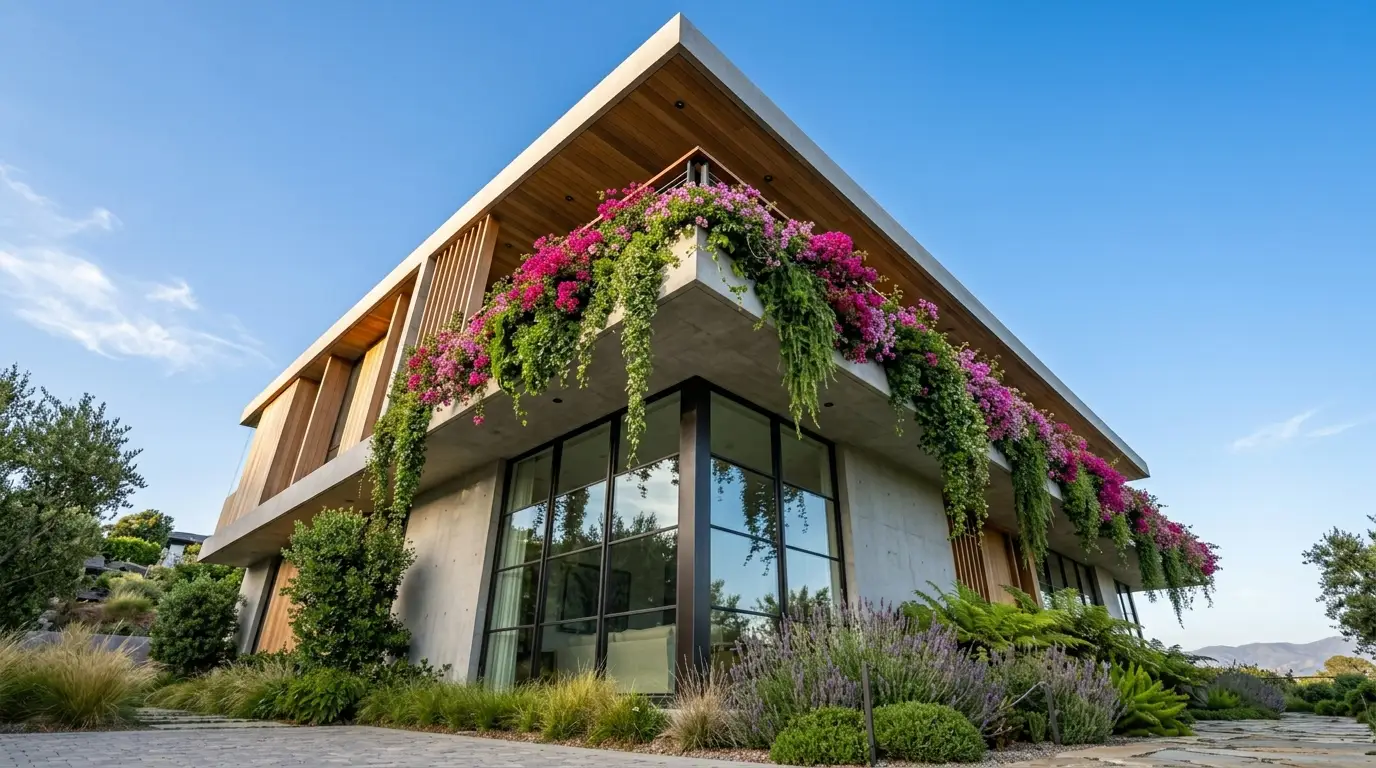
The secret to a flawless balcony is knowing when to swap your plants. As the summer pink petunias fade, replace them with trailing creeping wire vine and vibrant, deep purple ornamental cabbage. Add small gourds or trailing ivy to keep the boxes looking full and intentional even as the weather turns crisp. By treating your balcony boxes as a rotating seasonal gallery, your home’s exterior remains a dynamic, living piece of art all year long.
15. Conclusion: Looking Up and Loving It
Transforming your two-story exterior doesn’t require a wrecking ball or a massive renovation budget. It simply requires a shift in perspective. By acknowledging the power of the second-story balcony and utilizing the core tenets of the Modern Organic Minimalist style, you can completely alter the narrative of your home’s curb appeal.
The contrast of warm brown railings against the explosive, chaotic beauty of cascading pink flowers creates a dynamic tension that makes your facade look thoughtfully designed and deeply inviting. Whether you choose the drama of a petunia waterfall, the airy grace of a floating meadow, or the striking allure of an asymmetrical drip, the goal is the same: to draw the eye upward. Stop letting your balcony be an afterthought. Grab your potting mix, secure those matte planters, and elevate your home to breathtaking new heights.
16. Frequently Asked Questions (FAQs)
Q1: How often do I need to water balcony flower boxes? Because balcony boxes are exposed to wind and have limited soil volume, they dry out much faster than ground-level gardens. During the heat of the summer, you will likely need to water them every single day. For a low-maintenance solution, consider installing a simple micro-drip irrigation line that hooks up to an outdoor faucet on a timer.
Q2: Will the water draining from the planters ruin my siding or the deck below? It can, if you aren’t careful. Always ensure your planters have drainage holes, but position the boxes so the water falls clear of your facade. Alternatively, you can use planters with built-in water reservoirs (self-watering planters) which drastically reduce the amount of excess water dripping down the side of your house.
Q3: Can I leave my fiberglass planters out on the balcony during freezing winters? High-quality fiberglass or resin planters are generally frost-proof and can be left out. However, wet soil expands when it freezes. To prevent the planters from cracking, empty the soil before the first hard freeze, or ensure they are completely covered so they don’t fill with freezing rain and snow.
Q4: What are the best cascading pink flowers for a balcony that gets mostly shade? If your balcony faces north or is heavily shaded by trees, petunias will not thrive. Instead, opt for pink Begonias, Impatiens, or Fuchsias. Fuchsias, in particular, offer a stunning, dramatic trailing flower that absolutely loves shady, cooler conditions.
Q5: Are there any weight limits I should be worried about for a standard balcony? Yes. While standard residential balconies are built to hold the weight of several people, adding dozens of massive, water-logged terracotta pots can strain the structure. This is why using lightweight fiberglass or resin planters, combined with a perlite-heavy potting mix, is critical. If you are unsure about your balcony’s load-bearing capacity, consult a structural engineer.
About the Author