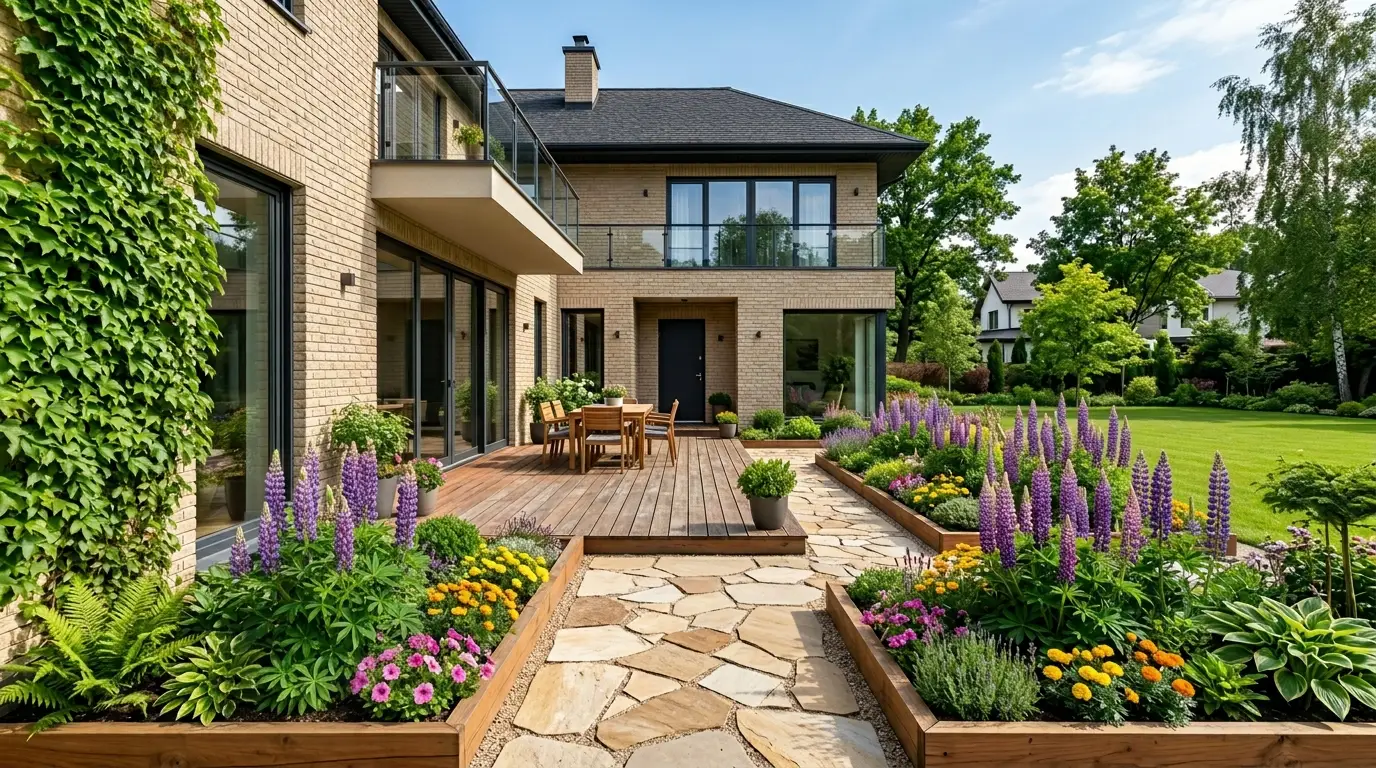
The Soul of the Suburban Sanctuary
Have you ever stepped out onto your backyard deck and felt like you were standing on a wooden island floating in a sea of grass? It’s a common design frustration. We spend thousands on the “perfect” deck and thousands more on the “perfect” garden, only to realize the two aren’t even on speaking terms. They look disconnected, forced, and—honestly—a little bit lonely.
The secret to a high-end, inviting home exterior isn’t about having the biggest deck or the rarest flowers. It’s about the transition. We’re talking about that magical “middle ground” where the rigid architecture of your home shakes hands with the wild, organic energy of your garden. This is the heart of Modern Organic Minimalism. It’s a style that celebrates clean lines and structured geometry but lets nature do the heavy lifting when it comes to color and texture.
By utilizing light beige and brown stone tiles as a bridge, anchoring the space with rectangular flower beds, and letting vertical elements like ivy and balconies play a part, you can turn a disjointed backyard into a cohesive, breathtaking sanctuary. Ready to stop “living on an island” and start living in a masterpiece? Let’s break down the layout secrets that make a two-story home exterior truly sing.
1. The “Floating Island” Problem: Why Decks and Gardens Clash
Let’s be real: most decks look like they were dropped from a crane onto a lawn. The wood ends abruptly, and the grass begins. This creates a hard visual stop that makes the yard feel smaller and the deck feel like an obstacle. To fix this, we need to stop thinking of the deck as a “floor” and start thinking of it as a “level.”
When you treat your outdoor space as a series of interlocking levels rather than separate zones, you create flow. You want your eye to glide from the beige brick of the house, across the wood of the deck, over a stone-tiled path, and into the soft petals of a hydrangea without hitting a “dead zone.” This is where the magic of material blending comes in.
2. Defining Modern Organic Minimalism in the Suburban Landscape
You might hear “minimalism” and think of cold, white boxes. But Modern Organic Minimalism is different. It’s warm. It’s tactile. It’s about using the fewest elements possible to achieve the greatest impact. In our suburban context, this means:
-
Structure: Rectangular beds and stone tiles that provide a “frame.”
-
Organic Content: A lush, colorful array of lupines, marigolds, and ivy that fill that frame with life.
-
Minimalist Palette: Using beige, brown, and wood tones as the foundation so the vibrant flowers can provide the “burst” without overwhelming the senses.
3. The Power of Hardscaping: Anchoring the Deck with Stone Tiles
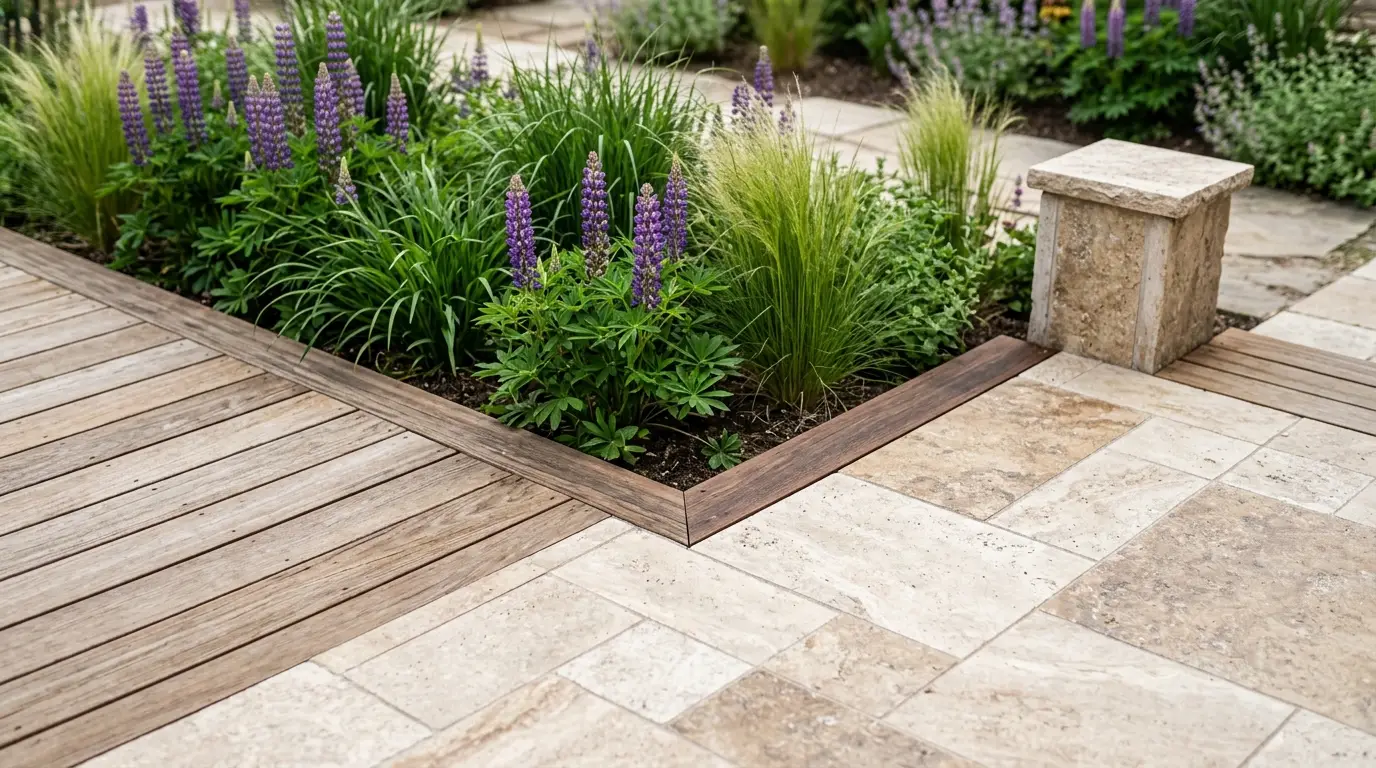
The most effective way to anchor a wooden deck to the earth is to move away from the “wood-to-grass” transition. Instead, we use stone tiles as a transitional “apron.”
3.1. Choosing the Right Palette: Beige and Brown Tones
Why beige and brown? Because they are the ultimate peacekeepers. Beige mirrors the warmth of the brick and the house walls, while brown tones echo the natural wood of the deck. When these colors are mixed in stone tiles, they create a textured surface that feels like a natural extension of the house.
3.2. The Layout Secret: Creating a Material “Interlock”
Don’t just lay the tiles in a straight line. Let them wrap around the corner of the deck. Place a small stone pillar at the corner to act as a visual “weight.” This pillar anchors the deck, making it look like it was built into the landscape rather than on top of it.
4. Geometric Harmony: The Role of Rectangular Flower Beds
In a Modern Organic Minimalist garden, geometry is your best friend. While nature is chaotic, the human eye finds peace in order.
4.1. Forging Clean Lines Against Organic Growth
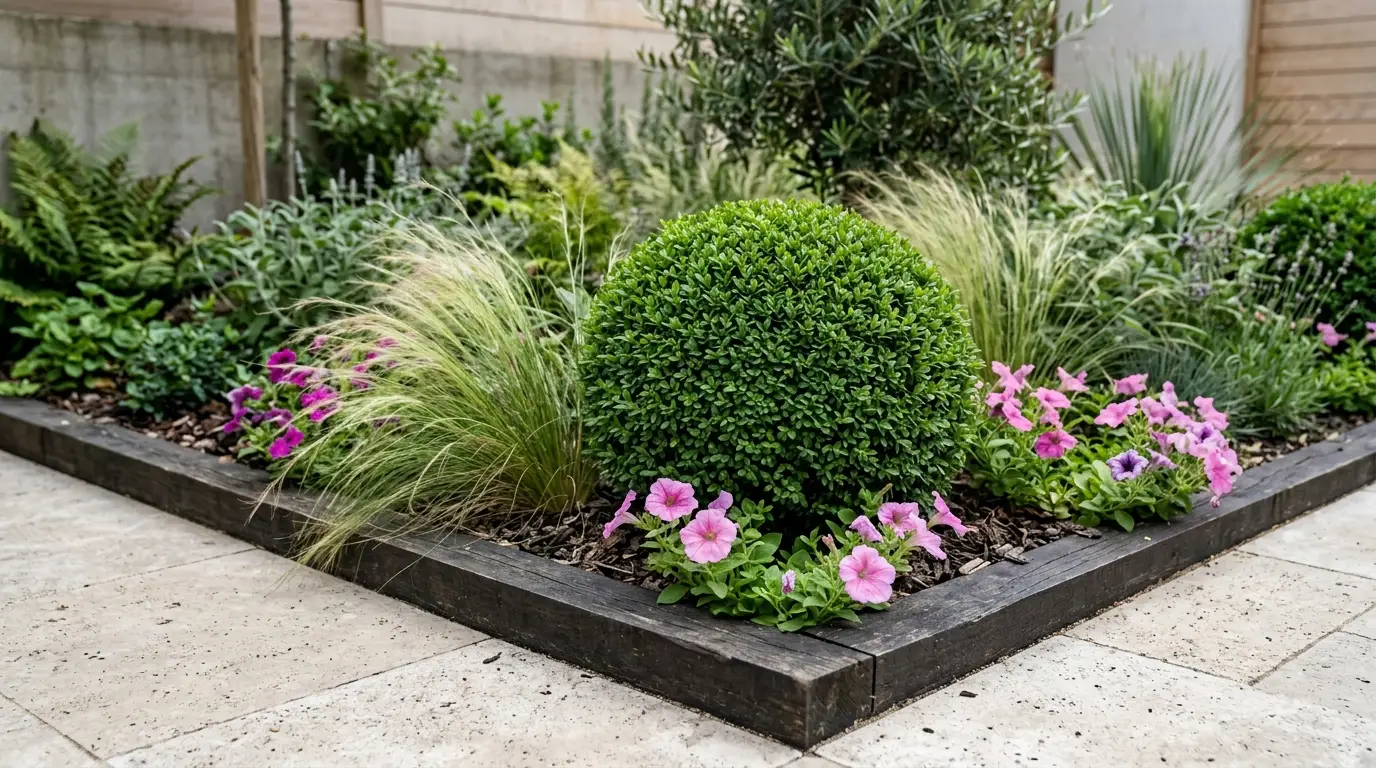
By dividing your garden into rectangular beds, you provide a “housed” feeling for your plants. It turns a “wild” garden into a “designed” garden. This structure allows you to pack in a huge variety of plants—white hydrangeas, purple petunias, yellow marigolds—without it looking like a jungle. The straight wooden edges of the beds mirror the lines of the deck, creating a visual rhythm that ties the whole yard together.
4.2. Structural Edging: Wood and Stone Borders
Using wooden edges for the beds is a pro-move. It repeats the material of the deck further into the garden, pulling the architecture outward. When these beds are placed on the light beige stone tiles, the contrast makes the colors of the flowers vibrate with life.
5. Vertical Integration: Connecting the Two-Story Facade
A common mistake is forgetting that a two-story home has a lot of “vertical real estate.” If your garden is all on the ground, the house feels like it’s looming over it.
5.1. The Role of Climbing Ivy on Beige Brick
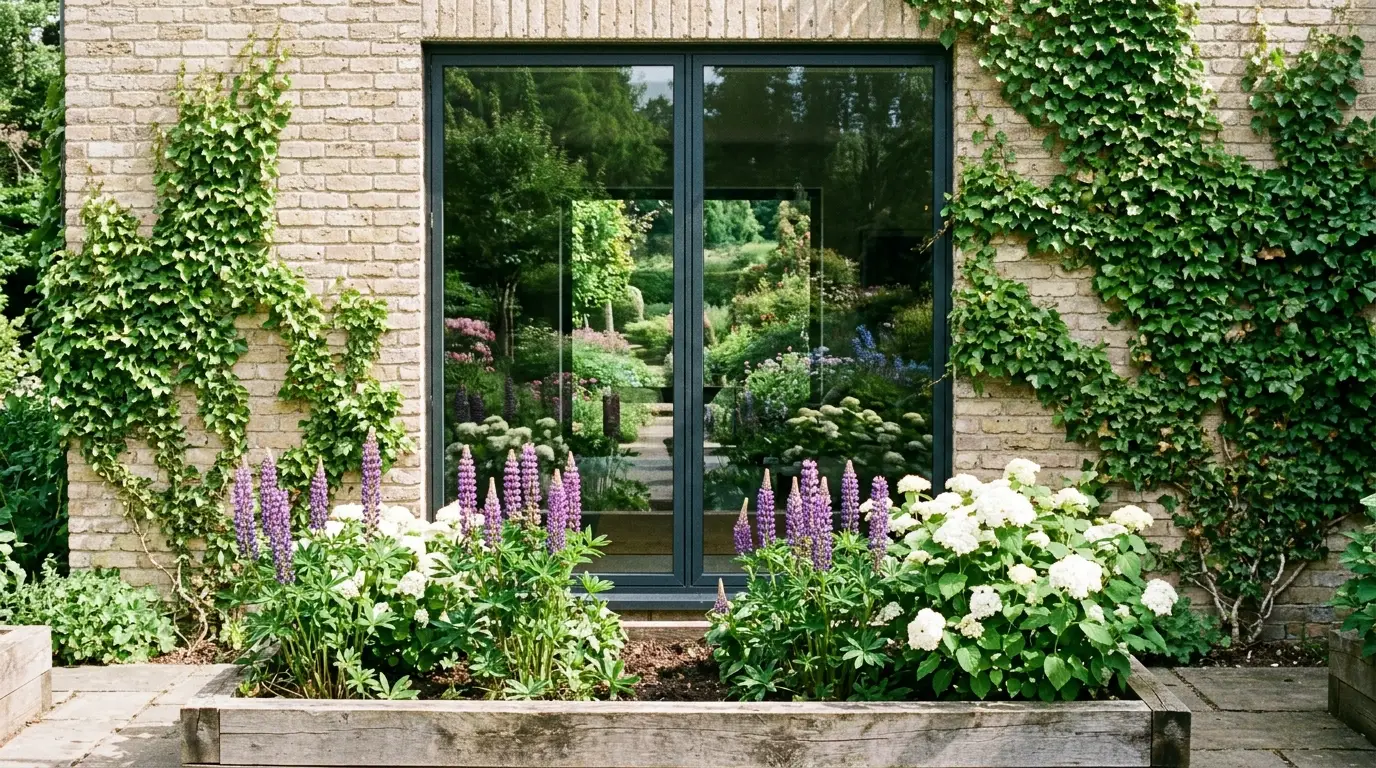
Ivy is the ultimate architectural “glue.” By letting ivy climb the beige brick walls, you are literally pulling the garden up onto the house. It softens the hard corners of the brickwork and adds a layer of “living wallpaper” that changes with the light.
5.2. Balancing Large Windows with Lush Foregrounds
Large windows are a hallmark of modern suburban design, but they can feel exposed. Positioning tall, structural plants like purple lupines or green ornamental grasses in front of these windows creates a “living screen.” From the inside, you see a curated view of the garden; from the outside, the house looks tucked into nature.
6. The Multi-Level Flow: Balconies and Potted Perfection
If you have a balcony, you have a second chance to blend. A balcony shouldn’t be a separate entity; it should be the garden’s “upper deck.”
6.1. Brown Railings and Pink Floral Cascades
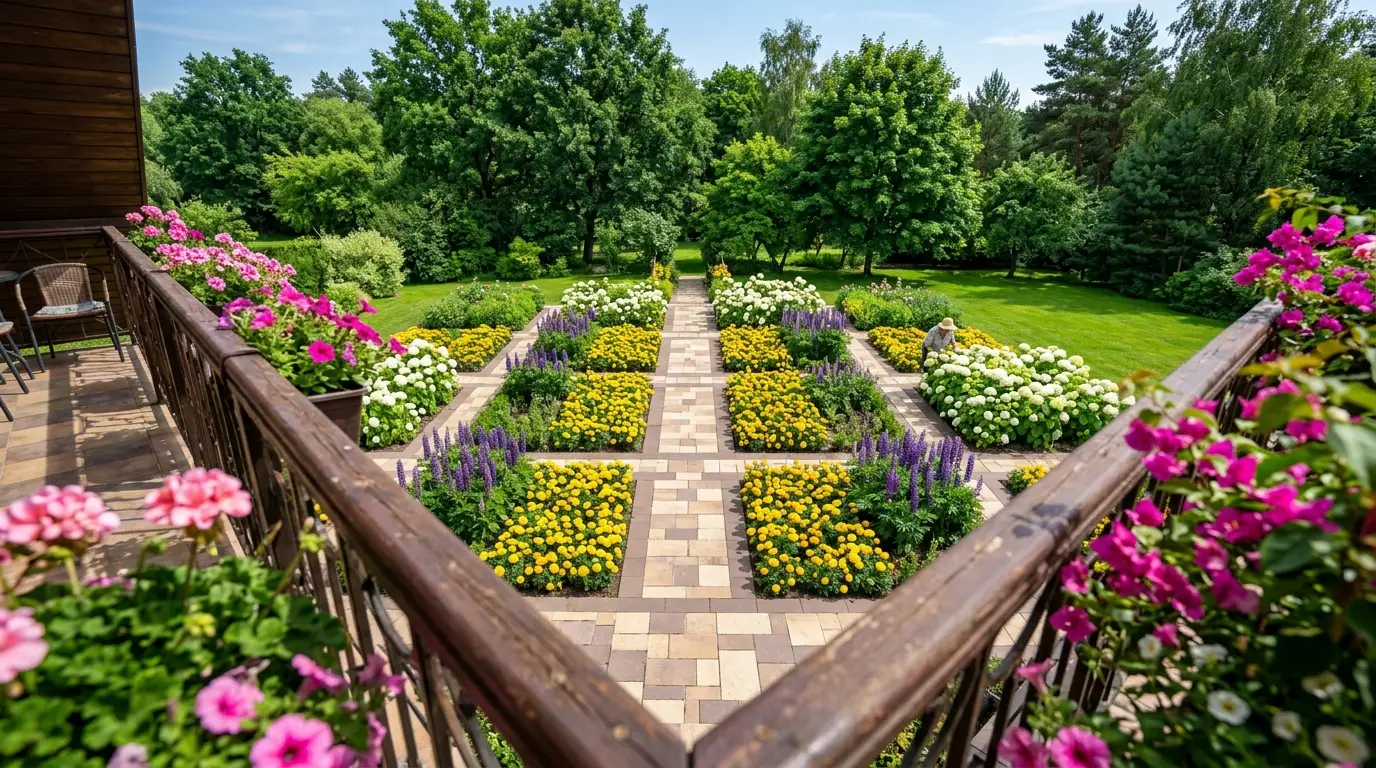
Matching the brown railing of the balcony to the brown tones in your stone tiles and deck creates a vertical “color thread.” By adorning the balcony with potted plants and pink flowers, you create a visual echo. When someone stands in the garden and looks up, they see the same colors and textures repeated, making the two-story home feel like a single, cohesive unit.
7. Curating the Color Palette: A Vibrant Suburban Symphony
While the hardscaping (stone, wood, brick) is neutral, the “Organic” part of the design is where you get to play. The key is to choose colors that complement each other across the spectrum.
7.1. Stately Spires: Incorporating Purple Lupines
Lupines add much-needed verticality to the flower beds. Their cone-shaped blooms act like exclamation points among the lower-mounding flowers. They bridge the gap between the ground-level petunias and the mid-level shrubs.
7.2. Vibrant Fills: Marigolds and Petunias as Texture
Marigolds (yellow) and petunias (pink and purple) provide “carpet” color. They fill in the gaps, ensuring that no soil is visible within your rectangular beds. This “fullness” is what makes the garden feel lush and expensive.
8. Softening the Structure: Ornamental Grasses and Spheres
If every plant is a flower, the garden can feel a bit “busy.” You need “visual rest” plants.
8.1. The Kinetic Energy of Green Ornamental Grasses
Ornamental grasses provide movement. They sway in the breeze, adding a sound and motion that static flowers can’t. They also offer a fine, wispy texture that contrasts beautifully with the hard, flat surfaces of the stone tiles and the brick walls.
8.2. Textured Spheres: Adding Modern Geometry to Nature
Spherical, textured plants (like certain varieties of boxwood or allium) repeat the geometric theme of the rectangular beds but in a softer, 3D way. They act as “punctuation marks” in the garden, guiding the eye from one bed to the next.
9. Architectural Accents: The Stone Pillar and Black Doors
Small details often have the biggest impact on how “intentional” a space feels.
9.1. Anchoring the Corner: The Subtle Strength of Stone
The small stone pillar mentioned in the generation brief is a critical anchor. It provides a vertical element that matches the stone tiles, effectively “pinning” the wooden deck to the ground. It’s a subtle nod to classic masonry that makes the modern deck feel more permanent.
9.2. Modern Contrast: The Bold Black Central Door
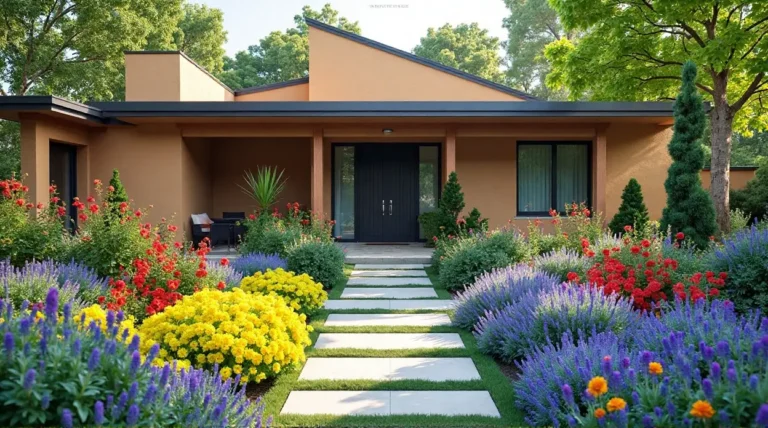
A small black door at the center of the house-to-deck transition provides a much-needed “visual anchor.” Black is the ultimate minimalist color—it draws the eye and provides a sophisticated contrast to the beige walls and colorful flowers. It makes the transition point feel like a portal into a different world.
10. The Background Connection: Lawns, Trees, and Depth
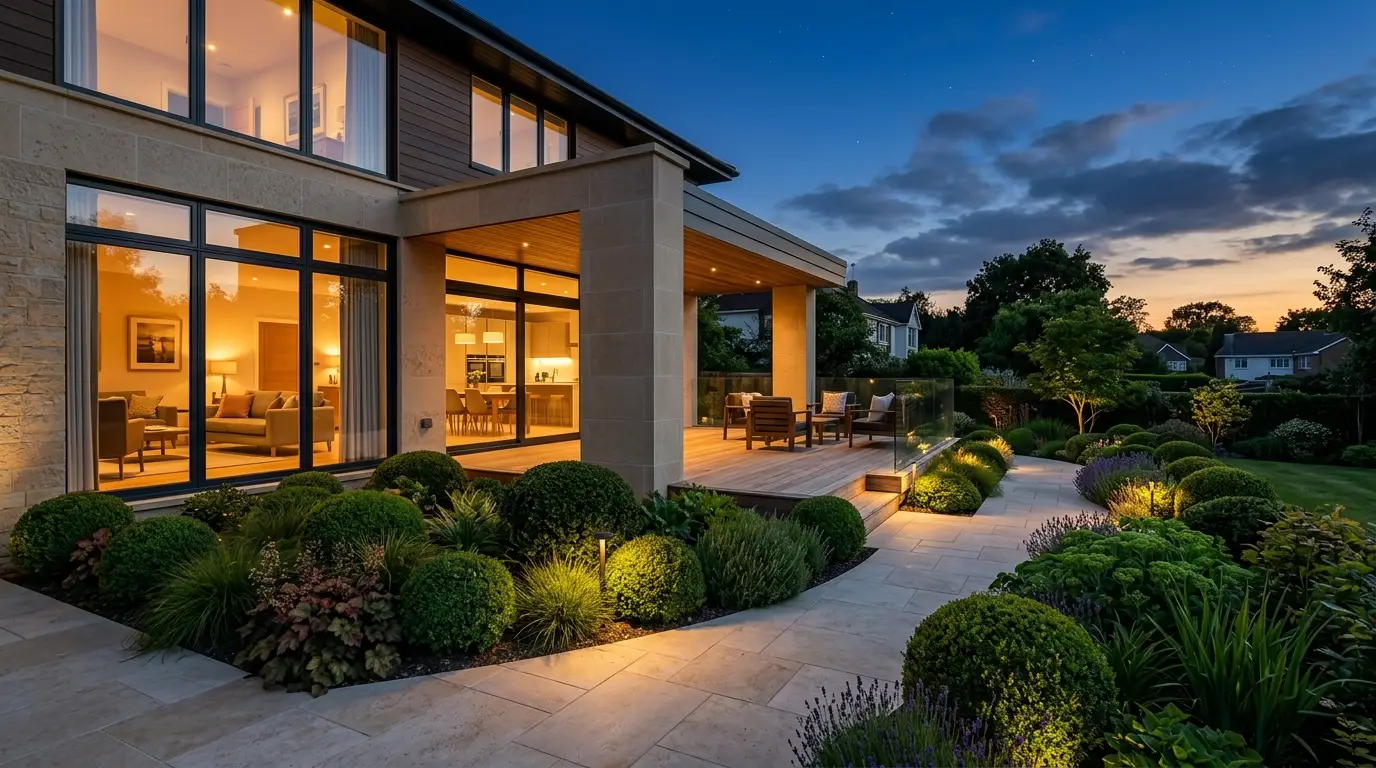
A garden doesn’t stop at the flower beds. The background is the “frame” for your sanctuary. A lush green lawn and mature trees in the distance provide a cool, green backdrop that makes the warm beige and bright colors of the foreground pop. It creates “depth of field,” making your yard feel like an endless estate rather than a suburban plot.
11. Material Honesty: Blending Wood, Brick, and Stone
The key to the “Modern Organic” look is Material Honesty. This means letting wood look like wood and stone look like stone. Don’t try to over-paint or hide these textures. The beauty comes from the grain of the deck, the rough texture of the beige brick, and the cool, flat surface of the tiles. When you let these natural elements speak, the garden feels authentic.
12. Planning for Seasons: Ensuring Year-Round Sanctuary Status
A garden shouldn’t just be a summer fling.
-
Spring: Focus on the ivy and early bulbs.
-
Summer: The height of the marigolds, petunias, and lupines.
-
Autumn: The ornamental grasses turn golden, matching the brown stone tiles.
-
Winter: The structure of the rectangular beds and the stone pillar provide architectural interest even under a blanket of snow.
13. Lighting the Transition: Making the Sanctuary Glow
To truly make this a sanctuary, you need to think about the “Blue Hour.” Low-voltage LED path lights tucked into the ornamental grasses can highlight the texture of the stone tiles at night. Up-lighting the ivy on the brick wall makes the house feel like it’s glowing from within.
14. DIY vs. Professional Installation: Navigating the Hardscape
While planting marigolds is a fun weekend project, laying stone tiles and building wooden deck extensions requires precision. If you’re a DIYer, focus on the “softscaping” (the flowers and ivy). For the “hardscaping” (the stone pillar and tile layout), consider a professional to ensure that water drains away from your beige brick house properly.
15. Maintenance: Preserving the Modern Organic Aesthetic
A minimalist garden only works if it’s well-maintained.
-
Trim the ivy: Don’t let it cover the windows or get into the roofline.
-
Deadhead the flowers: Keep the petunias and marigolds blooming by removing old growth.
-
Seal the deck: Keep that wood looking rich and brown to match the tiles.
Conclusion: Your Cohesive Suburban Sanctuary
Creating a flawless transition between a wooden deck and a vibrant garden isn’t about luck—it’s about layout. By using the light beige and brown stone tiles as your material bridge, you remove the “floating island” effect. By organizing your floral favorites like lupines and marigolds into structured rectangular beds, you give the eye a path to follow.
Remember, your home exterior is the first thing the world sees, but more importantly, it’s the first thing you see when you come home. It should be a place where the architecture of the house and the energy of the garden exist in perfect harmony. With a little planning and a focus on textured materials, your two-story suburban home won’t just be a place to live—it will be a cohesive, inviting sanctuary.
FAQs: Mastering the Deck-to-Garden Transition
1. What is the best stone for the “beige and brown” tile look? Natural sandstone or limestone are excellent choices. They offer a matte, organic texture that isn’t too slippery when wet and naturally features those warm beige and earthy brown tones that complement wooden decks.
2. How do I prevent weeds from growing between my stone tiles? When laying your tiles, use a high-quality polymeric sand in the joints. This sand hardens when wet, creating a barrier that prevents weeds from taking root while still allowing for slight natural movement in the ground.
3. Will ivy damage my brick walls? Climbing ivy like Boston Ivy uses small suction cups rather than invasive roots, making it generally safe for sound brick. However, you should avoid “English Ivy” on old or crumbling mortar, as its roots can penetrate and widen cracks.
4. How wide should my transition tiles be? Ideally, your stone “apron” should be at least 3 to 4 feet wide. This provides enough space for two people to walk comfortably and creates a significant enough visual break between the wood and the lawn.
5. Can I use rectangular beds in a small yard? Absolutely! In fact, rectangular beds are better for small yards because they maximize space. Their clean lines prevent the yard from looking cluttered and make the available green space feel more deliberate and expansive.
About the Author