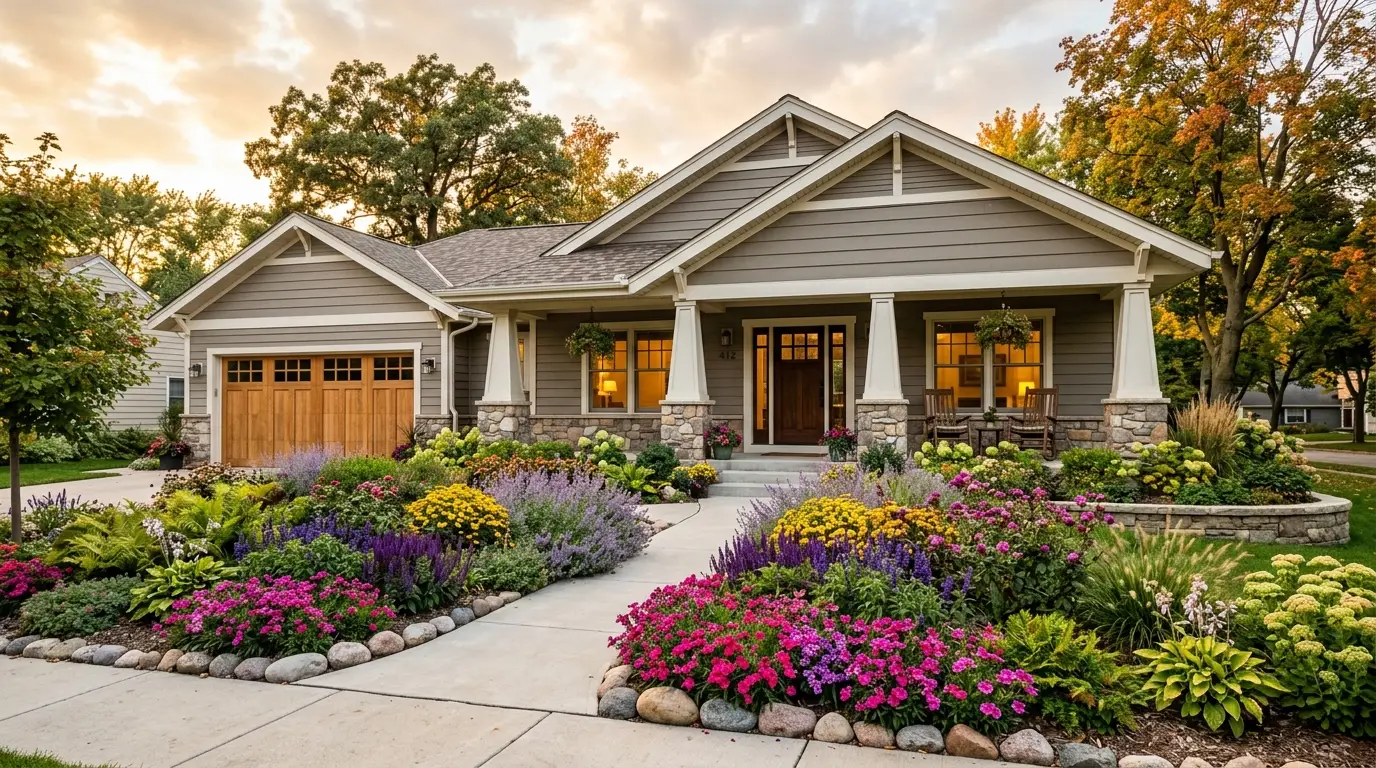
Have you ever looked at the corner of your yard—that awkward 90-degree intersection where the fence meets the house or the driveway meets the lawn—and just felt… uninspired? You’re not alone. Corners are the “problem children” of landscaping. They often become catch-alls for stray weeds or forgotten garden gnomes. But what if I told you that the corner is actually the most strategic spot in your entire landscape?
In the world of Craftsman architecture, corners aren’t just edges; they are opportunities for organic embrace. Think of a corner flower bed as the punctuation mark at the end of a beautiful sentence. It defines the space, provides a sense of enclosure, and—when done right—makes your home feel like it grew naturally out of the earth rather than being dropped onto it. Today, we’re digging deep into the “dense tapestry” approach. I’m talking about a profusion of color, the warmth of the golden hour, and the structural integrity of stone and timber. Ready to turn that “dead zone” into a masterpiece? Let’s get our hands dirty.
1. Why the Corner Bed is Your Yard’s Most Powerful Asset
Most people treat a corner like an ending. But in design, a corner is an anchor. It’s the visual weight that holds the rest of your yard in place.
1.1. Turning “Dead Space” into a Vibrant Anchor
When you leave a corner empty, the eye just slides off the property. It feels unfinished. By installing a dense, tiered flower bed, you create a destination. You’re telling the viewer, “Look here, there’s a story in this curve.” A well-designed corner bed can actually make a small yard feel much larger by creating layers of depth. It’s like a well-placed mirror in a room, but instead of glass, we’re using salvia and river stones.
1.2. The Craftsman Philosophy: Harmony Between Timber and Petals
Craftsman style is all about the “honesty” of materials. We love the grain of the wood, the texture of the stone, and the vibrant, unpretentious beauty of perennials. A corner bed shouldn’t fight the house; it should echo it. If you have tapered columns or stone wainscoting, your garden should pull those colors and textures forward. It’s a handshake between the man-made and the biological.
2. Defining the Visual Style: The “Dense Tapestry” Approach
We’re moving away from the “spaced-out bushes in mulch” look. That’s too suburban-catalogue. We want a garden that feels like a masterpiece.
2.1. Layering for Maximum Impact
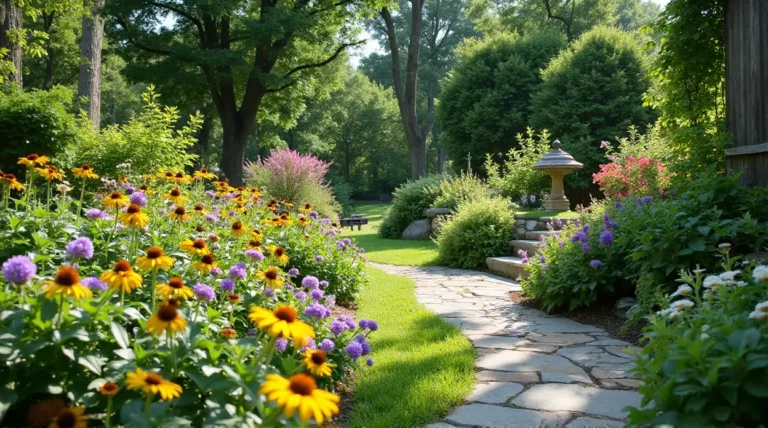
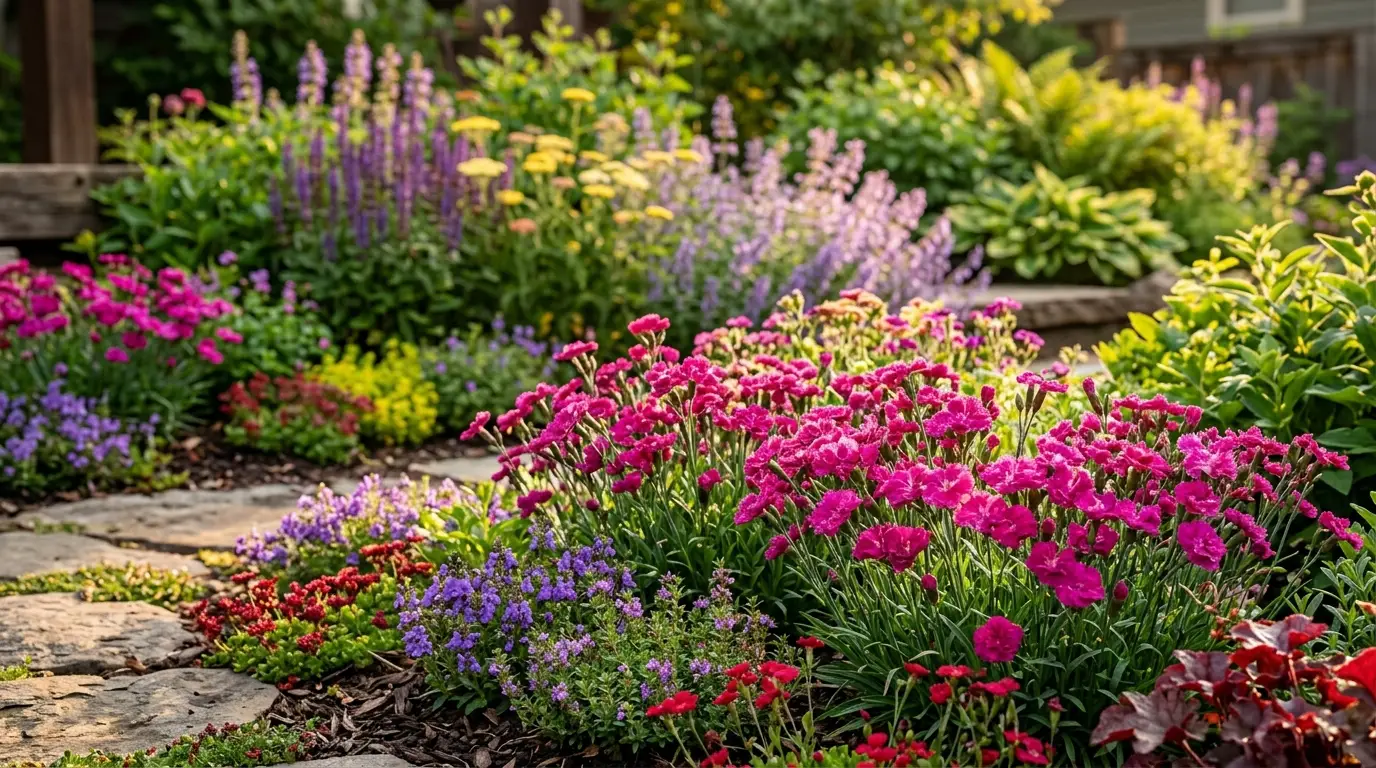
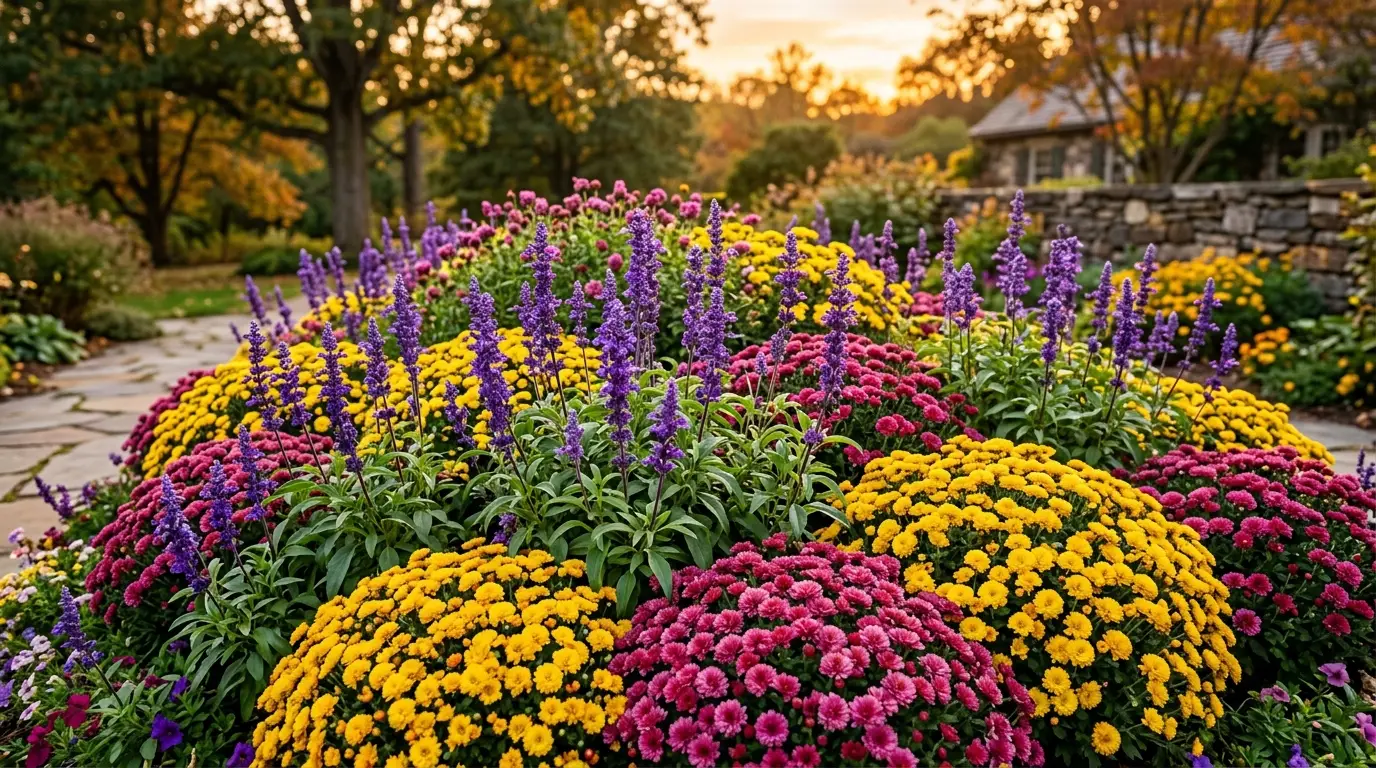
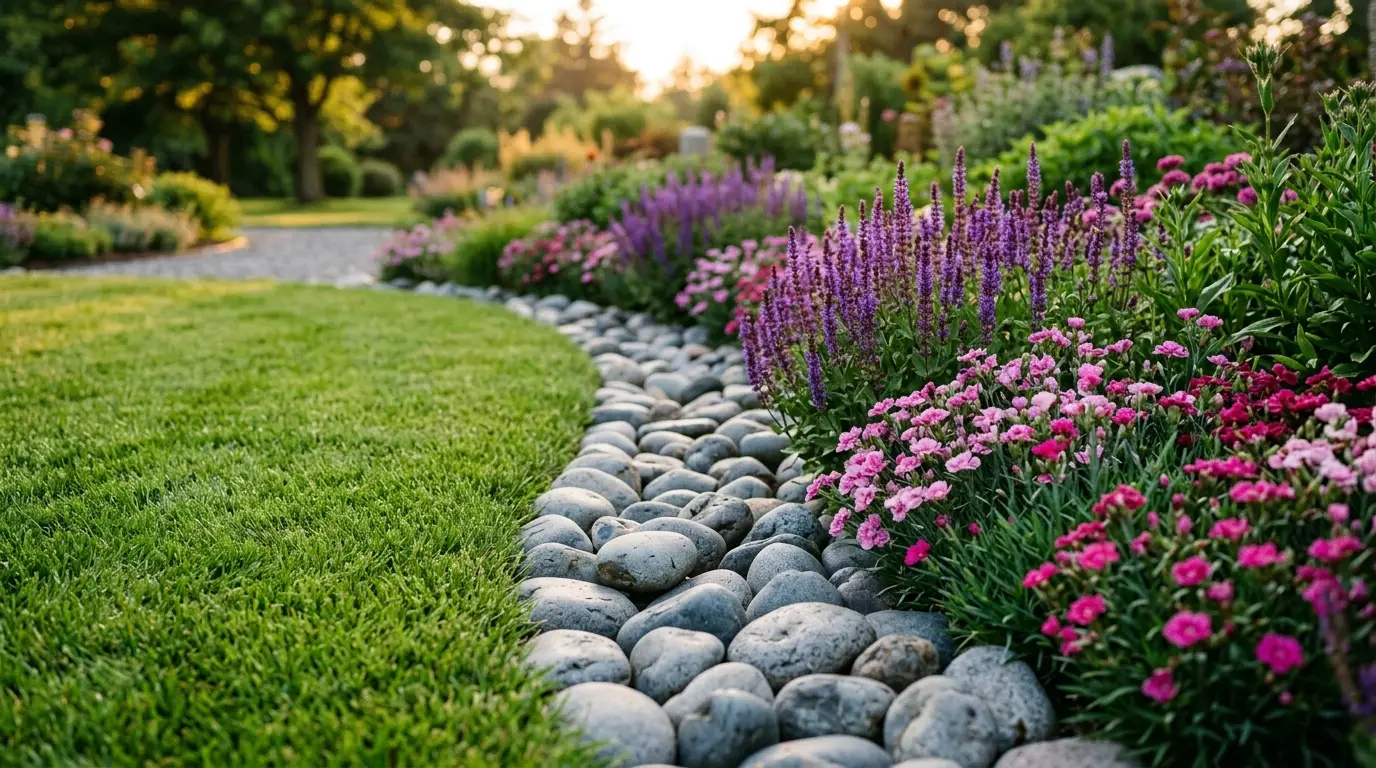
The secret to a corner bed that looks “massive” and lush is layering. We start with the low-lying “carpet” in the front—those vibrant magenta dianthus and creeping purple flowers that spill over the edges. Then, we build upward. We add the mid-height “mounders” like salvia and chrysanthemums, and finally, the structural background plants. It’s about creating a solid wall of color where not an inch of bare dirt is visible.
3. The Bones of the Design: Hardscaping Your Corners
Before we talk about the “soft” stuff, we have to talk about the “hard” stuff. Hardscaping is the skeleton of your garden.
3.1. Curving Walkways: The Path of Least Resistance
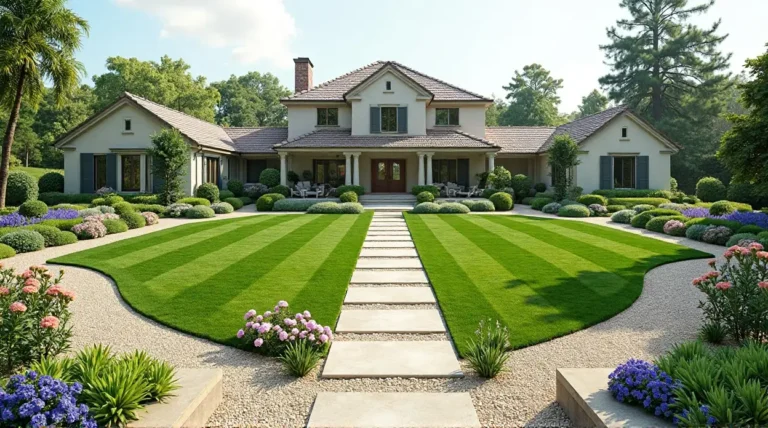
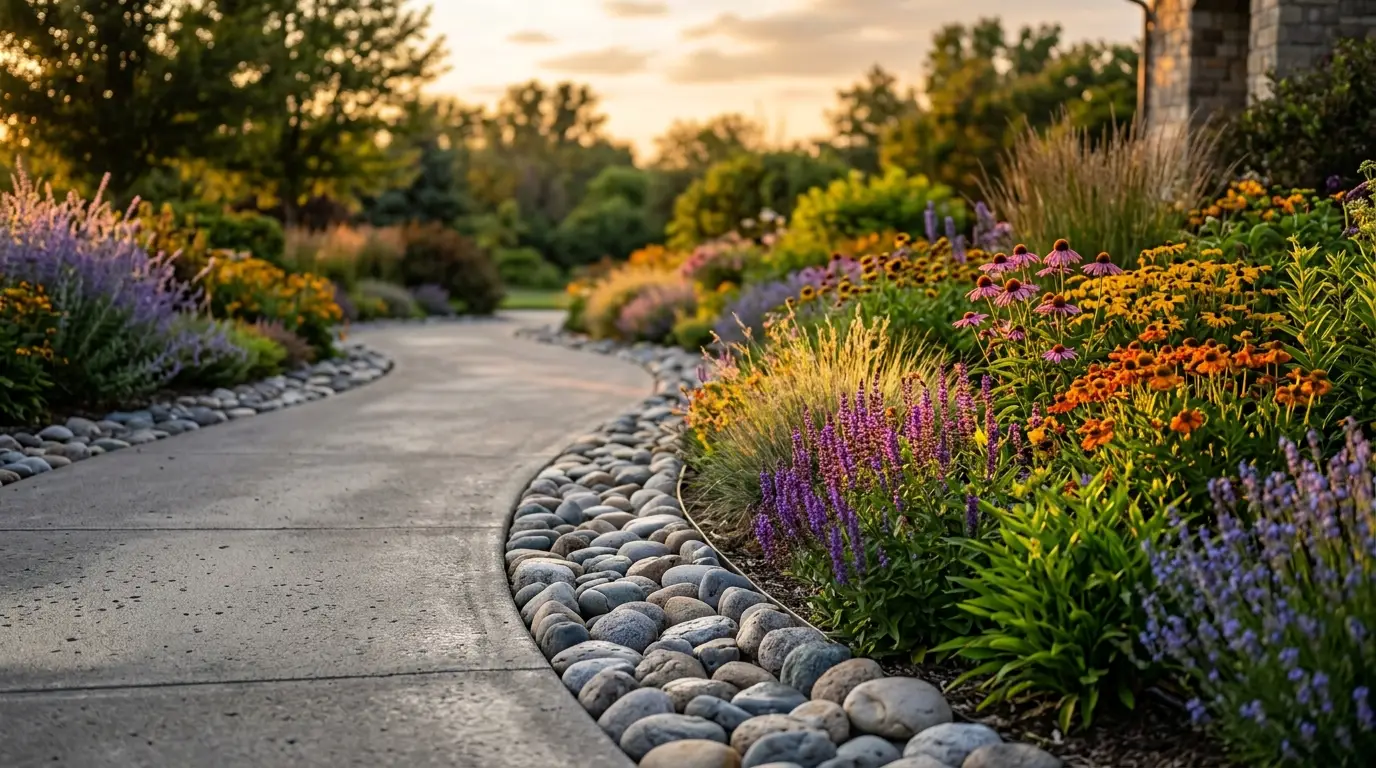
Straight lines are for sidewalks; curves are for gardens. A curving concrete walkway creates a sense of mystery. It forces you to slow down and notice the plants. By lining that walkway with smooth river stones, you create a crisp transition between the “civilized” path and the “wild” garden. It’s clean, it’s organized, and it’s undeniably Craftsman.
4. Architectural Integration: Framing the Craftsman Facade
Your garden shouldn’t just sit in front of your house; it should be part of it.
4.1. Tapered Columns and Stone Wainscoting as Garden Backdrops
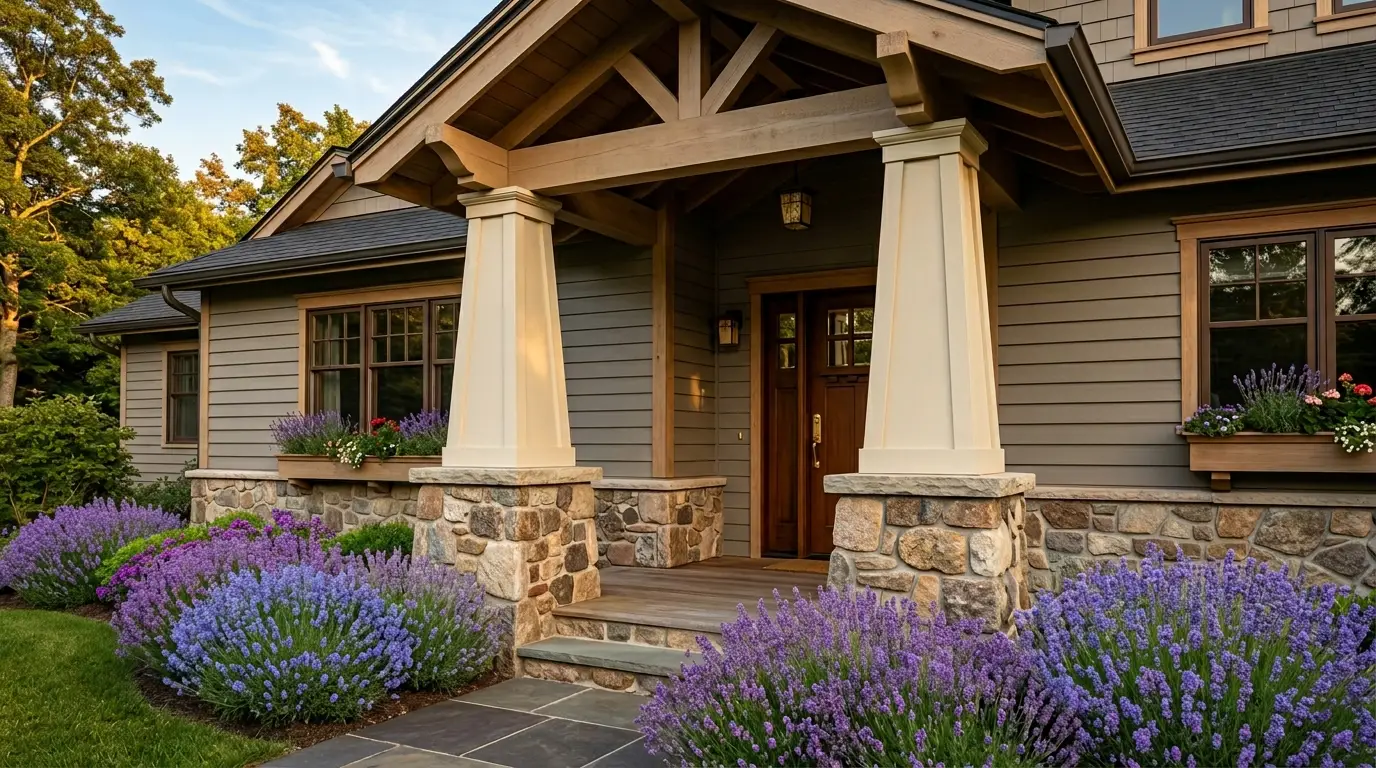
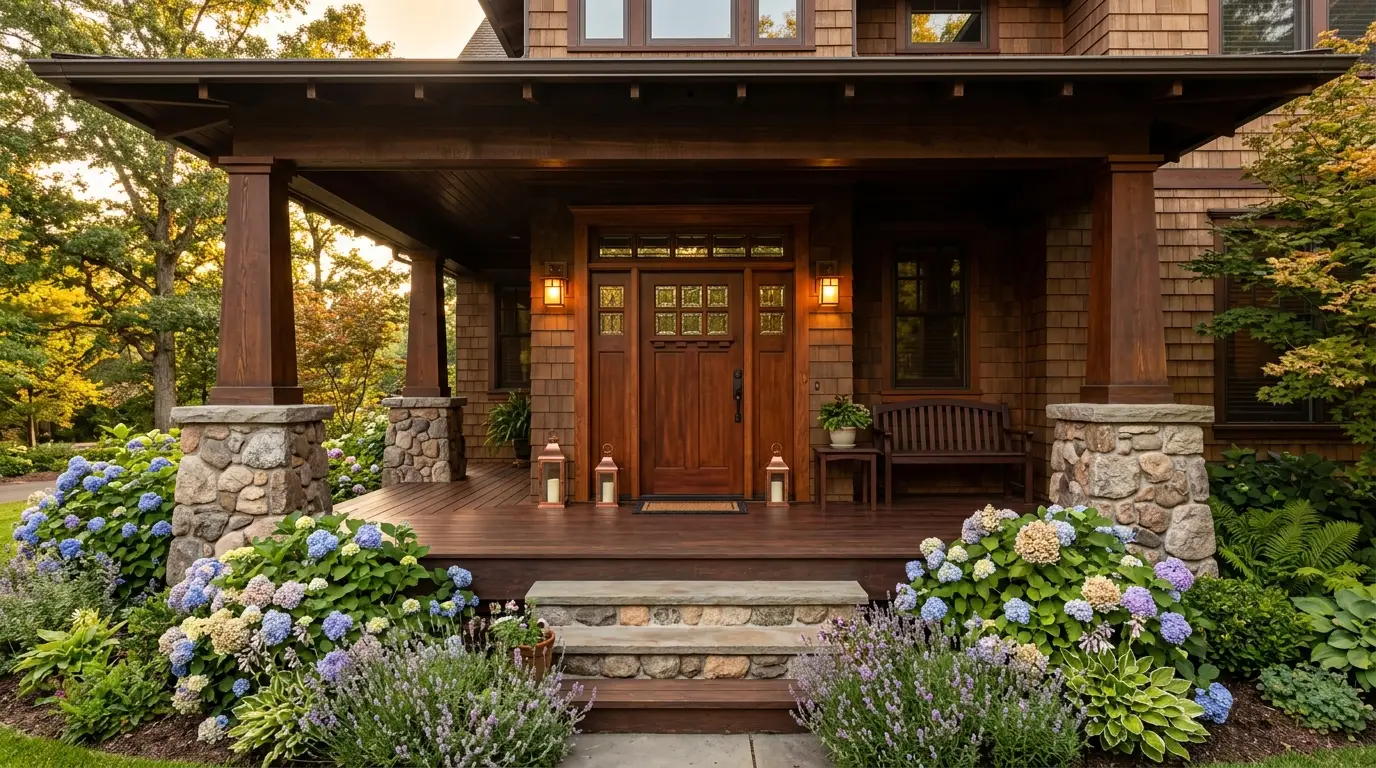
Those prominent tapered columns are a gift. They provide vertical rhythm. When you plant lower-lying shrubs and hydrangeas around the stone bases of these columns, you soften the transition between the ground and the porch. The natural stone of the house should feel like it’s just another part of the garden’s geology.
5. Mastering Color Palettes in Tight Spaces
In a corner bed, you don’t have a lot of real estate, so every color needs to pull its weight.
5.1. The Interplay of Magenta, Purple, and Gold
Think of color like a symphony. Magenta is the high note—it catches the eye immediately. Purple salvia acts as the steady rhythm, providing a cool background that makes everything else pop. And then, the gold—the yellow and orange chrysanthemums—bring in the warmth of the sun. Together, they create a palette that feels energetic yet balanced. It’s not just a garden; it’s an emotional experience.
6. Playing with Texture: Spikes, Mounds, and Clouds
Color gets the attention, but texture gets the respect. If all your plants have the same leaf shape, your garden will look like a blob.
6.1. Using Ornamental Grasses for Kinetic Energy
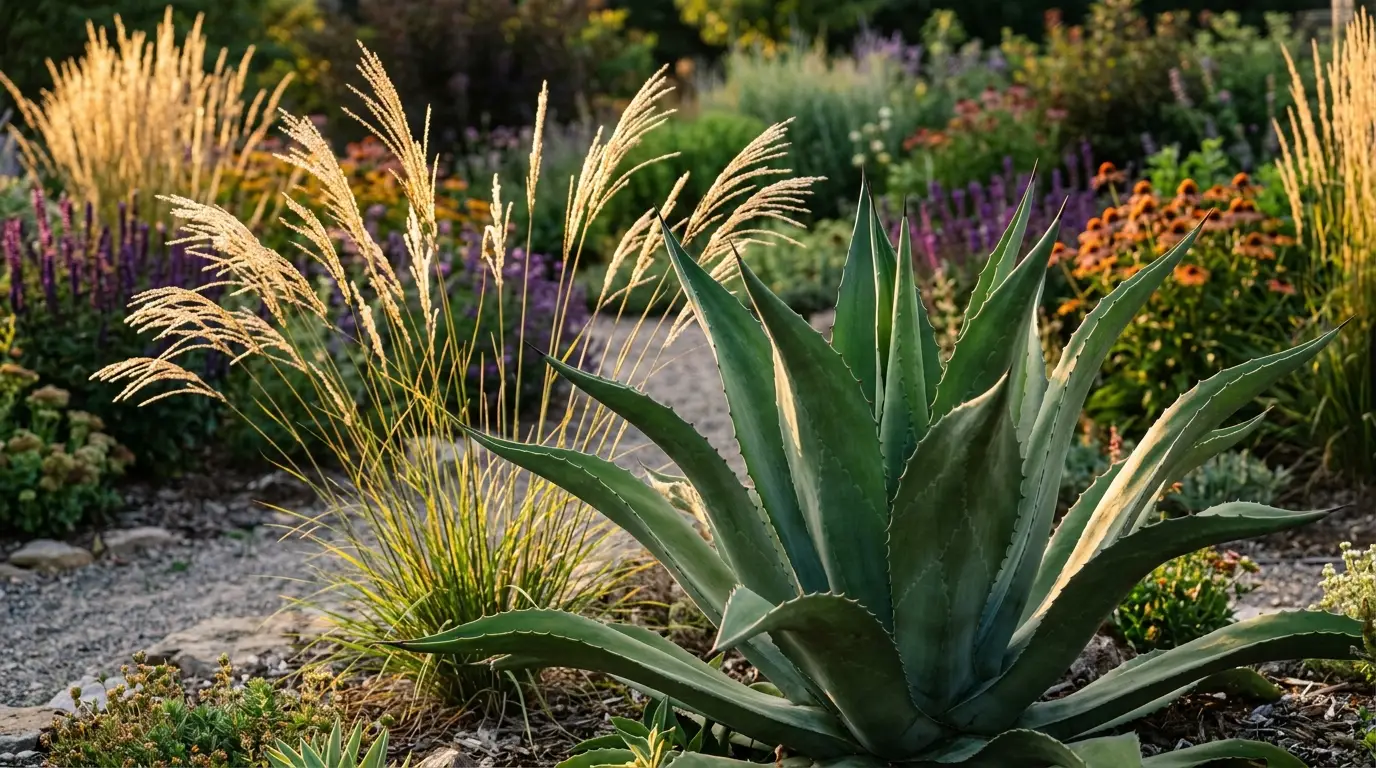
Ornamental grasses are the “secret sauce” of corner beds. They provide movement. Even a slight breeze makes them dance, adding a kinetic energy that static shrubs can’t match. When you pair the arching, spiky leaves of a yucca or bromeliad-type plant with the wispy clouds of ornamental grass, you create a visual contrast that is pure designer-grade.
7. The Power of the Canopy: Integrating Mature Trees
If you’re lucky enough to have a massive mature tree in your yard, don’t ignore it. Build your corner bed around it.
7.1. Shadow Play and Scale
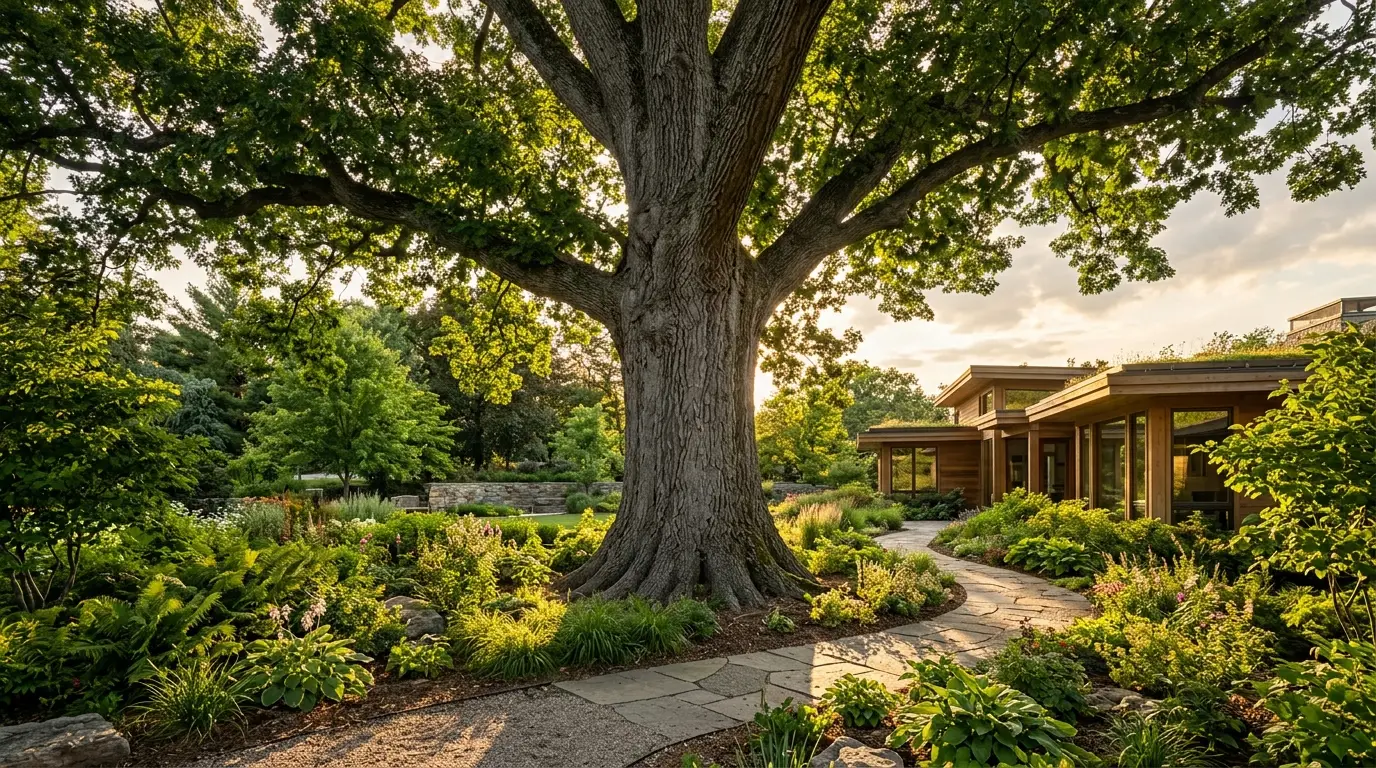
A mature tree with rough, grey bark provides a sense of history. It anchors the left-hand side of the property and creates shifting patterns of light and shadow throughout the day. The canopy acts as a ceiling for your outdoor “room.” By curving your walkway around the base of the tree and lining the shade with hostas or hydrangeas, you’re embracing the natural geometry of the site.
8. Structural Plants for Year-Round Interest
Flowers are great for a few months, but what about the rest of the year? That’s where structural plants come in.
8.1. Pyramidal Conifers and Boxwood Mounds
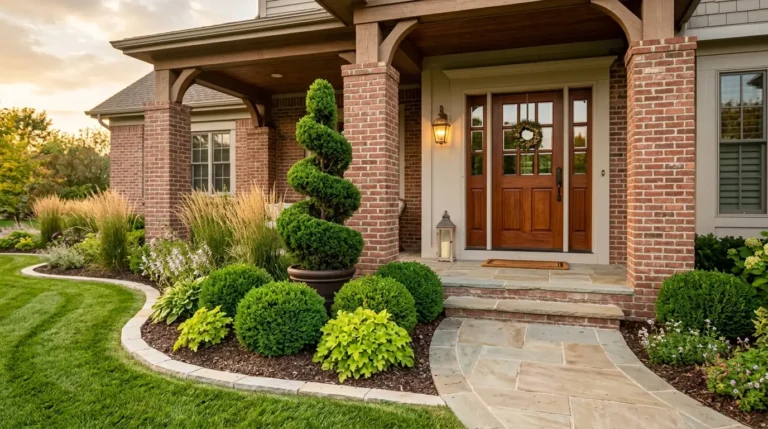
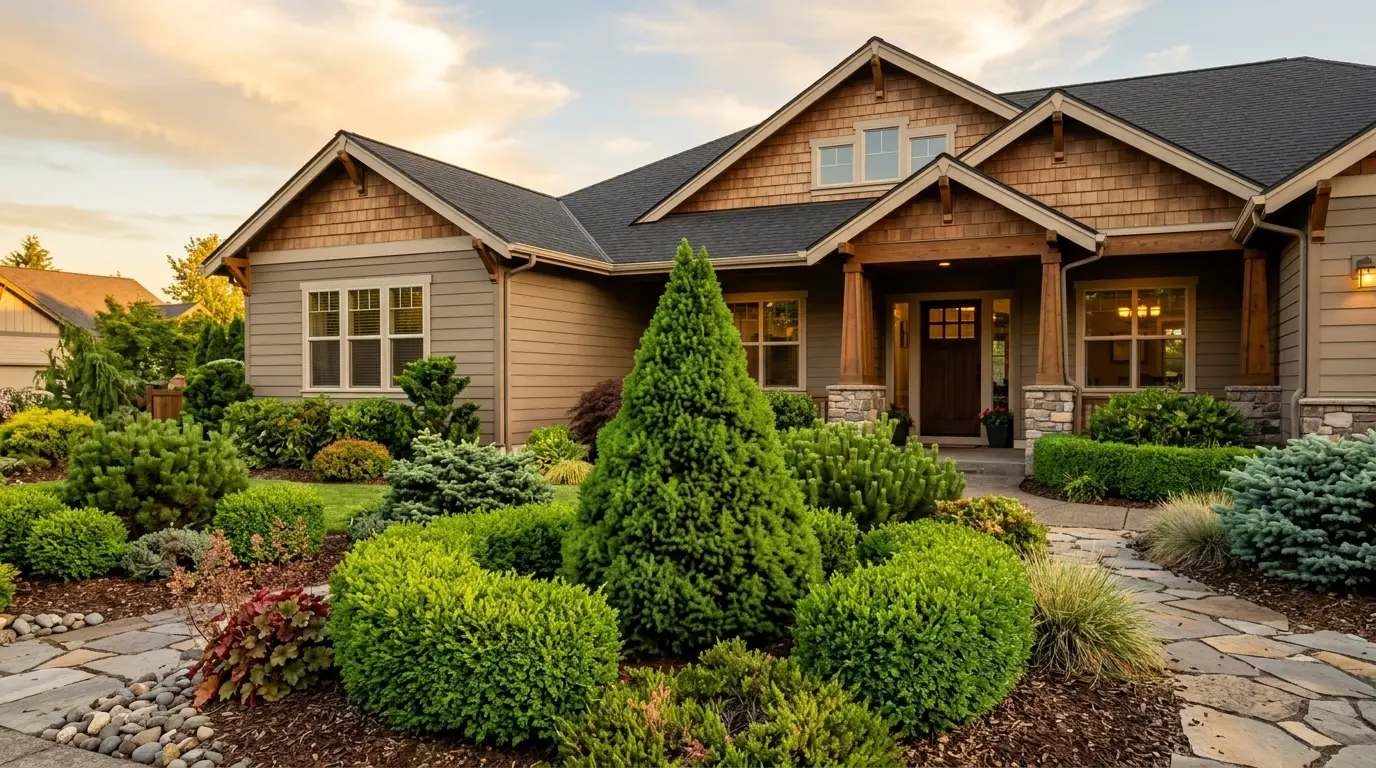
Structural plants are like the furniture in your garden. A distinctly pyramidal conifer provides a vertical point that doesn’t disappear when the frost hits. Mounding boxwoods provide a “permanent green” that holds the garden’s shape even when the salvia has gone dormant. These are the anchors of your corner bed.
9. Creating a Sense of Entrance: Porch and Doorway Framing
Your garden should guide the visitor to your door. It’s a visual “welcome” mat.
9.1. Setback Entrances and Soft Transitions
A setback craftsman entrance is naturally inviting. By using hydrangeas and lavender to flank the porch, you create a soft transition from the yard to the home. The warm-toned wood door is a beacon, and the garden is the path that leads you there. It’s about creating an atmosphere of safety and beauty.
10. The Garage Side Garden: Softening the Driveway Edge
Garages are often the “forgotten” side of the house. But in a dense tapestry design, no space is left behind.
10.1. Lantern Lighting and Wood Textures
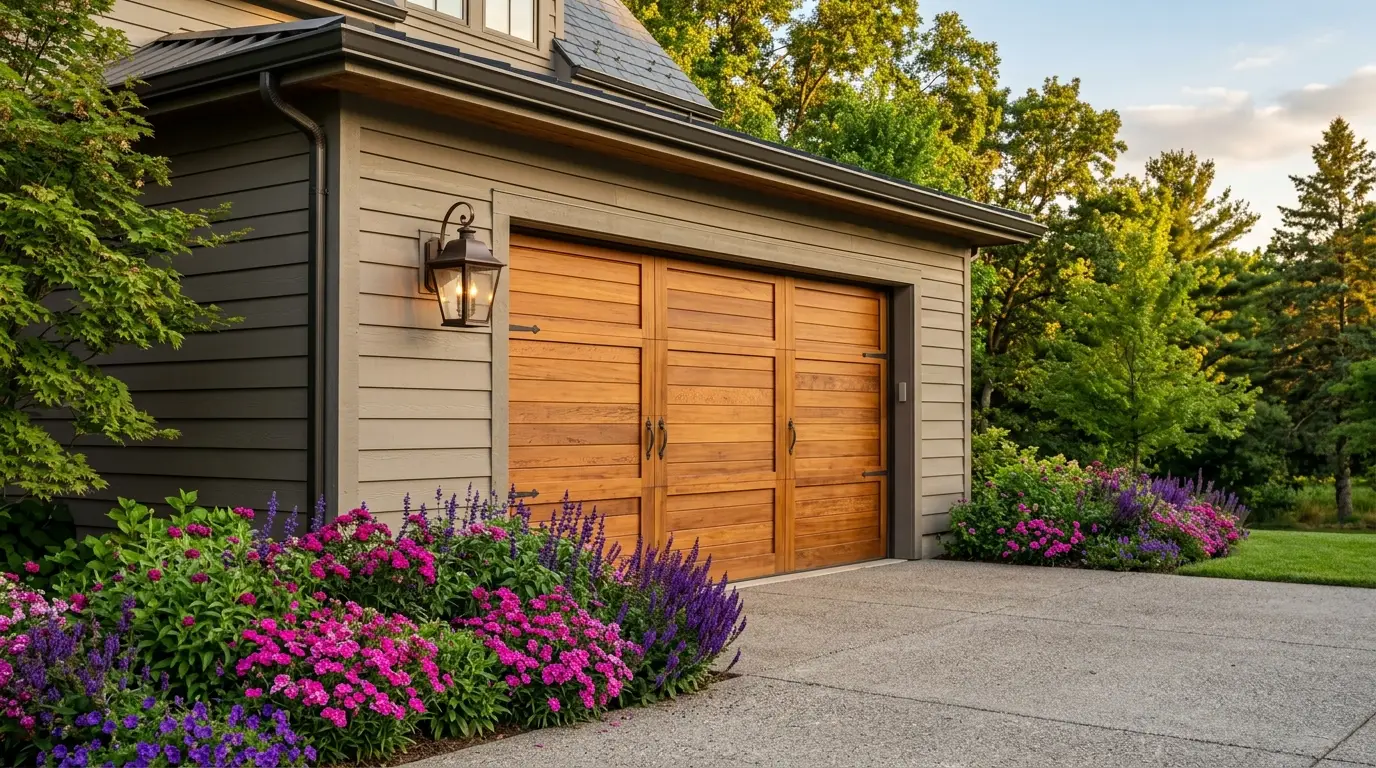
A natural wood-paneled garage door is a design statement on its own. By placing a small, classic wall lantern fixture and a border of colorful perennials next to it, you turn the “utilitarian” driveway into part of the garden experience. The light from the lantern at dusk creates a secondary “golden hour” for your plants.
11. Creating Privacy: Fences as Green Gallery Walls
A fence shouldn’t just be a barrier; it should be a backdrop.
11.1. Using Dark Wood Fencing to Pop Flower Colors
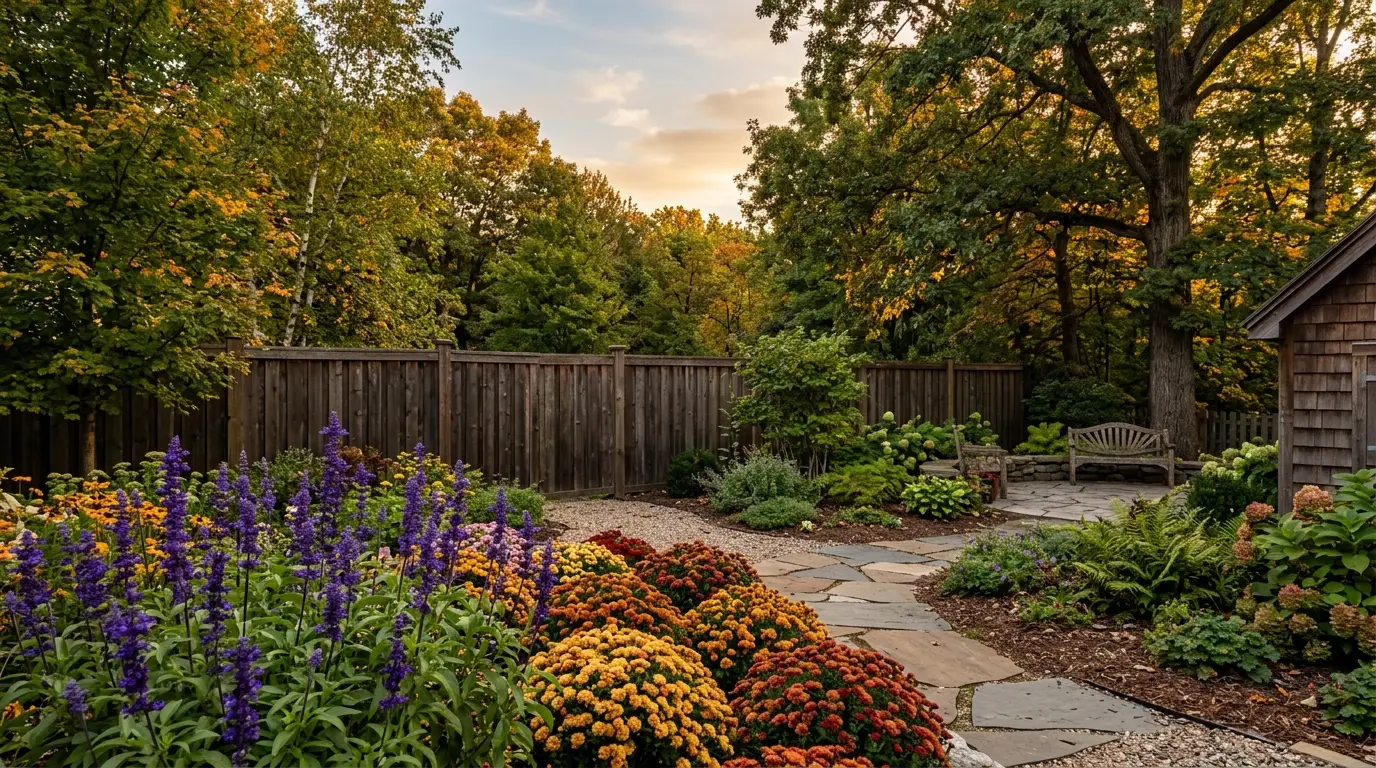
When you use a dark wooden privacy fence, it acts as a negative space that makes your flower colors vibrate. Magenta, yellow, and orange look ten times brighter against a dark, warm-toned wood. By framing the background with other large, mature trees, you create a “secret garden” feel—a private suburban sanctuary.
12. Seasonal Shifts: From Summer Roses to Autumn Mounds
A good garden design is a four-season theater. You want something blooming as long as possible.
12.1. Red Roses and Lavender: The Midsummer Dream
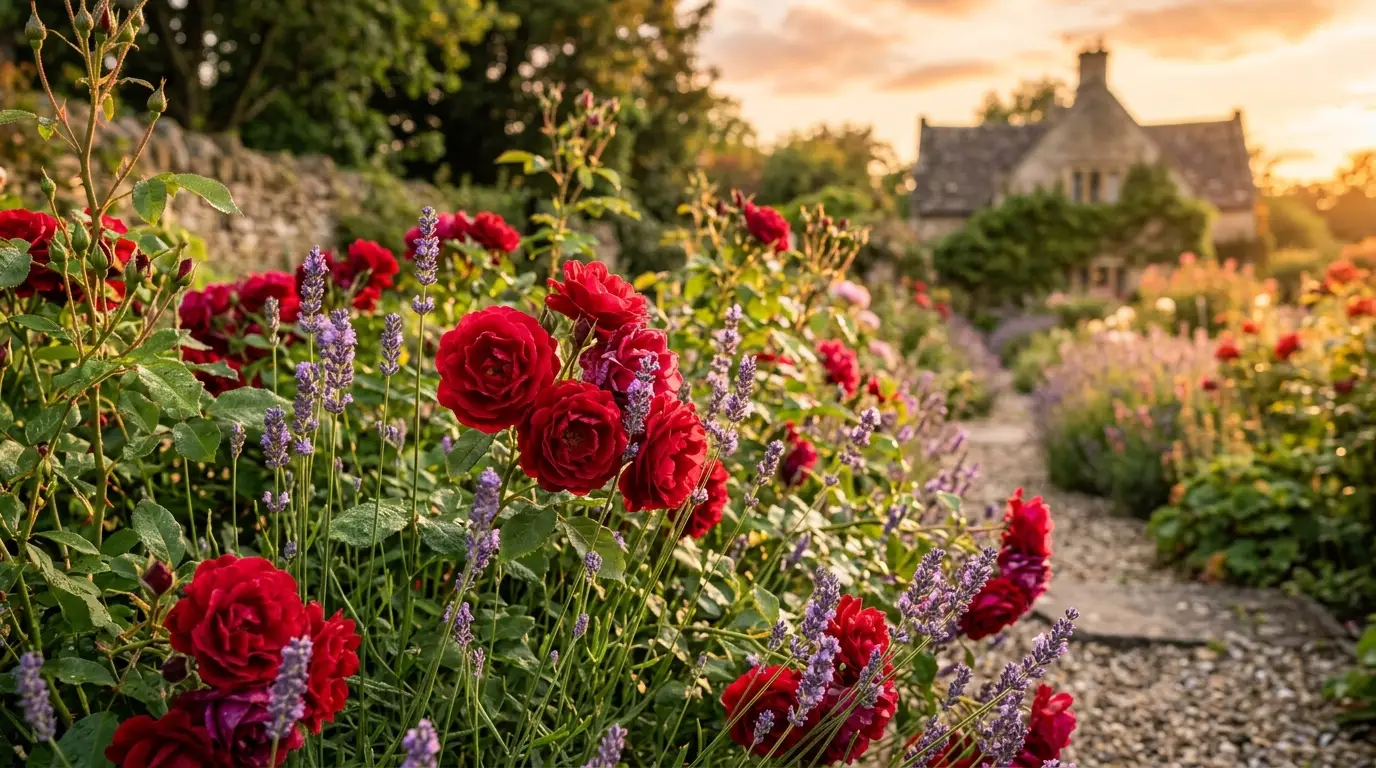
Red roses and lavender are a classic combination for a reason. They offer scent, color, and a traditional charm that fits perfectly with the Craftsman aesthetic. In the heat of summer, they provide a focal point, while the chrysanthemums wait in the wings for their autumn debut.
13. Window Framing: The View from the Inside Out
Don’t just design your garden for the neighbors; design it for yourself.
13.1. White Sashes and Multi-Pane Perspectives
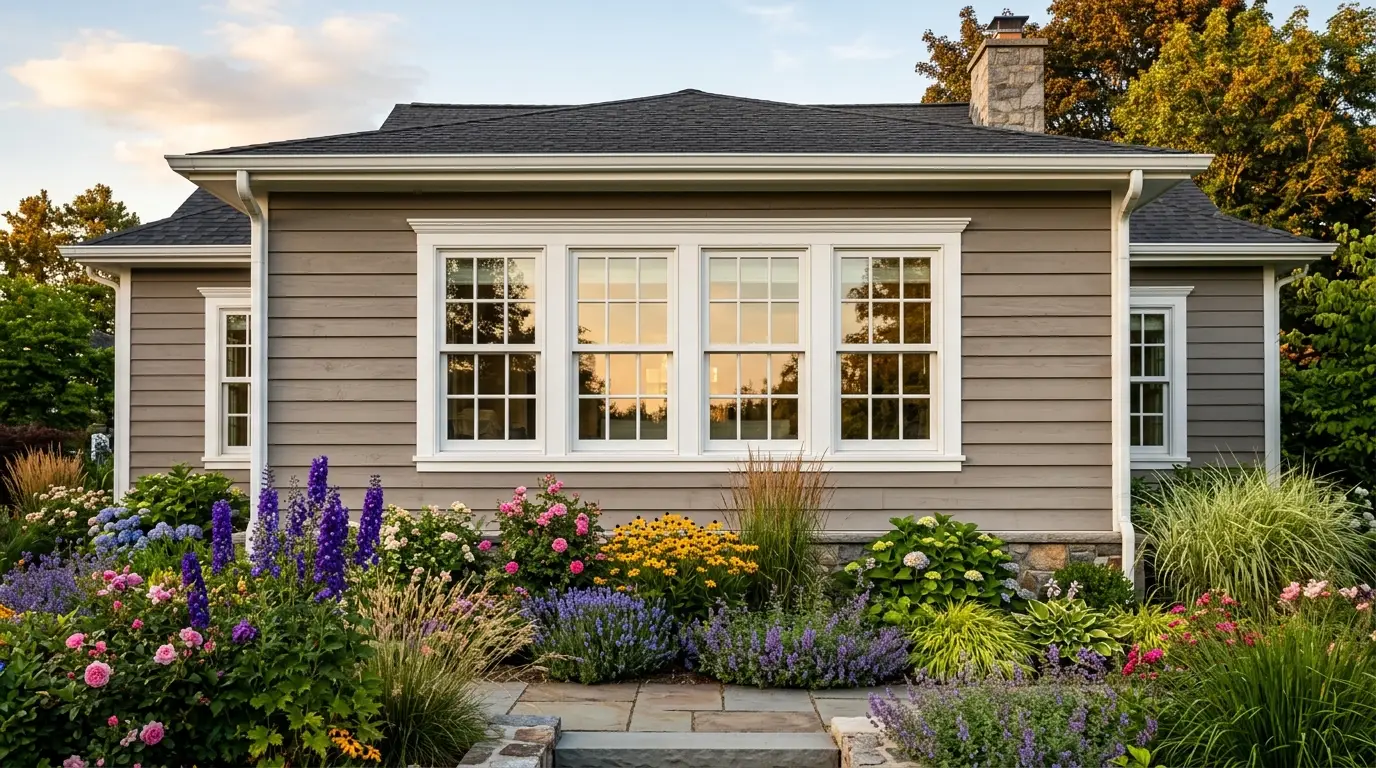
Those white-trimmed windows with multi-paned sashes are the perfect frames for your garden. When you’re sitting inside the house, looking out, your corner flower bed should look like a painting. By planting taller ornamental grasses or shrubs near the windows, you create a living screen that provides privacy without blocking the light.
14. Maintenance and Immaculate Care: The Finished Look
The difference between a “good” garden and an “immaculate” garden is the attention to detail.
14.1. Keeping the Lawn Manicured and the Stones Clean
An immaculate garden requires a sharp edge. A well-manicured green lawn provides the negative space that allows the flower profusion to breathe. The river stones should be clean and clearly defined. This level of care is what gives a Craftsman home its undeniable charm—it’s not just about the plants; it’s about the stewardship.
15. Conclusion: Bringing the Craftsman Charm Home
Transforming a corner into a dense, colorful tapestry isn’t just about planting flowers; it’s about building a relationship with your home. It’s about noticing how the golden light hits your taupe siding and choosing plants that sing in that glow. It’s about the curve of a walkway and the texture of a stone.
When you take the time to layer your dianthus, your salvia, and your structural conifers, you’re creating more than a garden. You’re creating a sanctuary. You’re taking an awkward angle and turning it into an anchor. So, the next time you look at that “dead zone” in your yard, don’t see an ending. See a beginning. Grab some river stones, find some vibrant magenta dianthus, and let the Craftsman charm take over. Your yard—and your house—will thank you.
Frequently Asked Questions (FAQs)
Q1: How do I choose the right “anchor” tree for a corner bed? Look for trees with interesting bark texture (like grey birch or mature oaks) and a canopy that won’t overwhelm your house. The goal is scale—you want the tree to feel like it’s protecting the house, not eating it.
Q2: Are river stones better than mulch for corner beds? For the Craftsman style, river stones provide a more permanent, architectural “edge.” While you still need organic mulch inside the beds for plant health, the stone border provides a clean, sharply focused line that stays put and looks immaculate year-round.
Q3: How do I maintain color in a corner bed during the winter? This is where structural evergreens (boxwood mounds and pyramidal conifers) come into play. They hold the garden’s shape and provide greenery even when the perennials have died back.
Q4: What if my corner is in deep shade? Trade the salvia and chrysanthemums for shade-lovers like hostas, ferns, and hydrangeas. You can still maintain the “dense tapestry” look with different shades of green and white-flowering shade plants.
Q5: How wide should my corner flower bed be? A good rule of thumb is the “Thirds Rule.” Your flower bed should extend out about one-third the distance of the surrounding yard area to feel balanced and substantial rather than “dinky.”
About the Author