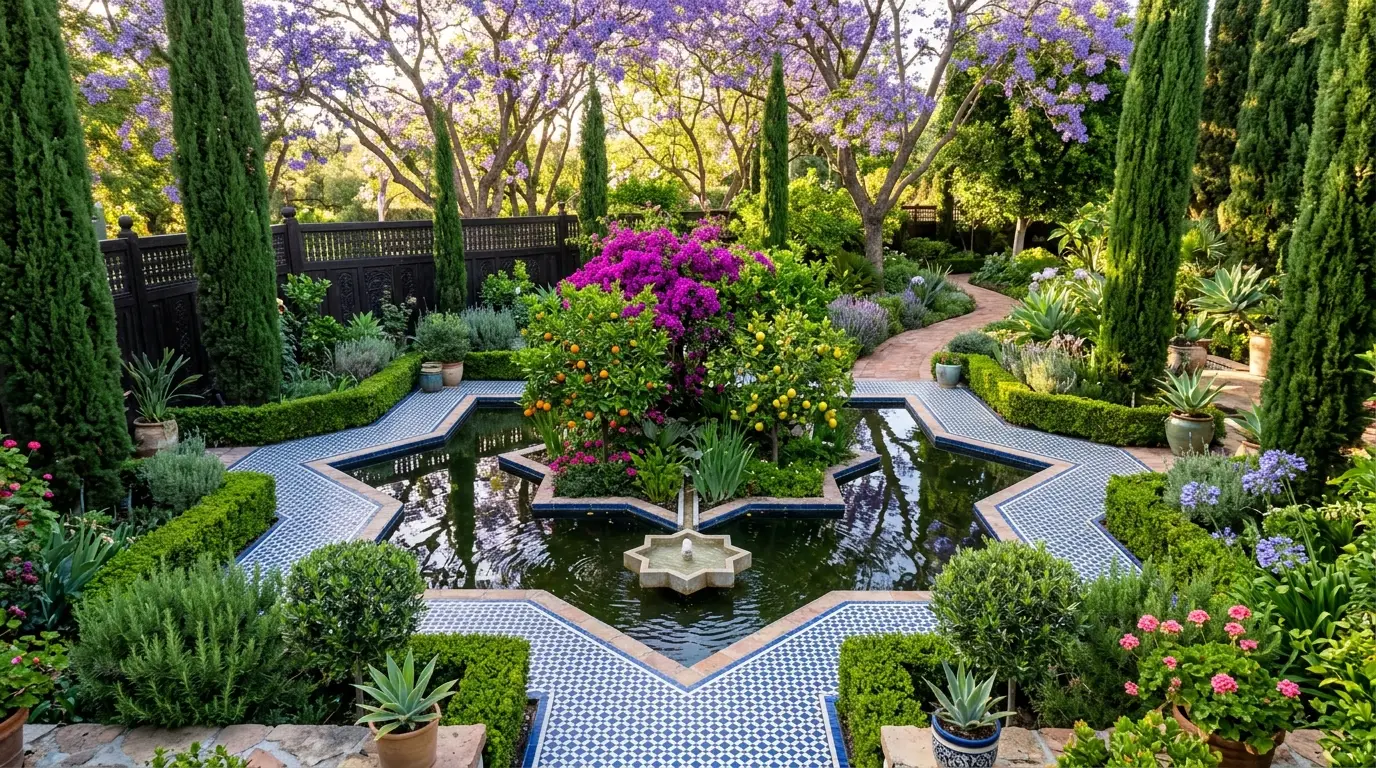
Creating a private retreat right outside your back door is the ultimate goal of modern homeownership, and backyard landscape design ideas are shifting toward a desire for profound serenity and rich, cultural aesthetics. The Andalusian courtyard aesthetic is exploding in popularity because it perfectly marries the lush, vibrant energy of Mediterranean planting with highly structured, geometric hardscaping. By integrating the warm glow of midday sunlight filtering through purple jacaranda canopies, colorful mosaic tile pathways, and the soothing sounds of star-shaped water features, this style transforms any mundane yard into an exotic, inviting sanctuary. In this extensive gallery, you will discover 23 distinct variations of this meticulous landscape design, giving you the ultimate blueprint to curate your own Mediterranean-inspired oasis.
1. The Classic Zellige Tile Focus
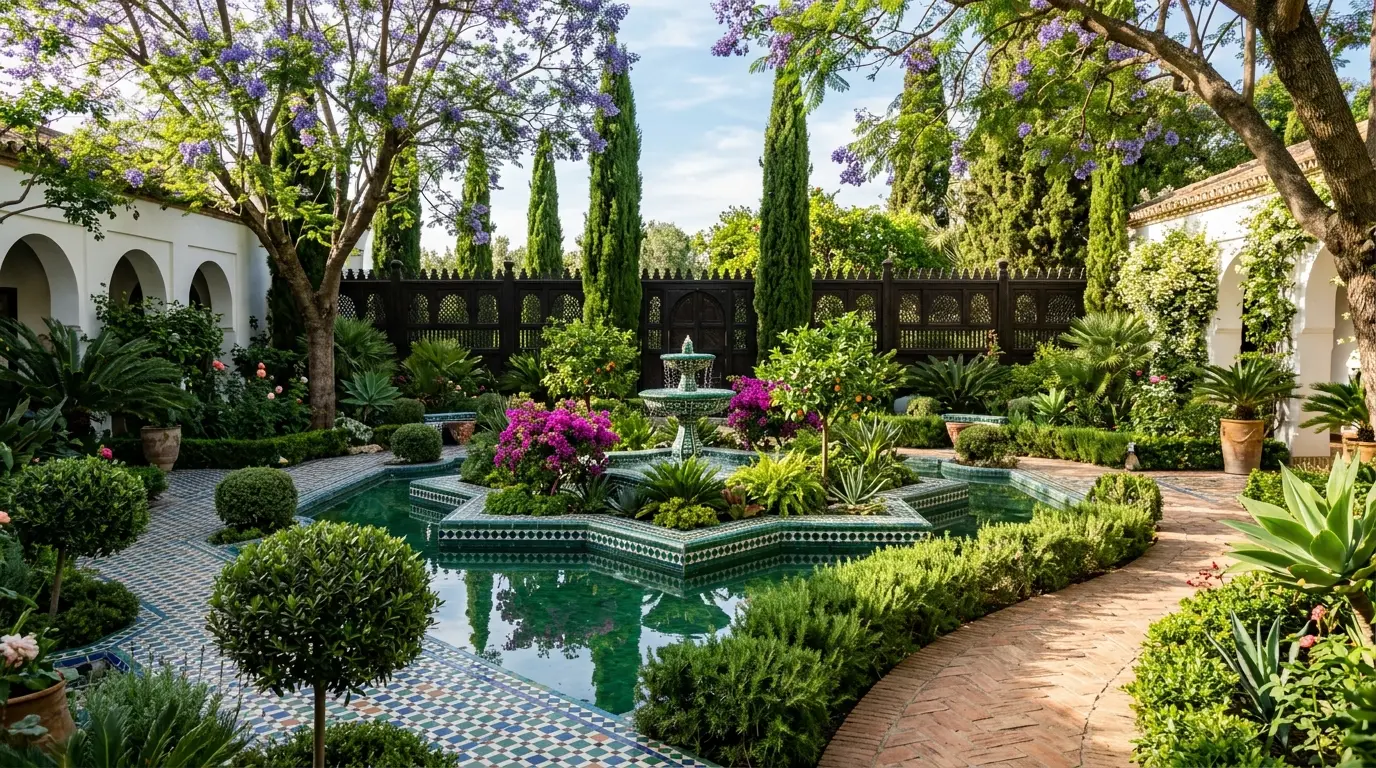
This design places the spotlight heavily on traditional Moorish craftsmanship by utilizing authentic, hand-cut zellige tiles in striking jewel tones. The vibrant emerald and sapphire hardscaping creates a stunning contrast against the terracotta pathways and green rosemary hedges. It captures the authentic Andalusian courtyard mood by making the architectural materials just as visually important as the softscaping.
2. The Sunken Stucco Lounge
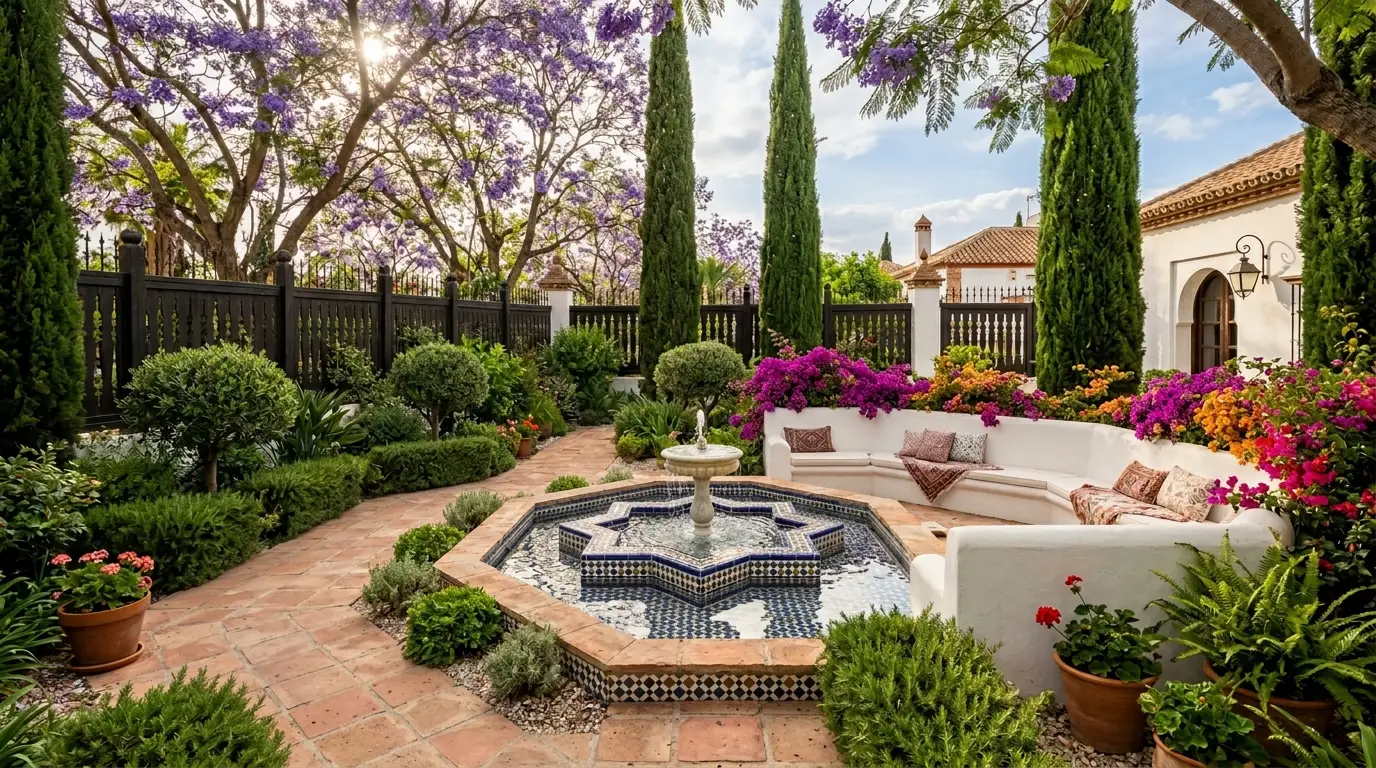
Integrating functional living space directly into the landscape, this variation features a sunken conversation pit crafted from smooth, minimalist white stucco. The built-in benches hug the perimeter of the star-shaped fountain, offering an immersive auditory experience of the gently rippling water. The vibrant bougainvillea and jacaranda canopy soften the stark white architecture, maintaining a harmonious, relaxing environment.
3. The Reclaimed Brick and Mosaic Blend
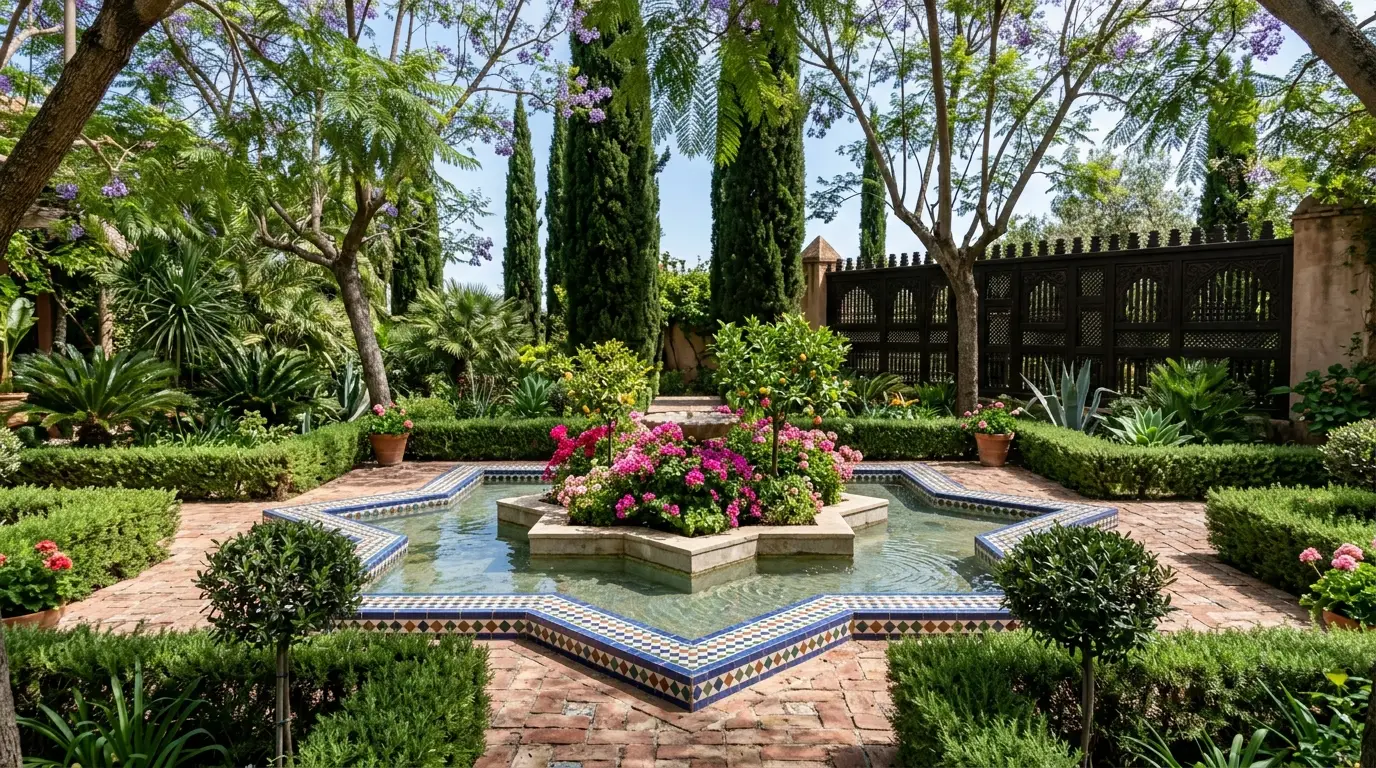
For a more aged, historical feel, this backyard replaces pristine terracotta paths with weathered, reclaimed rustic red bricks. The colorful mosaic tiles are utilized strictly as an accent border, drawing the eye toward the central star-shaped island. This specific hardscape variation gives the garden a deeply established, centuries-old charm while preserving the vibrant Mediterranean plant palette.
4. The Grand Pergola Canopy
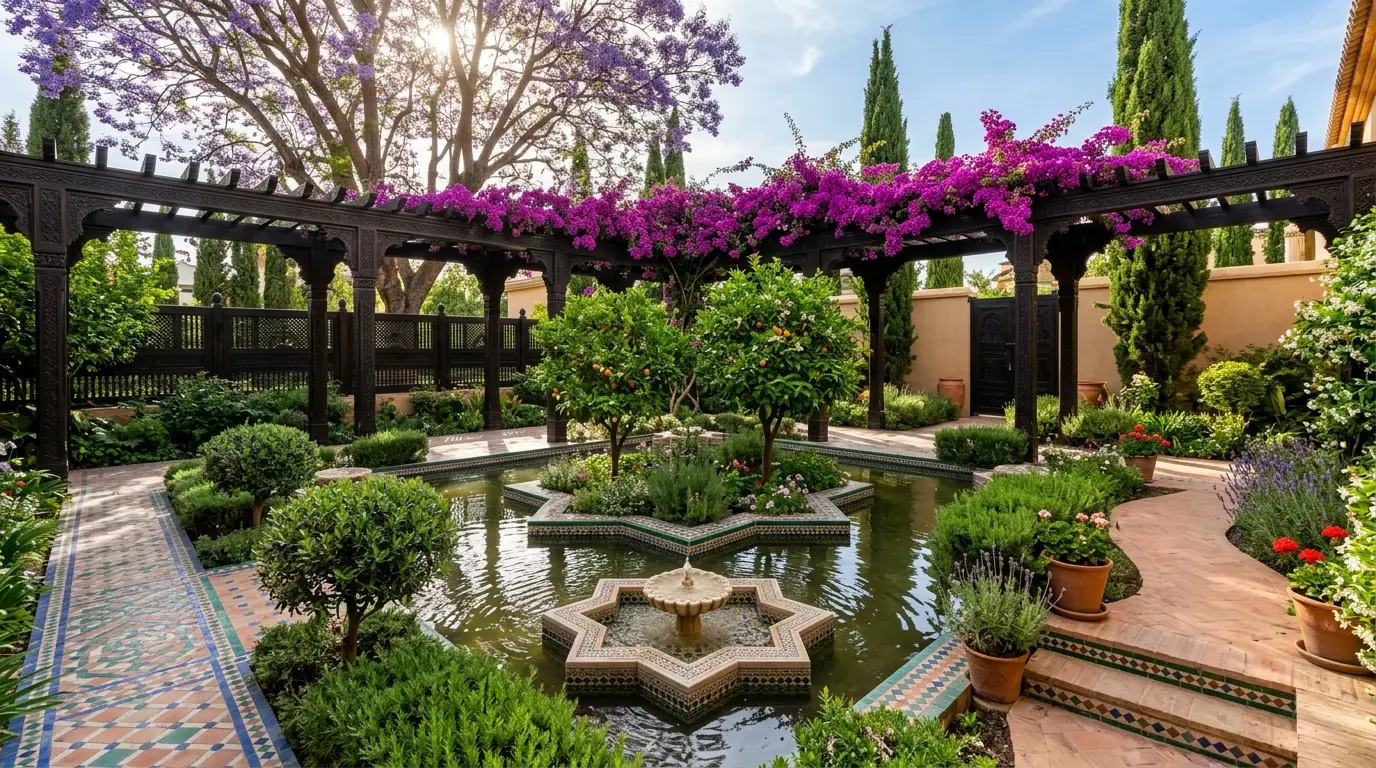
Adding vertical architectural volume, a massive, dark carved wooden pergola is erected directly over the courtyard pond. The structure acts as a climbing frame for an explosion of magenta bougainvillea, creating a dense, natural roof that filters the intense midday sunlight. This setup offers a deeply shaded, romantic focal point that complements the surrounding slender cypress trees.
5. The Terracotta Container Garden
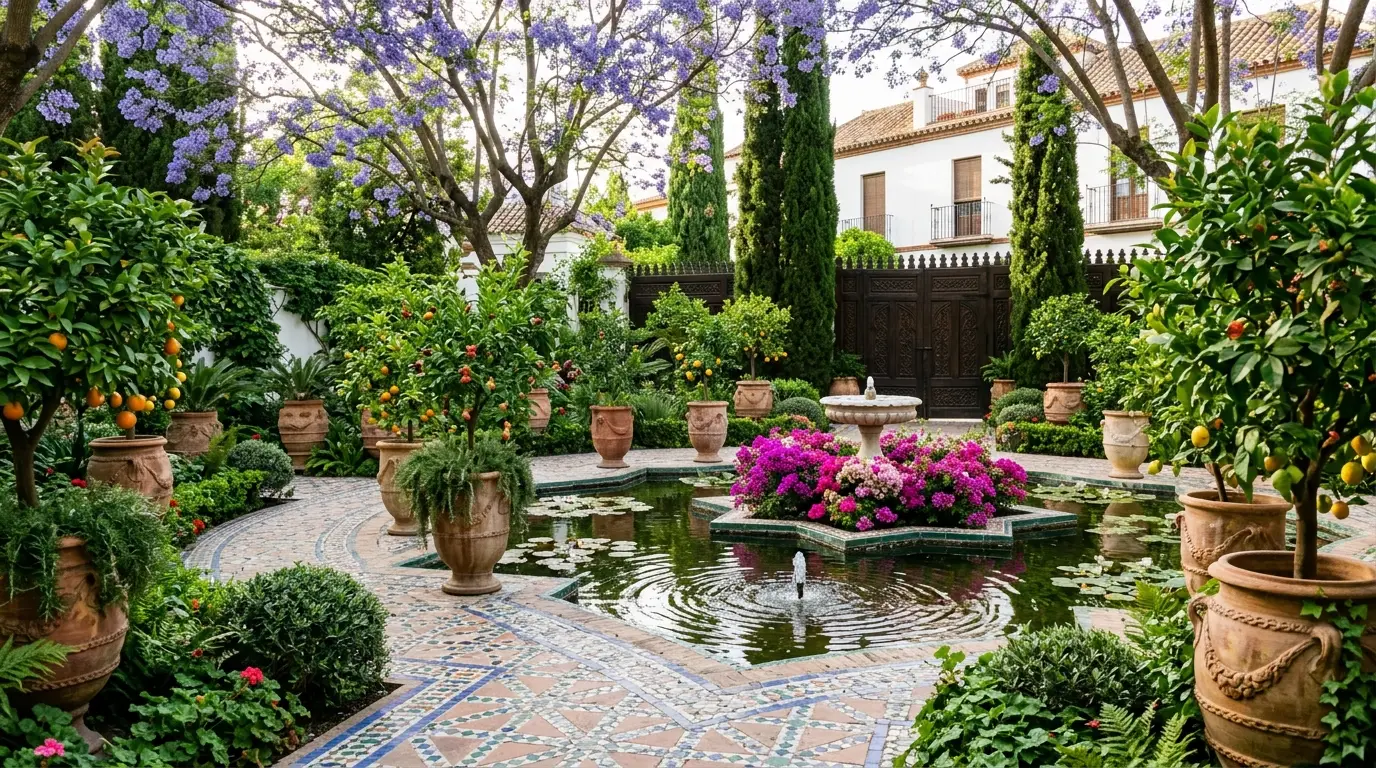
This variation shifts the softscape focus from in-ground planting to an elaborate container garden layout. By utilizing oversized, ornately detailed terracotta urns to house the dwarf citrus and rosemary, the design achieves dynamic height variations and a highly curated, movable landscape. The terracotta seamlessly ties into the winding pathways, enhancing the warm, earthy aesthetic of the courtyard.
6. The Geometric Pebble Mosaic
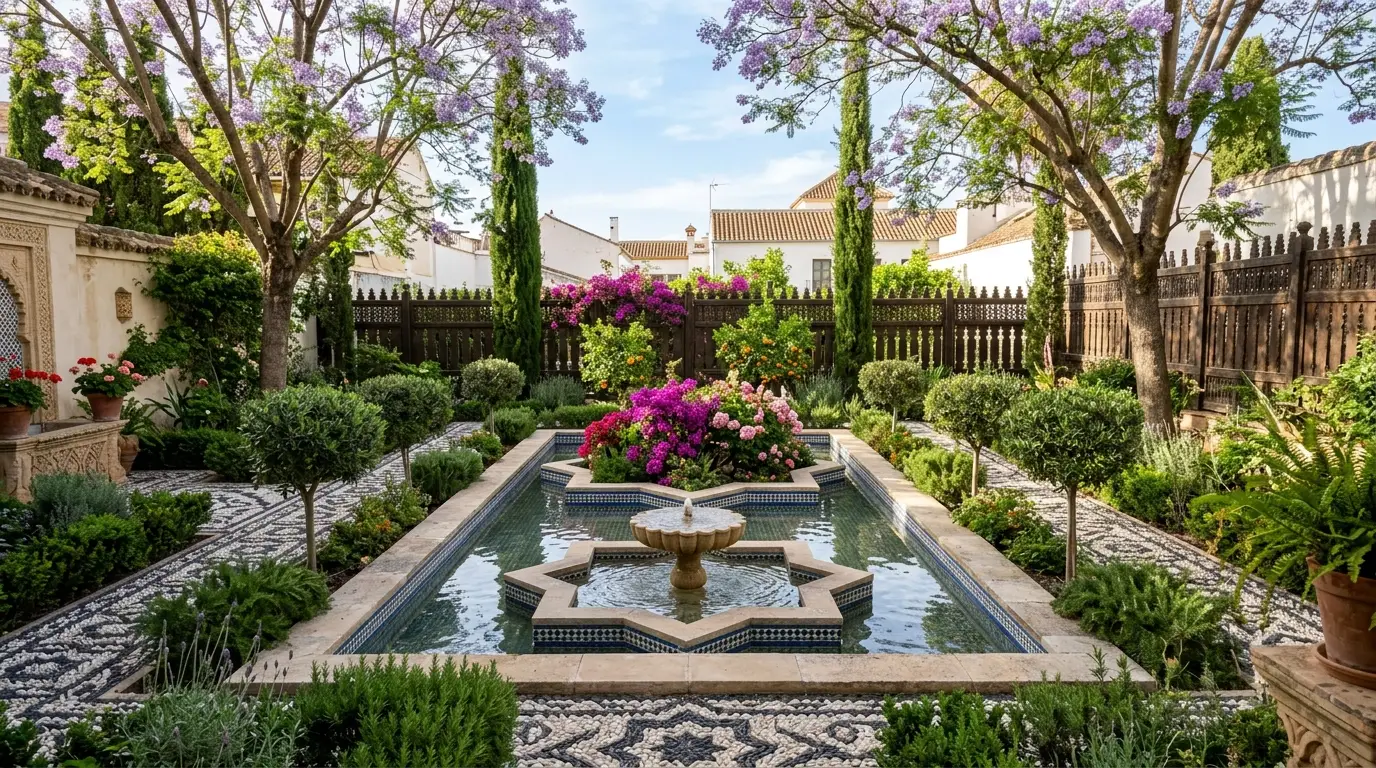
Swapping out glazed ceramic tiles for traditional black and white geometric pebble mosaics (known as taracea) completely alters the textural experience underfoot. The monochromatic, intricate stonework provides a stunning, high-contrast base that makes the purple jacaranda blooms and magenta bougainvillea pop with incredible intensity. It is a highly durable, historically accurate hardscaping choice for Mediterranean spaces.
7. The Wall Fountain and Linear Rill
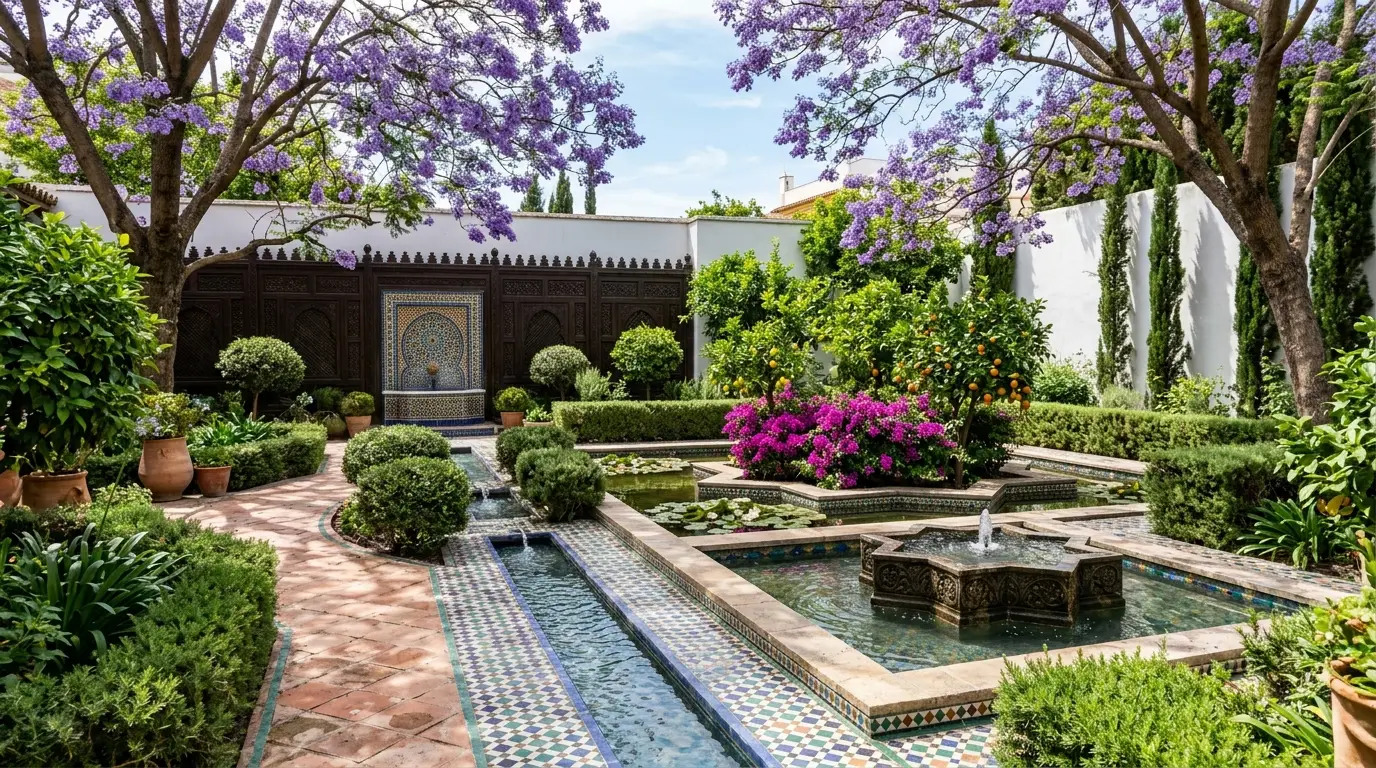
To maximize the auditory element of the landscape, this design introduces a tiled wall fountain mounted against the dark carved wooden enclosure. The water travels down a narrow, engineered rill that bisects the mosaic pathways before dramatically cascading into the central star-shaped pond. This linear water feature visually elongates the yard and creates a continuous sense of flow and movement.
8. The Al Fresco Dining Terrace
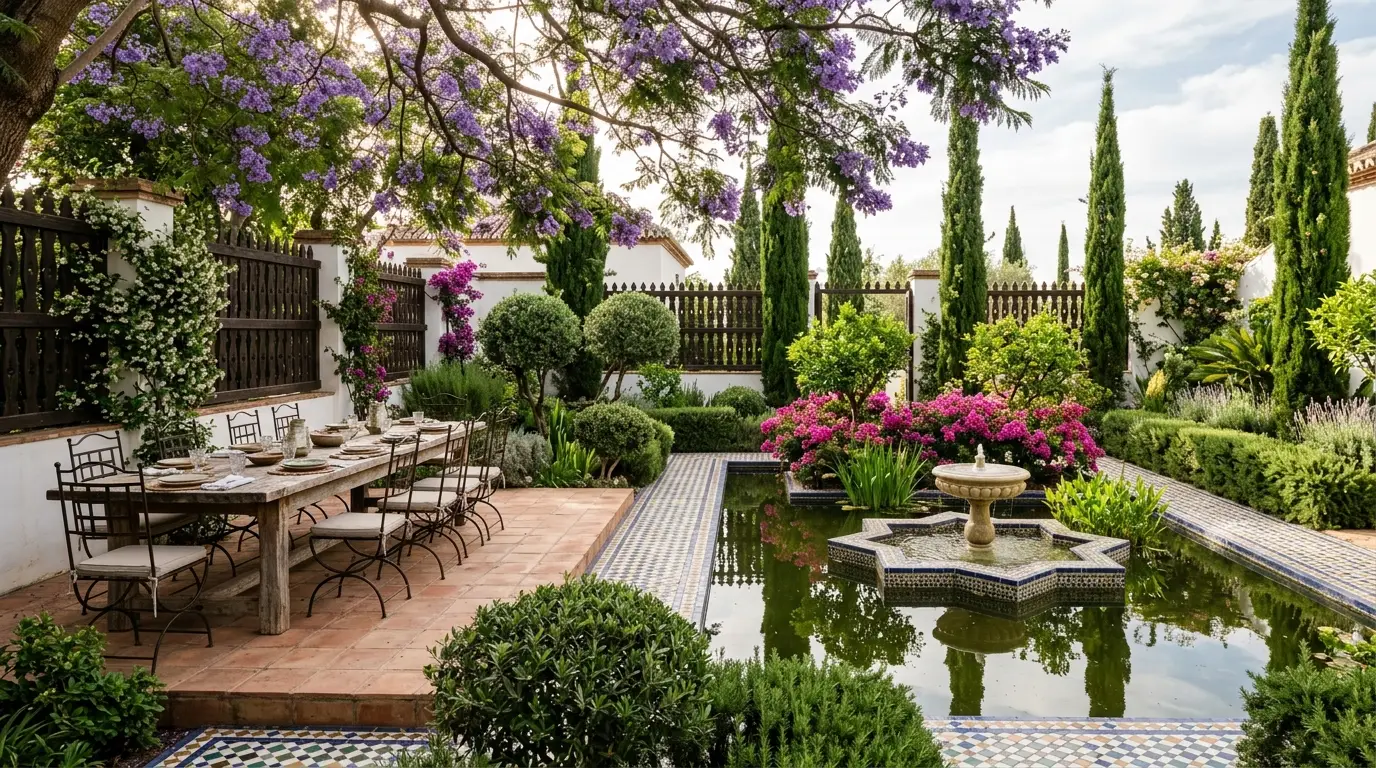
Functionality meets high design in this layout, which carves out a raised terracotta terrace specifically dedicated to al fresco dining. Overlooking the central fountain and lush star-shaped island, the rustic wooden table and wrought iron chairs invite extended outdoor entertaining. The canopy of jacaranda trees naturally shades the dining area, creating a highly comfortable, luxurious hosting zone.
9. The Wrought Iron Gazebo Focal Point
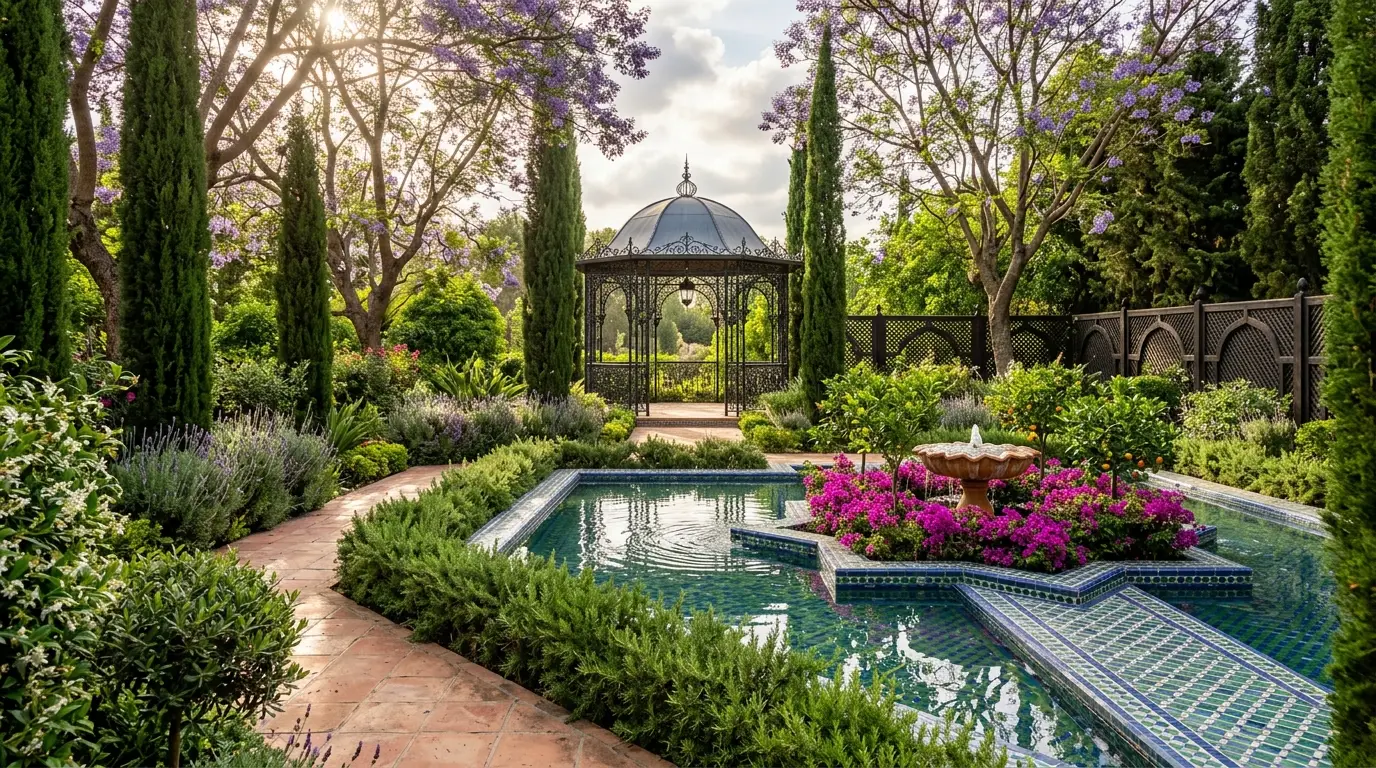
Replacing a standard wooden pergola, an ornate black wrought iron gazebo serves as a stunning, visually permeable focal point at the end of the terracotta path. The dark metalwork echoes the dark carved wooden fence in the background and provides a beautiful contrast against the bright bougainvillea and dwarf citrus. It offers a structured destination point that draws visitors through the garden.
10. The Succulent and Agave Oasis
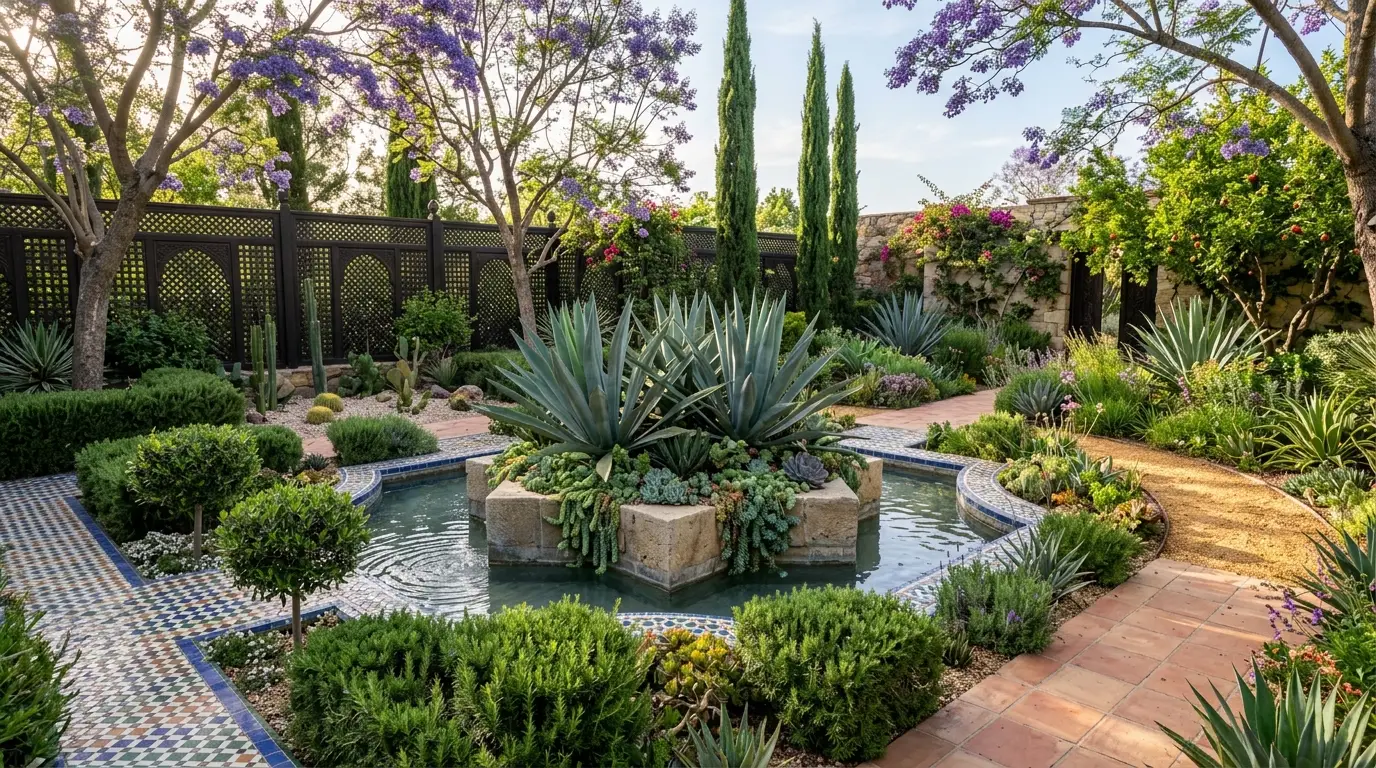
This drought-tolerant variation swaps the thirsty bougainvillea for massive, architectural blue agaves and trailing succulents. The resulting plant palette requires significantly less water while introducing striking, sculptural silhouettes to the central island. The edges of the terracotta path are softened with crushed golden gravel, creating a seamless blend between lush Mediterranean design and arid landscaping principles.
11. The Elevated Grand Staircase
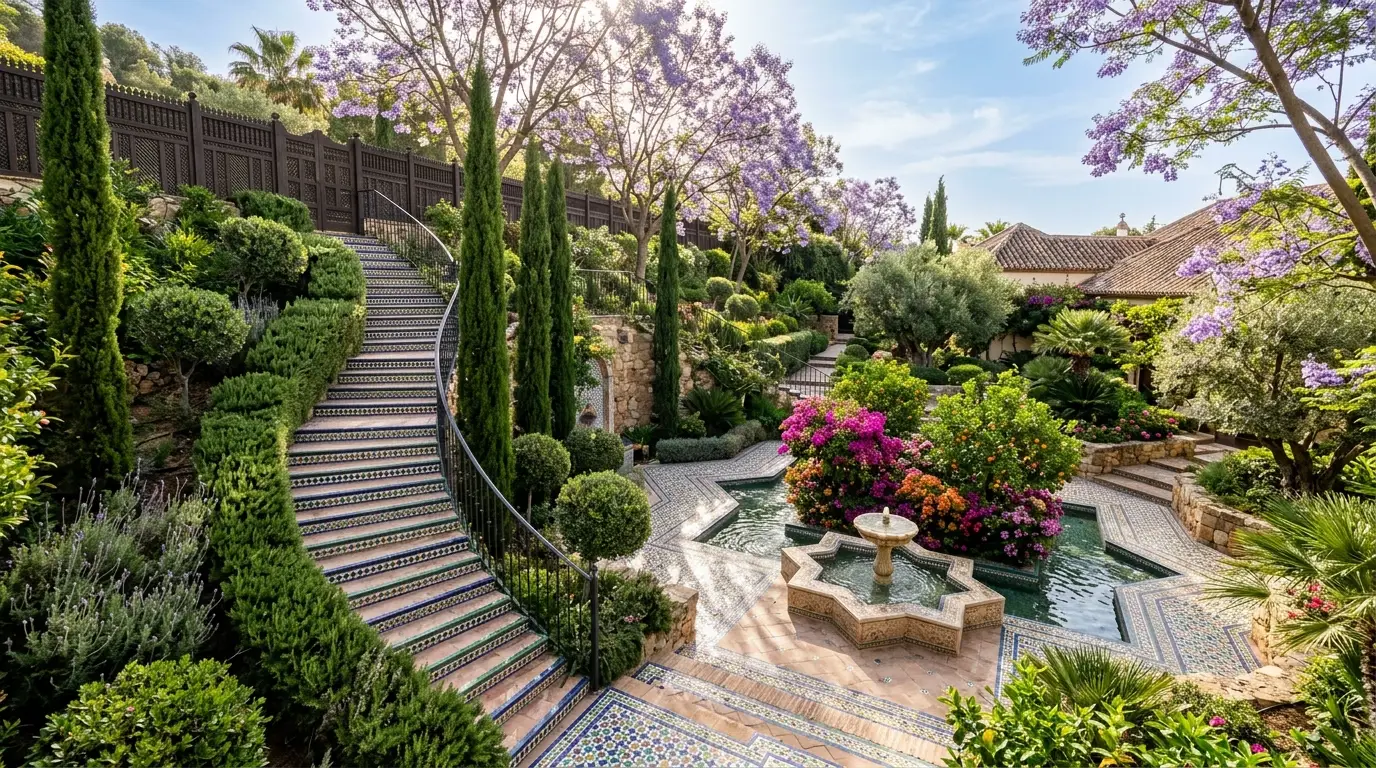
If your backyard features a natural slope, terracing the space is essential. This design incorporates a grand, sweeping staircase adorned with vibrant mosaic tile risers that lead guests majestically down into the sunken courtyard. The tall, slender cypress trees flank the stairs, amplifying the dramatic sense of descent and architectural grandeur.
12. The Moorish Archway Frame
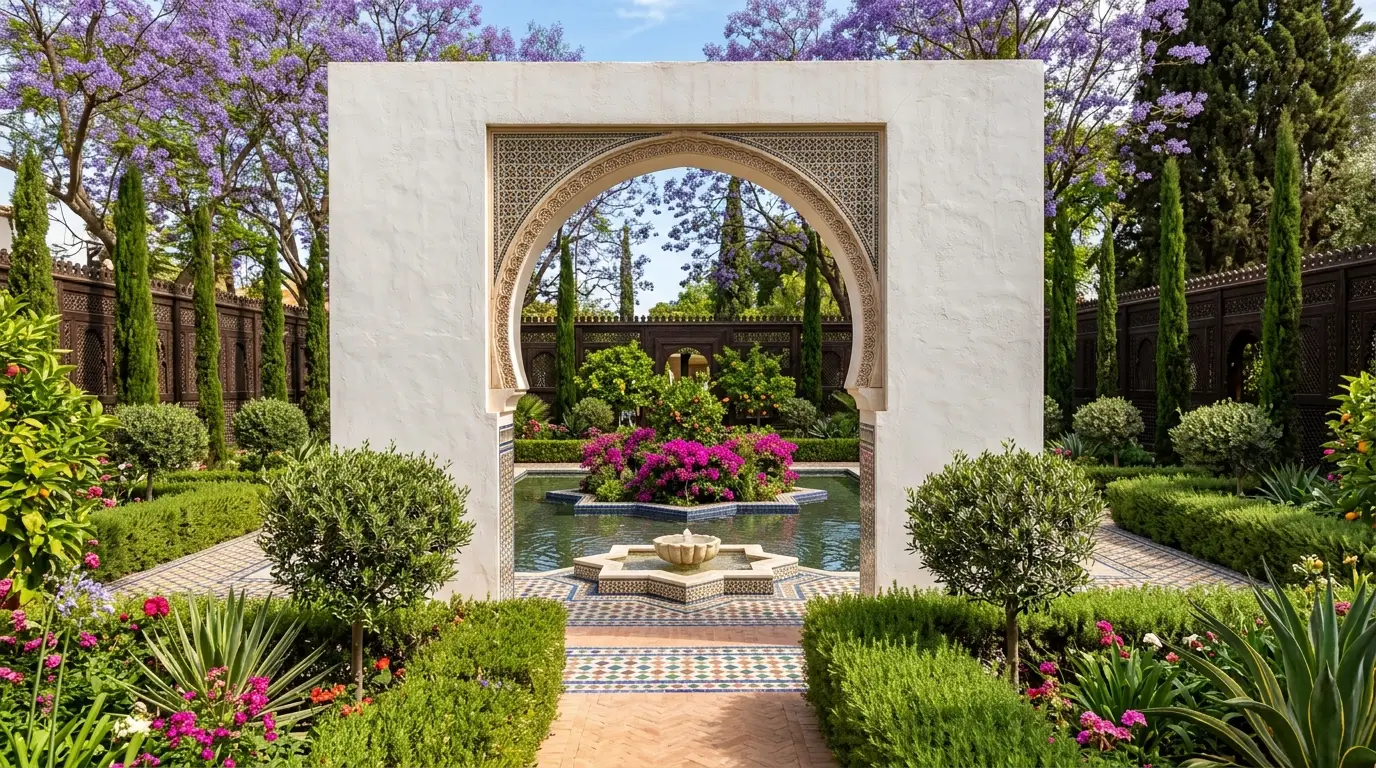
Landscape design is heavily influenced by how sightlines are controlled. By erecting a smooth white stucco wall with a traditional keyhole Moorish archway, the view of the star-shaped fountain and lush plantings becomes perfectly framed like a living painting. This architectural intervention builds anticipation and defines the transition between different zones of the backyard.
13. The Oversized Central Urn
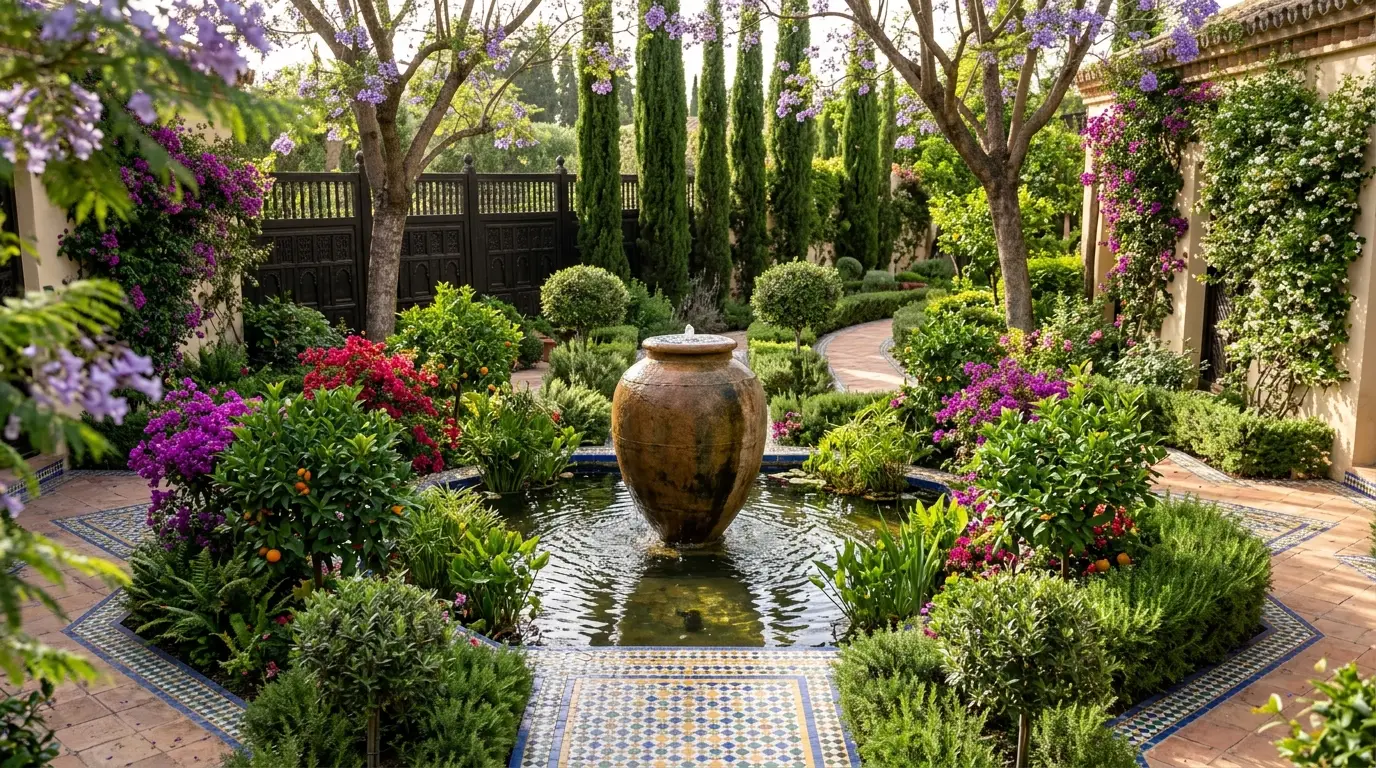
For a bolder, more centralized statement, the planted star-shaped island is replaced by a singular, massive, water-overflowing terracotta urn. Moving the lush bougainvillea and dwarf citrus to the outer perimeter of the pond keeps the focal point stark and sculptural. The overflowing water creates a distinct acoustic profile that resonates beautifully throughout the manicured courtyard.
14. The Outdoor Kitchen Integration
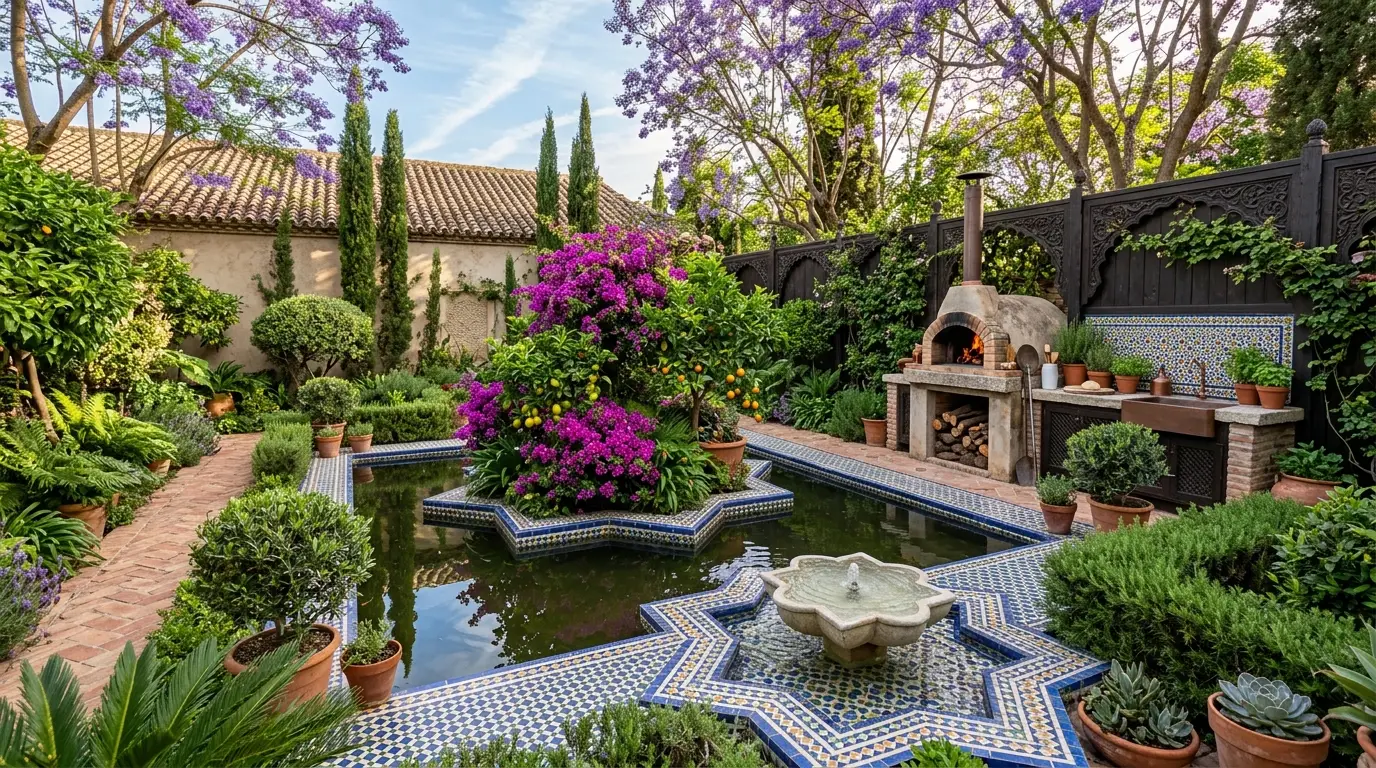
Elevating the backyard from a viewing garden to a culinary destination, this layout integrates a full outdoor kitchen. A beautiful wood-fired pizza oven and prep station are built against the carved wooden fence, utilizing the same vibrant mosaic tiles for the backsplash to maintain aesthetic cohesion. The surrounding rosemary hedges offer convenient, fresh aromatics right next to the cooking zone.
15. The Checkerboard Stone Patio
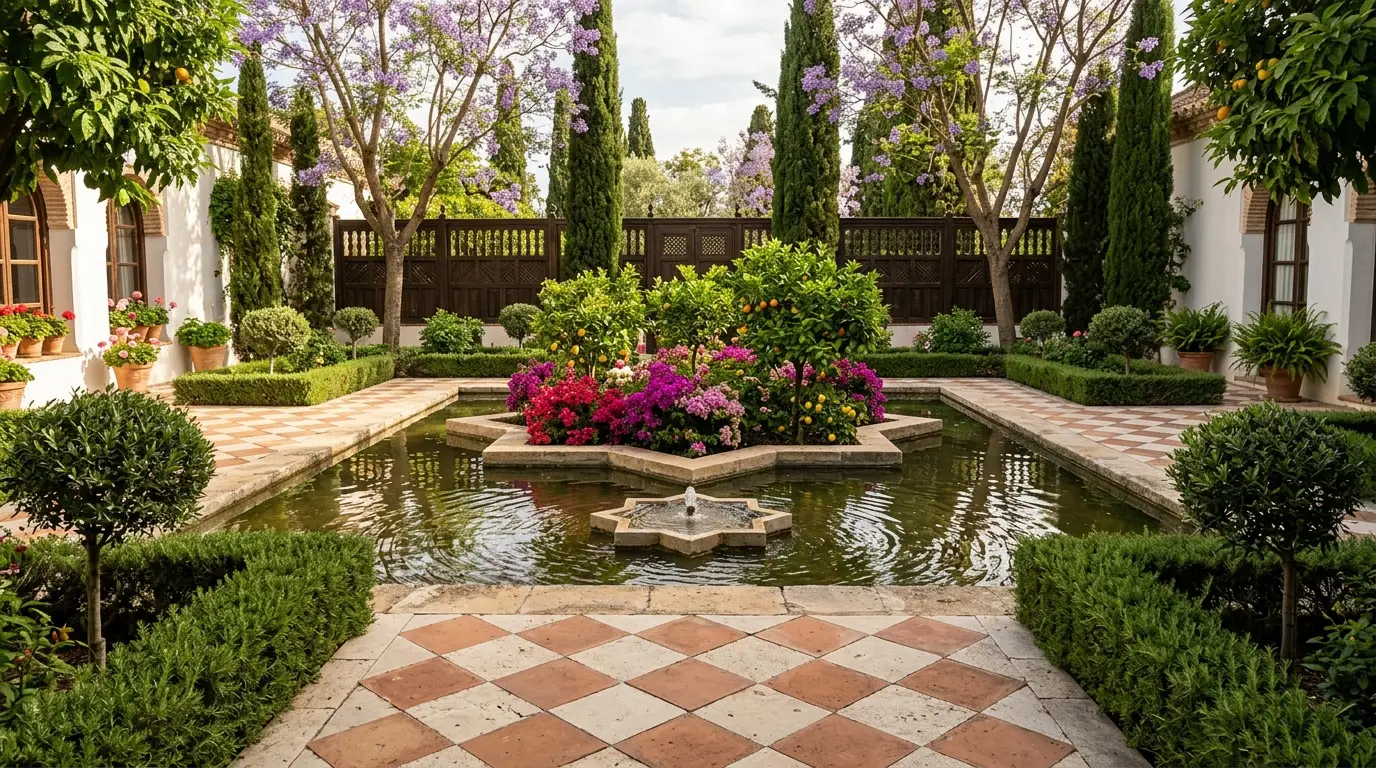
For a slightly more formal, Renaissance-infused look, the intricate mosaic paths are replaced with a bold, oversized checkerboard patio utilizing terracotta and pale limestone. This large-scale geometric grid grounds the space and provides a stunning visual anchor beneath the delicate, dappled light of the jacaranda trees. It creates a vast, highly walkable plaza feel around the central fountain.
16. The Stepping Stone Water Crossing
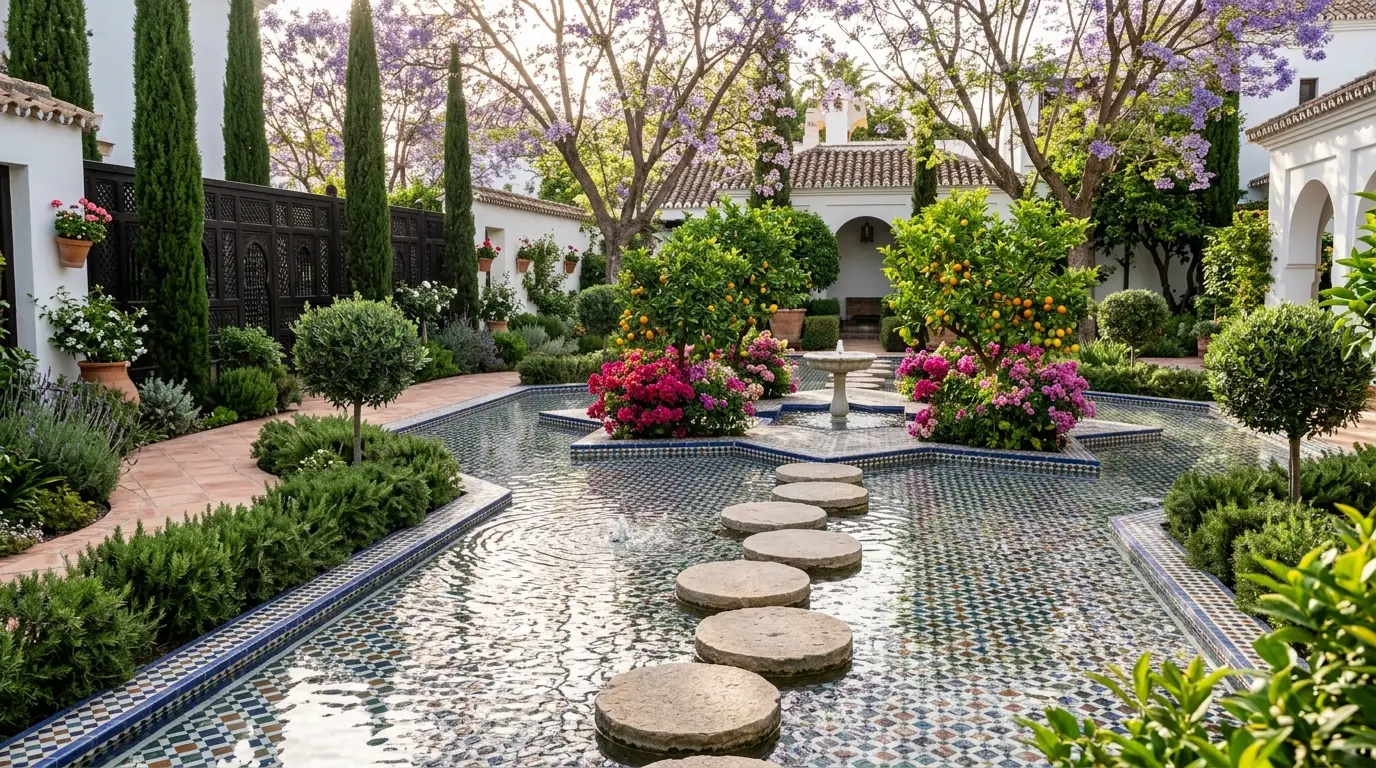
Interaction is key to an engaging landscape. By expanding the shallow footprint of the courtyard pond and introducing large, flat circular stepping stones directly across the water’s surface, the garden invites visitors to actively traverse the water feature. This playful layout provides closer access to the blooming bougainvillea on the star-shaped island.
17. The Fire Pit Reflection Area
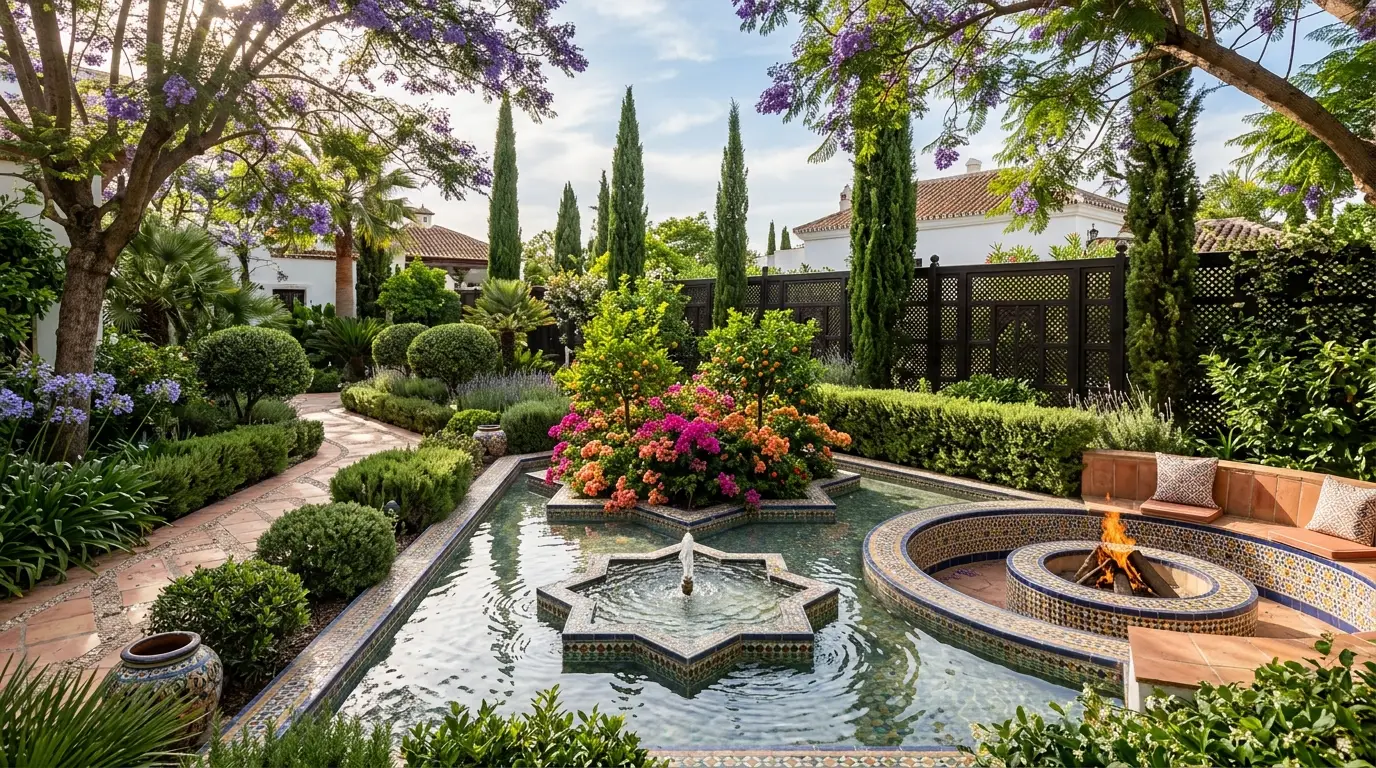
Balancing the cooling presence of the fountain, this design incorporates a sunken circular fire pit adjacent to the water. Lined with matching mosaic tiles and built-in terracotta seating, this secondary focal point extends the usability of the backyard into the cooler evenings. The juxtaposition of the rippling water and the structured fire pit zone provides the ultimate functional oasis.
18. The Secret Meditation Nook
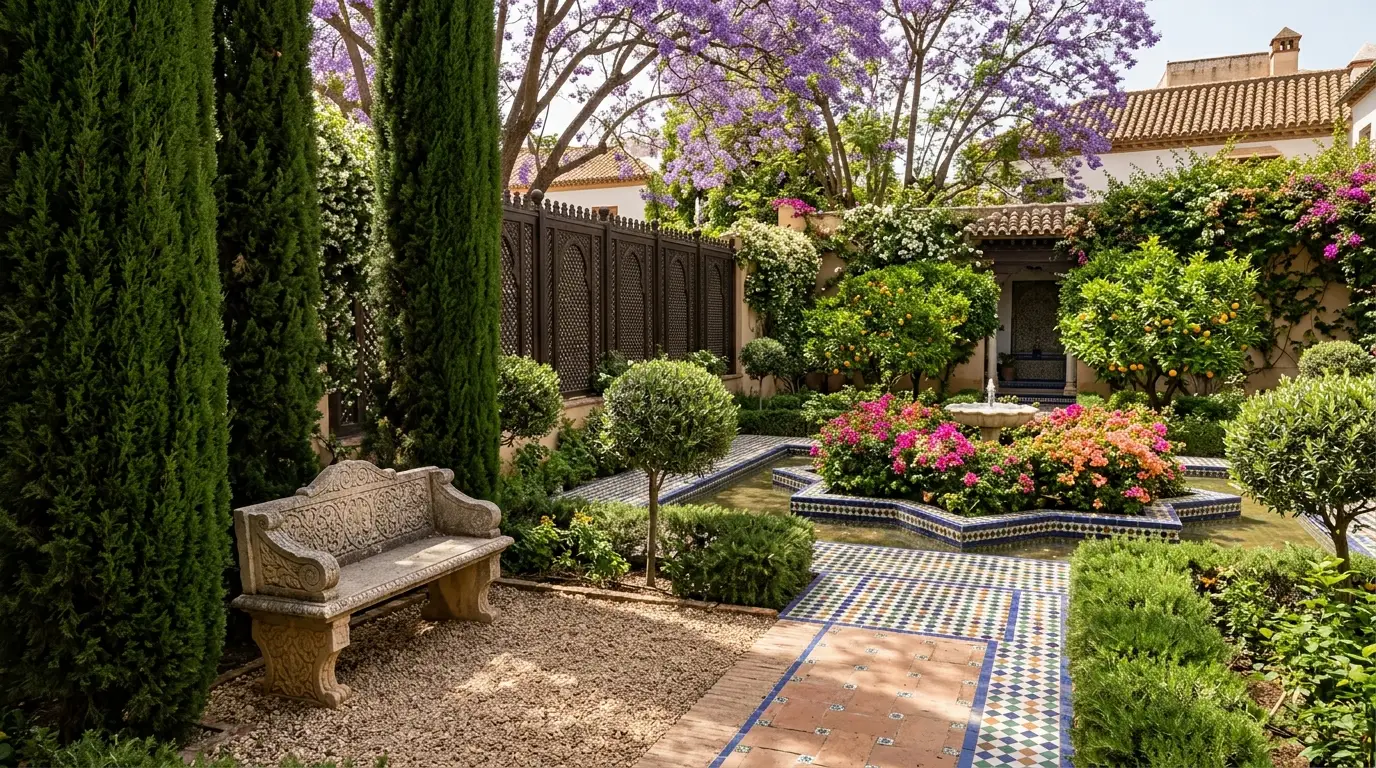
Landscape design should cater to moments of quiet solitude. By strategically grouping the tall, slender cypress trees, this design creates a secluded, hidden meditation nook. A simple carved stone bench resting on a quiet bed of crushed gravel offers a peaceful vantage point to admire the star-shaped fountain and vibrant plantings without feeling exposed to the rest of the yard.
19. The White Stucco Enclosure
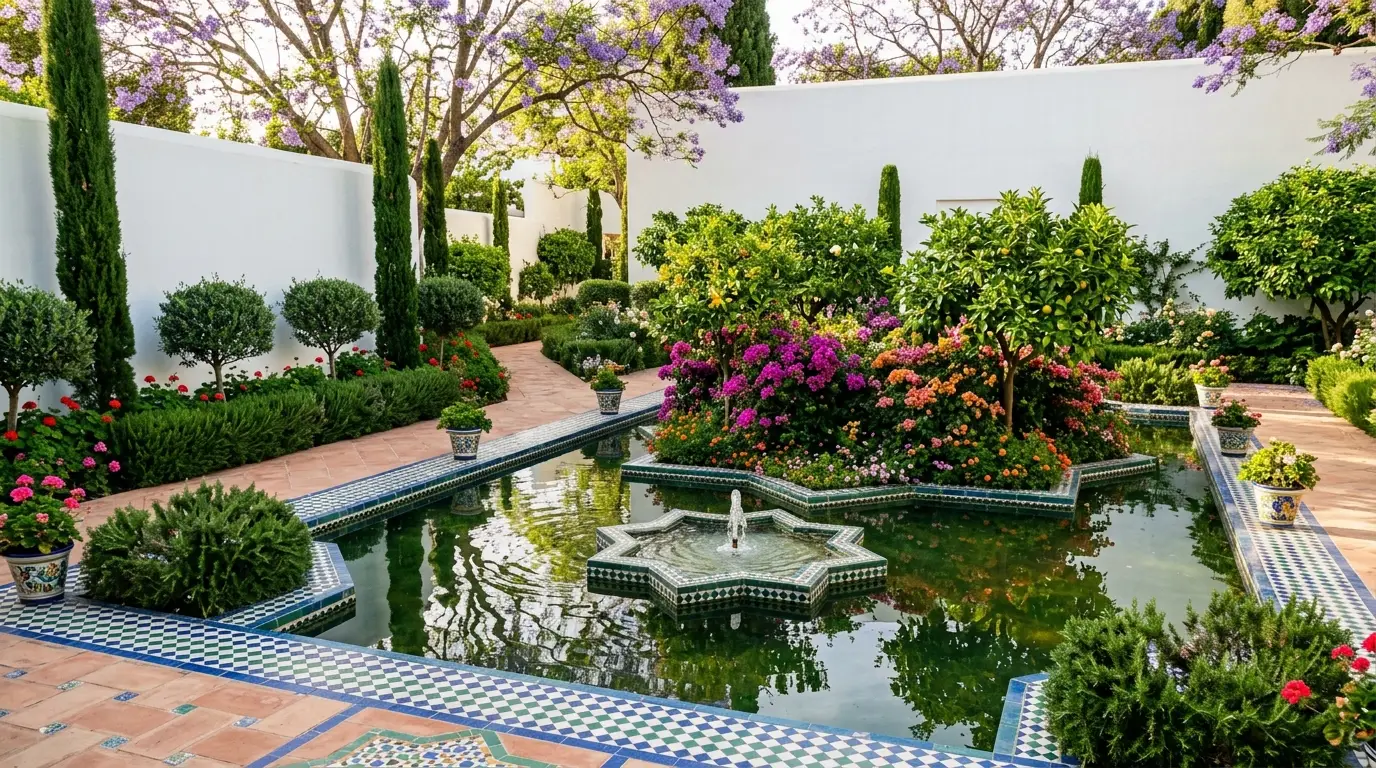
Replacing the dark carved wooden fence with a tall, bright white smooth stucco wall drastically changes the garden’s luminosity. The bright white boundary acts as a massive reflector for the midday sunlight, making the greens of the olive shrubs and cypress trees appear incredibly vivid. This structural variation creates an ultra-clean, classic Mediterranean resort aesthetic.
20. The Herb Garden Parterre
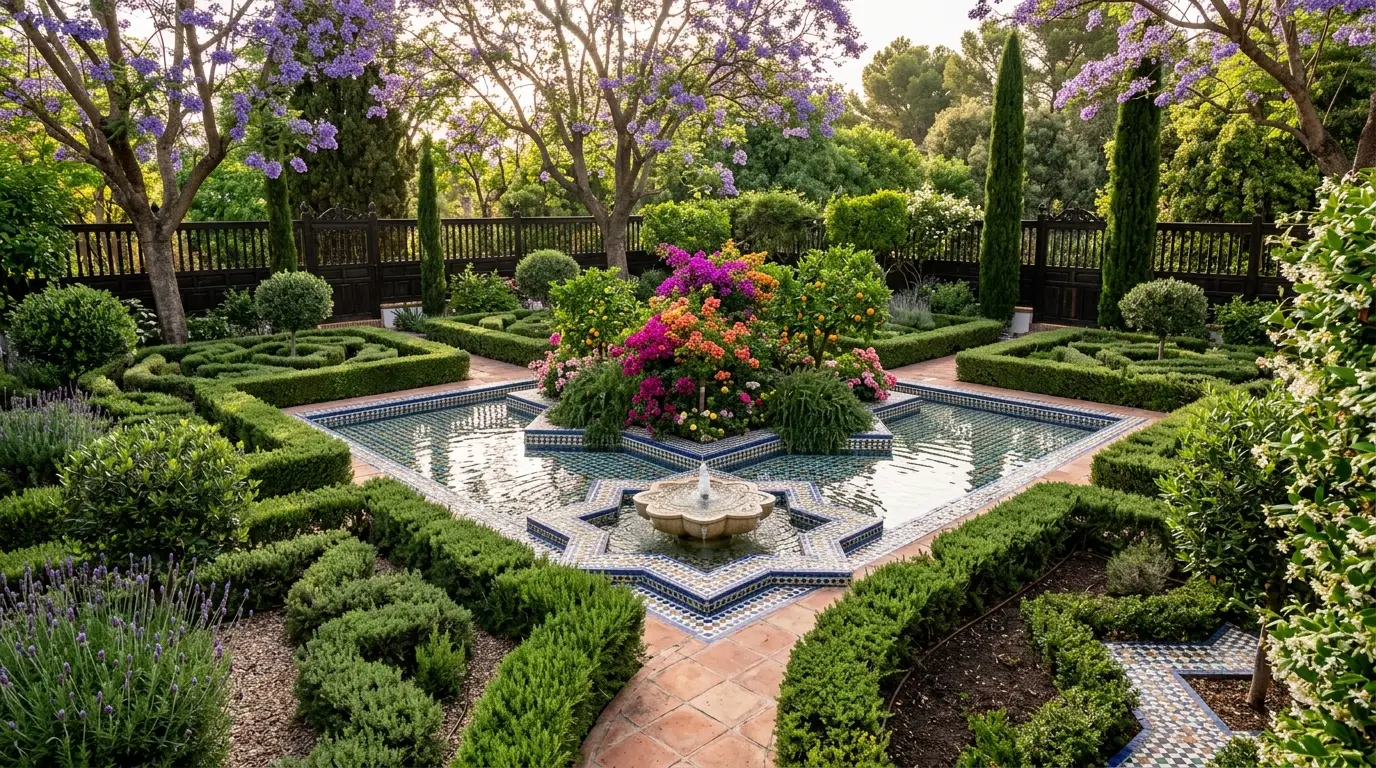
Channeling formal European estate design, this variation transforms the softscaping around the pond into an intricate knot garden (parterre). By tightly manicuring rosemary, lavender, and thyme into geometric patterns that intersect with the mosaic pathways, the garden becomes an overwhelming sensory experience of aromatic Mediterranean herbs. It is a highly disciplined, visually stunning display of horticultural mastery.
21. The Ornate Gate Entrance
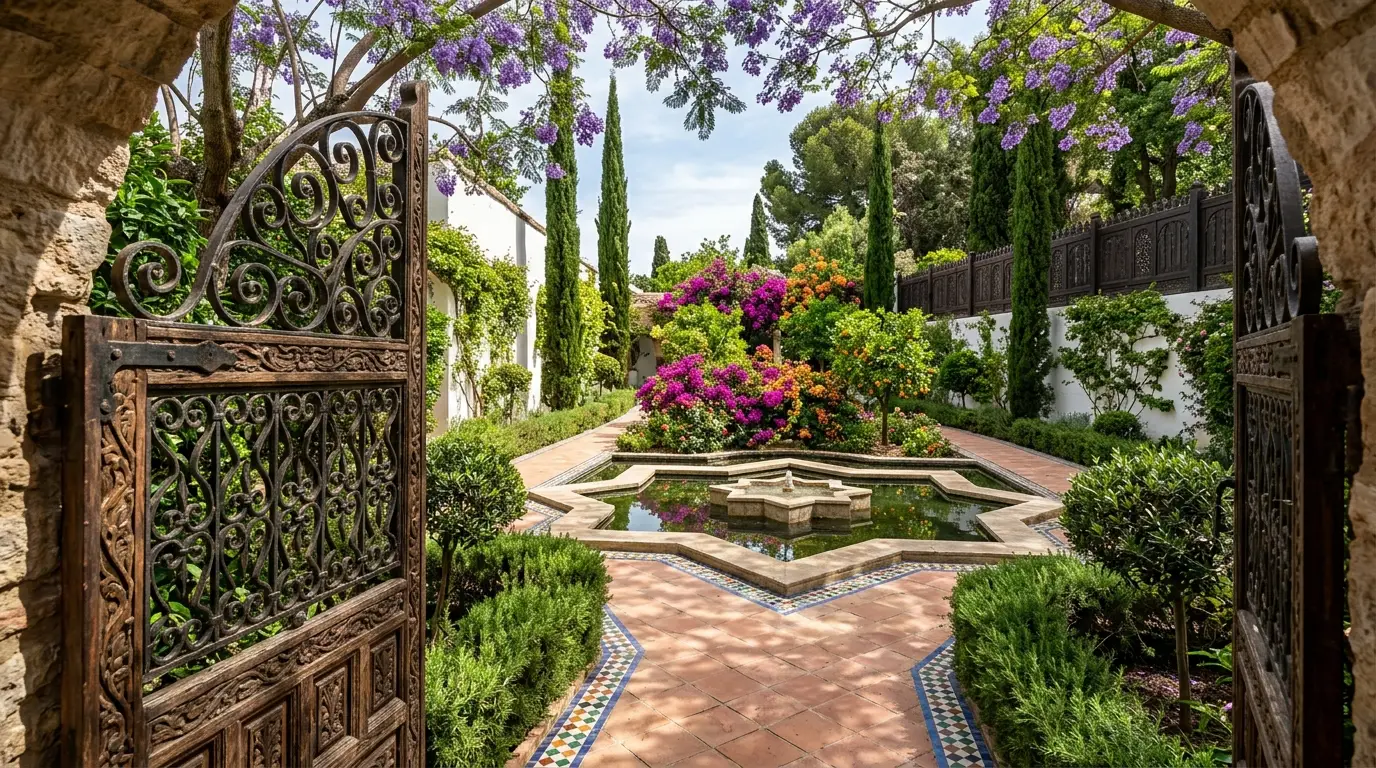
First impressions dictate the entire spatial experience. This layout emphasizes the entrance to the courtyard by introducing an intricate wrought iron and carved wood gate along the terracotta path. Passing through this ornate threshold officially transitions the visitor from the outside world into the private, perfectly curated Andalusian sanctuary, framing the central water feature beautifully.
22. The Monochromatic Blue Oasis
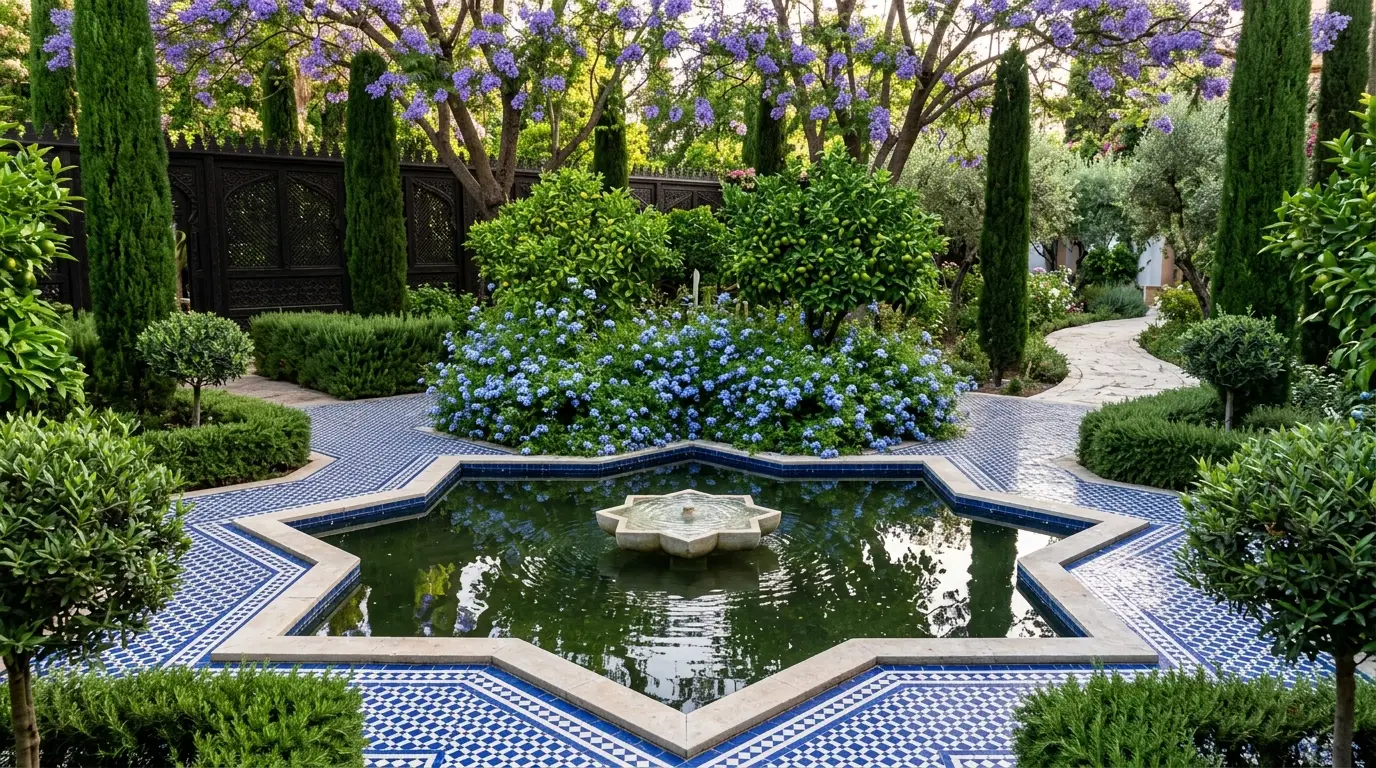
Color theory is a powerful landscaping tool. By omitting the hot magenta bougainvillea and red terracotta, this variation leans entirely into a cooling, monochromatic blue and white palette. Cascading blue plumbago, cobalt mosaic tiles, pale limestone, and the purple-blue canopy of the jacaranda trees create an exceptionally soothing, visually cooling oasis perfect for hot Mediterranean climates.
23. The Gravel and Tile Hybrid
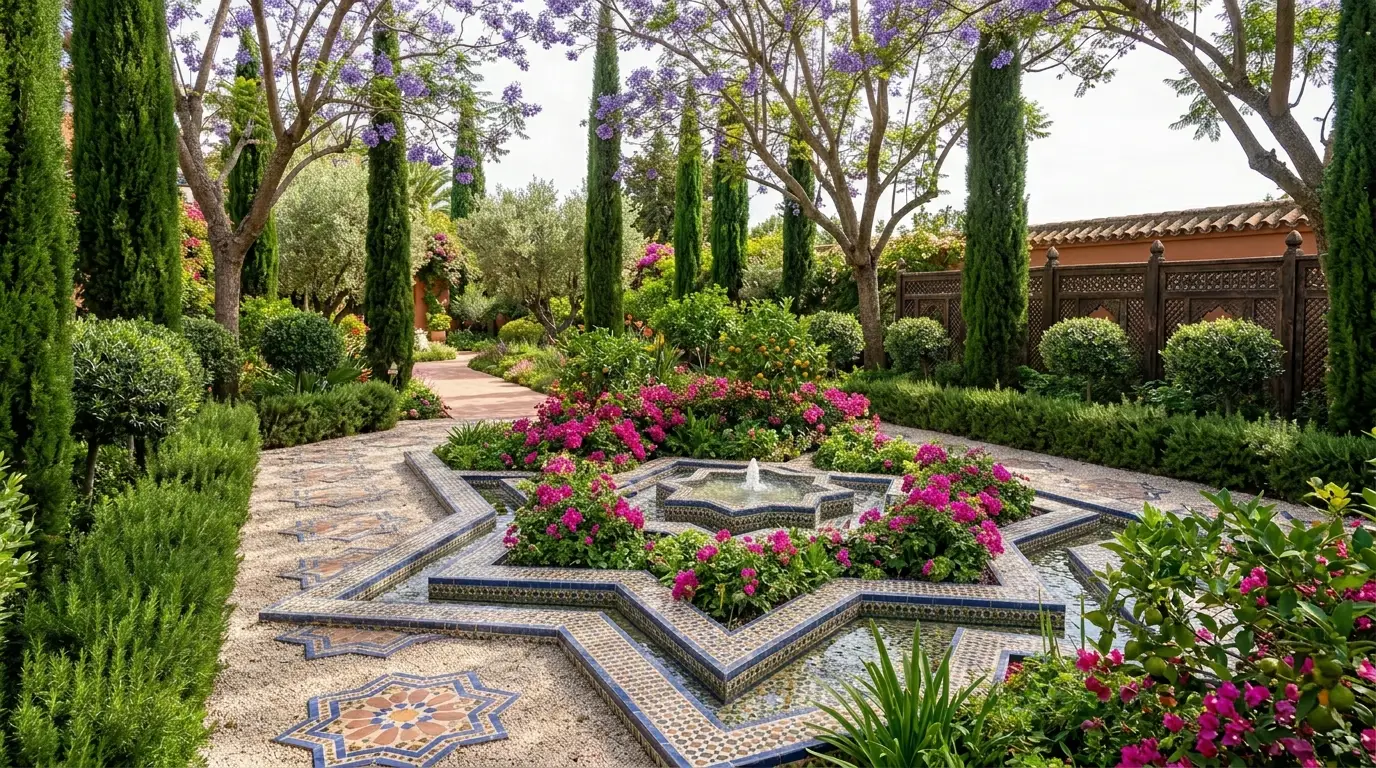
For a more relaxed, permeable hardscaping solution, the solid mosaic paths are replaced with wide walkways of pale decomposed granite gravel. Large, decorative mosaic tiles are utilized simply as widely spaced stepping stones. This hybrid approach softens the hardscaping, improves water drainage, and provides a satisfying crunch underfoot, all while preserving the distinct Andalusian flair.
Implementation Tips
-
Prioritize Deep Drainage for Citrus and Olives: Mediterranean plants absolutely detest “wet feet.” When cultivating dwarf citrus and precisely shaping olive shrubs in your own yard, ensure you deeply amend your soil with perlite and coarse sand to guarantee rapid drainage, especially if you live in an area with heavy clay soils.
-
Establish a Strict Pruning Schedule: The clean, architectural lines of rosemary hedges and slender cypress trees require discipline. To maintain that sense of structural depth and order, commit to shearing your hedges in the early spring and selectively pruning your cypress to prevent them from splaying under heavy winds.
-
Start with Seeds for Aromatic Borders: If budget is a concern for large-scale parterres, consider cultivating your rosemary and thyme hedges from seed indoors. Establishing these robust aromatics early in small, controlled environments ensures you have enough volume to line your new terracotta pathways without breaking the bank at the local nursery.
-
Seal Your Zellige and Terracotta: Authentic terracotta and glazed mosaic tiles are porous and susceptible to cracking if moisture freezes inside them. Always apply a high-quality, penetrating masonry sealer to your hardscaping to protect the intricate details of your fountain and pathways from weather degradation.
About the Author