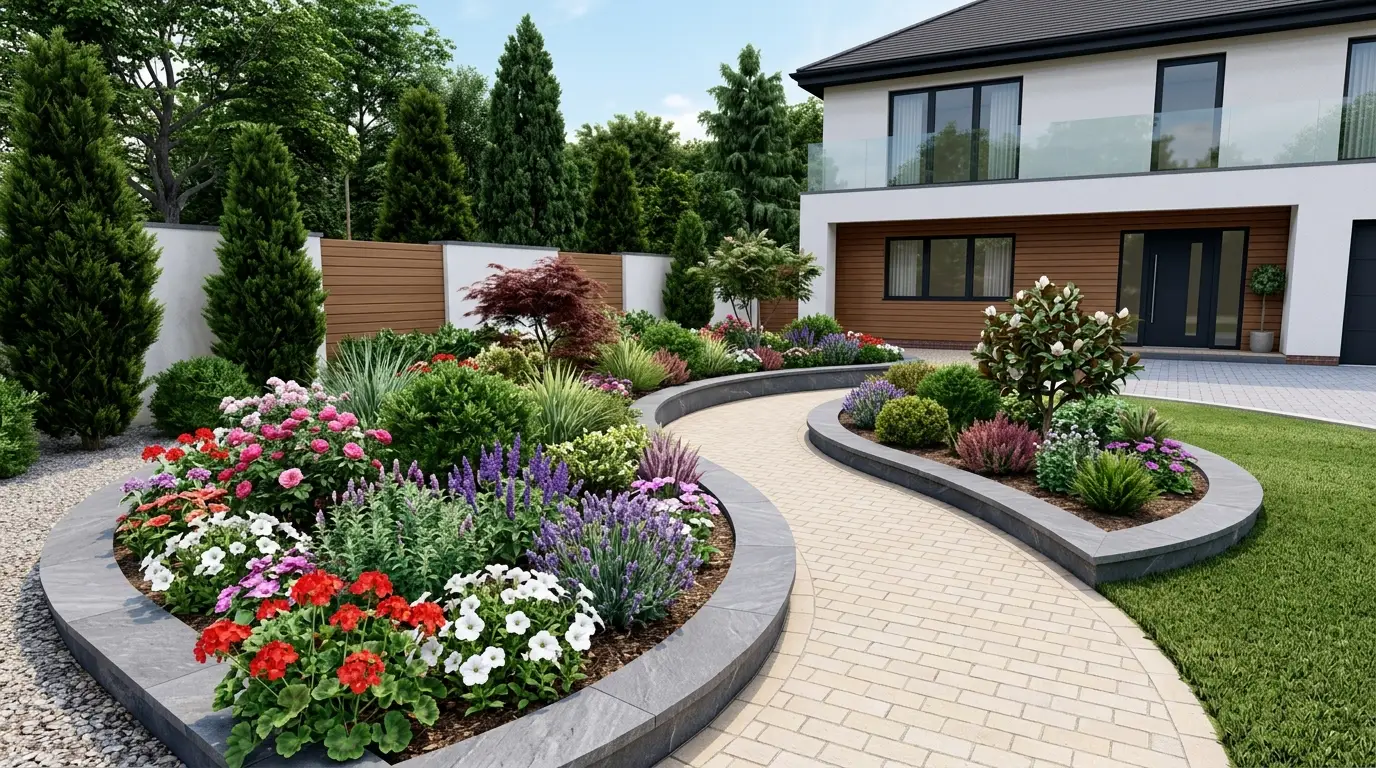
Ever pulled up to your house and felt like the exterior just didn’t match the warmth of the life inside? We’ve all been there. You look at a small, patchy lawn and think, “There’s just not enough room to do anything special.” But let me let you in on a designer secret: small yards are actually a blessing in disguise. They are the perfect canvas for a high-detail, high-impact “Modern Elegant” transformation.
Imagine walking through a garden that feels less like a yard and more like a curated outdoor gallery. We’re talking about the kind of curb appeal that makes neighbors slow their cars down just to catch a glimpse. In this guide, we aren’t just talking about planting a few petunias and calling it a day. We are diving into the world of structured, vibrant, and organized floral displays—think of it as a realistic CGI rendering come to life right in front of your porch.
1. The Psychology of the First Impression: Why Small Yards Matter
Your front yard is your home’s handshake. It’s the first thing you see after a long day at work, and the first thing guests experience before they even cross your threshold. When a space is small, every square inch carries more weight.
1.1. Curb Appeal as a Personal Sanctuary
In a world that feels increasingly chaotic, coming home to a well-ordered garden provides an immediate hit of dopamine. It’s not just about what the neighbors think (though, let’s be honest, that’s a nice perk). It’s about creating a transition zone—a space that tells your brain, “You are home now. You can relax.”
1.2. The Shift Toward Modern Elegant Floral Displays
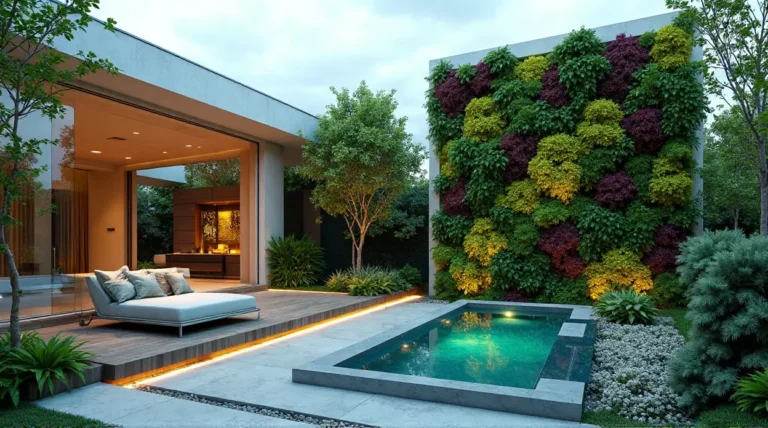
The trend lately has moved away from the sprawling, messy English cottage style toward something more structured. We call this “Modern Elegant.” It’s defined by clean lines, high-contrast materials like gray stone and dark wood, and a color palette that pops with intentionality. It’s about organized vibrance.
2. Defining the Modern Elegant Aesthetic
What makes a garden look “modern”? It’s all in the contrast. We love pairing organic, wild beauty with cold, structured man-made materials.
2.1. Structure Meets Nature: The Gray Stone and Wood Panel Contrast
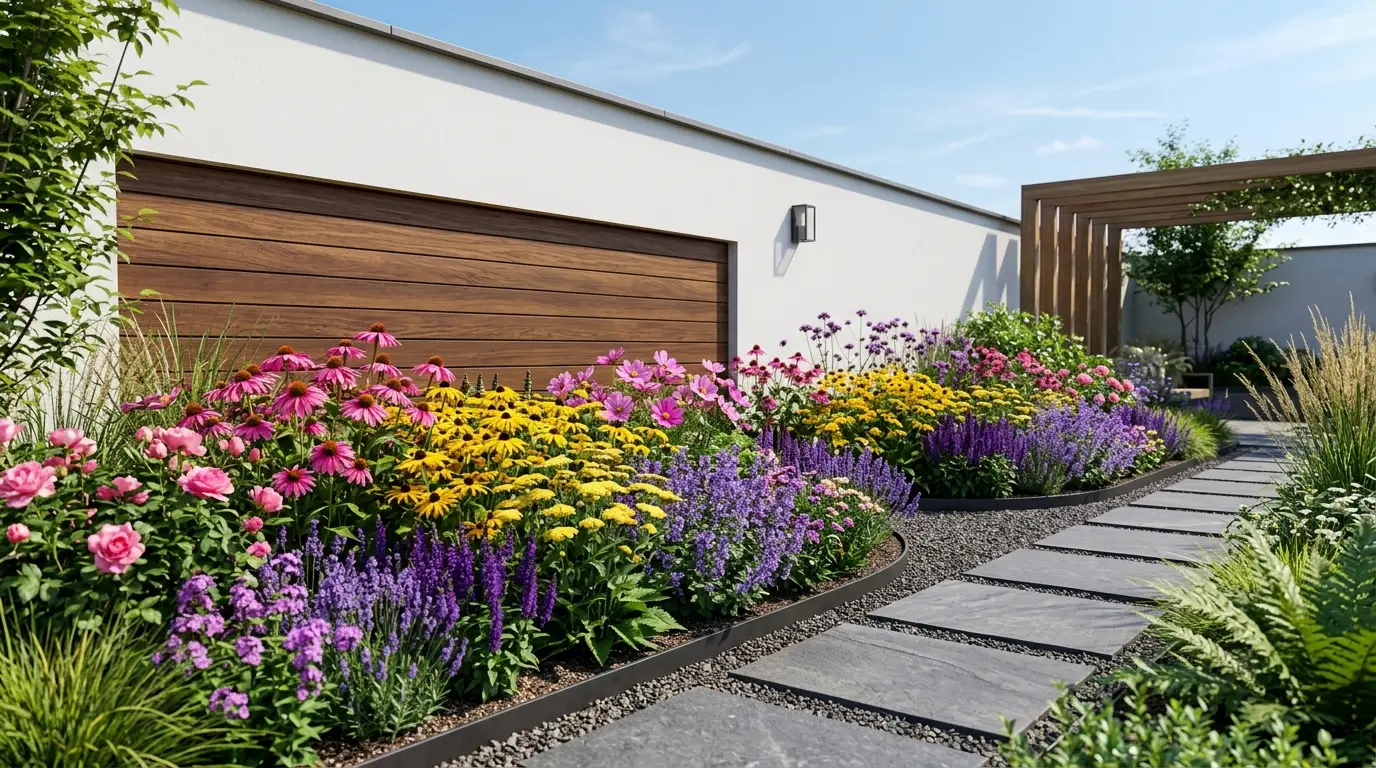
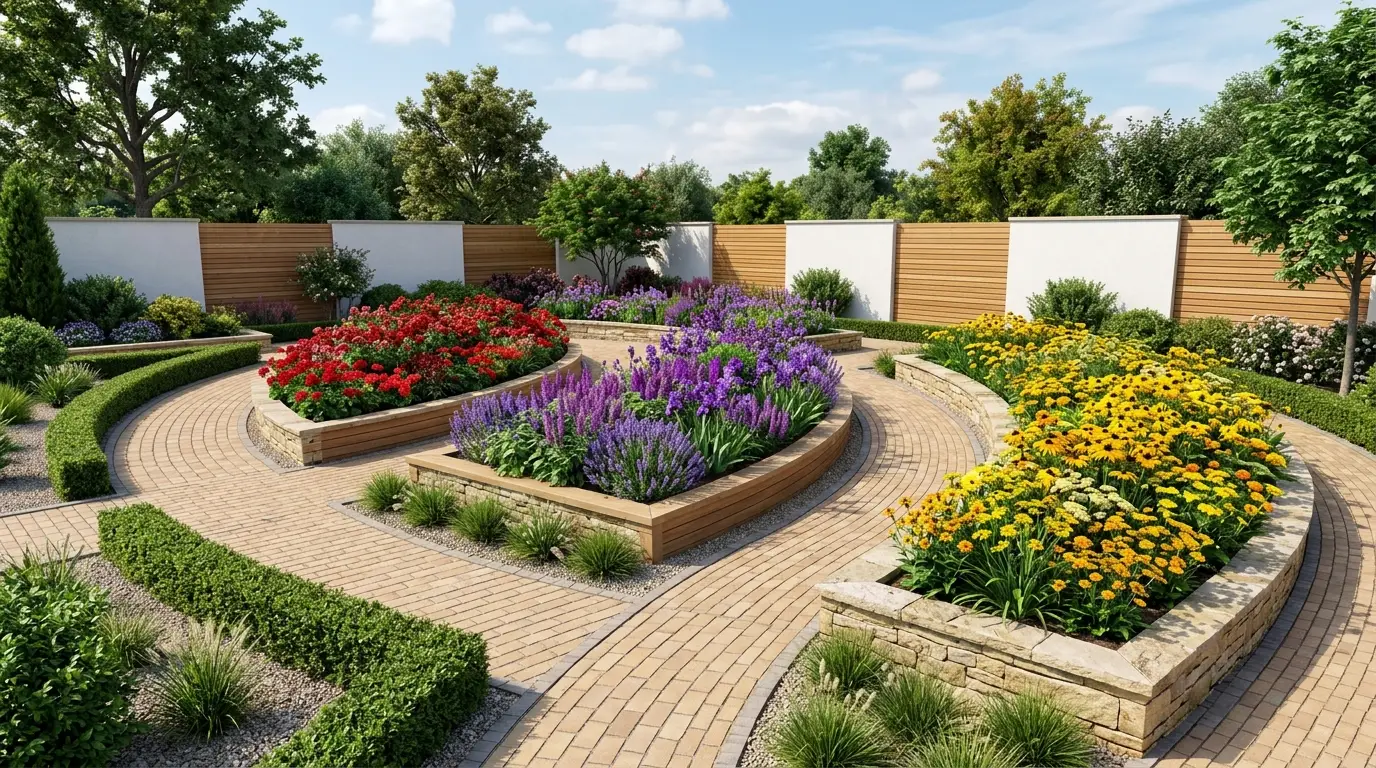
The backbone of this style is the backdrop. Imagine a crisp white wall, but at its base, you have a rich, brown wooden lower panel. This provides a warm, architectural groundedness. When you place bright flowers against this, the colors don’t just sit there—they sing.
2.2. The Backdrop Dynamics
3. Hardscaping: The Skeleton of Your Garden
If flowers are the “skin” of your garden, hardscaping is the skeleton. Without it, everything just feels like a bunch of plants in a pile.
3.1. The Curve Appeal: Why Curved Beds Soften the Facade
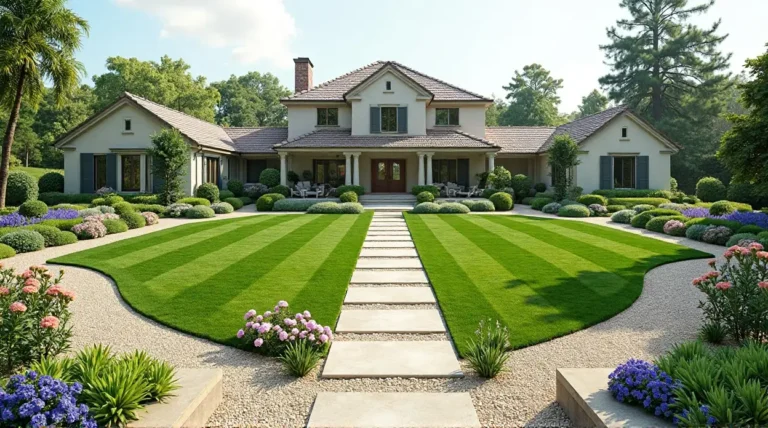
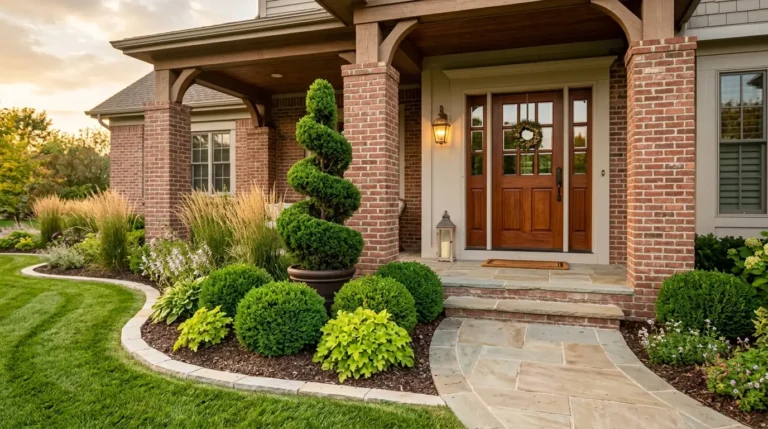
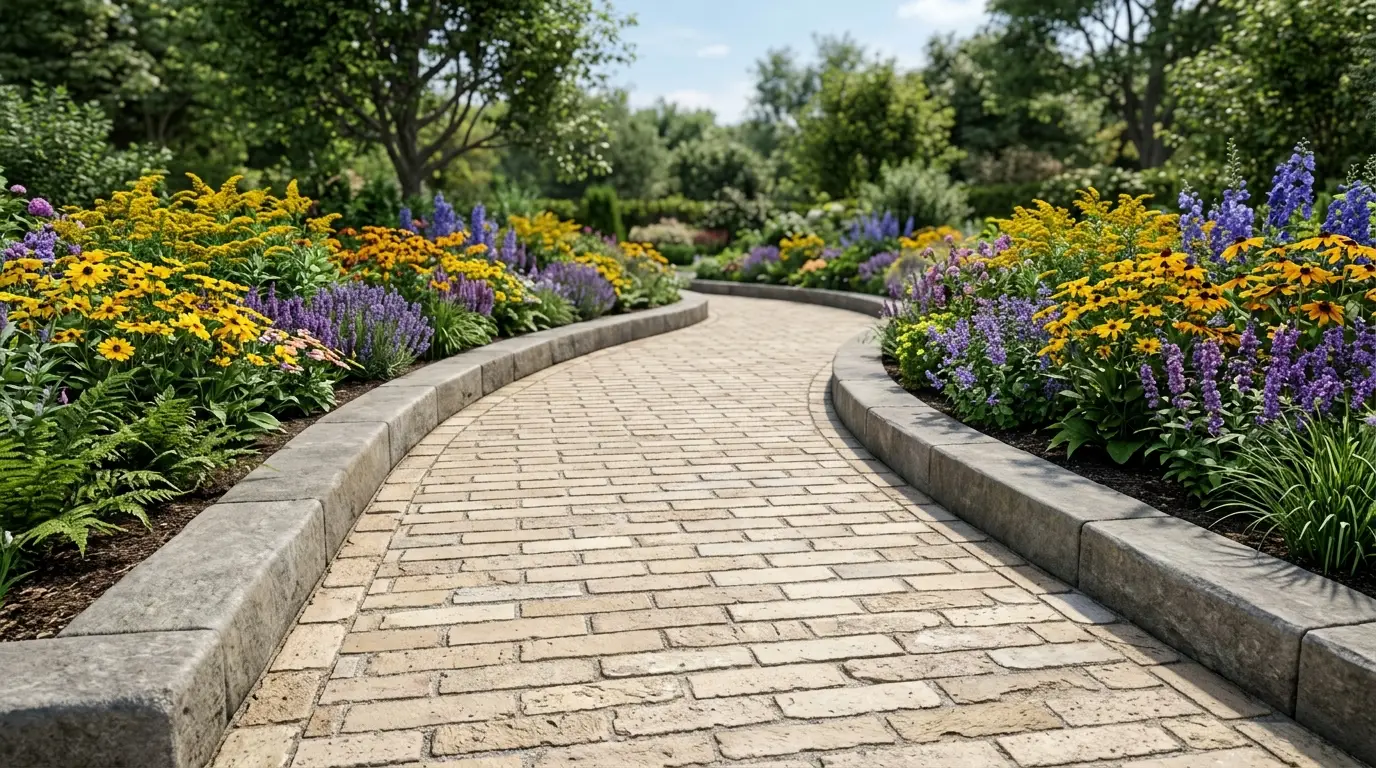
Most houses are built with right angles. To make a small yard feel bigger and more inviting, we introduce curves. Curved beds create a sense of movement. They lead the eye on a journey, making a small space feel like an exploration.
3.2. Beige Brick Paths: Navigating the Space
The path is your guide. Instead of standard gray concrete, we use a light beige brick. It’s warmer, more inviting, and provides a neutral ground that allows the vivid greens and reds of your plants to stand out.
3.3. Walking the Walk
4. The Art of the Elevated Bed
Elevation is a game-changer for small yards. Why? Because it adds a third dimension without taking up more footprint.
4.1. Why Height Creates Grandeur in Small Spaces
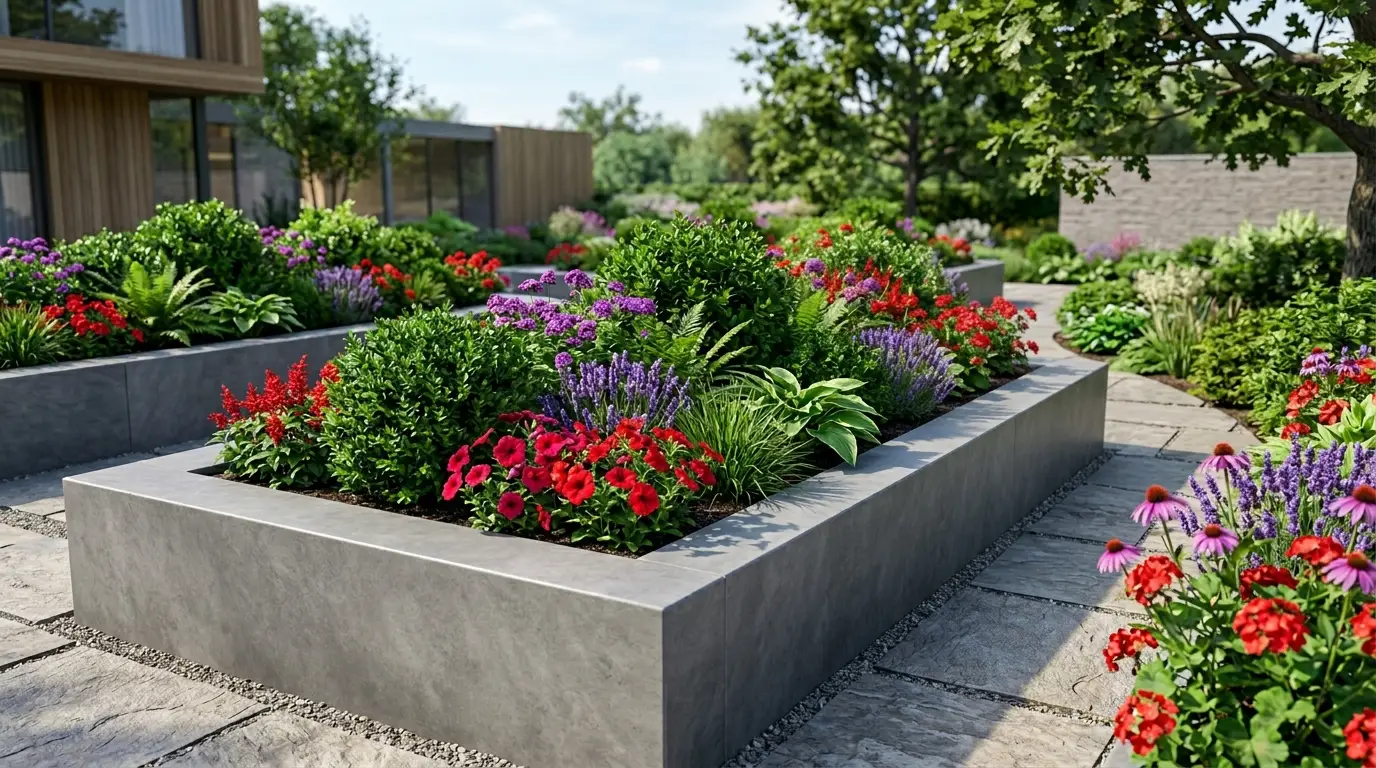
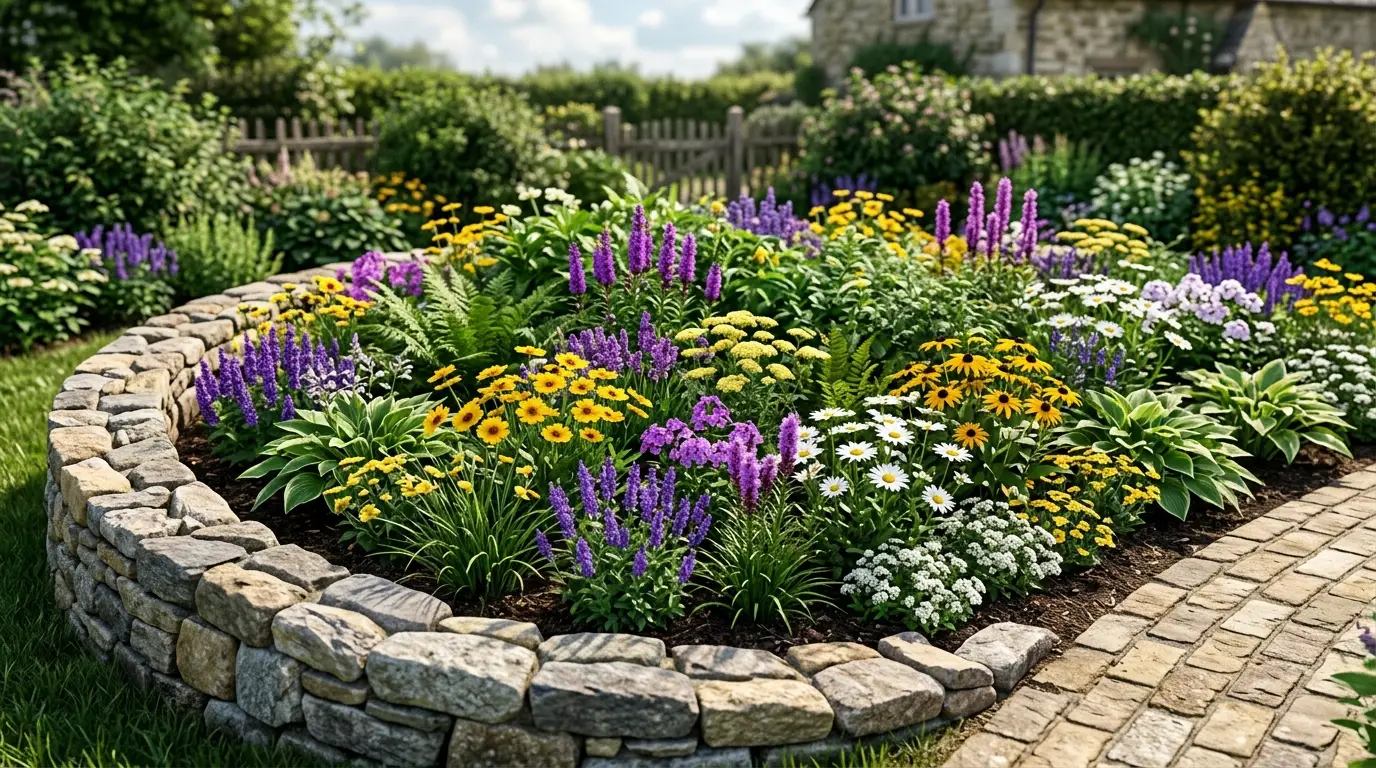
When you lift your garden beds using smooth, gray stone, you create layers. It allows you to “stack” your visual interest. Elevated beds also act as a natural frame, signaling that these plants are special—they are part of a curated display.
4.2. Framing the Beauty
5. Color Theory in the Front Yard
Color is where the “vibrant” part of our style comes in. We aren’t afraid of a little drama.
5.1. Creating Vibrancy with Reds, Pinks, and Whites
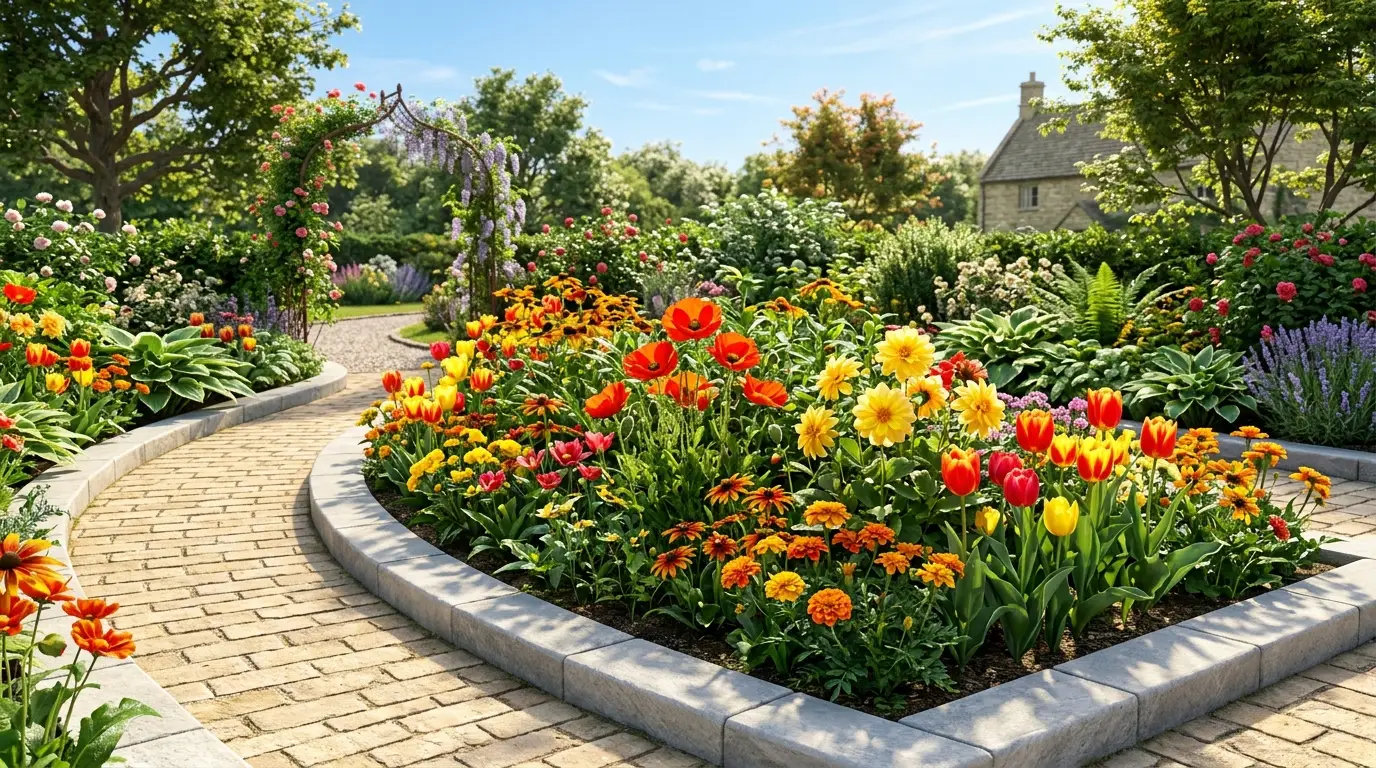
In the foreground, where your eye hits first, we want the “wow” factor. Vibrant reds and pinks create energy. When you mix in white, it provides a “rest” for the eye, making the reds look even more intense. It’s like a visual exclamation point at your front gate.
5.2. Foreground Energy
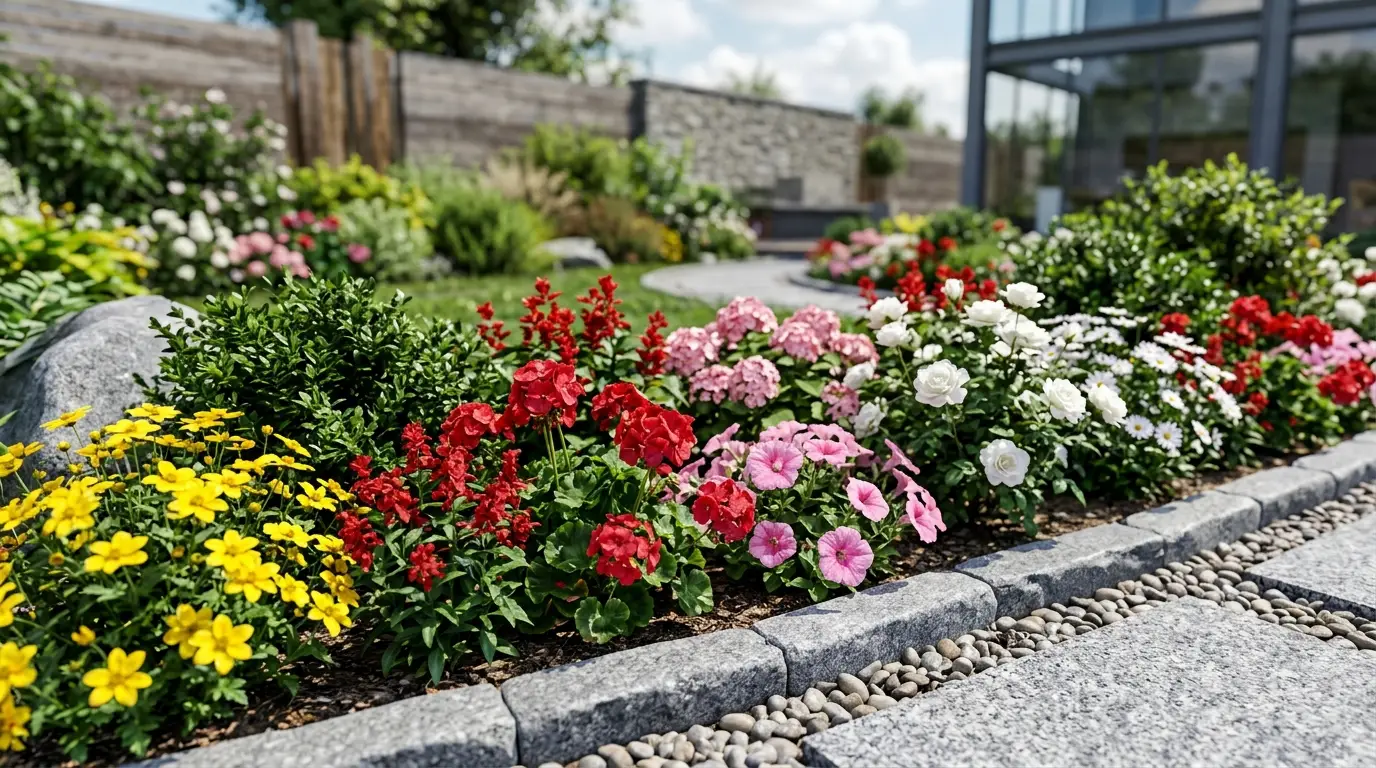
5.3. Neutralizing with Purple and Yellow Accents
As you move toward the middle of the yard, we want to transition into something a bit more sophisticated. Purples and yellows are complementary colors. They naturally make each other look better. They provide a sense of balance and elegance that prevents the red from becoming too overwhelming.
5.4. The Mid-Ground Mix
6. Verticality and Evergreen Structure
Small yards often fall into the trap of being “flat.” We need height to lead the eye upward.
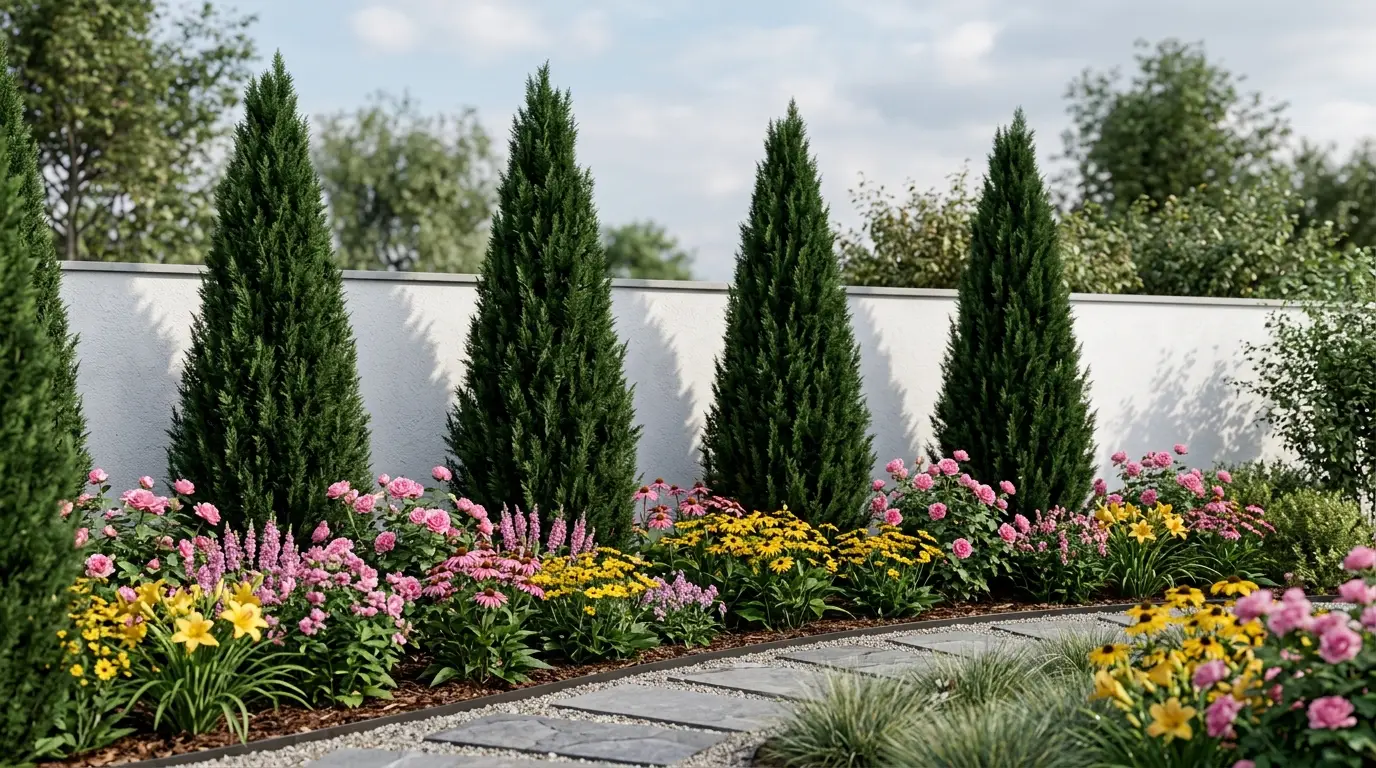
6.1. Conical Evergreens: Year-Round Architecture
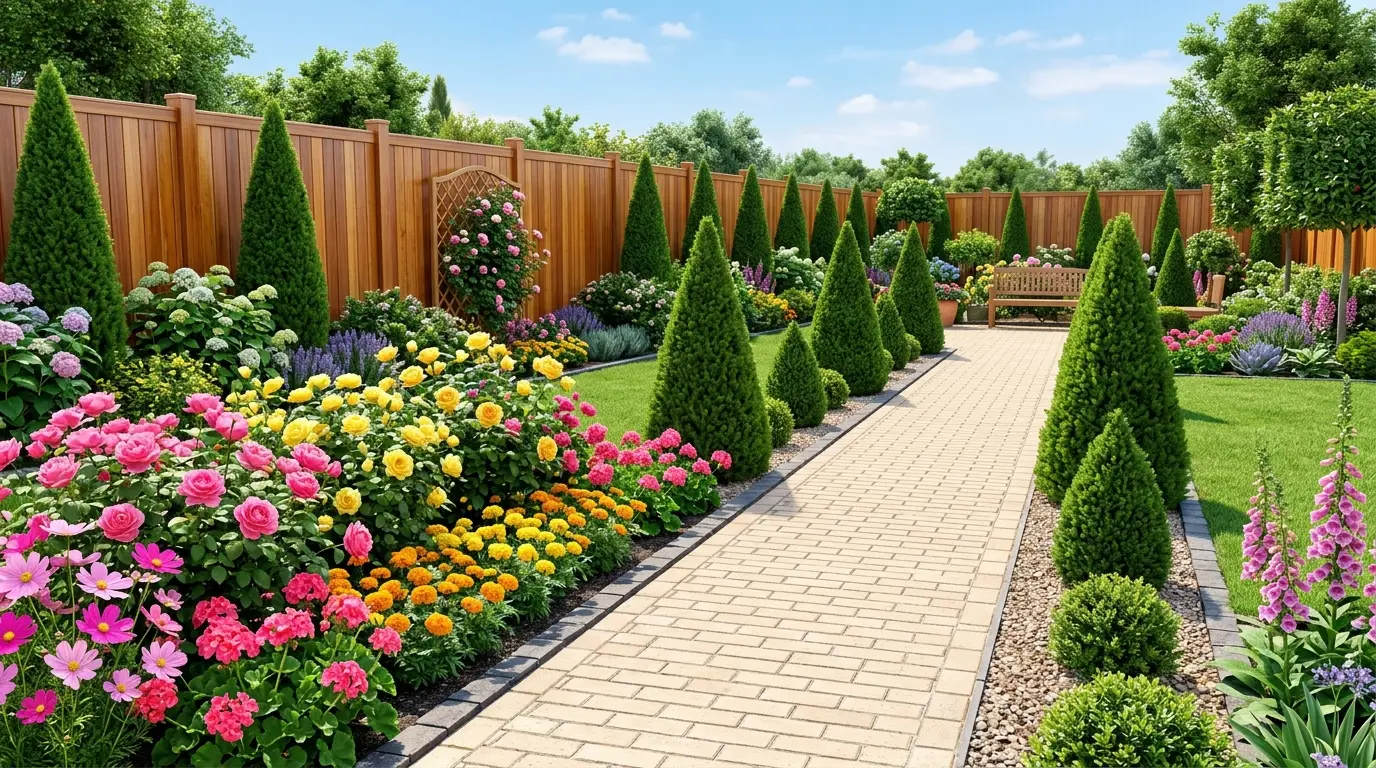
Evergreens are the workhorses of the garden. While flowers come and go with the seasons, a tall, conical evergreen tree provides structure all year long. They act like the tall furniture in a small room—they make the “ceiling” (the sky) feel higher.
6.2. Standing Tall
7. Texture and Layering: Achieving the CGI-Perfect Look
What separates a DIY-looking yard from a professional design? Texture.
7.1. Mixing Shrubs with Delicate Perennials
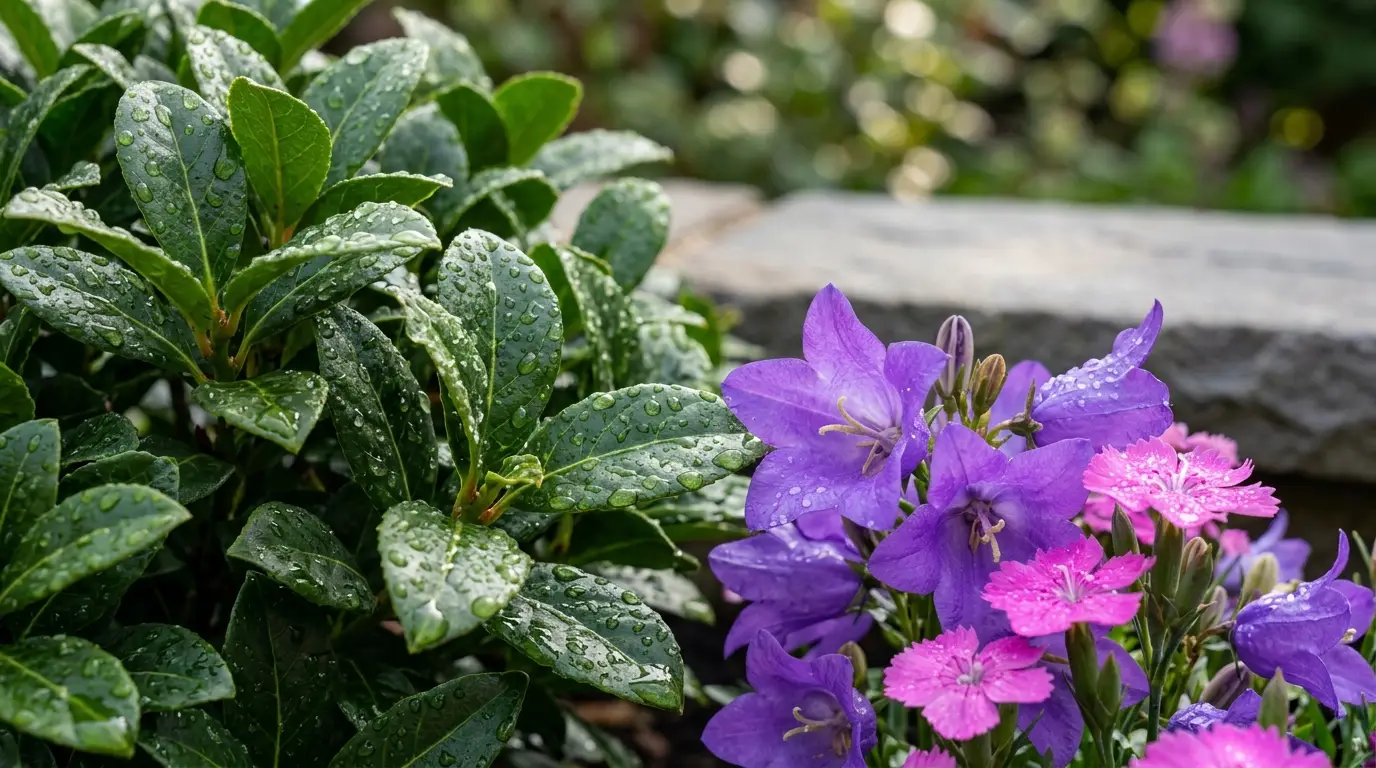
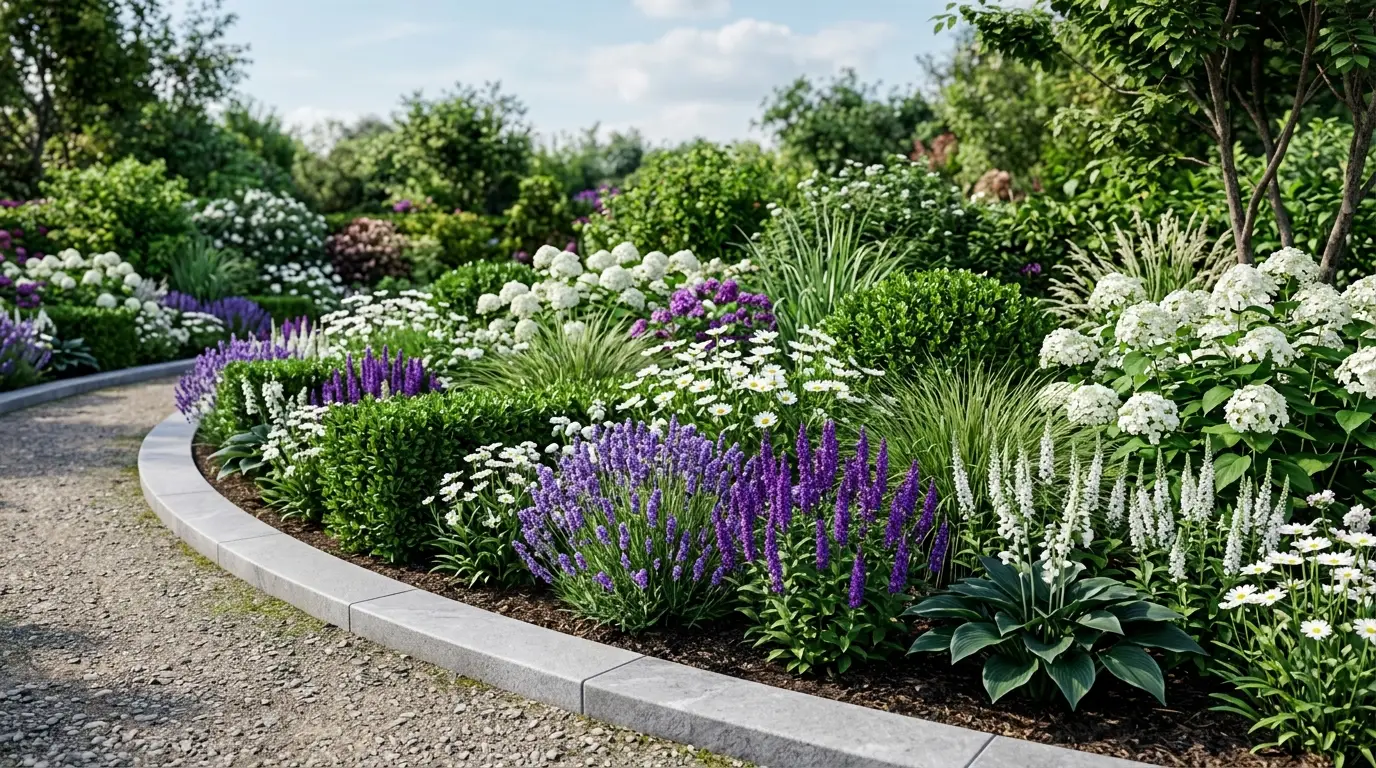
You want to mix broad-leaf shrubs with fine-textured flowers. This “visual friction” is what makes a garden look expensive. It’s the difference between a flat photo and a high-resolution 3D rendering.
7.2. Feeling the Foliage
8. Lighting Your Masterpiece
You’ve spent the time and effort; you need to make sure the world can see it.
8.1. Maximizing Natural Light and Vividness
In our Modern Elegant style, we want light that is bright and natural. Think about how a CGI rendering uses light to highlight “specular reflections”—the little glints on a leaf or a stone. In the real world, this means positioning your beds to catch the morning or evening sun, highlighting the “vividness” of those reds and purples.
8.2. The Glow of Nature
9. Organizing the Chaos: Symmetry vs. Fluidity
A garden can be colorful without being messy. The “organized floral display” is the key to elegance.
9.1. The Role of Well-Organized Floral Displays
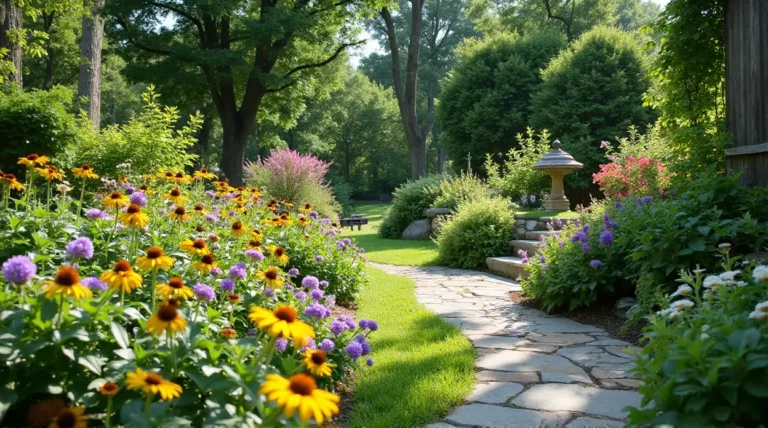
By grouping colors together in “drifts” or specific sections of a curved bed, you avoid the “wildflower meadow” look, which can often look like weeds in a small yard. We want every plant to look like it has a specific job to do.
9.2. Curated Composition
10. Plants for the Modern Elegant Style
While we want variety, we don’t want a hodgepodge. Stick to a curated list.
10.1. Low-Maintenance Shrubs for Permanent Greenery
Look for shrubs like Boxwood or Dwarf Conifers. These stay green all year and can be trimmed into the neat, structured shapes that define the modern look.
10.2. The Mid-Ground Variety
11. Maintenance: Keeping the “Rendering” Alive
A garden is a living thing, not a static image. But it doesn’t have to be a full-time job.
11.1. Pruning for Clean Lines
To keep that “modern” look, you need to keep your lines clean. This means occasional pruning of the evergreens and deadheading the flowers. When the borders stay sharp, the whole yard looks “expensive.”
11.2. Background Brilliance
12. Conclusion: Your Home’s New Signature
Landscaping a small front yard is about more than just plants—it’s about creating an experience. By using elevated beds, smooth gray stone, and a light beige brick path, you create a structured “Modern Elegant” framework. Within that frame, you let nature go wild with vibrant reds, purples, and yellows.
Don’t let a small space limit your imagination. Treat it like a high-resolution rendering. Focus on the textures, the contrast of the wood and stone, and the vividness of the floral displays. Your home deserves a handshake that says, “Someone who loves beauty lives here.”
13. Frequently Asked Questions (FAQs)
1. What are the best plants for a low-maintenance but vibrant front yard? Evergreen shrubs like Boxwood are great for structure, while perennials like Lavender (purple) and Coneflowers (pink/yellow) provide year-round interest with very little water or pruning.
2. How do I make a small yard look larger? Use curved garden beds and paths. Straight lines remind the eye where the property ends; curved lines trick the brain into following a journey, making the yard feel expansive.
3. Is stone better than wood for garden bed borders? In a “Modern Elegant” style, smooth gray stone is superior. It’s more durable than wood and provides a clean, matte contrast that makes the colors of your flowers pop.
4. What color should my path be? Light beige or cream-colored bricks are excellent. They reflect light, keeping the yard from looking “heavy” or dark, and they complement almost any flower color.
5. Do elevated beds require more water? They can dry out slightly faster than ground-level beds, so it’s best to use a drip irrigation system or choose drought-tolerant plants. However, the drainage they provide is excellent for plant health!
About the Author